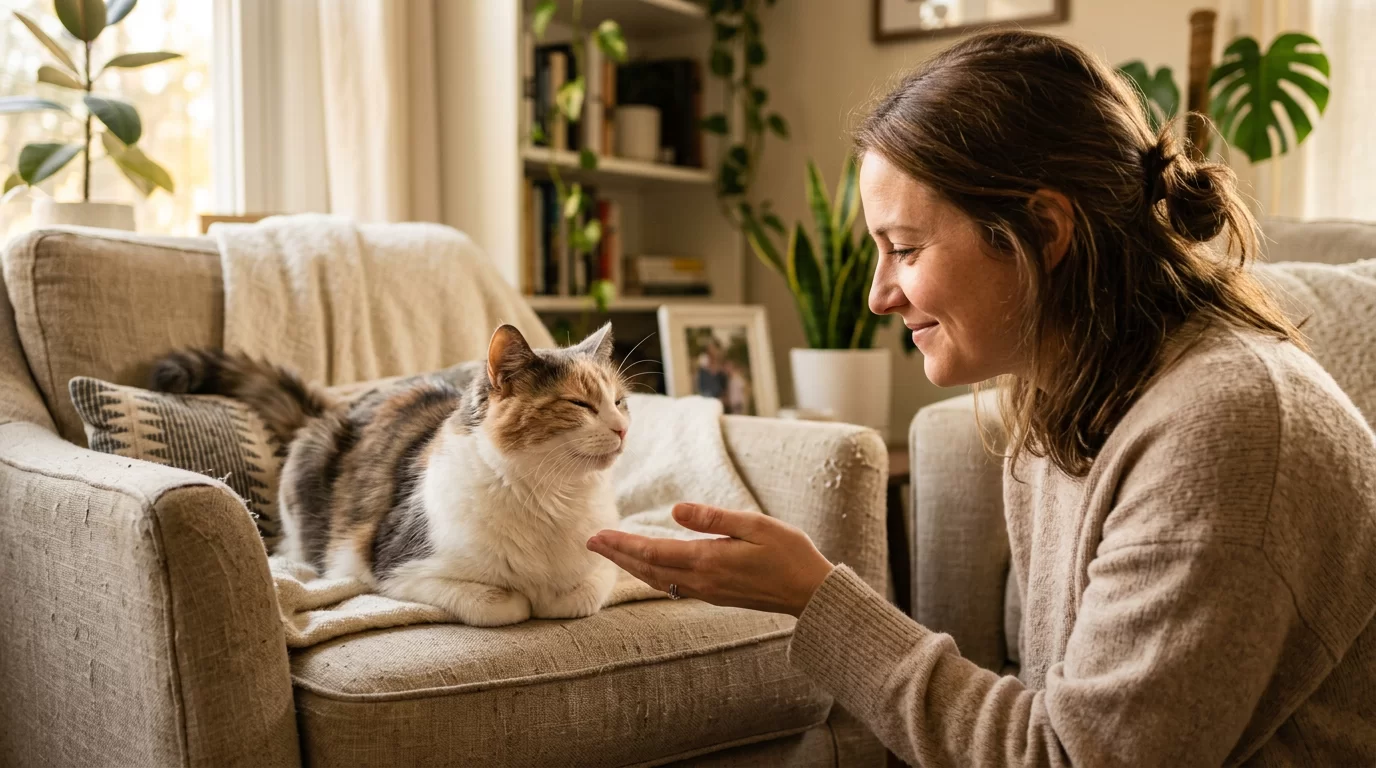
Your cat’s slow blink is often called a “cat kiss,” and for good reason. A cat slow blink—closing both eyes softly, holding them shut for a moment, then opening them again—typically signals trust, comfort, and a peaceful wish to connect. In feline body language, closing the eyes voluntarily in front of another being is a vulnerable act, which makes it one of the clearest signs your cat feels safe with you. It’s not a trick or a coincidence; it’s a quiet, intentional gesture that can strengthen the human-cat bond when you recognize it and respond gently.
In This Article
- What This Behavior Usually Means
- How Cats Show Trust and Affection
- Body Language That Helps You Read the Moment
- When Affection Can Be Misread
- How to Respond in a Cat-Friendly Way
- How to Build More Trust Over Time
What This Behavior Usually Means
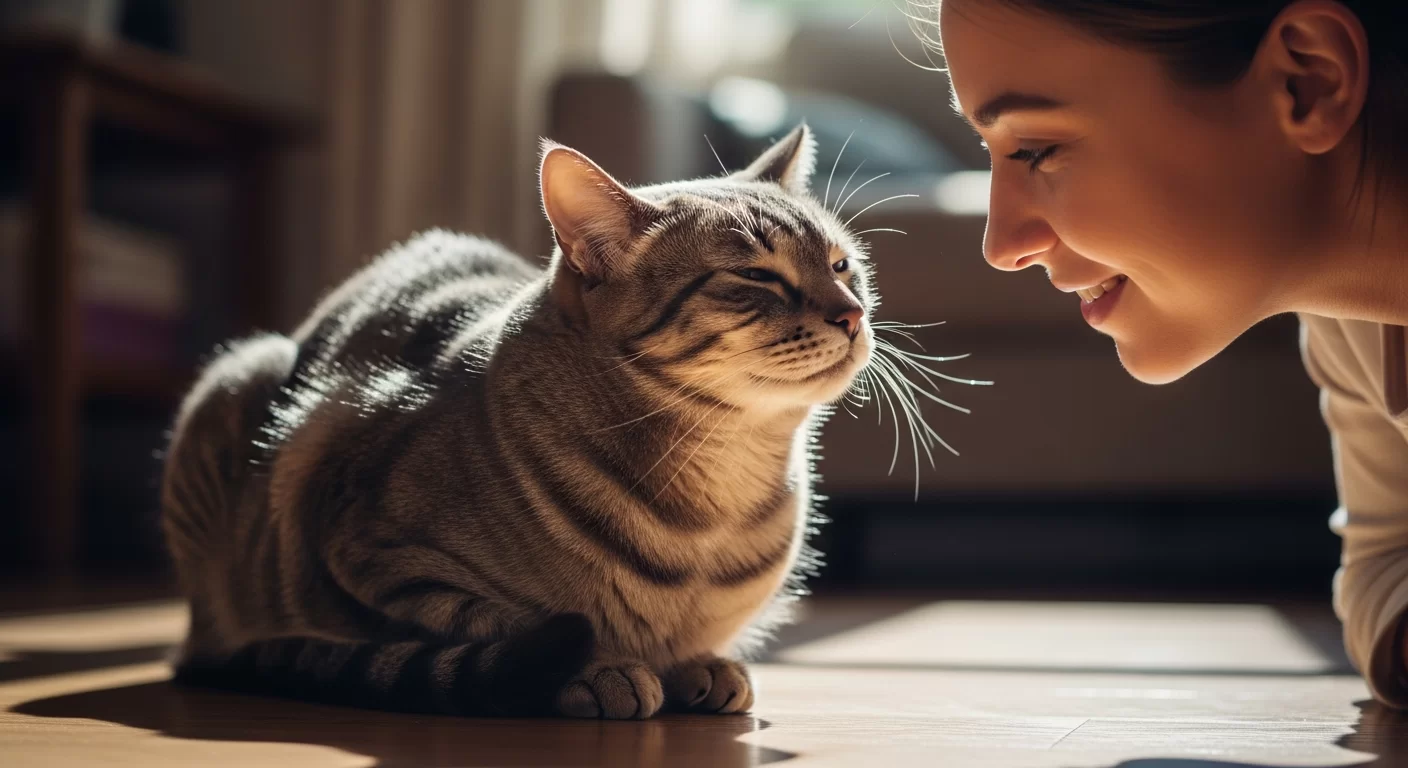
Key points about the cat slow blink:
- It’s a sign of relaxation, not fatigue. A cat who slow blinks is usually in a calm, comfortable state, not simply sleepy.
- It often occurs when your cat is sitting or lying near you, looking at you with soft eyes, and the slow blink happens spontaneously.
- It can be an invitation to connect, signaling that the cat would be receptive to gentle attention—or that the cat simply wants you to know all is well.
- It’s one of many trust signals, not a standalone guarantee of a deep bond. Pair it with body language like relaxed ears, a softly curving tail, or quiet purring for fuller context.
How Cats Show Trust and Affection
Slow blinking fits into a larger toolkit cats use to show they care, often in understated ways. In multi-cat homes and feral colonies, cats who get along often slow-blink at each other to communicate peaceful intent. With humans, the same principle applies. Other common cat affection signs include:
- Headbutting and rubbing: When a cat rubs its cheeks, chin, or forehead against you, it deposits scent from facial glands. This combines scent marking with affiliative behavior, reinforcing a sense of shared territory and belonging.
- Kneading: Pushing paws rhythmically against a soft surface—often your lap—can be a deeply comforting remnant of kittenhood, associated with nursing and safety.
- Choosing proximity: A cat who follows you into a room, curls up on the back of the sofa while you work, or simply sits in the same sunny spot nearby is actively choosing to share space, which for a solitary species is significant.
- Soft purring: While purring can signal pain or stress in some contexts, a relaxed purr paired with a loose body, slow blinks, and half-closed eyes is usually a sign of contentment.
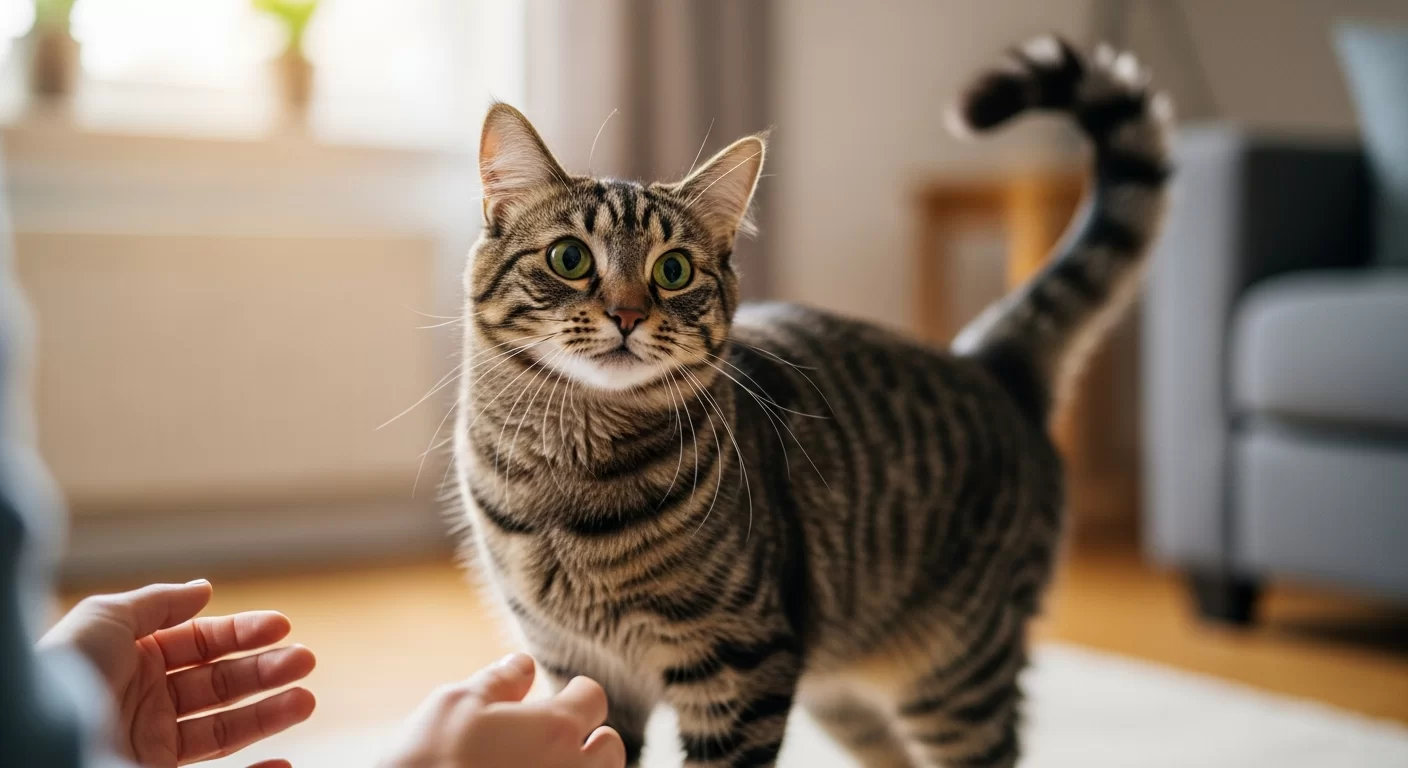
- Tail signals: An upright tail with a slight curve at the tip, often seen when approaching a favorite person, is a friendly greeting. Wrapping the tail around your leg or arm can also be a sign of closeness.
Body Language That Helps You Read the Moment
To understand whether a slow blink is truly a sign of relaxed affection or something else, look at the whole cat. Cats communicate primarily through body posture, ear position, whisker orientation, tail movement, and eye expression. Reading these together paints a complete picture.
When your cat offers a slow blink alongside these signals, it’s a clear indication of comfort:
- Ears: Still or gently forward, not flattened or swiveling rapidly.
- Eyes: Soft, partially closed, or blinking slowly; pupils not fully dilated in bright light (pupil dilation can indicate excitement or stress, but also dim lighting, so assess alongside other cues).
- Whiskers: Relaxed and slightly forward or sideways, not pulled back tightly against the cheeks.
- Body posture: Lying down with paws tucked under, sprawled on a side exposing the belly (though belly exposure is not always an invitation for touch), or sitting upright with a loose, tension-free curve to the back.
- Tail: Still or gently waving, not lashing or held rigidly low.
If you see a slow blink but notice flattened ears, a tightly wrapped tail, or a tense crouch, the cat may be uncomfortable or overstimulated. Context matters deeply.
When Affection Can Be Misread
While a slow blink is widely accepted as a friendly signal, not every seemingly affectionate behavior means exactly what we hope. A cat might squint or close its eyes due to bright light, irritation, or drowsiness. Slow blinking in a very tense situation—such as during a vet visit or right after a fight—could be a self-soothing behavior rather than a sign of trust. Similarly, a cat who stares with fixed, wide eyes is not communicating the same feeling; that intense stare can be a sign of vigilance or unease.
Other behaviors sometimes mistaken for pure affection include:
- Rubbing: While bonding-related, it also serves territorial marking. The same gesture can occur when a cat feels mildly anxious and wants to re-establish familiar scent.
- Kneading: In some cats, excessive kneading can be a self-comfort mechanism if the cat is stressed, especially if paired with sucking on fabric while the cat appears tense.
- Close following: Staying near you might mean trust, but if the cat becomes vocal, paces, or blocks your path when you move away, it could signal clinginess tied to separation distress. In that case, the behavior deserves a closer look and possibly veterinary guidance.
The table below helps distinguish relaxed trust signals from those that require more careful reading.
| Relaxed trust or affection | Behavior to read more carefully |
|---|---|
| Your cat slow blinks with soft eyes and a loose body posture. | Your cat squints or closes its eyes tightly while the body is tense or flattened. |
| Head rubbing occurs when the cat is purring and clearly seeking gentle touch. | Head rubbing is frantic, persistent, and paired with restlessness or vocalization. |
| Your cat follows you and then settles quietly nearby. | Your cat follows you constantly, cries when you leave the room, or becomes destructive when separated. |
| Kneading is rhythmic and the cat looks drowsy and content. | Kneading is intense, accompanied by suckling fabrics, and the cat seems agitated. |
| Slow blinks occur during calm bonding moments at home. | Slow blinking occurs in the middle of a stressful event and the cat’s body is frozen. |
If a behavior change is sudden, persistent, or matched with appetite loss, hiding, litter box issues, or aggression, a veterinarian consultation is wise. Pain or illness can alter a cat’s communication style.
How to Respond in a Cat-Friendly Way
One of the most respectful things you can do when your cat slow blinks at you is to slow blink back. Soften your gaze, blink slowly a few times, and then look away gently. This signals, “I’m not a threat, and I’m comfortable with you too.” Multiple studies and behavior experts at organizations like the Cornell Feline Health Center note that mimicking this gesture can be a simple form of cat-friendly communication.
Other ways to respond without overwhelming your cat:
- Let the cat initiate physical contact. If your cat approaches after a slow blink, offer a relaxed hand a few inches away. If the cat rubs against it, you can gently stroke the chin or cheeks—areas many cats prefer over full-body petting.
- Avoid staring. Direct, unblinking eye contact can be perceived as confrontational. Use soft eye contact and occasional slow blinks to keep the interaction peaceful.
- Respect the stop sign. If the cat turns away, flicks its tail, or flattens its ears, pause. That’s the cat saying, “I’m done.” Pushing past that cue can erode trust over time.
- Offer gentle play. Some cats respond to a slow blink by wanting a calm interactive moment, like a light wand toy session. Follow your cat’s energy level.
How to Build More Trust Over Time
Trust isn’t built through grand gestures. Cats develop confidence in their humans through small, consistent experiences that teach them the environment is safe and predictable. The slow blink is a beautiful starting point, but you can deepen that trust with ongoing habits.
- Establish predictable routines. Feeding, play, and quiet time at similar times each day help a cat feel secure.
- Provide vertical space and hiding spots. Cat trees, shelves, and cozy hideaways give a cat control over its environment and an easy escape when needed.
- Respect the cat’s choice to be near but not touched. A cat who sits a few feet away is still bonding. Let your cat enjoy proximity without pressure to move closer.
- Use positive, gentle interactions. Slow blinking, soft talking, short chin scratches, and play sessions that end on a positive note reinforce that you’re a source of good things.
- Learn your individual cat’s comfort zones. Some cats will slow blink from across the room but avoid lap sitting for years. That’s genuine trust, just expressed differently.
If your cat is new or has a history of fear, patience is essential. The 2020 Scientific Reports study showed that even cats meeting a stranger were more likely to approach after being slow-blinked at, but the strongest responses are seen in cats with existing bonds. Consistency and quiet respect win trust far more effectively than chasing affection.
When your cat looks at you, blinks slowly, and then looks away softly, that small gesture can mark a moment of genuine connection. It’s a reminder that cat affection often arrives quietly—in half-closed eyes, a relaxed body, and the choice to be near you. The most cat-friendly response is to meet that offer with equal gentleness, returning a slow blink, honoring boundaries, and letting the relationship unfold at your cat’s own pace. Over time, those small interactions build a strong foundation of trust. If your cat’s behavior suddenly changes, becomes withdrawn, or includes signs of illness, seek guidance from a veterinarian to rule out any underlying health concerns.