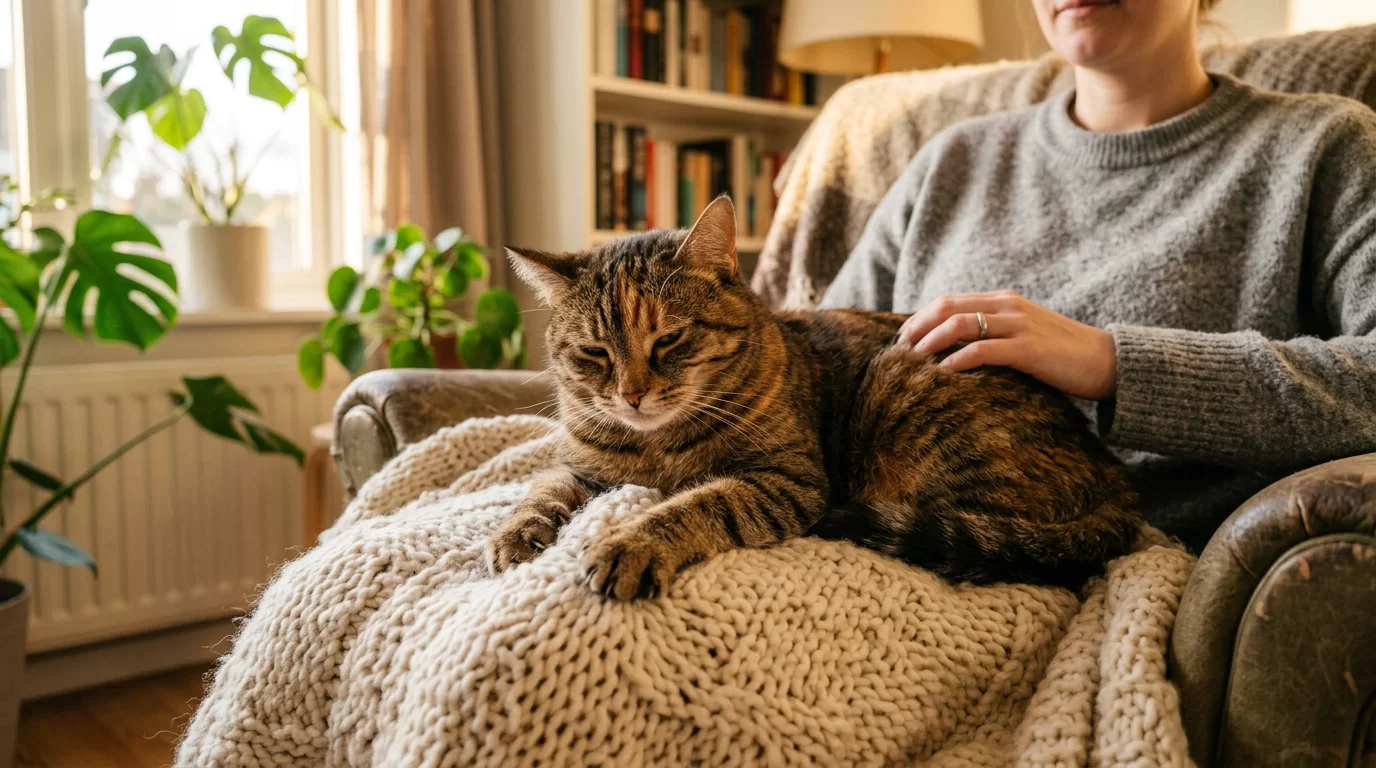
When your cat kneads you with steady, rhythmic paw movements, it is almost always a sign of comfort and trust. This behavior, often called “making biscuits,” usually starts in kittenhood when a nursing kitten presses against its mother to stimulate milk flow. As an adult cat, kneading typically becomes a bonding ritual that signals your cat feels safe and content with you. The repetition, the relaxed eyes, and the occasional quiet purr all point to a moment of genuine connection. Understanding why your cat kneads can help you read this affectionate behavior more clearly and respond in a way that strengthens your bond.
In This Article
- What Kneading Usually Means
- How Cats Show Trust and Affection Through Kneading
- Body Language That Helps You Read the Moment
- When Affection Can Be Misread
- How to Respond in a Cat-Friendly Way
- How to Build More Trust Over Time
What Kneading Usually Means
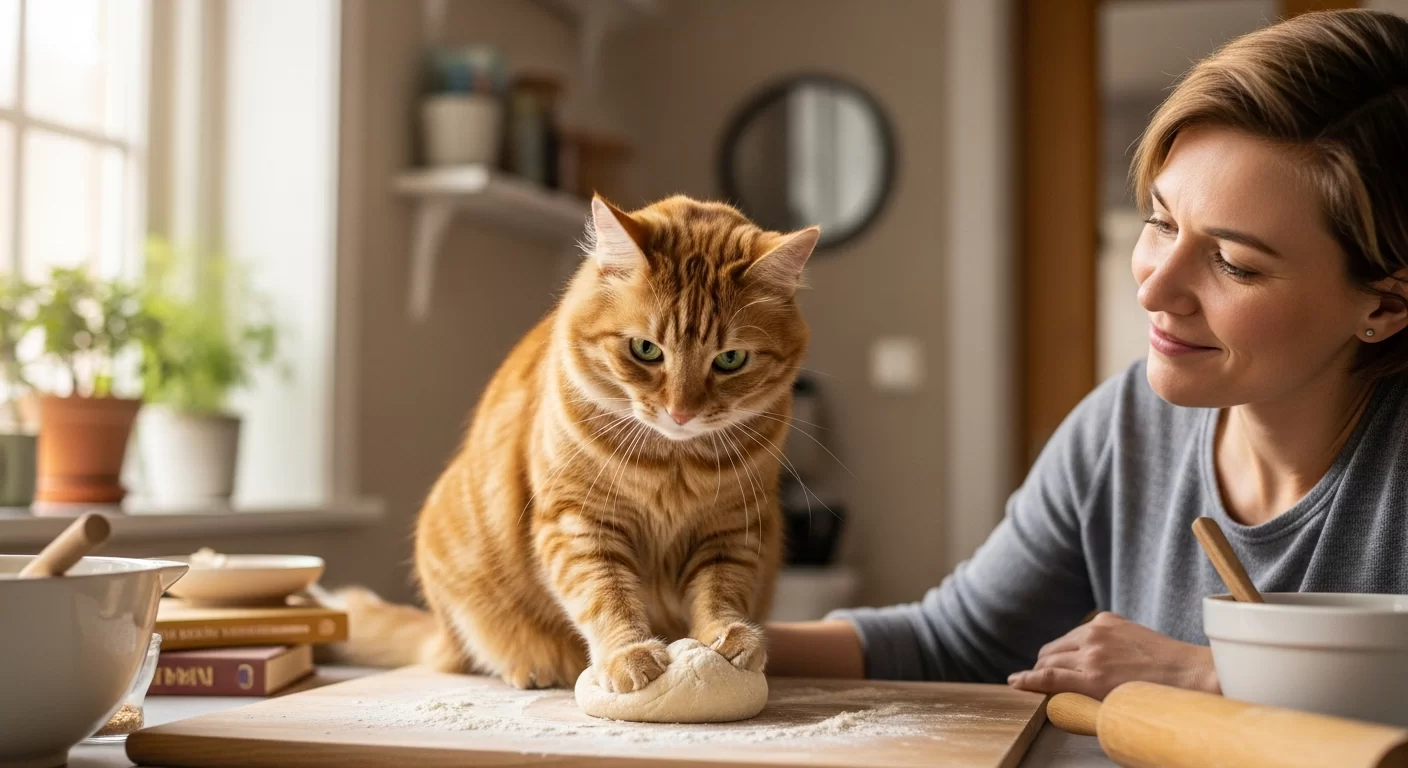
- Many cats knead when they are feeling especially relaxed and content.
- Kneading also activates scent glands in the paw pads, leaving a familiar scent that marks you as a safe part of the cat’s territory.
- Some cats knead before settling down to sleep, a leftover instinct from wild ancestors who would pat down grass or leaves for a comfortable bed.
- In most cases, a cat that kneads you is showing that it trusts you enough to let its guard down.
How Cats Show Trust and Affection Through Kneading
Kneading is just one of several ways cats express closeness. When a cat kneads you, it often happens alongside other signals of cat trust and affection. The combination of these behaviors gives you a fuller picture of your cat’s feelings.
Slow blinking is a well-known sign of trust. If your cat gives you a slow, sleepy blink while kneading, it is a soft signal that it feels safe. Purring is also common during kneading, though not every purr means the same thing. A relaxed, low-pitched purr during kneading usually indicates contentment.
Some cats will also headbutt or rub their cheeks against you before or after kneading. This is another scent-marking behavior that reinforces your place in their world. If your cat brings you a favorite toy, nuzzles your hand, or simply chooses to knead on your lap rather than on a blanket, those are all small gestures that say you are a trusted companion.
Body Language That Helps You Read the Moment
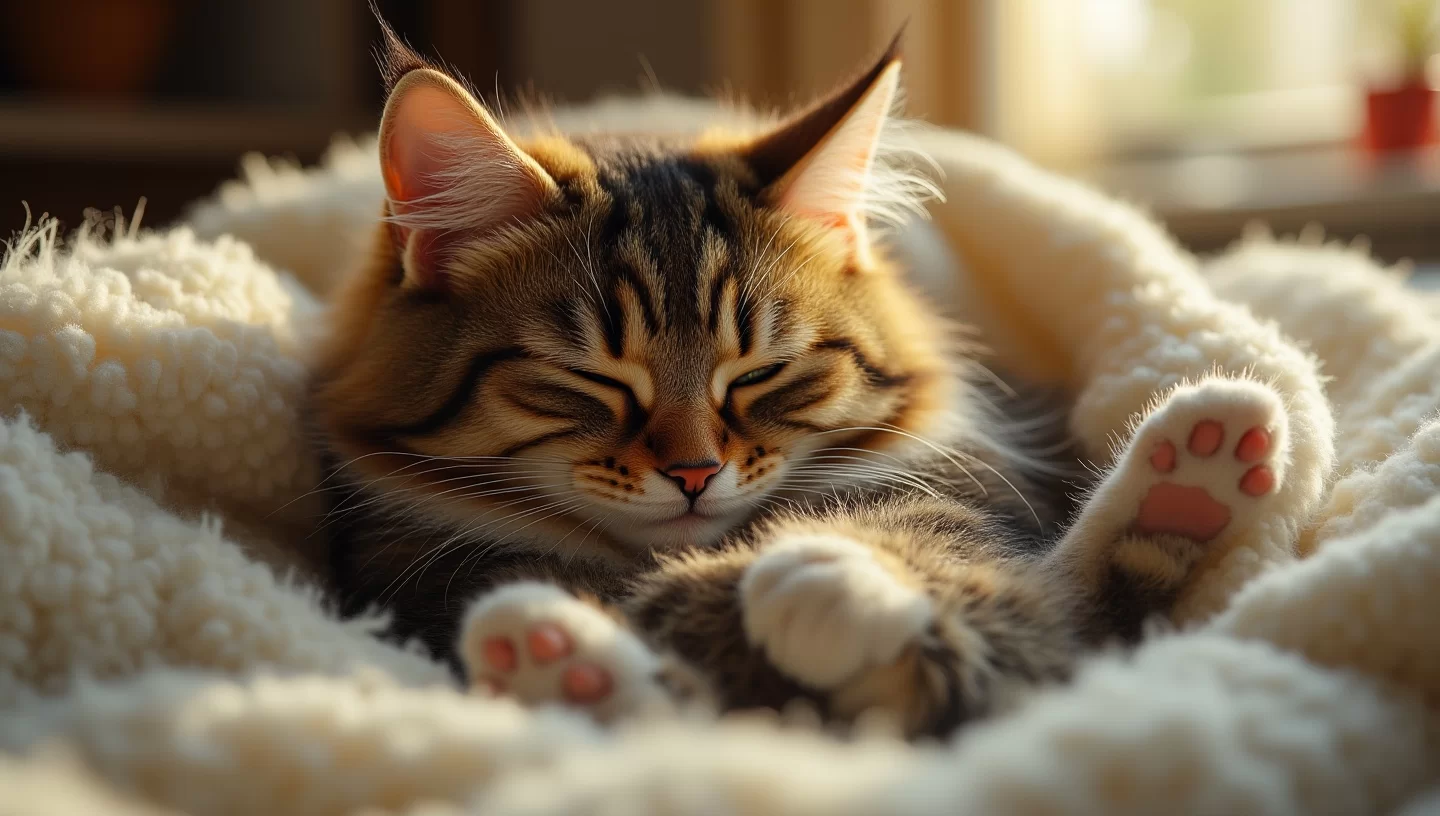
To know whether the kneading is a moment of pure trust or something else, watch your cat’s whole body. A relaxed cat will have soft, almond-shaped eyes with slow blinking. The ears will be in a neutral or slightly forward position, and the tail may be still or gently curved. The cat’s body feels loose, and it may even drool a little from sheer contentment.
Signs of a comfortable, trustful kneading session include:
- Soft, half-closed eyes or slow blinks
- Steady, rhythmic paw motion without urgency
- Purring that is low and even
- A relaxed tail that lifts or curls gently
- The cat remains in place without tensing or pulling away
If the cat’s tail begins to twitch or thump, the ears flatten, the pupils dilate suddenly, or the kneading turns into harder pushes or nipping, that can be a sign of overstimulation. At that point, the cat may need a break.
When Affection Can Be Misread
Kneading can also be a sign that a female cat is about to go into heat, though that context usually includes other behavioral changes. And occasionally, a cat may knead as a habit that started early in life, even if it doesn’t feel particularly bonded to the person. The key is to look at the whole picture: where the cat chooses to knead, the body language, and the relationship history.
How to Respond in a Cat-Friendly Way
When your cat kneads you, the best response is usually a calm, low-interaction one. Avoid sudden movements, loud voices, or grabbing the paws. Let the cat control the duration and intensity.
- Place a soft towel or blanket on your lap to protect your legs from claws, and let the cat knead as long as it seems comfortable.
- If your cat’s claws are sharp, you can gently trim them beforehand to make the experience more pleasant for both of you.
- Offer gentle, slow strokes along the cat’s back or chin if it leans into your hand. Avoid petting the belly or paws unless your cat specifically invites it.
- If you notice signs of overstimulation, calmly shift your leg or stand up to give the cat space. Do not push the cat away roughly.
- Some cats enjoy a soft verbal acknowledgment, like a gentle “good kitty,” spoken quietly.
Responding with patience and predictability helps your cat feel that its affection is welcome without pressure.
| Relaxed trust or affection | Behavior to read more carefully |
|---|---|
| Your cat kneads with soft eyes and purrs steadily. It may slow blink at you. | Your cat kneads with a twitching tail, tense body, and may suddenly nip or scratch. |
| The kneading is rhythmic and calm, and your cat stays on your lap for several minutes. | The kneading is fast or forceful, and your cat gets up and leaves quickly after. |
| Your cat kneads while relaxing in a favorite spot or on you after a quiet session. | Your cat kneads excessively on surfaces, paces, or vocalizes during the behavior. |
How to Build More Trust Over Time
Kneading is already a good sign that your cat considers you part of its safe circle. To strengthen that bond further, focus on consistency and respect for the cat’s preferences. Cats build trust through predictable routines. Feed your cat at the same times each day, offer interactive play sessions that let your cat stalk and pounce, and provide cozy spots for resting.
Let your cat approach you for affection rather than forcing interaction. When your cat does choose to be near you, speak softly and move slowly. Offer treats or gentle chin scratches when your cat rubs against you. Over time, your cat will learn that your presence brings safety and good things. If your cat has never kneaded before and suddenly starts, or if kneading becomes obsessive or is paired with signs of stress like hiding, appetite loss, or aggression, it is wise to consult a veterinarian to rule out any underlying discomfort or pain.
If your cat chooses to knead you, greets you with a slow blink, or curls up in your lap, those are small but meaningful signs of cat trust and affection. The best response is not to ask more of your cat, but to make sure your presence remains a calm, predictable source of comfort. Pay attention to the quiet cues your cat gives, respect its boundaries, and enjoy the quiet connection that kneading can bring. When the behavior is relaxed and accompanied by soft body language, it is something to cherish.