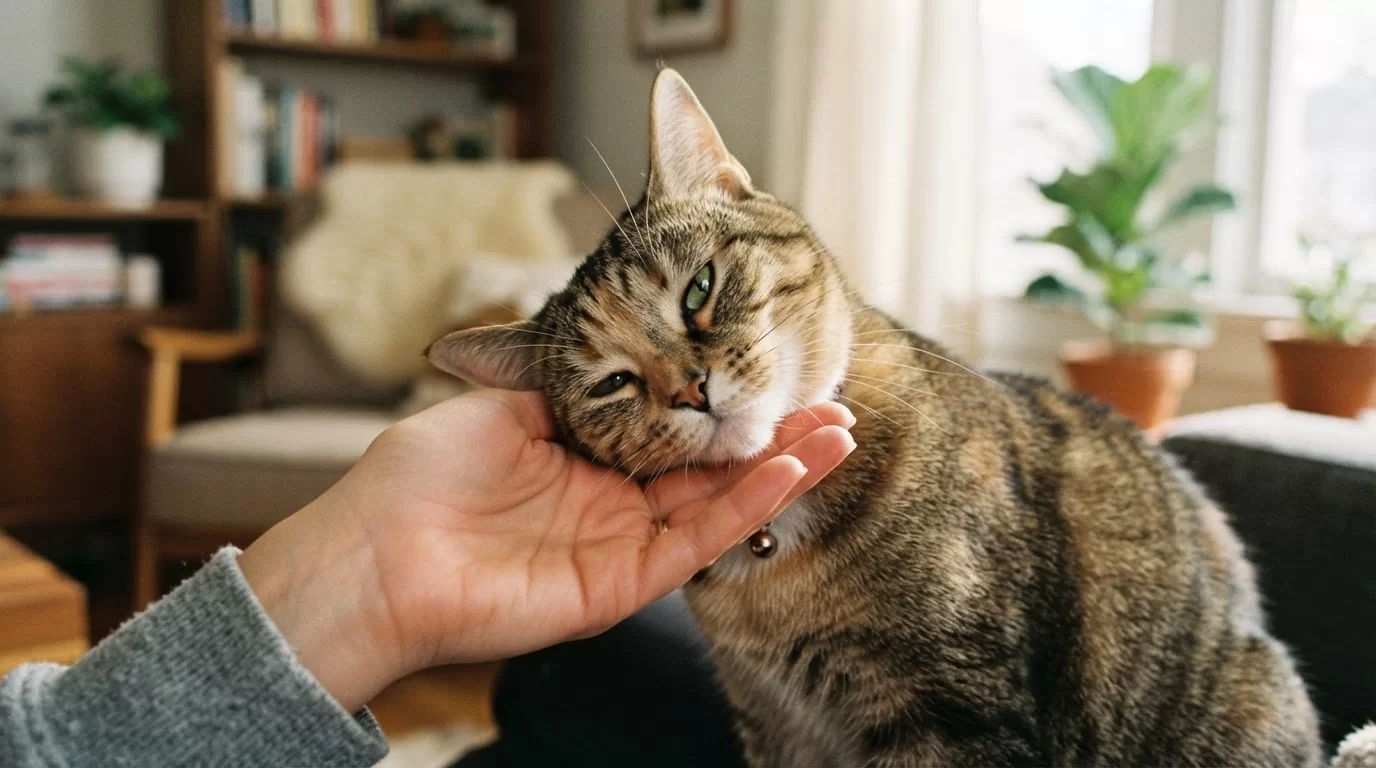
A cat winding around a pair of legs, pressing a soft forehead into an outstretched hand, or gently bumping a chin against a familiar cheek—these are endearing rituals that millions of cat owners experience daily. To the untrained eye, the behavior might look like a simple request for attention or a feline version of a hug. In reality, it is a sophisticated form of communication rooted in scent, social bonding, and territorial instinct. Understanding why a cat rubs against people offers profound insight into how felines perceive their world, mark their safety zones, and silently declare the humans they trust. For some owners, constant rubbing can feel puzzling or even overwhelming, especially when it leads to tripping over an enthusiastic cat weaving between ankles. Others may worry that a sudden change in rubbing habits signals a deeper problem. Decoding this everyday gesture reveals a quiet language of trust, chemistry, and affection that lies at the heart of the human-cat relationship.
In This Article
•Why Do Cats Rub Against You? A Quick Answer
•The Science Behind Feline Scent Glands
•Head-Butting vs. Body Rubbing: A Comparison
•What Rubbing Reveals About Affection and Trust
•Why Some Cats Rub More Than Others
•When Rubbing Behavior Changes: What to Watch For
•How to Respond to Your Cat’s Rubs
•The Deeper Meaning of Mutual Bonding
Why Do Cats Rub Against You? A Quick Answer
Cats rub against people primarily to deposit pheromones from scent glands located on their face, head, sides, and tail. This behavior—called bunting or allorubbing—marks a person as familiar and safe, reinforces social bonds, and signals trust. It is both a territorial message and an affectionate greeting.
The quick motion of a cat’s cheek sliding across a hand or the full flank press against a shin is far from random. It releases a cocktail of chemical signals unique to each cat, which creates a shared group scent between cat and owner. In multi-cat households, this allorubbing blends individual odors and reduces tension. For a human, being chosen as a rubbing post is a quiet badge of belonging.
The Science Behind Feline Scent Glands
Kittens learn scent-sharing behaviors early. Mothers rub against their kittens to create a family scent, and kittens mimic this by rubbing against their littermates and mother. As cats mature, bunting remains a core social tool. When a cat face-rubs a person’s hand after returning from work, the cat is effectively refreshing the communal odor and re-establishing the bond that says “you are still one of us.”
Head-Butting vs. Body Rubbing: A Comparison
Not all rubs are created equal. Felines use distinct parts of the body to communicate different nuances, and knowing the difference helps owners interpret what their cat is saying.
| Behavior | Primary Gland Locations | Typical Meaning |
|---|---|---|
| Head bunting (forehead, cheeks, chin) | Temporal, cheek, and chin glands | Affection, greeting, marking a close social partner |
| Body rubbing (flank, shoulders) | Sebaceous glands along the sides | Territory marking, often while in motion |
| Tail wrapping or rubbing | Glands at the base of the tail | Familiarity, a combined greeting and scent exchange |
Head bunting, often called simply “bunting,” is the most deliberate social gesture. It is commonly reserved for individuals the cat trusts deeply. A cat that bumps a person’s forehead or rubs a cheek on their glasses is offering a clear sign of affiliation. Body rubbing along legs, by contrast, often occurs during active movement—think of a cat weaving between ankles while the owner fills a food bowl. Tail wrapping, when a cat curls its tail around a calf, adds another layer of tactile connection.
What Rubbing Reveals About Affection and Trust
Bunting is a prosocial behavior that goes beyond mere scent-marking. By mixing scents, cats create a communal odor that serves as an olfactory badge of group membership. Wild felids use allorubbing to reinforce alliances and reduce intra-group conflict, and the domestic cat has adapted this instinct to include the humans in their social circle. A cat that rubs its face on an owner’s hands after a long absence is essentially reweaving the sensory fabric of safety and familiarity.
The behavior also functions as a request. Many cats quickly learn that rubbing against a person’s legs or bumping their hand often leads to scratches behind the ears or gentle pats—both of which stimulate the same scent glands and deepen the bonding loop. Far from being a purely instinctive act, rubbing becomes a learned interaction that both cat and owner find rewarding.
Why Some Cats Rub More Than Others
The frequency and intensity of rubbing vary widely among individuals. Genetics, early socialization, personality, and even recent experiences shape the behavior. Cats that were handled gently as kittens and exposed to positive human contact during the sensitive socialization period are generally more tactile as adults. Confident, outgoing cats tend to rub more frequently, while timid or independent cats may express affection through slower blinks or simply sitting nearby.
Factors that influence rubbing frequency include:
- Early socialization: Kittens raised with gentle handling often become face-rubbers.
- Environmental confidence: A cat that feels secure in the home is more likely to mark liberally.
- Owner response: If rubbing earns positive attention, the cat is likely to repeat it.
- Presence of other pets: In multi-cat homes, allorubbing among cats can reduce the need to rub humans.
- Age and health: Older cats or those with joint discomfort may rub less due to physical limitations.
It is crucial to remember that a cat who rarely rubs is not necessarily aloof or unhappy. It may simply prefer a different love language.
When Rubbing Behavior Changes: What to Watch For
Because cats mask discomfort by nature, any abrupt behavioral change warrants a veterinary evaluation. Observing a cat’s full interaction profile—appetite, litter box use, playfulness—alongside rubbing changes provides the clearest picture.
How to Respond to Your Cat’s Rubs
Responding appropriately to a cat’s rubs strengthens the bond while respecting feline boundaries. The golden rule is to let the cat initiate the contact. Extending a relaxed finger at nose level allows the cat to choose whether to approach and rub. Forcing a head pat onto a cat that merely brushed past can erode trust.
When a cat rubs against legs while an owner is walking, pausing or stepping aside prevents accidental tripping and teaches the cat that weaving is safe. Gentle cheek scratches and soft praise reward the behavior. Owners should avoid punishing rubbing, even when it occurs at inconvenient moments—discipline can create confusion and anxiety. Instead, redirect the cat’s attention to a scratching post or a treat puzzle if the rubbing becomes too intense during certain activities.
For shy cats, quiet encouragement works best. Sitting still and offering a scent-soaked hand often coaxes the first tentative rub, marking a significant milestone in the relationship.
The Deeper Meaning of Mutual Bonding
A cat’s rub is more than a mechanical scent transfer; it is an invitation into a world of silent understanding. Each time a cat marks a human with its facial pheromones, it is quietly declaring, “You are safe. You are mine. I am yours.” In return, the human who accepts that gesture and responds with warmth participates in a ritual that has evolved across thousands of years of domestication. The shared scent becomes a subconscious comfort, a constant reminder of connection even in moments of stillness. Paying attention to these quiet exchanges enriches the daily rhythm of living with a cat and transforms an ordinary hallway greeting into a profound act of companionship.
Ultimately, the question isn’t just why cats rub against people—it’s what that gesture says about the human who is chosen to receive it. In a species often stereotyped as aloof, the willingness to intertwine identities through scent is perhaps the truest expression of feline trust, freely given and unmistakably real.