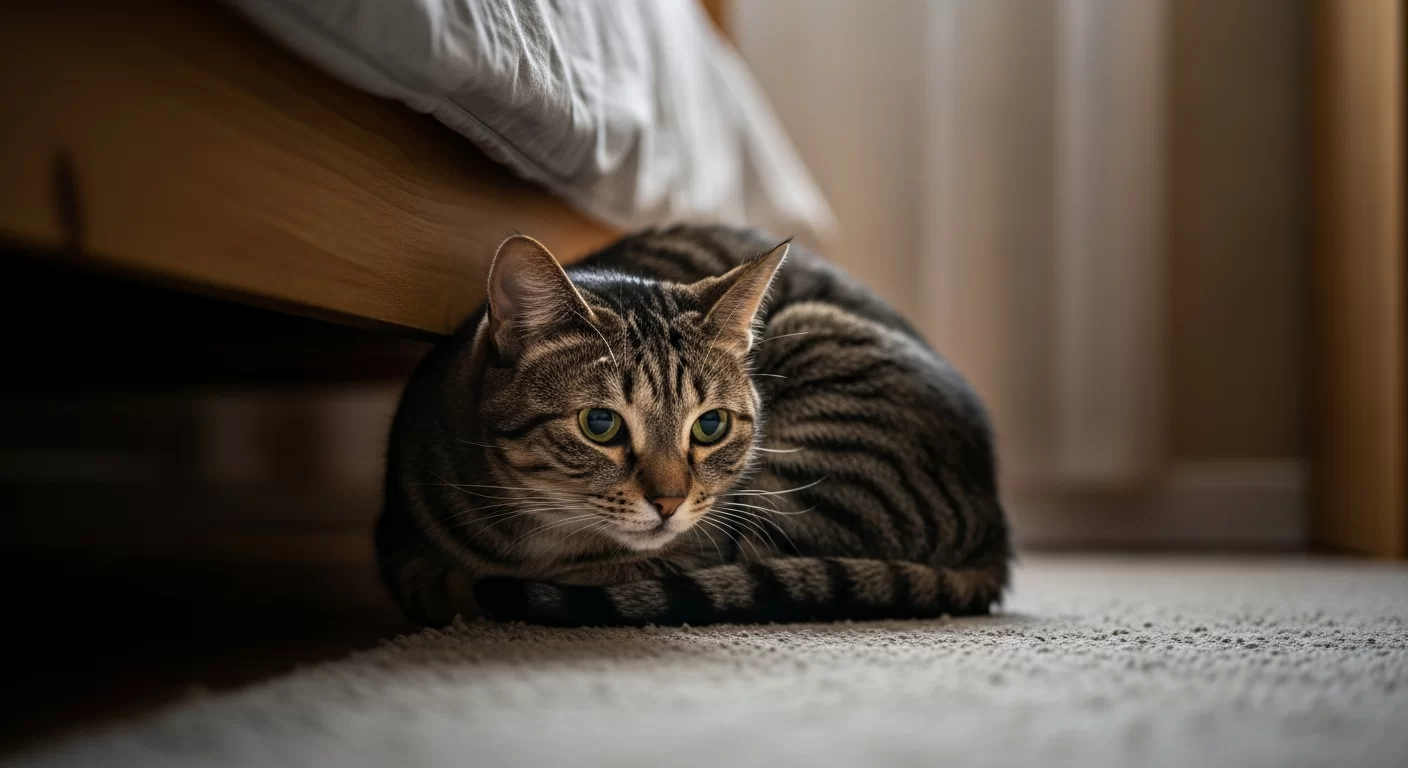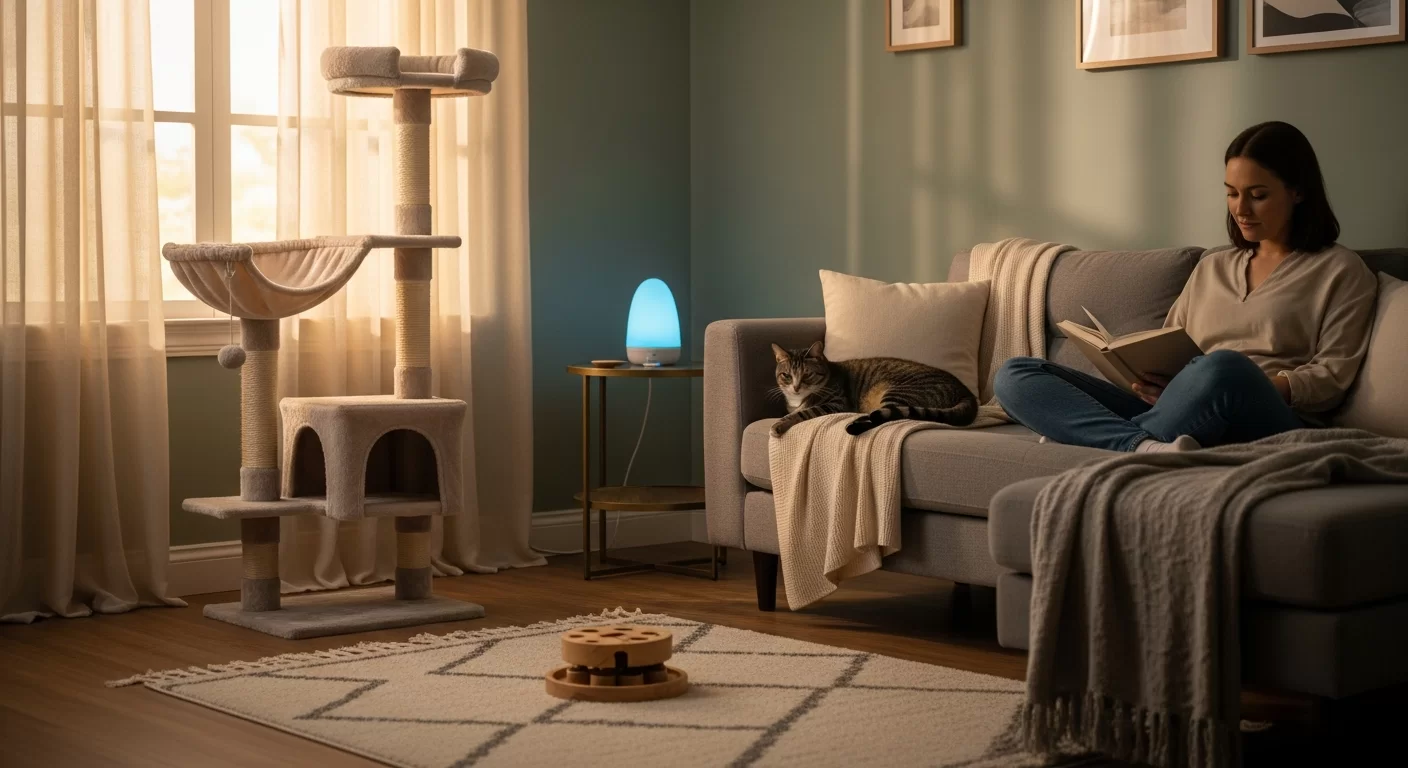
A nervous cat can make an entire home feel tense. Some cats hide when guests arrive, spray after a move, yowl at night, swat at other pets, or seem unsettled for reasons their people cannot easily identify. As more cat owners look for low-stress, non-sedating ways to support feline behavior, pheromone diffusers have become one of the most commonly recommended calming tools in homes, shelters, and veterinary clinics.
Cat pheromone diffusers are not magic, and they do not replace veterinary care or behavior modification. But for the right cat, in the right environment, they can help reduce stress-related behaviors and make a home feel more predictable. The best options depend on the cat’s behavior, the number of cats in the household, the room size, and whether the main issue is general anxiety, urine marking, scratching, hiding, or inter-cat conflict.
In This Article
• What Pheromone Diffusers Do for Nervous Cats
• Quick Answer: Are Pheromone Diffusers Worth Trying?
• Best Pheromone Diffusers for Nervous Cats
• How Cat Pheromone Diffusers Compare
• When a Pheromone Diffuser May Help Most
• Limitations Cat Owners Should Understand
• How to Use a Pheromone Diffuser Correctly
• When Nervous Behavior Needs a Veterinarian
• Other Ways to Help a Nervous Cat Feel Safer
What Pheromone Diffusers Do for Nervous Cats
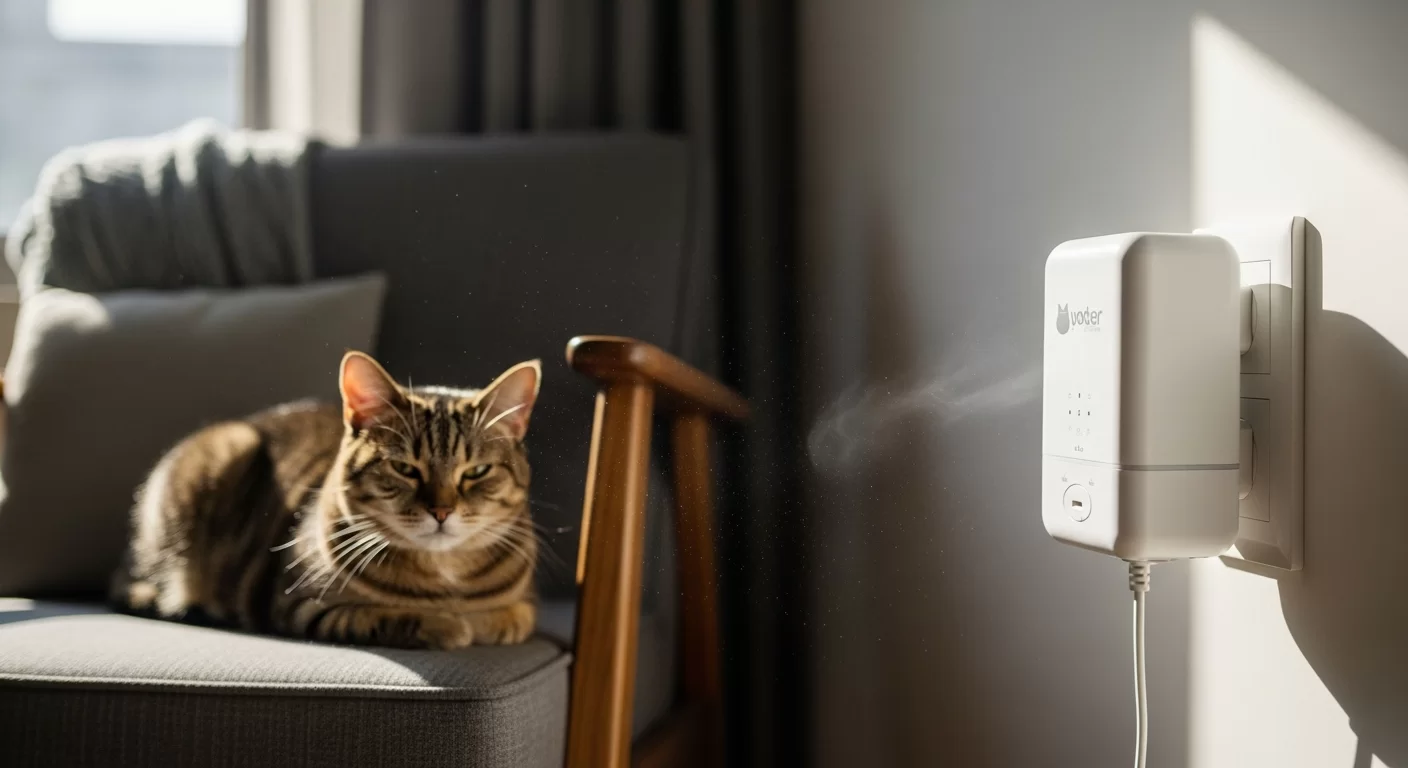
A cat pheromone diffuser is a plug-in device that releases synthetic versions of feline chemical signals into the air. These signals are designed to mimic natural pheromones cats use to communicate safety, familiarity, or social harmony.
The most familiar example is the feline facial pheromone. Cats deposit this scent when they rub their cheeks against furniture, doorways, and people. To a cat, those scent marks help a space feel known and secure. Synthetic facial pheromone products aim to recreate that “this place is safe” message.
Other diffusers target different feline signals. Some are designed for multi-cat homes and mimic calming maternal pheromones associated with social bonding. Others combine multiple pheromone types for cats showing several stress-related behaviors at once.
Pheromone diffusers do not sedate cats, change their personality, or work like anti-anxiety medication. They are environmental support tools. For many cats, their best use is alongside predictable routines, hiding spaces, vertical territory, appropriate litter boxes, and gentle behavior management.
Are Pheromone Diffusers Worth Trying?
Yes, pheromone diffusers are often worth trying for nervous cats, especially when stress is linked to environmental changes, mild anxiety, urine marking, scratching, hiding, or tension between cats. They are generally considered low-risk when used as directed and are widely recommended as part of feline behavior plans.
They are less likely to solve severe anxiety, aggression, medical pain, or litter box problems caused by illness. If a cat is suddenly hiding, urinating outside the box, growling, losing appetite, or acting dramatically different, a veterinary exam should come before assuming the problem is behavioral.
Most products need continuous use for several weeks before results are clear. Some cats appear calmer within days, while others show little or no change.
Best Pheromone Diffusers for Nervous Cats
The best pheromone diffuser depends on the behavior being addressed. Prices vary by retailer, refill size, and multipack availability, but most starter kits fall in the $25–$45 range, with monthly refills commonly costing $18–$35.
| Product | Best For | Typical Price Range | Notes |
|---|---|---|---|
| Feliway Classic Diffuser | General stress, hiding, urine marking, scratching | $25–$40 starter kit; $20–$30 refill | Mimics feline facial pheromone |
| Feliway Optimum Diffuser | Multiple stress signs, broader calming support | $30–$45 starter kit; $25–$35 refill | Uses a newer pheromone complex |
| Feliway MultiCat Diffuser | Tension between cats | $25–$40 starter kit; $20–$30 refill | Designed for multi-cat conflict |
| Comfort Zone Cat Calming Diffuser | Budget-friendly general calming | $20–$35 starter kit; $15–$25 refill | Widely available online and in pet stores |
| ThunderEase Cat Calming Diffuser | Stress, scratching, marking | $25–$40 starter kit; $20–$30 refill | Uses a synthetic facial pheromone approach |
Prices are commonly seen at major retailers such as Chewy, Amazon, Petco, PetSmart, Walmart, and manufacturer websites. Availability and pricing change frequently, so comparing refill costs is often more useful than comparing starter kit prices alone.
Feliway Classic
Feliway Classic is one of the best-known pheromone products for cats. It is designed to mimic the feline facial pheromone cats leave when they rub their cheeks on familiar objects.
This diffuser is most often used for cats who hide, scratch furniture, spray urine, or seem unsettled after a move, renovation, new furniture, travel, or household disruption. It is a common first choice for single-cat homes with general stress behaviors.
Feliway Optimum
Feliway Optimum is positioned as a broader calming formula and uses a pheromone complex rather than only one pheromone signal. It may be a good option when a cat shows several signs of stress at once, such as hiding, tension, overgrooming, marking, or reduced confidence.
It is usually more expensive than Feliway Classic, but some households choose it when previous calming products have offered only partial improvement.
Feliway MultiCat
Feliway MultiCat is intended for homes where cats are not getting along. It mimics a feline appeasing pheromone associated with harmony between cats.
This option may be useful when cats hiss, stare, block doorways, chase, swat, or avoid shared spaces. It is not a substitute for proper introductions, litter box management, or separating cats during serious conflict, but it may support a calmer social environment.
Comfort Zone Cat Calming Diffuser
Comfort Zone offers a more budget-conscious pheromone diffuser aimed at stress behaviors such as scratching and urine marking. It is widely available and often priced slightly lower than Feliway products, especially when refills are purchased in multipacks.
It can be a practical choice for cat owners who want to try a pheromone diffuser without committing to a higher monthly cost.
ThunderEase Cat Calming Diffuser
ThunderEase is another plug-in pheromone option for cats experiencing stress, marking, scratching, or household change. Like similar products, it is intended for continuous use in the room where the cat spends the most time.
It may appeal to households already familiar with ThunderEase or ThunderShirt calming products, though the same limitation applies: results vary by cat.
How Cat Pheromone Diffusers Compare
Pheromone diffusers work best when matched to the problem rather than chosen by brand alone.
| Cat Behavior | Best Diffuser Type to Consider | Also Needed |
|---|---|---|
| Hiding after a move | Facial pheromone or broad calming diffuser | Quiet room, familiar bedding, slow access to home |
| Urine spraying | Facial pheromone diffuser | Vet check, litter box review, cleaning with enzymatic cleaner |
| Scratching furniture | Facial pheromone diffuser | Scratching posts, placement near target areas |
| Fighting between cats | Multi-cat appeasing pheromone diffuser | Separate resources, reintroductions, vertical space |
| Fear of visitors | Calming diffuser in safe room | Controlled exposure, hiding places, no forced interaction |
| Nighttime restlessness | Diffuser may help if stress-related | Medical check if new, senior cat evaluation |
The American Association of Feline Practitioners and other feline behavior experts frequently emphasize environmental enrichment, resource distribution, and stress reduction in managing feline behavior. Pheromones fit into that larger approach; they are rarely the entire solution.
When a Pheromone Diffuser May Help Most
Pheromone diffusers are most useful for stress that has a clear environmental or social trigger. Examples include:
- Moving to a new home
- Introducing new furniture, smells, or renovations
- Bringing home a new baby or pet
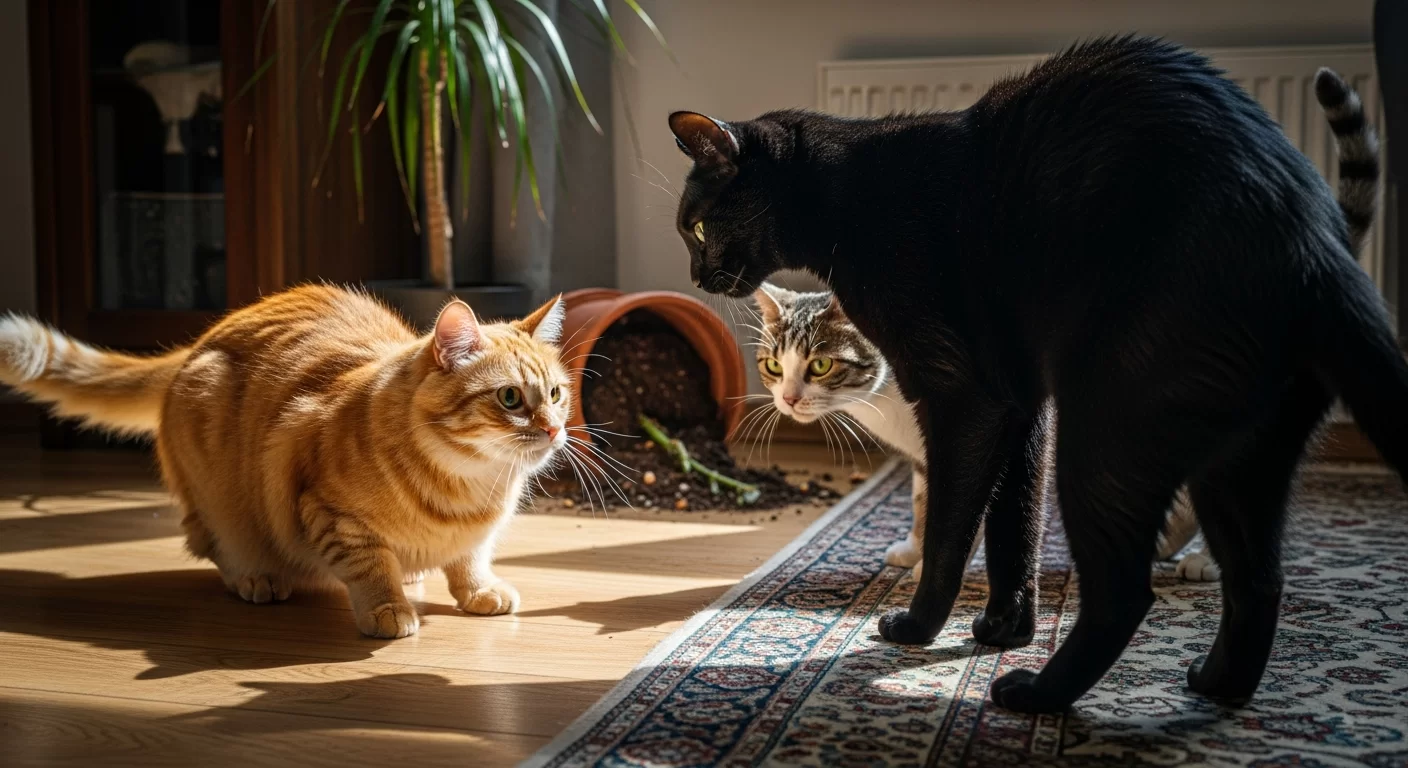
- Multi-cat tension without severe injury
- Mild urine marking linked to stress
- Furniture scratching in newly changed spaces
- Boarding, foster care, or post-adoption adjustment
- Nervousness after a veterinary visit or travel
Cats depend heavily on scent and territory. Even small changes can feel significant to them. A new couch, a visiting dog, construction noise, or the scent of an unfamiliar cat outside a window may unsettle a sensitive cat.
A diffuser may help make the environment feel more familiar while the cat adjusts. In many homes, the goal is not to make the cat instantly relaxed, but to lower the emotional temperature enough for better behavior choices to take hold.
Limitations Cat Owners Should Understand
Pheromone diffusers do not work for every cat. A lack of response does not mean the cat is being difficult or that the product is defective. Cats vary in temperament, stress history, medical status, and sensitivity to environmental cues.
The main limitations include:
- They may take two to four weeks to show visible results.
- They usually cover only one room or area.
- They must be used continuously, not just during stressful moments.
- They do not treat pain, urinary disease, hyperthyroidism, cognitive decline, or other medical problems.
- They may not resolve severe aggression or panic.
- They work best when combined with behavior and environmental changes.
A diffuser also cannot compensate for an environment that lacks basic feline needs. A nervous cat still needs clean litter boxes, safe resting places, scratching outlets, predictable feeding, and the ability to retreat without being pursued.
For multi-cat homes, pheromones cannot fix competition if the cats are forced to share too few resources. A common feline behavior guideline is to provide one litter box per cat, plus one extra, placed in different areas rather than lined up together.
How to Use a Pheromone Diffuser Correctly
Placement matters. A diffuser should be plugged into an open outlet in the area where the cat spends the most time or where the stress behavior occurs. It should not be hidden behind furniture, covered by curtains, or placed in a hallway the cat rarely uses.
For best results:
- Plug it in continuously, day and night.
- Use one diffuser per recommended square footage, often around 600–700 square feet depending on the product.
- Replace refills on schedule, usually about every 30 days.
- Keep the diffuser upright.
- Avoid placing it behind large furniture or near open windows.
- Use the correct product for the behavior: general calming, multi-cat conflict, or marking support.
For larger homes, one diffuser may not be enough. A nervous cat who sleeps upstairs but sprays near a downstairs patio door may need support in both areas, especially if outdoor cats are part of the stress trigger.
When Nervous Behavior Needs a Veterinarian
A cat who suddenly becomes anxious, irritable, clingy, withdrawn, or messy outside the litter box may be showing signs of illness. Cats often hide pain, and behavior changes can be one of the first visible clues.
Veterinary attention is especially important if nervous behavior appears with:
- Urinating outside the litter box
- Straining to urinate
- Blood in urine
- Loss of appetite
- Weight loss
- Excessive grooming or bald patches
- Sudden aggression
- Hiding for long periods
- Vocalizing at night, especially in older cats
- Reduced mobility or reluctance to jump
Urinary issues deserve particular caution. A male cat who strains to urinate or produces little to no urine may have a life-threatening blockage and needs emergency veterinary care.
Organizations such as the Cornell Feline Health Center and veterinary behavior specialists consistently note that medical conditions and behavioral signs can overlap. A calming product may reduce stress, but it should not delay diagnosis when symptoms point to pain or disease.
Other Ways to Help a Nervous Cat Feel Safer
The best calming plan for a nervous cat usually combines scent support with environmental changes. Cats feel safer when they have control over distance, hiding, height, and routine.
Helpful strategies include:
- Creating a quiet safe room with food, water, litter, bedding, and hiding places
- Offering vertical territory such as cat trees, shelves, or window perches
- Keeping feeding, play, and sleep routines predictable
- Using interactive play to build confidence
- Providing multiple litter boxes in low-traffic areas
- Adding scratching posts near resting spots and problem areas
- Avoiding forced handling or forced introductions
- Blocking views of outdoor cats if they trigger spraying or agitation
For cats with ongoing anxiety, a veterinarian may recommend a referral to a board-certified veterinary behaviorist or a qualified feline behavior consultant. In some cases, prescription anti-anxiety medication, pain treatment, or a structured behavior plan is more appropriate than over-the-counter calming products alone.
Pheromone diffusers can be a valuable part of life with a nervous cat, particularly when stress is mild to moderate and connected to territory, change, or social tension. The strongest results usually come when the diffuser is used consistently and paired with a home setup that respects feline instincts. A cat who has places to hide, climb, scratch, retreat, and predict what happens next is already in a better position to relax. For many households, the right diffuser does not transform behavior overnight, but it can help create the calmer background a sensitive cat needs to feel at home again.