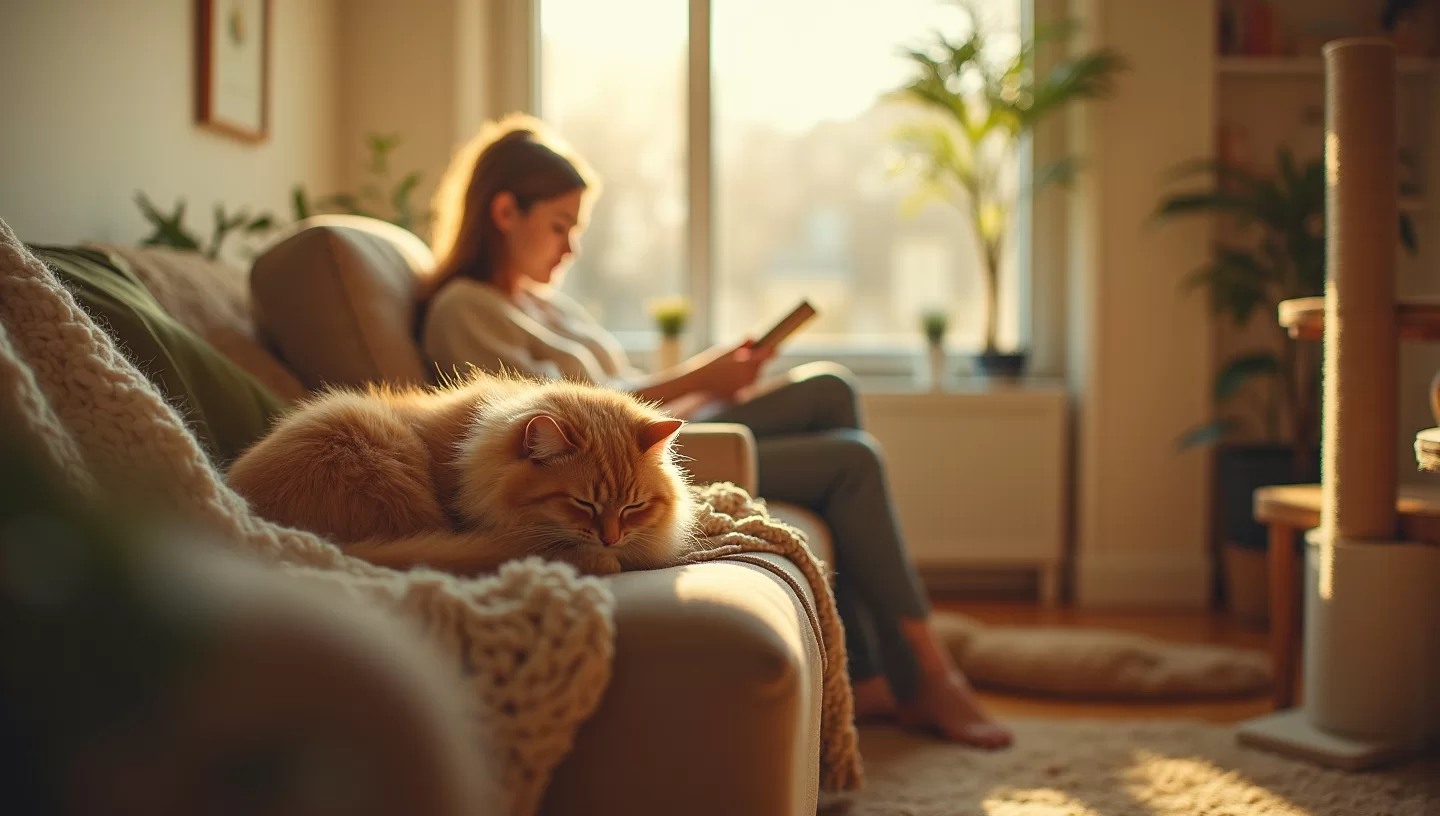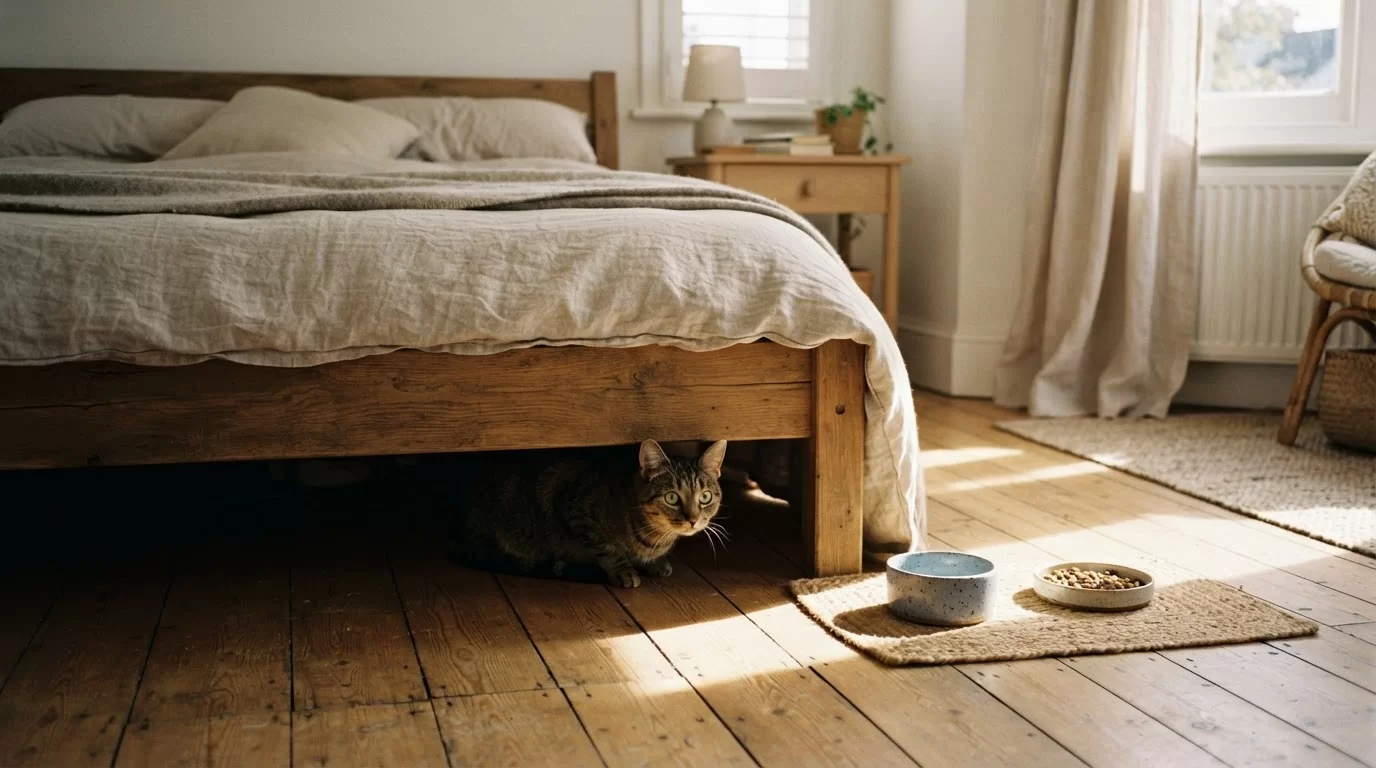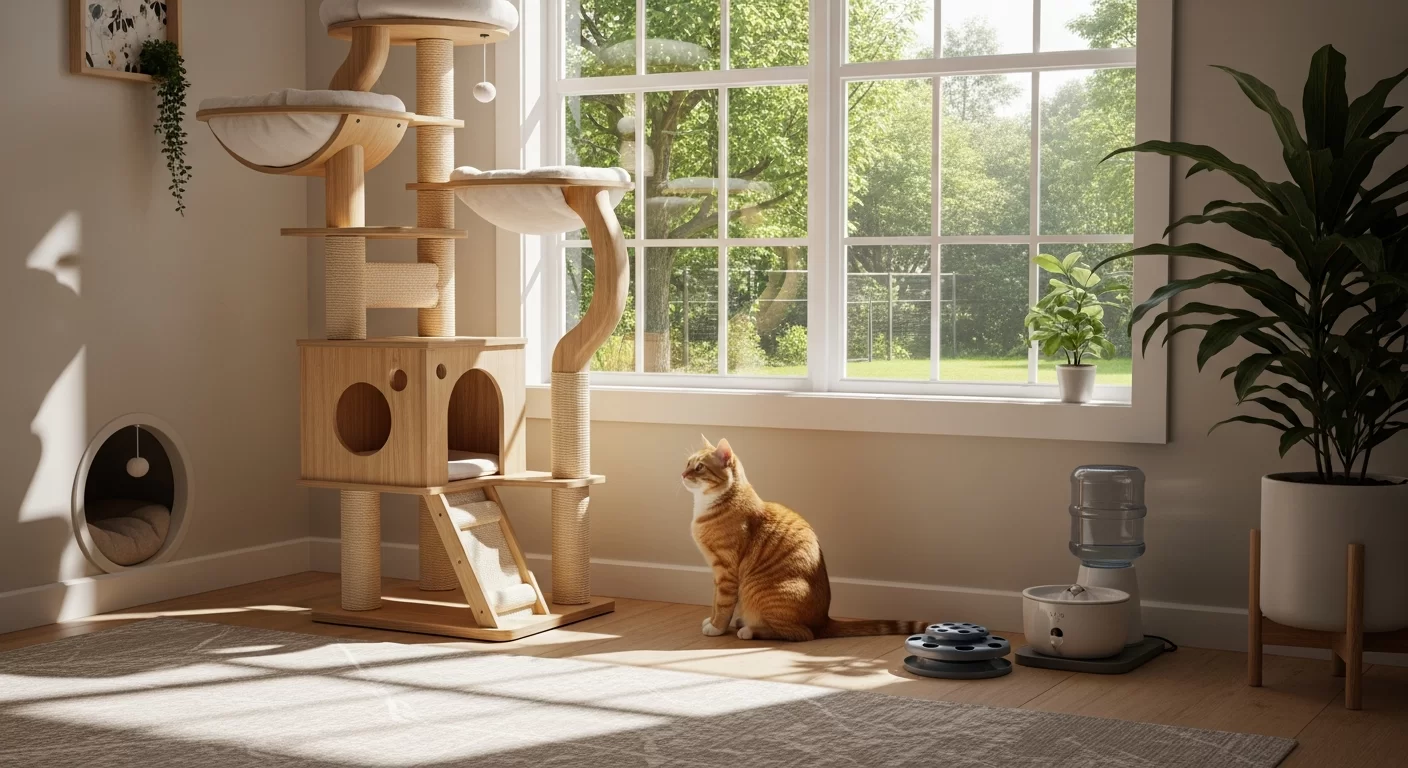
A chronically stressed cat is not “being dramatic,” stubborn, or spiteful. Anxiety changes how a cat interprets ordinary life: a delivery at the door, a new litter box location, a visiting dog, a noisy renovation, or even a predictable absence can feel threatening. Because cats are both predators and prey animals, they often hide distress behind stillness, withdrawal, overgrooming, appetite changes, or litter box avoidance rather than obvious panic.
Feline anxiety disorders matter because long-term stress can affect welfare, behavior, human–cat relationships, and physical health. Veterinary behavior specialists and feline medicine organizations increasingly recognize that emotional health is part of whole-cat care, not an optional extra. The best outcomes usually come from a compassionate combination of veterinary assessment, environmental design, predictable routines, enrichment, behavior modification, and, when needed, medication.
This guide explains how feline anxiety develops, how to recognize it, what conditions can mimic it, and what cat owners can do at home to help a chronically stressed cat feel safer. It also addresses bored indoor cats, safe-space creation, treatment choices, common myths, and long-term care planning.
In This Article
- What Feline Anxiety Disorders Are
- How to Recognize Anxiety and Chronic Stress in Cats
- Common Causes and Risk Factors for Anxious Cats
- Why a Veterinary Exam Comes First
- Creating a Safe Space for an Anxious Cat
- Environmental Changes for a Bored or Understimulated Cat
- Behavior Modification: Helping Cats Feel Safe Without Forcing Them
- Treatment Options: Pheromones, Supplements, Medication, and Professional Support
- Multi-Cat Households, Separation Anxiety, and Special Situations
- Monitoring Progress and Knowing When Anxiety Is Improving
- Common Myths and Mistakes About Feline Anxiety
What Feline Anxiety Disorders Are
Feline anxiety is a persistent or recurring state of fear, apprehension, or distress triggered by perceived threats, uncertainty, separation, social conflict, environmental change, or lack of control. A cat may be anxious even when no obvious danger exists.
Normal fear is adaptive. A cat that hides during fireworks or startles when a pan falls is responding to a sudden threat. Anxiety becomes a welfare concern when the response is frequent, prolonged, excessive, or disruptive to daily life.
A chronically stressed cat may live in a near-constant state of vigilance. Instead of resting deeply, exploring, playing, grooming normally, and interacting on their own terms, the cat may scan the environment, hide, avoid certain rooms, become irritable, or develop stress-linked behaviors.
The American Association of Feline Practitioners and International Society of Feline Medicine have emphasized the importance of meeting feline environmental needs, including safe spaces, multiple resources, play, predictable routines, and respectful human interaction. These principles are central to anxiety prevention and recovery.
What is feline anxiety disorder?
A feline anxiety disorder is a pattern of ongoing distress that affects a cat’s behavior, routine, health, or relationships. It may appear as hiding, aggression, overgrooming, inappropriate urination, reduced appetite, clinginess, restlessness, or fear of specific triggers such as visitors, travel, other pets, or being left alone.
Feline anxiety is not one single condition. It may involve:
- Generalized anxiety or hypervigilance
- Fear-related aggression
- Noise sensitivity
- Separation-related distress
- Social stress in multi-cat homes
- Anxiety after trauma, rehoming, or shelter confinement
- Stress linked to chronic pain, illness, or cognitive decline
- Compulsive behaviors, such as excessive licking, in some cats
Anxiety also overlaps with frustration and boredom. A cat that has no meaningful outlet for stalking, climbing, scratching, exploring, or problem-solving may become restless, destructive, vocal, or withdrawn. In many indoor cats, stress relief begins not with “calming” the cat, but with giving the cat a more cat-like life.
How to Recognize Anxiety and Chronic Stress in Cats
Cats rarely announce emotional distress in obvious ways. Many anxious cats look “quiet,” “independent,” or “low-maintenance” while spending most of their time avoiding the household.
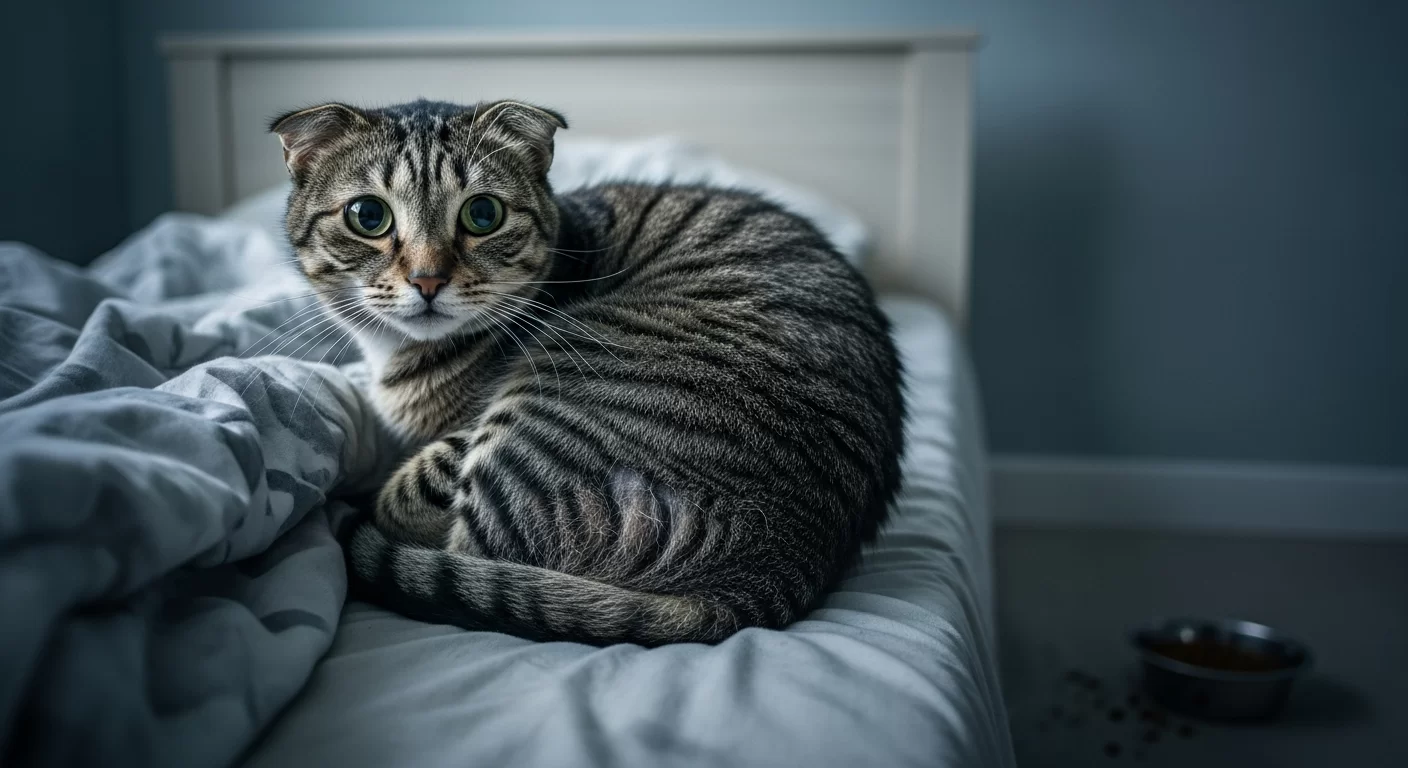
The Cornell Feline Health Center notes that changes in appetite, grooming, litter box habits, activity, and social behavior can be early signs that a cat needs attention. Because many medical problems and stress behaviors look similar, patterns matter more than a single incident.
| Sign | What It May Look Like | Possible Meaning |
|---|---|---|
| Hiding more than usual | Under beds, closets, behind furniture | Fear, pain, illness, social stress |
| Overgrooming | Bald patches, irritated skin, frequent licking | Anxiety, allergies, parasites, pain |
| Litter box avoidance | Urinating outside the box, spraying, defecating elsewhere | Stress, urinary disease, box aversion, conflict |
| Aggression | Swatting, biting, hissing, ambushing | Fear, pain, overstimulation, redirected aggression |
| Reduced appetite | Skipping meals, eating only at night | Stress, nausea, dental disease, illness |
| Excessive vocalization | Yowling, crying at night, calling when alone | Anxiety, cognitive changes, hyperthyroidism, pain |
| Restlessness | Pacing, inability to settle, frequent scanning | Hypervigilance, frustration, discomfort |
| Clinginess | Following constantly, distress when separated | Separation-related anxiety, insecurity |
| Freezing or crouching | Low posture, tucked tail, dilated pupils | Fear or threat perception |
| Destructive behavior | Scratching furniture, knocking items down | Boredom, stress, territorial communication |
Body language offers important clues. An anxious cat may flatten the ears, tuck the tail, crouch low, widen the pupils, flick the tail tip, avoid eye contact, or turn the body away. Some cats purr when stressed, so purring alone should not be assumed to mean contentment.
Expert Insight:
A cat’s stress signals are often context-dependent. A cat that bites during petting may not be “mean”; the behavior may reflect overstimulation, pain, or previous experiences where subtle warning signals were ignored. Respecting early signals—turning away, tail twitching, skin rippling, ear rotation—can prevent escalation.
Acute stress vs. chronic stress
| Type of Stress | Typical Trigger | Duration | Example |
|---|---|---|---|
| Acute stress | Sudden noise, vet visit, unfamiliar visitor | Minutes to hours | Cat hides during a thunderstorm |
| Chronic stress | Ongoing conflict, poor environment, pain, repeated unpredictability | Weeks to months or longer | Cat hides daily because another cat blocks access to food |
Chronic stress is particularly concerning because it can become the cat’s baseline. Over time, owners may stop noticing that the cat rarely plays, avoids rooms, or only eats when the house is asleep.
Common Causes and Risk Factors for Anxious Cats
Common anxiety triggers include:
- Moving to a new home
- Adoption, rehoming, or shelter stress
- New baby, roommate, partner, dog, or cat
- Loud noises, construction, storms, fireworks, or traffic
- Lack of hiding places or vertical territory
- Conflict with another cat
- Unpredictable feeding or cleaning routines
- Litter box changes
- Painful medical conditions
- Punishment-based training
- Rough handling or forced affection
- Understimulation in an indoor-only environment
- Separation from a bonded person
- Cognitive changes in senior cats
The ASPCA Cat Care Guide emphasizes that cats need appropriate scratching surfaces, litter box access, mental stimulation, and respectful handling. When these needs are not met, stress-related behaviors can develop.
Early socialization and life history
Kittens have sensitive developmental periods when positive exposure to people, handling, household sounds, and safe novelty can shape adult resilience. Cats with limited early socialization may be more fearful of unfamiliar people, carriers, vet visits, or household changes.
Rescue cats and former outdoor cats may carry unknown histories. A cat that hides for weeks after adoption is not necessarily “unfriendly.” The cat may be assessing safety. Forcing rapid bonding can slow progress.
Indoor-only living and frustration
Indoor life protects cats from vehicles, predators, infectious disease exposure, and many injuries. However, indoor cats still retain strong natural behaviors: hunting, scent marking, climbing, scratching, hiding, surveying territory, and choosing when to interact.
Anxiety can increase when a cat has safety but not agency. A healthy indoor environment should provide both protection and choice.
Social stress between cats
Multi-cat tension is one of the most underrecognized causes of feline anxiety. Cats may not fight openly. Instead, one cat may block hallways, guard litter boxes, stare from across the room, occupy prime resting spaces, or quietly intimidate another cat.
Signs of social conflict include:
- One cat waits to eat until another leaves
- Litter box accidents near doors, corners, or guarded areas
- Chasing that does not look playful or reciprocal
- A cat spends most time on high surfaces or hidden
- Tension around doorways, stairs, food bowls, or litter boxes
- Frequent staring, stalking, or blocking
The problem is often not the number of cats alone, but whether each cat has secure access to essential resources.
Why a Veterinary Exam Comes First
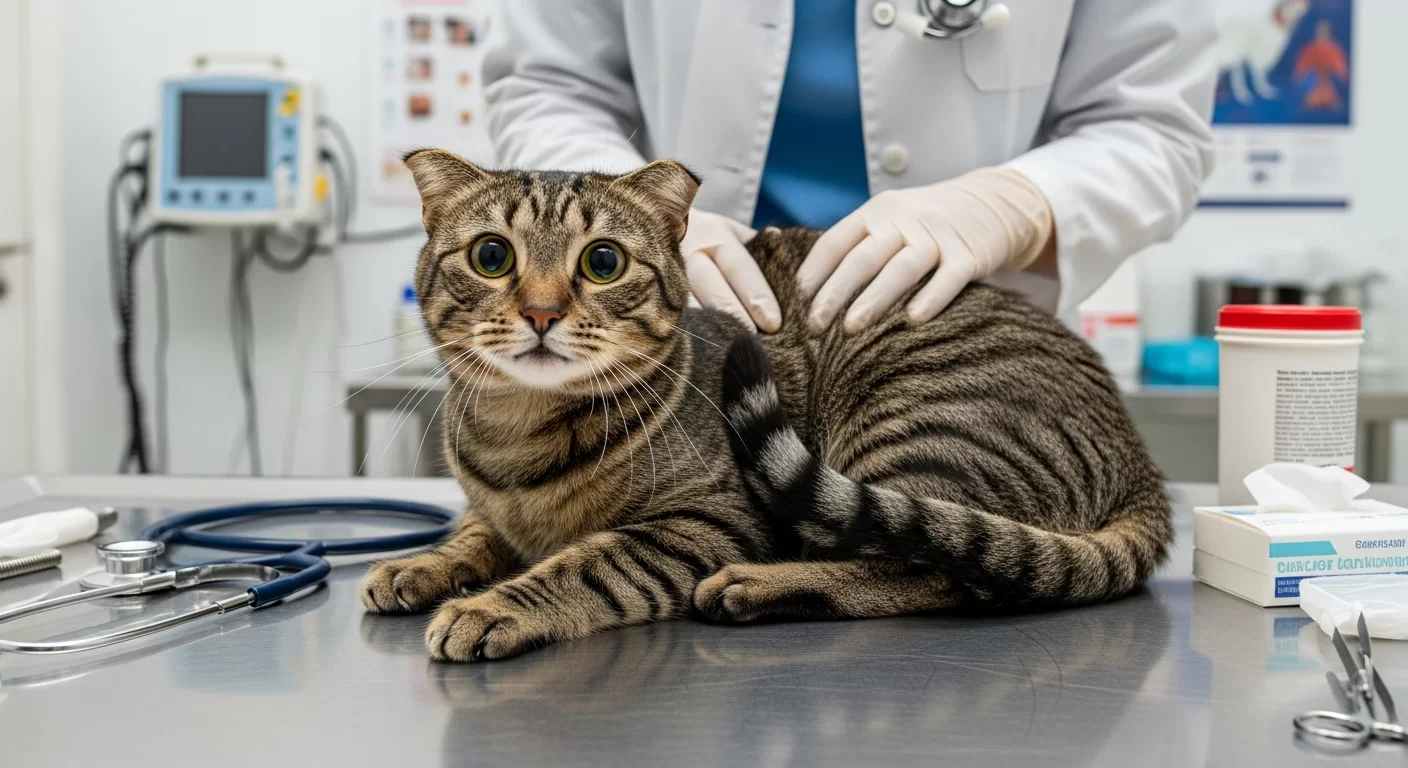
Anxiety should never be diagnosed by behavior alone without considering medical causes. Many conditions can cause hiding, aggression, vocalization, house soiling, appetite changes, overgrooming, or restlessness.
The American Veterinary Medical Association encourages veterinary evaluation when behavior changes occur, especially if the change is sudden, severe, or associated with physical symptoms.
Medical conditions that may mimic or worsen anxiety include:
- Feline lower urinary tract disease
- Urinary tract infection or bladder inflammation
- Arthritis or chronic pain
- Dental disease
- Hyperthyroidism
- Hypertension
- Gastrointestinal disease
- Skin allergies or parasites
- Neurologic disorders
- Sensory decline in older cats
- Feline cognitive dysfunction
- Nausea or appetite-related illness
Research on stress-sensitive cats, including work associated with feline interstitial cystitis and “Pandora syndrome,” has explored the relationship between stress, environment, and urinary tract signs. The Merck Veterinary Manual also describes how behavior and medical disorders can overlap in cats.
When should an anxious cat see a veterinarian?
A cat should see a veterinarian if anxiety signs are new, worsening, severe, linked to litter box changes, associated with appetite loss, accompanied by aggression, or causing self-injury such as overgrooming wounds. Male cats straining to urinate need emergency care because urinary blockage can be life-threatening.
What to prepare for the appointment
A useful behavior history helps the veterinarian identify patterns. Owners can document:
- When the behavior began
- Any household changes before onset
- Food, water, litter box, and sleeping routines
- Video of concerning behavior
- Frequency and duration of episodes
- Interactions with other pets
- Grooming, appetite, and elimination changes
- Current medications or supplements
- Prior trauma, adoption history, or major transitions
A veterinarian may recommend physical examination, urinalysis, bloodwork, pain assessment, parasite control, dietary review, or referral to a veterinary behaviorist.
Creating a Safe Space for an Anxious Cat
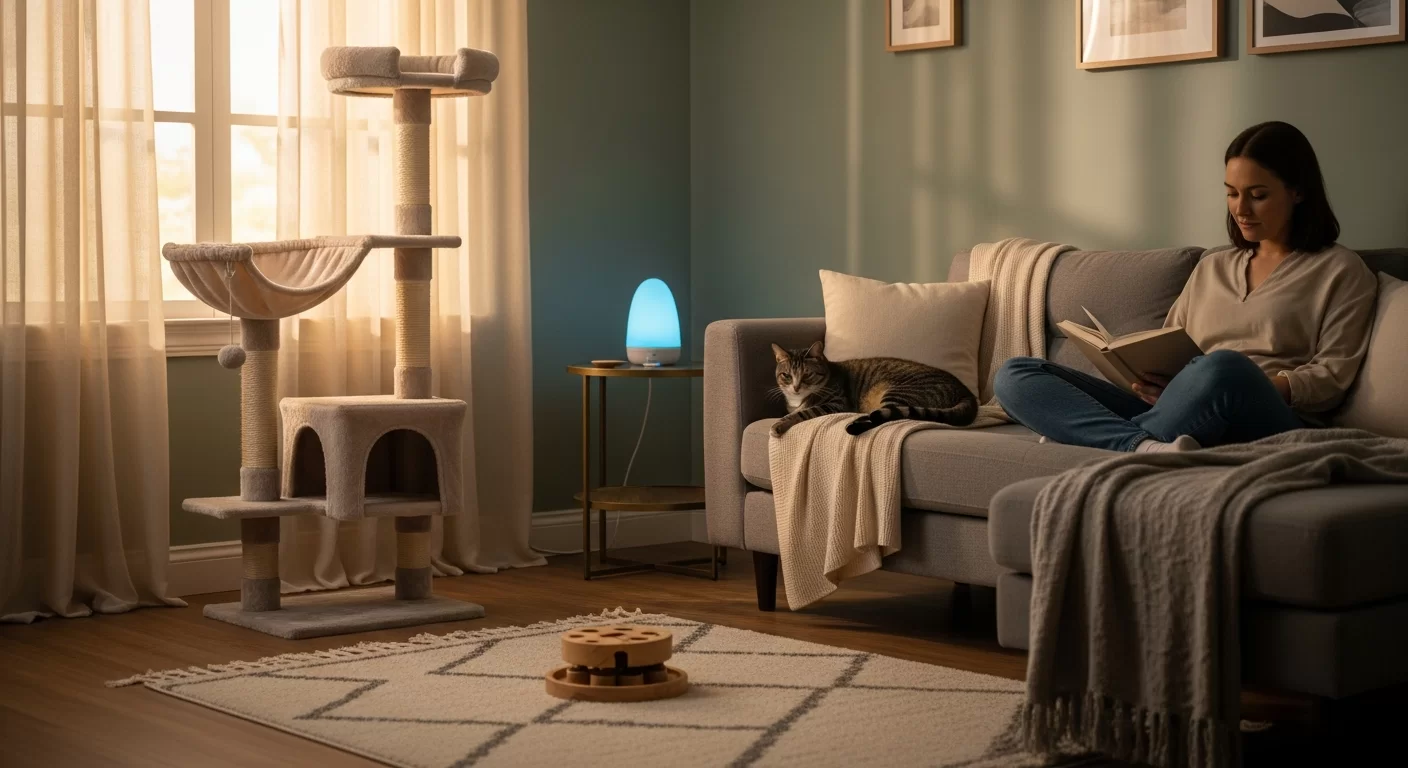
A safe space is one of the most effective non-medical tools for helping a chronically stressed cat. It gives the cat control over exposure, rest, retreat, and recovery. For a fearful cat, safety is not just comfort; it is the foundation for learning.
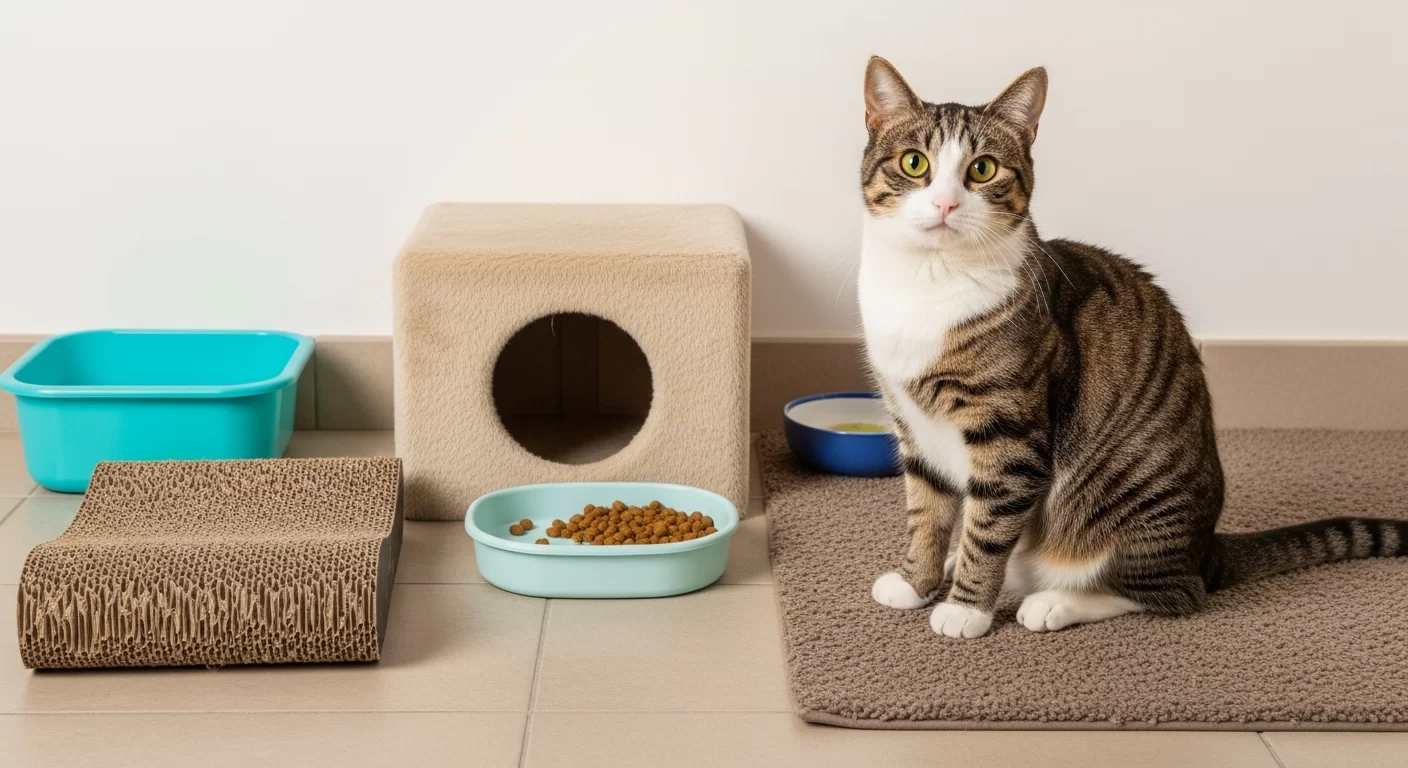
A feline safe space is a quiet, predictable area where a cat has secure access to resting places, hiding options, food, water, litter, scratching surfaces, and familiar scent without being chased, trapped, handled, or disturbed.
What specific steps should the owner take to create a safe space for the cat?
A safe space works best when it is deliberate rather than improvised. The following steps create a strong foundation:
- Choose a low-traffic room or area: A bedroom, office, quiet den, or enclosed spare room is usually better than a hallway, laundry room, or busy kitchen. Avoid spaces with unpredictable noise, such as rooms beside loud appliances.
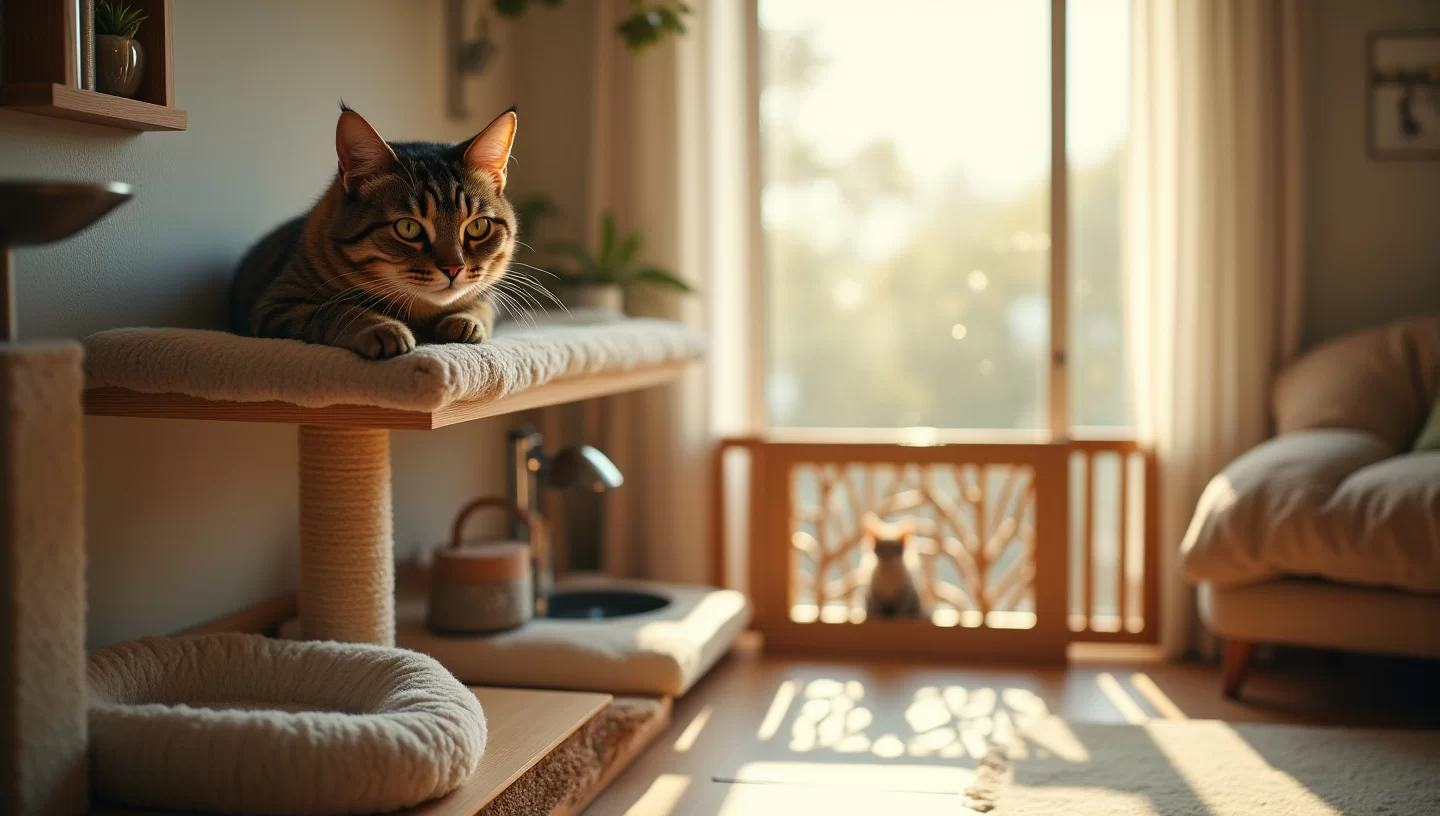
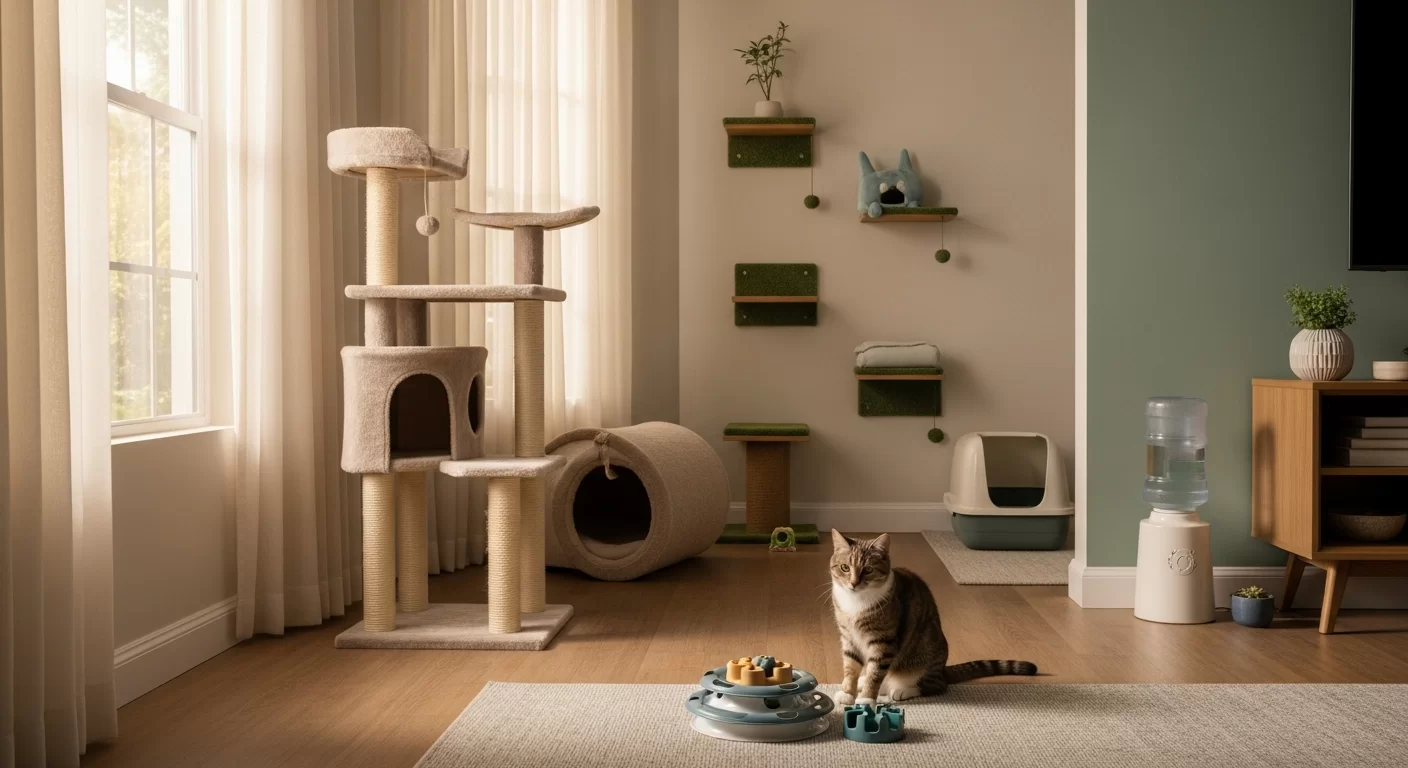
- Provide both hiding and observation options: Use a covered cat bed, cardboard box, carrier with bedding, cube bed, or open closet nook. Add vertical choices such as a cat tree, shelf, or sturdy window perch so the cat can watch from above.
- Place essential resources inside the space: Include food, water, litter box, scratching post, soft bedding, and toys. Food and water should not be directly beside the litter box.
- Use familiar scent:Add bedding, blankets, or towels that already smell like the cat. Avoid strong cleaners, air fresheners, scented candles, or essential oils, which can be irritating or unsafe for cats.
- Make the entrance predictable:The cat should be able to enter and leave without being cornered. In multi-pet homes, use baby gates, microchip cat doors, or closed-door decompression periods when needed.
- Reduce noise and visual stress: Close blinds if outdoor cats are triggering distress. Use soft background sound if household noise is unavoidable. Keep children, dogs, and guests from entering without supervision.
- Respect the space as the cat’s retreat: No pulling the cat out, no surprise handling, no forced introductions, and no punishment. The safe space must remain reliably safe.
- Build positive associations: Deliver meals, treats, gentle play, and calm interaction near or inside the space, depending on the cat’s comfort level.
- Clean with scent continuity in mind: Keep the area hygienic, but avoid removing all familiar scent at once. Wash bedding in rotation rather than stripping the entire space.
- Expand access gradually: Once the cat is eating, resting, grooming, and exploring comfortably, allow short, controlled access to more areas of the home.
| Safe-Space Item | Purpose | Typical Price Range |
|---|---|---|
| Covered cat bed or hideaway | Concealment and rest | $20–$60 |
| Cardboard box with blanket | Low-cost hiding option | Free–$15 |
| Cat tree or tower | Vertical territory | $50–$200+ |
| Scratching post | Stress relief and scent marking | $20–$80 |
| Feliway-style pheromone diffuser | Environmental calming support | $25–$40 starter kit; $15–$30 refills |
| Baby gate or pet gate | Controlled separation | $30–$100 |
| Microchip cat door | Cat-only access | $100–$200+ |
Products such as Feliway diffusers on Chewy or Amazon, basic scratching posts from Petco or Walmart, and sturdy cat trees from manufacturer sites can be useful, but layout matters more than brand. A $2 cardboard box in the right location can outperform an expensive bed placed in a noisy room.
Expert Insight:
For anxious cats, access and escape routes are as important as objects. A beautiful room can still feel unsafe if a dog can rush the doorway or another cat can trap the anxious cat inside.
Environmental Changes for a Bored or Understimulated Cat
Boredom is not harmless for cats. A bored indoor cat may become anxious, depressed, irritable, destructive, clingy, or excessively vocal. Some cats respond to understimulation by sleeping more; others demand attention at night or create their own “enrichment” by knocking objects down, chewing plants, or chasing housemates.
What environmental changes are suggested for a bored cat?
A bored cat needs a more stimulating environment that supports natural feline behaviors. Helpful changes include:
- Daily interactive play - using wand toys, feather teasers, or prey-like toys
- Food puzzles - make eating more mentally engaging
- Window perches - for bird, squirrel, and outdoor activity watching
- Vertical territory - such as cat trees, shelves, and climbing routes
- Scratching variety - including vertical posts, horizontal scratchers, cardboard, sisal, and carpet textures
- Toy rotation - so only a few toys are available at a time
- Scent enrichment - such as catnip, silvervine, or valerian for responsive cats
- Foraging opportunities - using hidden treats or kibble trails
- Training sessions - with clicker training or target training
- Safe outdoor access - through a catio, enclosed balcony, stroller, or harness training for suitable cats
- Predictable social interaction - based on the cat’s preferred style of contact
The AAFP/ISFM environmental needs guidelines describe five core pillars of a healthy feline environment: safe place, multiple and separated resources, play and predatory behavior, positive human interaction, and respect for the cat’s sense of smell. These principles are widely used in feline behavior medicine.
| Enrichment Type | Best For | Examples | Typical Cost |
|---|---|---|---|
| Interactive prey play | High-energy cats, anxious cats needing confidence | Wand toys, feather teasers | $5–$25 |
| Puzzle feeding | Food-motivated cats, overweight indoor cats | Treat balls, puzzle boards, slow feeders | $10–$35 |
| Vertical climbing | Timid cats, multi-cat homes | Cat trees, wall shelves | $50–$250+ |
| Scratching enrichment | Stress marking, nail maintenance | Sisal posts, cardboard loungers | $10–$80 |
| Window enrichment | Curious indoor cats | Window perches, bird feeders outside window | $20–$60 |
| Scent enrichment | Cats responsive to plant attractants | Catnip, silvervine sticks | $5–$20 |
| Outdoor containment | Cats craving fresh air | Catios, mesh tents, harness systems | $40–$1,000+ |
How much play does an anxious cat need?
Many cats benefit from two or more short play sessions daily, often 5–15 minutes each. Quality matters more than duration. The best play mimics hunting: stalk, chase, pounce, catch, then eat or receive a treat.
A common mistake is leaving toys scattered on the floor and assuming enrichment is complete. Cats are stimulated by movement, novelty, scent, and interaction. A wand toy that “acts like prey” is usually more engaging than a motionless plush mouse.
Behavior Modification: Helping Cats Feel Safe Without Forcing Them
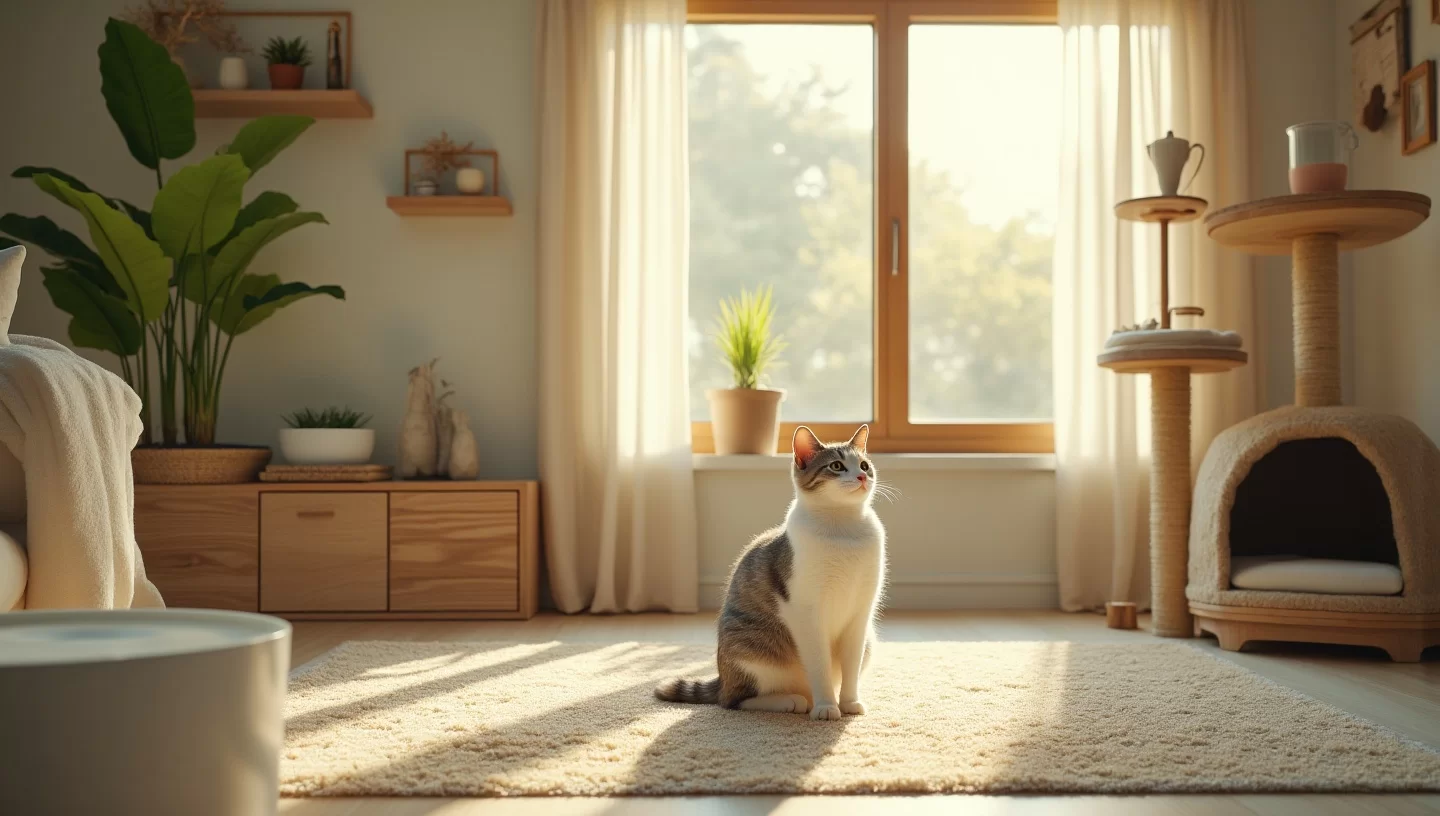
Behavior modification helps a cat form new emotional associations with people, places, sounds, routines, and triggers. The goal is not to suppress fear, but to reduce threat perception.
Two important techniques are commonly used:
Desensitization: Gradual exposure to a trigger at a level low enough that the cat remains calm.
Counterconditioning: Pairing the trigger with something pleasant, such as food, play, or gentle interaction, so the cat begins to feel differently about it.
For example, a cat afraid of the carrier may first see the carrier placed open in the room with soft bedding. Later, treats appear near the carrier, then inside it. The door remains open until the cat is comfortable. Eventually, the door closes briefly and reopens before the cat panics. This process can take days, weeks, or months.
A practical behavior-change framework
| Step | What It Means | Example |
|---|---|---|
| Identify the trigger | What causes fear or stress? | Doorbell, dog, carrier, visitor |
| Find the threshold | How close or intense can it be before panic? | Visitor voice heard from another room |
| Reduce intensity | Make the trigger easier | Lower volume, more distance, shorter duration |
| Pair with reward | Add food, play, or comfort | Treats appear when doorbell sound plays softly |
| Stop before distress | End while cat is still coping | Session lasts 30 seconds, not 10 minutes |
| Repeat gradually | Build tolerance over time | Increase volume or proximity slowly |
Expert Insight:
A cat that refuses treats is often over threshold. Fear suppresses appetite. The solution is not a better treat alone, but more distance, lower intensity, or a shorter session.
Handling and consent
Cats benefit from choice-based interaction. Many prefer petting around the cheeks, chin, and head rather than full-body stroking or belly contact. A simple consent test can help: pet briefly, stop, and see whether the cat leans back in or moves away.
Avoid:
- Pulling cats from hiding
- Holding a struggling cat
- Punishing hissing or swatting
- Forcing introductions
- Flooding the cat with scary stimuli
- Using spray bottles, yelling, or startling devices
Punishment may interrupt behavior in the moment, but it often increases anxiety and damages trust. The ASPCA and veterinary behavior resources generally recommend positive, humane approaches over punishment-based methods.
Treatment Options: Pheromones, Supplements, Medication, and Professional Support
Treatment for feline anxiety is most effective when matched to severity. Mild stress may improve with environmental changes and routine. Moderate to severe anxiety often needs a broader plan, especially when the cat is not eating, is injuring itself, is aggressive, or cannot relax.
| Option | Best Use | Pros | Limits |
|---|---|---|---|
| Environmental modification | Foundation for nearly all anxious cats | Low risk, improves welfare | Requires consistency |
| Pheromone products | Moving, conflict, general stress support | Easy to use, non-sedating | Not a complete treatment for severe anxiety |
| Nutraceuticals | Mild stress support | Often accessible | Evidence varies by ingredient |
| Prescription medication | Moderate to severe anxiety, compulsive behavior, panic | Can significantly improve quality of life | Requires veterinary supervision |
| Veterinary behaviorist | Complex, dangerous, or chronic cases | Highest level of behavior expertise | Availability and cost vary |
| Certified cat behavior consultant | Environmental and behavior planning | Practical home-based support | Should not replace veterinary diagnosis |
Pheromones
Synthetic feline facial pheromone products, such as Feliway Classic, are designed to mimic calming scent signals cats deposit when rubbing their cheeks on familiar objects. Multi-cat pheromone products are marketed for social tension. These products are available through retailers such as Chewy, Petco, Amazon, and veterinary clinics.
Typical costs:
- Diffuser starter kit: about $25–$40
- Monthly refill: about $15–$30
- Spray: about $15–$30
Pheromones may help some cats, especially during transitions, but they are not a substitute for resource distribution, safe space, play, medical care, or behavior modification.
Supplements and calming diets
Some calming supplements include ingredients such as L-theanine, alpha-casozepine, tryptophan, or milk protein derivatives. Certain veterinary diets are formulated for stress support. Evidence varies, and supplements can interact with medical conditions or medications, so veterinary guidance is recommended.
Prescription medication
For cats with severe or persistent anxiety, medication can be humane and appropriate. Commonly used veterinary behavior medications may include fluoxetine, clomipramine, gabapentin for situational stress, trazodone in selected cases, or other medications depending on the diagnosis. These should only be used under veterinary supervision.
Medication is not a “last resort” in the sense of failure. For some cats, anxiety is so intense that learning cannot occur until the nervous system is calmer. Medication can create enough emotional stability for environmental and behavior plans to work.
Do anxious cats always need medication?
No. Many cats improve with environmental changes, predictable routines, enrichment, and behavior modification. Medication becomes more important when anxiety is severe, long-lasting, dangerous, medically harmful, or preventing normal eating, resting, elimination, or social behavior.
Professional help
A veterinarian should be the first point of contact for sudden or severe behavior changes. For complex cases, a board-certified veterinary behaviorist can diagnose and treat behavioral disorders with both medical and behavioral tools. The American College of Veterinary Behaviorists provides a directory for locating specialists.
A qualified cat behavior consultant can also be valuable, particularly for home layout, introductions, enrichment, and routine planning. The best outcomes often come from collaboration between the primary veterinarian, behavior professional, and household.
Multi-Cat Households, Separation Anxiety, and Special Situations
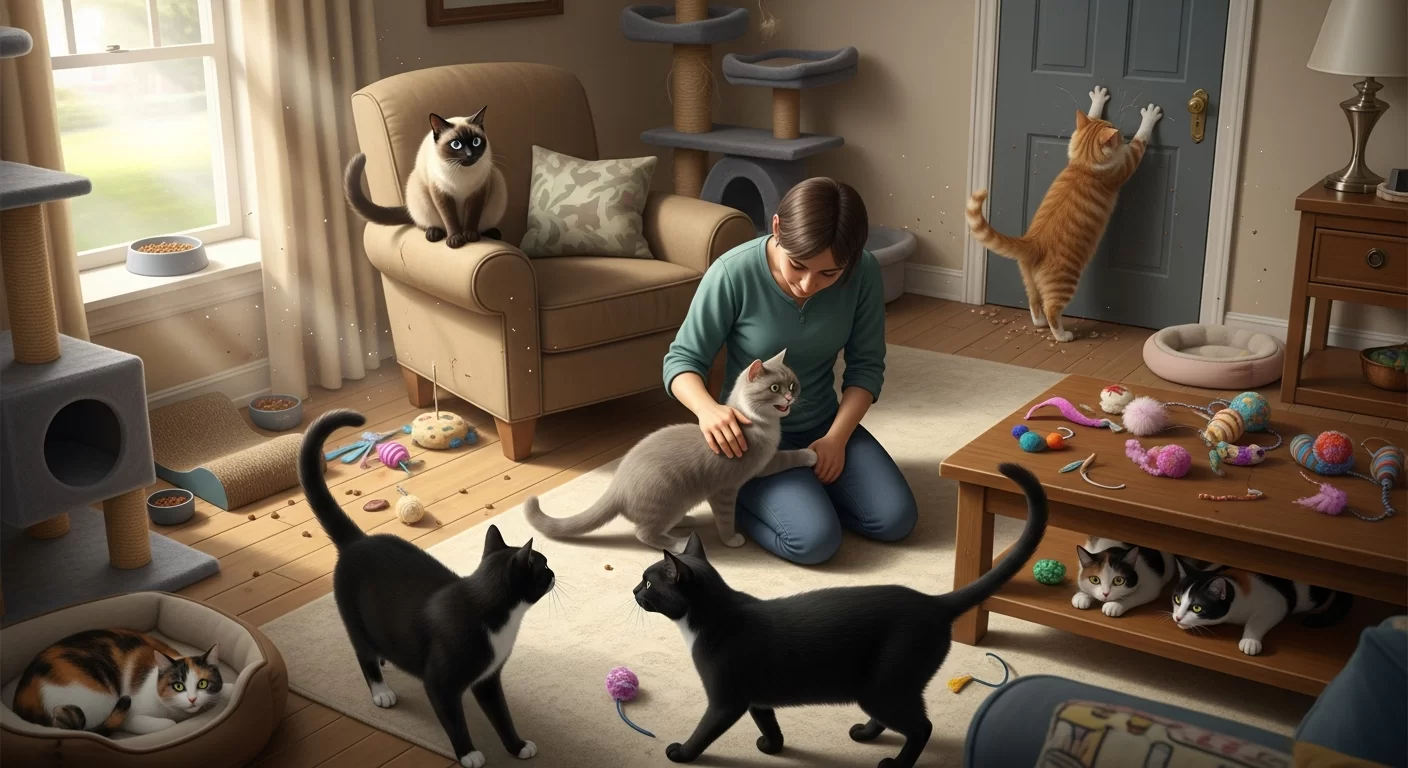
Feline anxiety often becomes more complicated when another animal, person, or life stage is involved. A plan that works for a single adult cat may not be enough for a senior cat with pain, a kitten in a busy household, or two cats with long-standing tension.
Multi-cat anxiety
In multi-cat homes, resource distribution matters. A common guideline is to provide multiple feeding stations, water stations, resting areas, scratching options, and litter boxes in separate locations.
For litter boxes, many feline professionals recommend one box per cat plus one extra, placed in different areas rather than lined up together. The exact number may depend on the home, but the principle is clear: no cat should have to pass a rival or enter a vulnerable location to eliminate.
| Resource | Anxiety-Reducing Strategy |
|---|---|
| Food | Separate feeding stations, visual barriers if needed |
| Water | Multiple bowls or fountains away from food and litter |
| Litter boxes | Multiple locations, uncovered options, easy exits |
| Resting places | High, low, hidden, warm, and socially separated choices |
| Scratching | Posts near resting areas and social pathways |
| Human attention | Individual time with each cat |
| Play | Separate sessions if one cat dominates |
Slow introductions are essential. Cats should not be placed face-to-face and expected to “work it out.” Scent swapping, site swapping, controlled visual access, and positive reinforcement are safer.
Separation-related distress
Cats can form strong attachments to people. Some cats show distress when a favored person leaves or routines change.
Possible signs include:
- Vocalizing when alone
- Waiting at doors or windows
- Urinating on bedding or personal items
- Destructive behavior near exits
- Overgrooming during absences
- Excessive greeting behavior
- Loss of appetite when alone
A camera can help distinguish separation distress from boredom, nighttime activity, or conflict with another pet. Treatment may involve predictable departure cues, independent enrichment, food puzzles before leaving, calm greetings, and gradual alone-time training.
Senior cats
Older cats may become anxious because of pain, sensory decline, cognitive dysfunction, hyperthyroidism, hypertension, or reduced mobility. A senior cat that suddenly cries at night, clings, hides, or becomes irritable needs medical assessment.
Helpful adjustments include:
- Low-entry litter boxes
- Heated beds used safely
- Night lights
- Ramps or steps
- More water stations
- Gentle predictable routines
- Pain management when prescribed
- Reduced household chaos
Newly adopted cats
New cats need decompression. Some adjust in days; others need weeks or months. A safe room, consistent feeding schedule, gentle voice, and no forced handling are usually better than immediate access to the entire home.
A fearful newly adopted cat should be allowed to approach first. Sitting quietly in the room, reading aloud, offering treats, and using interactive toys at a comfortable distance can build trust.
Monitoring Progress and Knowing When Anxiety Is Improving
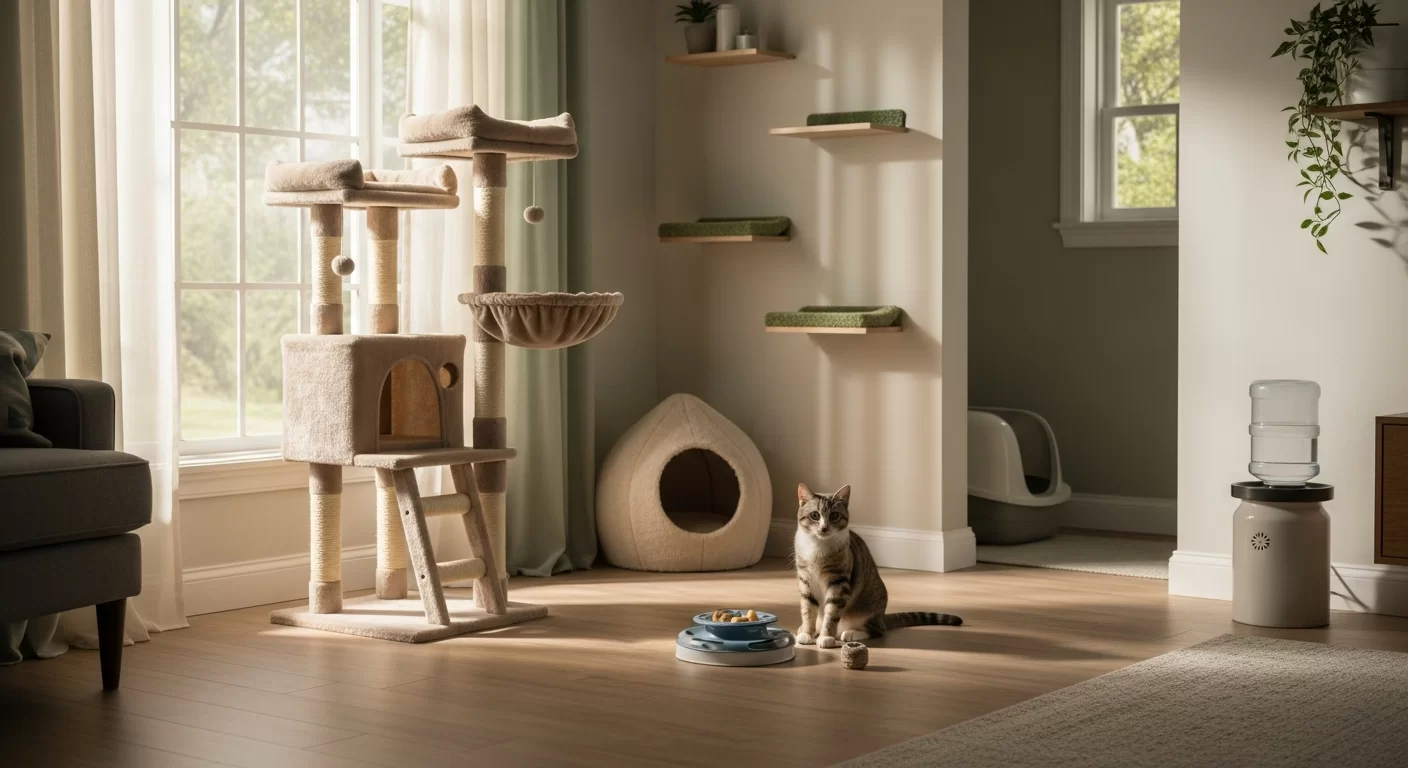
Progress with feline anxiety is often subtle. A cat may not become outgoing overnight. Improvement may first appear as eating in daylight, grooming in the open, sleeping more deeply, using the litter box reliably, or choosing to stay in the room when a person enters.
A simple tracking system can help determine whether a plan is working.
| Behavior to Track | Improving Signs | Concerning Signs |
|---|---|---|
| Appetite | Eats regularly, accepts treats during training | Skips meals, eats only when alone, weight loss |
| Rest | Sleeps in open or semi-open areas | Constant hiding, restless pacing |
| Grooming | Normal coat care | Bald patches, sores, excessive licking |
| Litter box use | Consistent use, relaxed posture | Straining, accidents, spraying, frequent trips |
| Play | Engages briefly or with enthusiasm | No interest in play over time |
| Social behavior | Approaches, blinks, remains nearby | Hissing, swatting, avoidance worsening |
| Trigger response | Recovers faster after stress | Panic lasts longer or spreads to new triggers |
How long does it take an anxious cat to improve?
Mild stress may improve within days to weeks after environmental changes. Chronic anxiety, multi-cat conflict, trauma-related fear, or compulsive behaviors may require months of consistent management. Progress is usually gradual and should be measured by function, not personality change.
When anxiety is urgent
Seek veterinary care promptly if a cat:
- Stops eating for 24 hours or more
- Strains to urinate or produces little urine
- Cries in the litter box
- Shows sudden aggression
- Hides continuously and refuses food
- Has open wounds from overgrooming
- Appears disoriented or collapses
- Has rapid breathing or severe lethargy
- Shows a sudden behavior change without clear cause
Male cats with urinary obstruction symptoms need emergency care. This is not a behavior problem.
Building a long-term care plan
A durable anxiety plan usually includes:
- Veterinary diagnosis and pain screening
- A safe space
- Predictable feeding and cleaning routines
- Daily play and enrichment
- Respect for consent and body language
- Resource separation in multi-cat homes
- Gradual exposure to triggers
- Monitoring with notes or videos
- Medication review if prescribed
- Adjustments during moves, travel, holidays, or household changes
The goal is not to eliminate every stressful event. Life will still include visitors, storms, veterinary appointments, and changes. The goal is to increase the cat’s resilience and give the household tools to respond before stress becomes chronic.
Common Myths and Mistakes About Feline Anxiety
Misunderstandings about feline behavior can delay treatment and unintentionally make anxiety worse.
| Myth | Fact |
|---|---|
| “Cats are solitary, so they do not need social support.” | Cats vary. Some prefer distance, while others form strong bonds with people or other cats. |
| “A cat peeing outside the box is being spiteful.” | House soiling is often linked to stress, litter box problems, urinary disease, pain, or territorial insecurity. |
| “Hiding means the cat wants to be left alone forever.” | Hiding means the cat needs safety now. Trust can still develop with patience. |
| “If cats fight, they will sort it out.” | Repeated conflict can create chronic stress and injury. Slow reintroduction may be needed. |
| “Medication changes a cat’s personality.” | Properly prescribed medication should reduce distress, not erase personality. Monitoring is essential. |
| “Indoor cats cannot be stressed because they are safe.” | Indoor cats may still experience boredom, social conflict, lack of control, and environmental stress. |
| “Comforting a scared cat rewards fear.” | Calm support does not reward fear. Forcing exposure or ignoring distress can worsen it. |
| “A purring cat is always happy.” | Cats may purr when content, stressed, painful, or seeking comfort. Context matters. |
Common mistakes that prolong anxiety
Owners often mean well but accidentally increase stress by:
- Changing too many things at once
- Moving litter boxes abruptly
- Forcing a cat into social situations
- Punishing fear-based aggression
- Ignoring subtle bullying between cats
- Using strong scents or essential oils
- Providing only one route to food, water, or litter
- Assuming a quiet cat is a calm cat
- Expecting a newly adopted cat to bond immediately
- Stopping medication without veterinary guidance
- Treating boredom as misbehavior rather than unmet need
Emerging trends in feline anxiety care
Feline behavior care is moving toward more individualized, welfare-centered approaches. Important trends include:
- Fear Free and Cat Friendly veterinary handling
- Pre-visit medications for cats with severe travel or clinic anxiety
- Telebehavior consultations for home-environment assessment
- Wearable and camera-based monitoring for activity and routine changes
- Greater recognition of pain-related behavior change
- More attention to enrichment as preventive medicine
- Improved understanding of feline social behavior in multi-cat homes
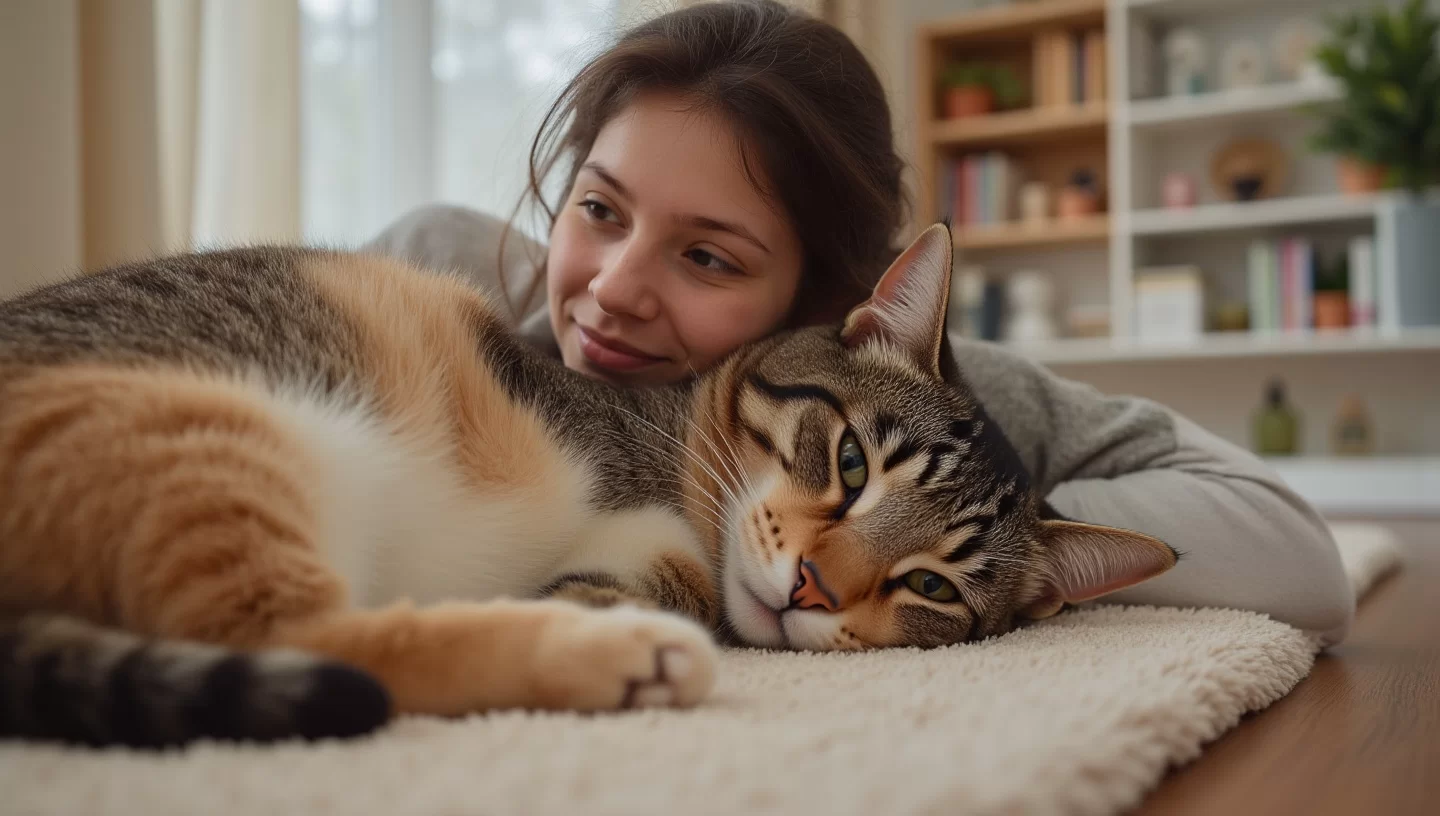
Living with an anxious cat requires a shift in perspective. The question is rarely “How can this behavior be stopped?” The more useful question is “What does this cat need in order to feel safe enough to behave differently?” That answer may involve a quieter room, better litter box access, pain treatment, more play, slower introductions, medication, or simply a household willing to move at the cat’s pace.
Chronically stressed cats can improve, sometimes dramatically, when their emotional world becomes more predictable and their choices expand. Healing does not mean turning every cat into a social butterfly. It means helping the cat eat, rest, groom, explore, eliminate, play, and connect without living in constant vigilance. With veterinary guidance, thoughtful environmental design, and patient behavior support, anxiety becomes a manageable condition rather than a mystery or a moral failing. For many cats, compassion is not just kindness; it is the treatment plan that makes recovery possible.