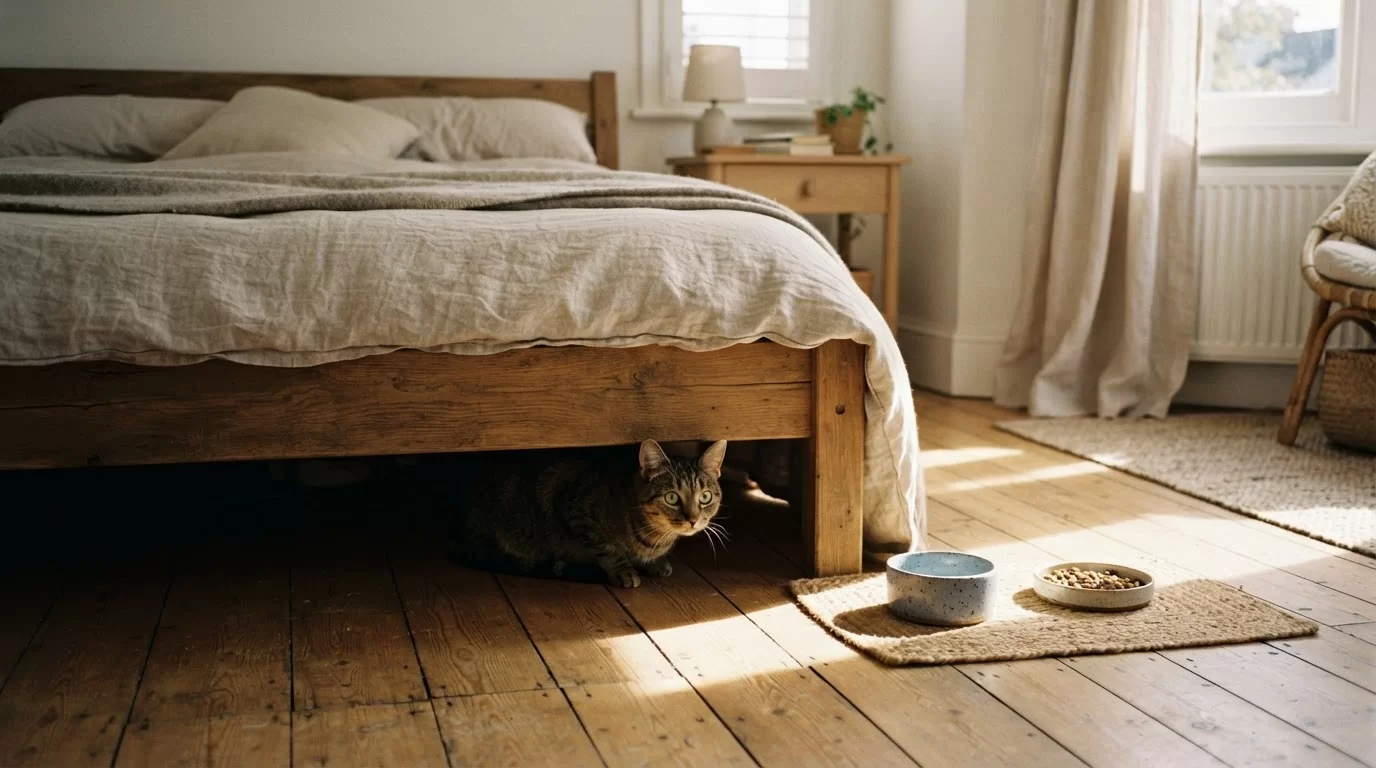
A cat who suddenly panics, bolts under the bed, and refuses to come out can make even experienced cat owners feel helpless. Hiding is a normal feline coping strategy, but the context matters. A cat may hide after a loud noise, a visitor, a move, a new pet, or a frightening encounter near a window. In those cases, the behavior may settle once the cat feels safe again. But hiding can also be an early sign of pain, illness, respiratory distress, poisoning, urinary blockage, trauma, or another medical emergency.
Because cats are instinctively private when frightened or unwell, the challenge is knowing when to wait quietly and when to seek urgent veterinary care. The safest approach is to look at the whole picture: breathing, appetite, posture, movement, vocalization, vomiting, litter box habits, and whether the cat can be gently encouraged to respond. A calm environment helps, but some situations need a veterinarian right away.
In This Article
- Why Cats Panic And Hide Suddenly
- How To Tell Fear Hiding From Medical Hiding
- Emergency Signs That Need Veterinary Help Now
- What To Do In The First 30 Minutes
- If A Cat Has Been Hiding For A Few Hours And Hasn’t Eaten Or Drunk
- If A Cat Has Been Hiding All Day And Is Breathing Rapidly
- If A Cat Is Hiding And Vomiting
- How To Make A Scared Cat Feel Safe Again
- Common Mistakes That Make Hiding Worse
- When To Call A Veterinarian Or Emergency Clinic
- How To Prevent Future Panic Episodes
Why Cats Panic And Hide Suddenly
Hiding is one of a cat’s most basic survival behaviors. When a cat feels threatened, uncertain, or physically vulnerable, seeking a dark, enclosed space can feel safer than staying exposed. This does not automatically mean the cat is “acting dramatic.” From a feline perspective, hiding is practical self-protection.
Common situational triggers include:
- Thunder, fireworks, construction, vacuum cleaners, or dropped objects
- Guests, children, unfamiliar pets, or repair workers in the home
- Moving house, rearranged furniture, or a new scent in the environment
- A frightening sight outdoors, such as a dog, raccoon, or unfamiliar cat
- Recent veterinary visits, grooming, travel, or boarding
- Household conflict, shouting, or sudden changes in routine
The ASPCA’s cat behavior resources note that cats rely heavily on predictable territory and safe hiding spaces. When something disrupts that sense of control, retreat is expected.
But sudden hiding can also happen when a cat feels sick or painful. The Cornell Feline Health Center emphasizes that cats often mask illness, so behavior changes may be one of the earliest clues something is wrong.
How To Tell Fear Hiding From Medical Hiding
A frightened but otherwise stable cat usually remains alert, responsive, and physically normal once observed from a distance. A sick or injured cat may hide in a way that feels different: more withdrawn, less responsive, tense, hunched, or unable to settle.
A cat’s hiding is more likely situational anxiety if it follows an obvious trigger, the cat is breathing normally, remains alert, can move normally, and begins to relax within a few hours. Hiding is more concerning when it appears suddenly without a clear trigger or comes with rapid breathing, vomiting, collapse, pale gums, repeated litter box trips, crying, injury, weakness, or refusal to eat for an extended period.
| What You Notice | More Consistent With Fear Or Stress | More Concerning For Illness Or Emergency |
|---|---|---|
| Trigger | Loud noise, visitor, new pet, move | No obvious trigger, or hiding after possible fall/toxin exposure |
| Breathing | Normal and quiet once left alone | Fast, labored, open-mouth, noisy, or belly effort |
| Appetite | May skip one meal after a scare | Refuses food repeatedly, seems nauseated, drools, vomits |
| Posture | Crouched but alert | Hunched, limp, stiff, unable to get comfortable |
| Response | Watches, blinks, may take treats later | Does not respond normally, seems disoriented or weak |
| Movement | Can walk normally when moving | Limping, staggering, dragging legs, collapse |
| Litter box | Normal once calm | Straining, crying, no urine, diarrhea, blood |
A cat hiding after fireworks may simply need time and quiet. A cat hiding in a closet while breathing hard, vomiting, or refusing to move should be treated as medically concerning.
Emergency Signs That Need Veterinary Help Now
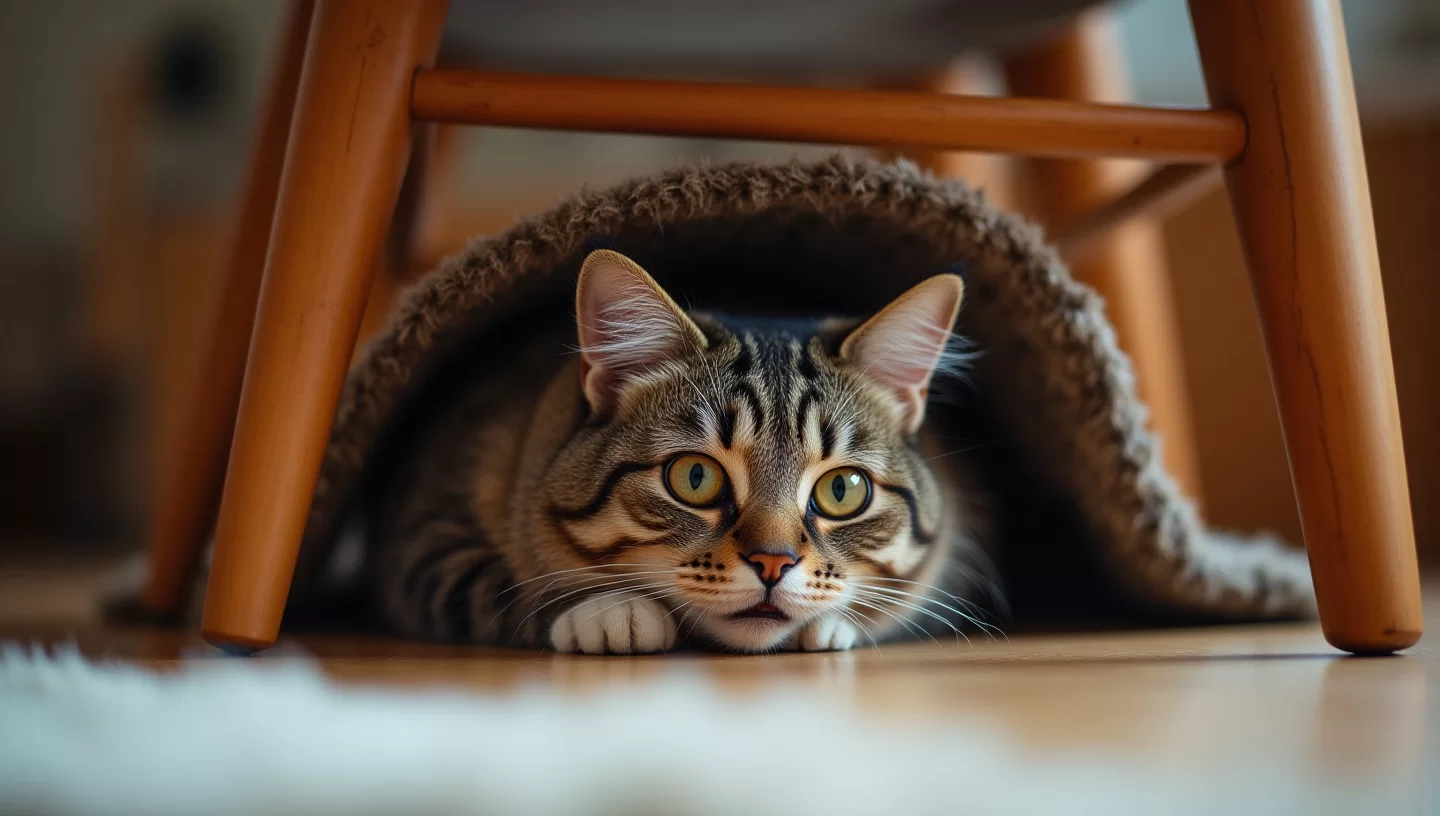
Some symptoms should not be managed at home. The American Veterinary Medical Association advises pet owners to seek veterinary help promptly when animals show signs of severe distress, trauma, poisoning, breathing difficulty, or persistent vomiting.
A hiding cat needs urgent veterinary attention if any of the following are present:
- Rapid, labored, or open-mouth breathing
- Blue, gray, white, or very pale gums
- Collapse, extreme weakness, or inability to stand
- Repeated vomiting, vomiting with blood, or vomiting plus lethargy
- Straining to urinate, crying in the litter box, or producing little to no urine
- Suspected toxin exposure, including lilies, human medications, rodenticides, antifreeze, essential oils, or household chemicals
- Seizures, tremors, disorientation, or sudden behavior change
- Obvious injury, bleeding, limping, swelling, or possible fall/trauma
- Bloated or painful abdomen
- Hiding all day with no food, no water, and no normal interaction
- Signs of heatstroke, such as panting, drooling, weakness, or collapse
Male cats deserve special caution if they are hiding and repeatedly visiting the litter box. A urethral blockage can become life-threatening quickly. The Merck Veterinary Manual describes urinary obstruction as an emergency requiring immediate care.
What To Do In The First 30 Minutes
When a cat is panicked and hiding, the goal is to reduce threat, assess safety, and avoid escalating fear. Chasing, pulling, or cornering the cat often makes the situation worse and may lead to scratches, bites, or deeper hiding.
Step-by-step help for a panicked hiding cat:
- Make the room quiet. Turn off loud appliances, reduce voices, dim lights, and keep children or other pets away.
- Block unsafe exits. Close windows, exterior doors, vents, recliners, and access to dangerous crawlspaces if possible.
- Do not drag the cat out. Forced handling can intensify panic and damage trust.
- Observe from a distance. Look for breathing effort, posture, vomiting, drooling, limping, or abnormal vocalizing.
- Offer resources nearby. Place water, a small amount of familiar food, and a litter box within easy reach, but not directly in the cat’s hiding spot.
- Use a calm voice sparingly. Soft reassurance is fine; repeated calling can feel like pressure.
- Try a high-value lure only if safe. A favorite treat, lickable cat treat, or familiar toy may help if the cat is stable and simply frightened.
- Prepare the carrier if medical signs appear. Place a towel inside and keep the carrier nearby before attempting movement.
If there are signs of breathing distress, severe pain, collapse, poisoning, or repeated vomiting, skip prolonged coaxing and call an emergency veterinary clinic for instructions.
If A Cat Has Been Hiding For A Few Hours And Hasn’t Eaten Or Drunk
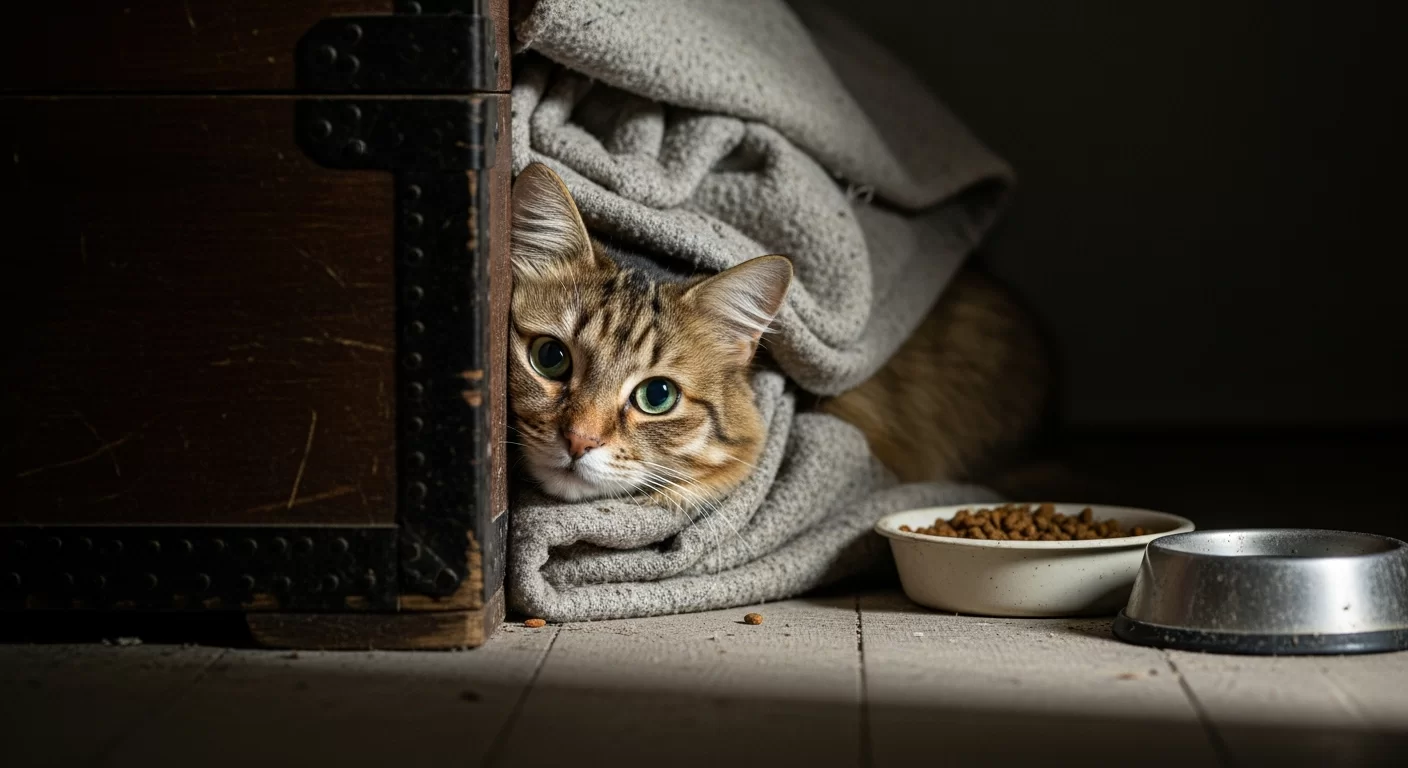
A cat who hides for a few hours after a clear scare and skips food or water is not automatically an emergency, especially if breathing is normal, the cat is alert, and there are no other symptoms. Many cats will not eat while frightened. Appetite often returns once the house is quiet and the cat feels safe.
That said, the situation should be monitored closely. Cats are not small dogs; going without food for too long can become risky, particularly in overweight cats, kittens, seniors, and cats with chronic disease. Prolonged lack of eating can contribute to hepatic lipidosis, a serious liver condition described by veterinary sources including VCA Animal Hospitals.
A practical approach:
- If the cat has been hiding for 2–4 hours after a known scare but is breathing normally, allow quiet time and offer food nearby.
- If the cat has not eaten by the next normal meal, try warmed wet food, tuna water, or a favorite treat without forcing interaction.
- If the cat refuses all food for 12–24 hours, contact a veterinarian.
- If the cat is a kitten, diabetic, elderly, medically fragile, or also vomiting, lethargic, painful, or breathing abnormally, call sooner.
Water intake is harder to judge because cats may drink privately. Signs such as tacky gums, sunken eyes, repeated vomiting, or extreme lethargy make dehydration more concerning.
If A Cat Has Been Hiding All Day And Is Breathing Rapidly
A cat hiding all day and breathing very rapidly should be treated as urgent, especially if the breathing is fast at rest. Fear can temporarily increase respiratory rate, but sustained rapid breathing while hiding may indicate pain, fever, heart disease, asthma, fluid around the lungs, anemia, trauma, heat stress, or another serious problem.
A normal resting respiratory rate for many healthy cats is often under about 30 breaths per minute when asleep or deeply relaxed, though individual variation exists. What matters most is whether the breathing is fast, effortful, or abnormal for that cat.
How to check breathing without touching the cat:
- Watch the chest or flank rise and fall.
- Count breaths for 15 seconds.
- Multiply by four to estimate breaths per minute.
- Note whether the cat is using abdominal effort, stretching the neck, crouching low, or breathing with the mouth open.
Emergency warning: Open-mouth breathing, panting at rest, blue or pale gums, neck extended to breathe, or sides heaving are emergency signs in cats.
If a cat has been hiding all day and breathing very rapidly, contact an emergency veterinarian immediately. Do not wait to see if it improves overnight. Keep handling minimal, place the cat in a carrier carefully, and avoid wrapping tightly around the chest because that can make breathing harder.
If A Cat Is Hiding And Vomiting
Hiding and vomiting can range from mild stomach upset to an emergency. A single hairball-like vomit in an otherwise bright cat may not be alarming. But vomiting combined with hiding means the cat does not feel well and should be evaluated based on frequency, severity, and other signs.
More urgent causes can include toxin exposure, gastrointestinal obstruction, pancreatitis, kidney disease, liver disease, parasites, infections, food intolerance, foreign body ingestion, or severe pain. Lilies are especially dangerous to cats; even small exposures to certain lily species can cause kidney failure, according to the FDA’s pet safety guidance.
| Vomiting Pattern | What To Do |
|---|---|
| One episode, cat is alert, breathing normal, no other symptoms | Monitor closely, offer small amounts of water, call vet if appetite does not return |
| Repeated vomiting within a few hours | Call a veterinarian or emergency clinic |
| Vomiting plus hiding, lethargy, pain, diarrhea, or refusal to move | Seek urgent veterinary advice |
| Vomiting blood or material that looks like coffee grounds | Emergency care |
| Vomiting after possible toxin, plant, string, ribbon, medication, or chemical exposure | Emergency care |
| Vomiting plus straining to urinate or crying | Emergency care |
Do not give human anti-nausea medication, pain relievers, Pepto-Bismol, aspirin, acetaminophen, or ibuprofen unless a veterinarian specifically instructs it. Several common human medications are toxic to cats.
How To Make A Scared Cat Feel Safe Again
Once medical red flags are ruled out, the best treatment for situational panic is safety, predictability, and control. Cats recover faster when they can choose when to emerge.
Create a “safe room” if the cat is overwhelmed. This can be a bedroom, office, or quiet bathroom with a door that closes. Include:
- Food and fresh water
- A litter box placed away from food
- A soft bed or blanket with familiar scent
- Cardboard boxes or covered hiding spots
- Scratching surface
- A perch or shelf if the cat likes vertical space
- Low lighting and minimal foot traffic
Pheromone diffusers may help some cats. Products such as Feliway are designed to mimic feline facial pheromones associated with familiar territory. They are not sedatives, and results vary, but they can be useful as part of a broader anxiety-reduction plan. At major retailers such as Chewy, Petco, and Amazon, plug-in starter kits commonly fall in the approximate $25–$40 range, with refills often around $20–$30 depending on size and seller.
For cats motivated by food, a lickable treat can help rebuild confidence. For play-driven cats, a wand toy used gently at a distance may encourage normal behavior. The key is not to crowd the cat. Relaxation happens when the cat feels there is an exit route.
Common Mistakes That Make Hiding Worse
Well-meaning reactions can accidentally intensify a cat’s fear. A hiding cat may interpret direct attention as pressure, even when the person is trying to comfort them.
Avoid these common mistakes:
- Pulling the cat from under furniture. This can cause panic and injury.
- Blocking the cat with multiple people. A crowd feels threatening.
- Reaching into a hiding place repeatedly. Hands entering a confined space can trigger defensive biting or scratching.
- Punishing hissing, growling, or swatting. These are distance-increasing signals, not bad manners.
- Assuming hiding is “just stress” when symptoms are present. Vomiting, rapid breathing, collapse, or urinary straining should never be ignored.
- Forcing food or water. Syringing food or liquid into a frightened or nauseated cat can cause aspiration or worsen stress unless directed by a veterinarian.
- Using essential oils or strong scents. Cats are sensitive to many aromatic compounds, and some oils can be unsafe.
A better approach is to reduce stimulation, monitor quietly, and let the cat regain control while staying alert for medical signs.
When To Call A Veterinarian Or Emergency Clinic

A veterinarian should be contacted any time the cat’s hiding is unusual, prolonged, or paired with physical symptoms. Even if an emergency visit is not needed, a phone call can help determine the safest next step.
Call an emergency veterinary clinic now if:
- The cat is breathing rapidly, with effort, or with an open mouth
- The cat is hiding and vomiting repeatedly
- There may have been exposure to lilies, medications, chemicals, rodent poison, or another toxin
- The cat is weak, collapsed, disoriented, or unable to walk normally
- The cat is crying, straining, or unable to urinate
- There is bleeding, trauma, swelling, or suspected injury
- The gums are pale, blue, gray, or yellow
- The cat has been hiding all day and seems worse, not better
Call a regular veterinarian soon if:
- Hiding lasts more than a day without an obvious explanation
- Appetite is reduced for 12–24 hours
- The cat is drinking much more or much less than usual
- Litter box habits have changed
- Hiding episodes are becoming frequent
- The cat seems anxious after a move, adoption, or household change
The American Association of Feline Practitioners supports cat-friendly handling and environmental strategies that reduce fear during veterinary care. If transport is difficult, ask the clinic about low-stress carrier techniques, pre-visit medications, or whether teletriage is available.
How To Get A Hiding Cat Into A Carrier Safely
If a veterinary visit is needed, the carrier process should be calm but efficient. Waiting until panic peaks can make transport harder.
Helpful steps include:
- Place the carrier in the room with the door open.
- Line it with a familiar towel or soft bedding.
- Use treats only if the cat is stable and not in respiratory distress.
- If the cat must be moved, use a towel to gently guide rather than grab.
- Keep the carrier level and covered with a light towel during transport.
- Call the clinic before arrival if breathing distress, toxin exposure, or collapse is involved.
For cats who hide under beds, blocking off inaccessible areas before a scheduled vet visit can prevent a stressful chase. For emergencies, safety matters more than perfect technique, but calm handling still helps.
How To Prevent Future Panic Episodes
Some cats are naturally cautious, but repeated panic hiding often means the home environment needs adjustment. Prevention focuses on reducing triggers and giving the cat dependable escape options.
Long-term strategies include:
- Keep a consistent feeding, play, and sleep routine
- Provide multiple hiding spots, especially in multi-pet homes
- Add vertical territory such as cat trees, shelves, or window perches
- Introduce guests, pets, and new rooms gradually
- Use gradual desensitization for noises such as vacuum cleaners or doorbells
- Keep carriers out as familiar resting places instead of bringing them out only for vet trips
- Provide daily interactive play to reduce tension and build confidence
- Use puzzle feeders or treat hunts for mental enrichment
- Schedule regular wellness exams, especially for senior cats
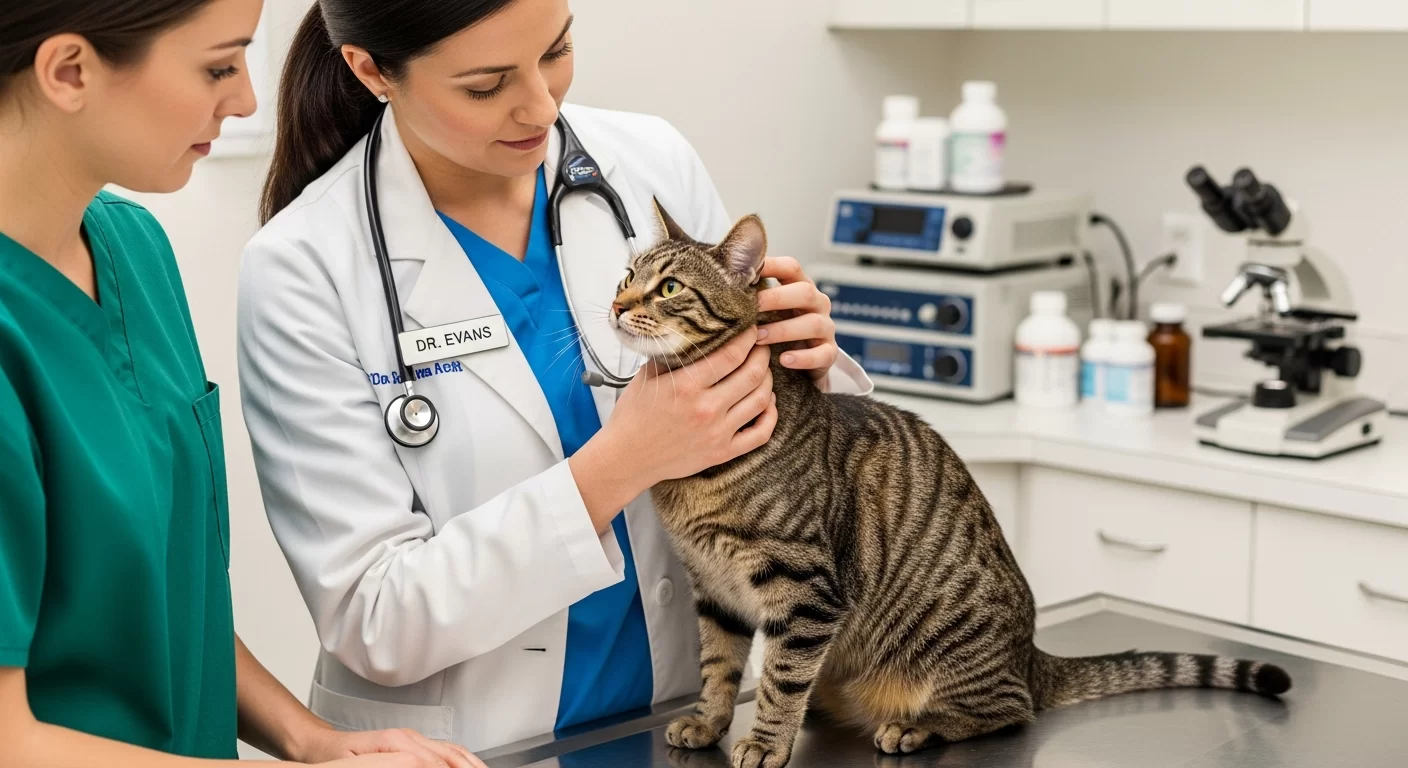
A cat who is panicked and hiding needs patience, not pressure. In many cases, a quiet room, familiar scents, and time will help a frightened cat recover. The deciding factor is whether the hiding stands alone or appears with physical warning signs. Normal breathing, alertness, and gradual improvement point more toward situational anxiety. Rapid breathing, repeated vomiting, collapse, urinary straining, pale gums, injury, toxin exposure, or a full day of worsening withdrawal should prompt veterinary help.
The safest response is calm observation followed by decisive action when symptoms appear. Cats are skilled at concealing illness, so behavior changes deserve respect. By creating safe spaces, avoiding forced handling, and knowing the difference between fear and medical distress, cat owners can protect both the cat’s emotional security and physical health.