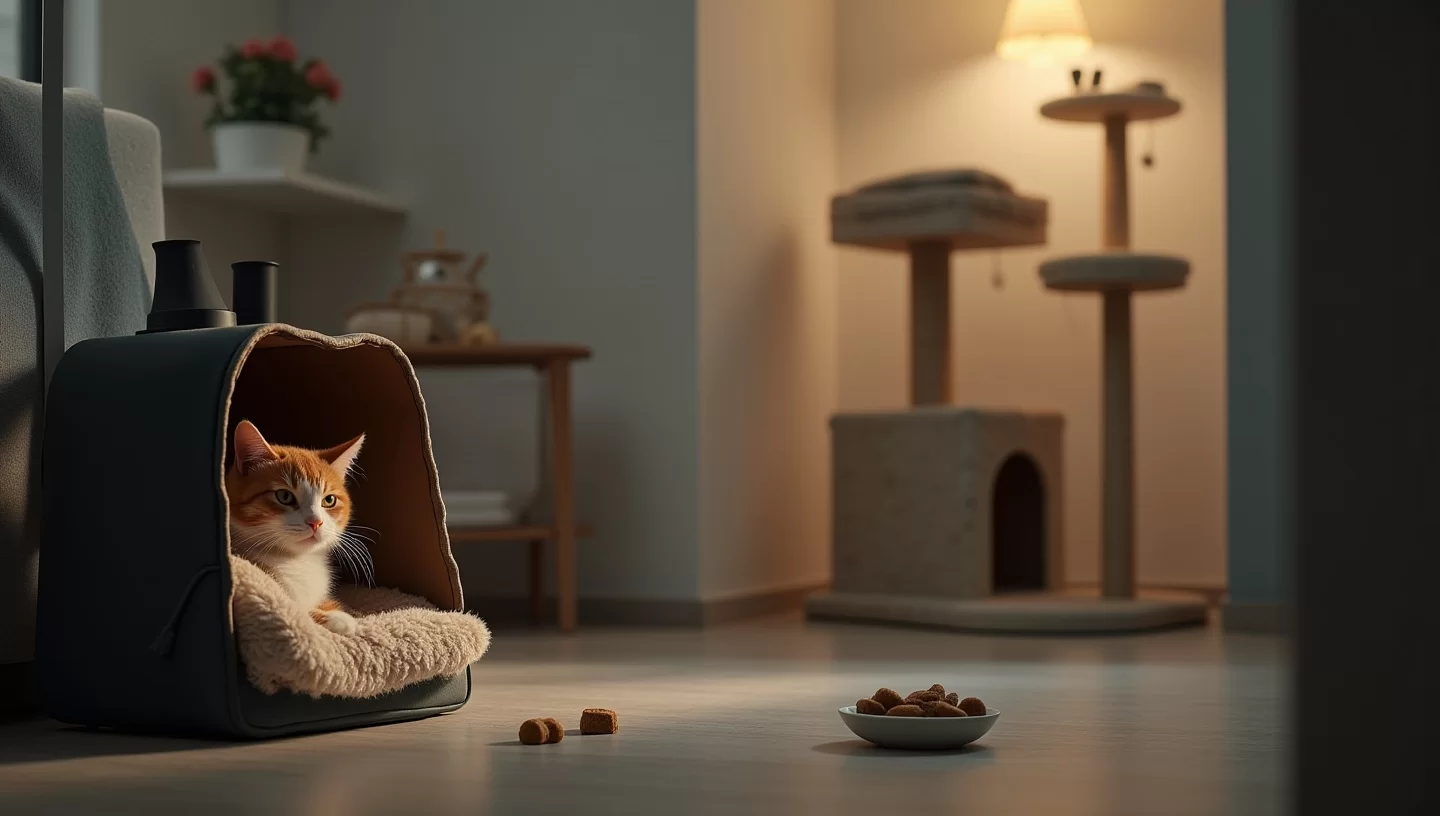
A cat pacing restlessly, ears flattened, pupils wide—these moments can feel bewildering and frightening for any owner. Anxiety attacks in cats are genuine medical events, not simply “bad behavior,” and knowing how to recognize them can make the difference between a quick recovery and a spiral into chronic stress. Unlike dogs, cats often hide signs of distress until symptoms become acute, leaving owners uncertain whether their pet is in pain, frightened, or simply irritable. Understanding what a feline anxiety attack looks like and how to respond calmly is essential for safeguarding both the cat’s well-being and the human-animal bond. The following guide draws on current veterinary behavior research to help owners identify the warning signs, take immediate safe action, and develop long-term strategies that reduce the frequency and severity of future episodes.
In This Article
- What a Cat Anxiety Attack Actually Looks Like
- Why Anxiety Attacks Happen: The Stress-Trigger Connection
- How to Respond in the Moment: Safety First
- Is There Any Way to Safely Get Them into a Carrier Right Now?
- I Have an Appointment for Later Today — What Should I Watch for Now?
- Build a Feline Stress-Relief Plan: Customized Routine, Environmental Audit, and Pheromone/Supplement Check
- Common Mistakes That Make Anxiety Worse
- When Medication or a Veterinary Behaviorist Is Necessary
What a Cat Anxiety Attack Actually Looks Like
A cat experiencing an anxiety attack may display a combination of physical and behavioral signs that escalate rapidly. Unlike general anxiety—which might involve hiding, reduced appetite, or mild avoidance—an attack is a short but intense episode of perceived threat. Key indicators include:
- Dilated pupils that remain large even in bright light
- Rapid, open-mouth breathing or panting (not to be confused with heat stress)
- Piloerection (hair standing on end along the back and tail)
- Trembling or shivering
- Pacing, circling, or frantic attempts to escape (running into walls, scratching at doors)
- Vocalizations such as yowling, hissing, or a low, continuous growl
- Loss of bladder or bowel control in severe cases
- Aggression toward people or other pets that is out of character
These symptoms are the feline equivalent of a human panic attack. The cat is in a state of sympathetic nervous system overload—heart rate and blood pressure spike, and the “fight or flight” response takes over. Recognizing this cluster of signs early allows the owner to intervene before the cat injures itself or someone else.
Why Anxiety Attacks Happen: The Stress-Trigger Connection

Anxiety attacks in cats rarely come out of nowhere. They are the culmination of accumulated stress, often combined with a specific trigger that pushes the cat past its coping threshold. According to the American Association of Feline Practitioners (AAFP), common contributors include:
- Sudden environmental changes — moving homes, rearranging furniture, new pets or people
- Loud noises — thunderstorms, fireworks, construction, vacuum cleaners
- Pain or illness — arthritis, dental disease, urinary tract infections can lower the threshold for anxiety
- Overstimulation — being handled too long, cornered by a child or another pet
- Medical emergencies — conditions like hyperthyroidism or cardiac arrhythmias can mimic or trigger an anxiety attack
A cat that experiences recurring attacks may have an underlying anxiety disorder, similar to generalized anxiety disorder in humans. The Merck Veterinary Manual notes that genetics, early socialization, and past trauma all play roles. Owners should track episodes in a simple journal: note the date, duration, triggers, and any behavioral changes in the hours before. This record becomes invaluable for veterinarians trying to differentiate anxiety from other medical causes.
How to Respond in the Moment: Safety First
During an anxiety attack, a cat is not capable of rational thought. Trying to hold, soothe, or reason with it can lead to redirected aggression. The safest immediate response is to:
- Remove the perceived threat — turn off loud music, close blinds to block frightening outdoor sights, or gently shoo other pets out of the room.
- Give the cat space — do not approach or attempt to pick it up. Instead, sit quietly a few feet away, avoiding direct eye contact (cats interpret prolonged staring as a threat).
- Provide a dark, quiet hiding place — open a closet door, a carrier with a towel over it, or a cardboard box. Many cats will retreat to a small space on their own once the attack peaks.
- Speak in a low, calm monotone — soft humming or a single repeated phrase (“It’s okay”) can provide auditory grounding, but do not touch the cat until it shows signs of calming down.
Once the cat stops pacing, its pupils return to normal, and breathing slows, it is safe to offer a gentle chin scratch or a high-value treat like a lickable cat treat. Avoid sudden movements. The entire episode usually lasts between two and ten minutes, though the recovery period—during which the cat may remain skittish or sleep deeply—can extend for hours.
Is There Any Way to Safely Get Them into a Carrier Right Now?
Yes, but only if the cat is not actively in an attack. Attempting to force an anxious, adrenaline-saturated cat into a carrier can result in bites, scratches, or a fractured bond of trust. However, there are safe strategies when the cat has calmed slightly or when transport is medically urgent.
- Use a two-person, towel-wrapping technique. Drop a thick bath towel over the cat’s body (covering the head for just a second), then gently gather the cat into a “purrito” wrap, with only the head exposed. Lower the wrapped cat into an open, top-loading carrier. The towel reduces visual stimulation and provides reassuring pressure.
- Pre-soak the carrier with synthetic pheromone spray (such as Feliway Classic) at least fifteen minutes before use. Do not spray directly onto the cat.
- Never chase the cat or corner it. If the cat is hiding under furniture, close the room first, then slowly slide the carrier near the hiding spot with the door open. Use treats or a small amount of tuna to lure rather than force.
- For cats that are highly resistant, consider a cat-specific calming wrap (ThunderShirt or similar) applied before carrier placement. The constant light pressure can reduce panic within a few minutes.
If the cat is still in a full-blown attack (panting, dilated pupils, aggression) and the situation is not life-threatening, it is better to wait thirty to sixty minutes until the cat begins to decompress before attempting any carrier transfer. A cat that is already wound up will only escalate further with confinement.
I Have an Appointment for Later Today — What Should I Watch for Now?
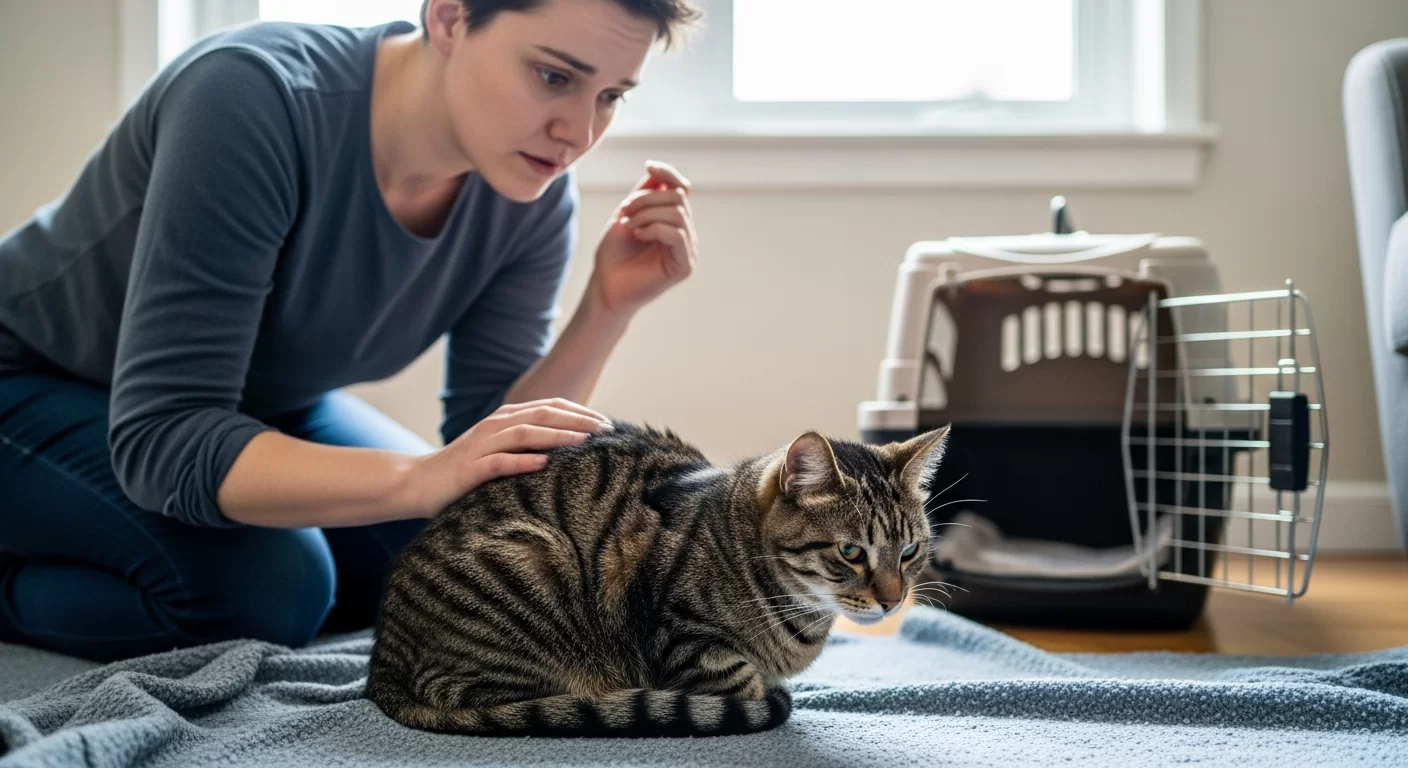
Between the moment you recognize an anxiety attack and the veterinary appointment, monitoring is critical. A cat that has had an attack may be at risk for:
- Self-injury — check for bleeding, torn claws, or broken teeth from biting or hitting surfaces.
- Shock — cold extremities, pale gums, weakness, or collapse require immediate emergency care, not a scheduled appointment.
- Post-ictal behavior — if the episode included seizure-like movements (paddling, stiff limbs, loss of consciousness), the cat might have had a seizure rather than an anxiety attack. Record a video with your phone to show the veterinarian.
- Hydration status — cats in severe distress often refuse to drink afterward. Gently offer a small amount of water from a syringe (without forcing) or place a wet food topper.
Keep the cat in a quiet, dim room with one familiar toy or blanket. Do not allow children or other pets to interact. Note the exact time the attack started, how long it lasted, and any medication (prescription or over-the-counter) the cat may have received. Bring that journal to the appointment.
Build a Feline Stress-Relief Plan: Customized Routine, Environmental Audit, and Pheromone/Supplement Check
Once the immediate crisis is managed, long-term prevention becomes the priority. A personalized stress-relief plan addresses the cat’s specific triggers through three pillars:
1. Customized Routine
Cats thrive on predictability. Set consistent times for feeding, play, and quiet time. If the attack was triggered by a specific event (e.g., when children return from school or when a mail truck arrives), schedule high-value activities before that trigger. For example, a fifteen-minute interactive play session with a wand toy thirty minutes before the trigger can drain pent-up energy and shift the cat’s emotional state.
2. Environmental Audit
Use a checklist adapted from the AAFP’s Feline Environmental Needs Guidelines:
| Area | What to Check |
|---|---|
| Vertical space | At least one tall cat tree or shelf per cat, placed away from high-traffic zones |
| Hiding spots | Covered beds, boxes, or tunnels in at least two rooms |
| Litter box | One box per cat plus one; unscented litter; cleaned daily; placed in quiet corners |
| Food and water | Separate from litter; multiple water sources (fountains encourage drinking) |
| Scratching surfaces | Horizontal and vertical options; placed near favorite resting spots |
| Noise levels | Identify and reduce startling sounds (e.g., door slams, TV bass) |
Make changes gradually. Adding too much novelty too fast can itself be stressful.
3. Pheromone and Supplement Check
Synthetic feline facial pheromone diffusers (Feliway Optimum or MultiCat) have shown efficacy in reducing stress-related behaviors in multiple studies. Place a diffuser in the room where the cat spends the most time, replacing the vial every 30 days.
Over-the-counter supplements such as:
- L-theanine (Anxitane, Solliquin)
- Alpha-casozepine (Zylkene)
- Magnolia officinalis and Phellodendron amurense (Composure, Calm-K)
- CBD oil for pets (third-party tested, THC-free)
These may help in mild to moderate cases, but always consult a veterinarian before starting any supplement, especially if the cat is on other medications. Some products can interact with thyroid, heart, or seizure medications.
Common Mistakes That Make Anxiety Worse
Even well-intentioned owners can inadvertently reinforce or worsen anxiety attacks. Avoid these pitfalls:
- Punishing the cat during or after an attack. Scolding or spraying with water increases fear and teaches the cat that human presence is associated with punishment.
- Over-coddling during the episode. Speaking in a frantic tone, petting aggressively, or offering treats during the attack can reward the panic behavior and make future episodes more likely. Quiet waiting after the attack subsides is more effective.
- Changing the environment too quickly. After an attack, some owners rush to rearrange furniture, remove perceived triggers, or buy new equipment. This adds more novelty and stress. Make one change at a time, then observe for a week.
- Assuming it’s “just a phase”. Repeated anxiety attacks often indicate a medical or behavioral issue that requires professional evaluation. Cats that hide their stress well may only show outward signs when the problem is advanced.
When Medication or a Veterinary Behaviorist Is Necessary
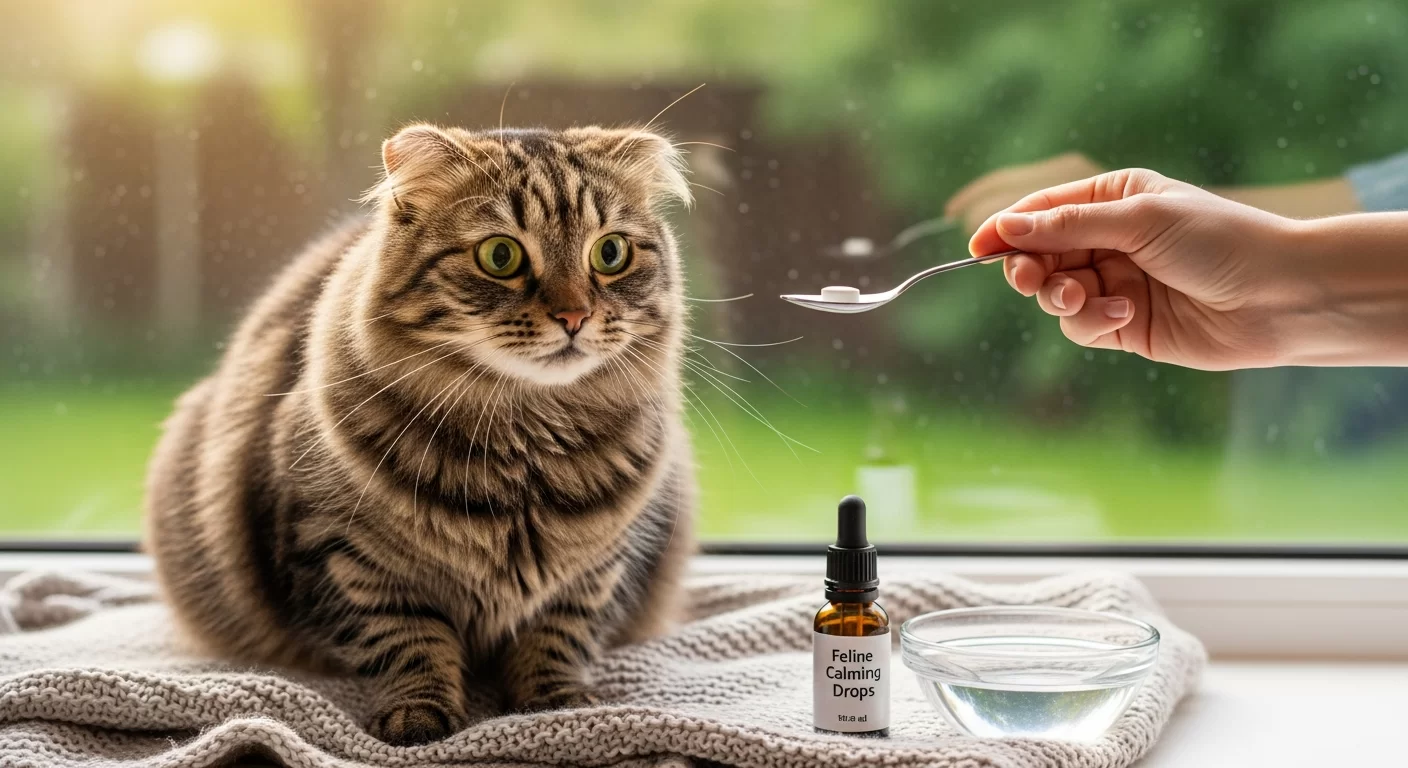
If a cat experiences more than one anxiety attack per month, or if attacks are severe enough to cause self-injury, long-term medication may be warranted. The American Veterinary Medical Association (AVMA) endorses a multimodal approach: behavior modification plus pharmaceuticals when needed.
First-line medications include:
- Fluoxetine (Prozac) — a selective serotonin reuptake inhibitor (SSRI) that reduces baseline anxiety; takes 4–6 weeks for full effect
- Clomipramine (Clomicalm) — a tricyclic antidepressant often used for separation anxiety and compulsive disorders
- Gabapentin — used situationally for veterinary visits, grooming, or known triggers; can be given 1–2 hours before a predictable event
These require a prescription and regular bloodwork to monitor liver and kidney function. A board-certified veterinary behaviorist (find one through the American College of Veterinary Behaviorists) can create a tailored treatment plan that combines environmental changes, training, and medication trials.
In some cases, the underlying cause is physical rather than psychological. Hyperthyroidism, chronic pain from arthritis, dental abscesses, and neurological conditions can all present with anxiety-like episodes. A full blood panel, thyroid test, and physical exam are the first steps before labeling the cat as purely behavioral.

Recognizing a cat anxiety attack is about more than surviving a tense few minutes—it is the gateway to understanding a cat’s emotional life. Owners who learn to read the subtle pre-attack signals (ear flicking, tail twitching, dilated pupils that linger) can often intervene with a calming scent or a quiet room before the full episode erupts. A combination of steady routines, a stress-audited home, appropriate pheromone support, and, when needed, veterinary guidance can dramatically reduce the frequency and intensity of these frightening events. Cats communicate through behavior, and an anxiety attack is a loud message. The most compassionate response is to listen, learn, and adjust the environment to meet their deep-seated need for safety and predictability.