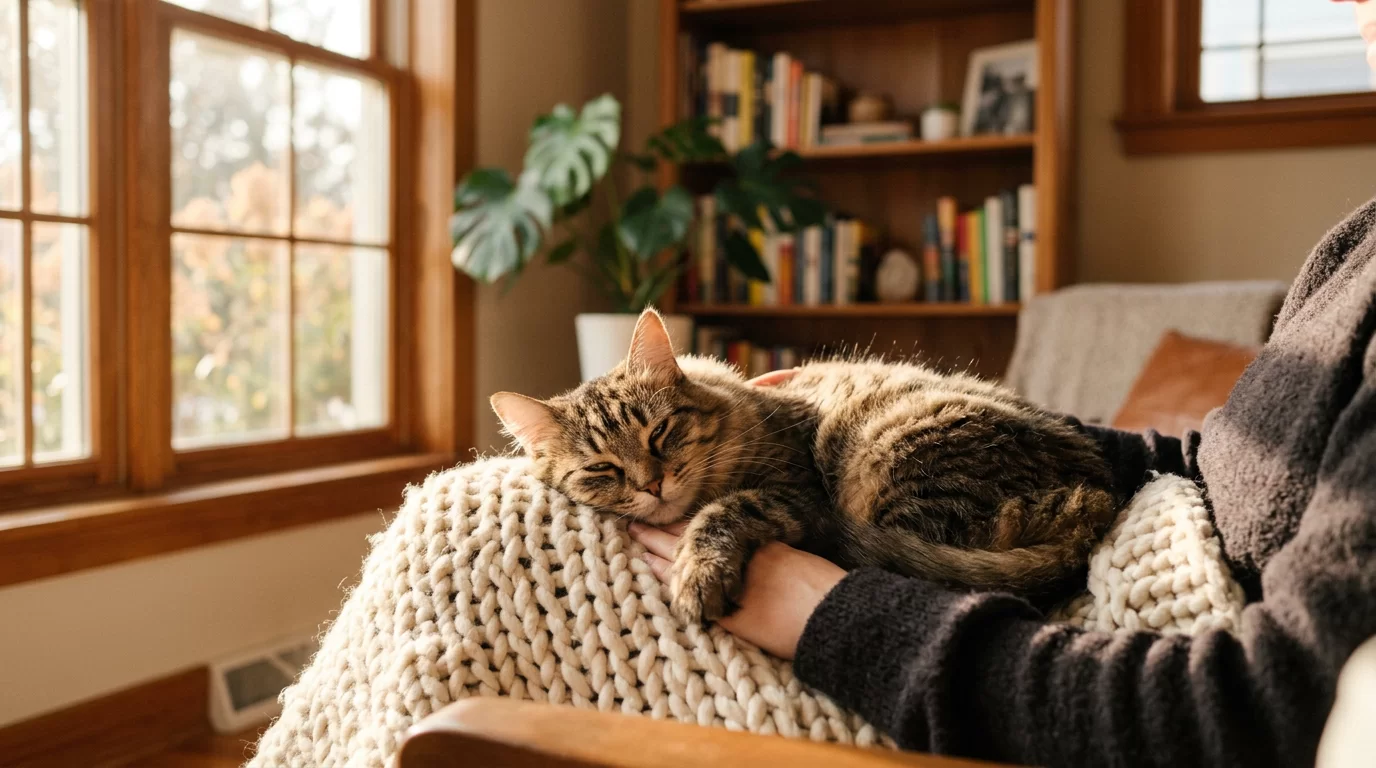
Cats have earned an unfair reputation for being aloof, especially when compared to dogs whose wagging tails and sloppy kisses leave little room for doubt. Yet anyone who shares a home with a cat knows the quiet magic of a slow blink from across the room or the weight of a small, warm body settling onto a lap during a thunderstorm. The question "Does my cat love me?" is both deeply human and deeply relatable, tapping into the bond millions of cat owners nurture every day. Modern feline science and veterinary behaviorists have moved well past the myth of feline indifference. Research confirms that cats form secure attachments to their caregivers, much like dogs and even human infants do. Recognizing that love, however, requires learning to read a language expressed through subtle tail flicks, rumbling purrs, and deliberate proximity. Understanding these signals not only reassures the heart but also strengthens the human-cat relationship at a time when pet companionship is increasingly valued for emotional well-being.
In This Article
• How Feline Emotions Differ From Human Love
• Vet-Reviewed Physical Signs of Affection
• Vocal and Grooming Behaviors That Signal Bonding
• Trust-Based Signs That Take Time to Develop
• Love vs. Tolerance: A Quick Comparison
• How to Strengthen Your Cat’s Emotional Trust
How Feline Emotions Differ From Human Love
Cats do not experience love as a philosophical concept or a verbal declaration. Their emotional world is rooted in survival, security, and social bonding. Veterinary behaviorists explain that domestic cats retain many instincts of their wild ancestors while evolving the capacity to form tight-knit colonies when resources allow. In a home, a human often fills the role of a colony member—a provider of food, warmth, and safety. The attachment is real, measurable through oxytocin levels that rise in both cats and owners during positive interactions.
A 2019 study from Oregon State University found that 65% of cats exhibited secure attachment toward their owners, a figure strikingly similar to that of human infants. When a cat rubs against legs or kneads a blanket while gazing softly, it is performing behaviors rooted in kittenhood, when safety meant closeness to a mother. Recognizing this shifts the question from “Does my cat love me?” to “How does my cat express a deep, trusting bond?” The signs veterinarians highlight are not grand gestures but the quiet, consistent rituals of a creature that sees you as part of its inner circle.
Vet-Reviewed Physical Signs of Affection
Physical proximity and contact are among the clearest ways cats communicate comfort and affection. Board-certified feline practitioners point to several unmistakable signs that have been confirmed through clinical observations.
The slow blink is often called a cat’s version of a kiss. When a cat gazes with half-lidded eyes and deliberately blinks, it signals relaxation and trust—a vulnerable state a cat only enters around a perceived ally. Owners can return the gesture to reinforce the bond.
Head bunting and cheek rubbing transfer facial pheromones from scent glands onto a person, marking them as familiar and safe. This scent-sharing behavior is reserved for colony members and is a profound compliment in feline terms. A cat that routinely butts its forehead into a hand or face is claiming you as its own.
Kneading, that rhythmic pushing of paws against a soft surface, echoes the nursing instinct of kittenhood. An adult cat that kneads on an owner is expressing a state of contentment that traces back to the most nurturing period of its life. Often accompanied by purring, it is a deeply embedded sign of emotional safety.
Tail language offers real-time insight. A tail held straight up with a slight curve at the tip—like a question mark—is a greeting reserved for friendly individuals. Wrapping the tail around a leg or arm further signals social closeness. Subtle tail vibrations when an owner returns home are an expression of joyful anticipation.
Vocal and Grooming Behaviors That Signal Bonding
Trills and chirps, high-pitched sounds distinct from the familiar meow, are used by mother cats to call kittens and by adult cats to greet preferred companions. If a cat trills upon seeing an owner, it is extending an invitation to follow or simply acknowledging a positive social connection.
Purring in context matters. While cats purr for many reasons—including pain relief—the low, steady purr delivered while being stroked or lying beside someone strongly correlates with contentment. Veterinary research notes that this purr's frequency can even have a calming effect on humans.
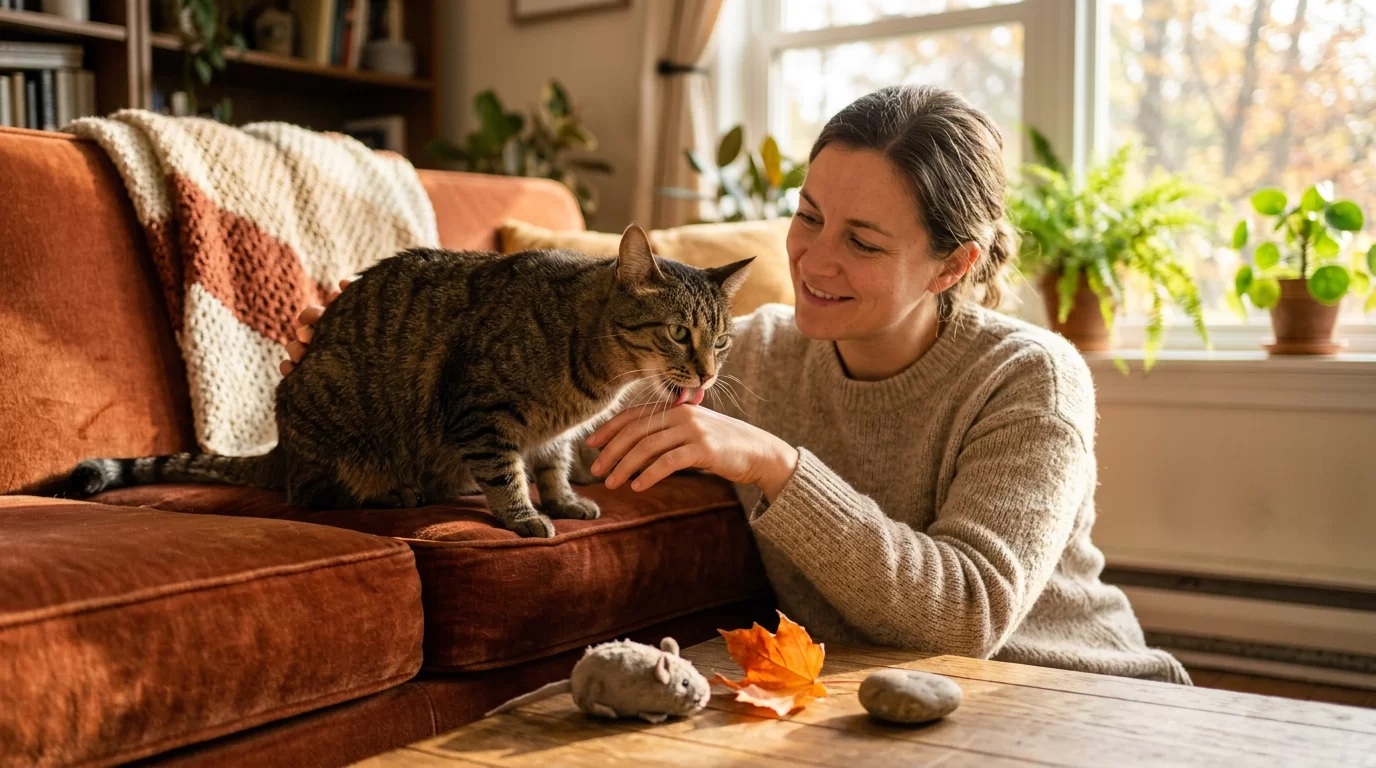
Allogrooming, or licking a human’s skin or hair, is a profound sign of social acceptance. Felines groom each other only within bonded pairs or family groups. A cat that licks an owner’s fingers or face is behaving as it would with a littermate, reinforcing mutual scent and social ties. The rasp of a small, sandpaper tongue may be unexpected but it is pure feline trust in action.
Bringing “gifts”—whether toys, leaves, or unfortunately, small prey—can be unsettling, but veterinary ethologists interpret it as a caregiving or teaching behavior. In a multi-cat colony, cats bring food to less experienced members. Your cat may be sharing its success or providing for a family member who simply never seems to hunt.
Trust-Based Signs That Take Time to Develop
Some of the deepest indicators of feline love only appear when a cat feels utterly secure. These are not shown to strangers or even to every family member at the same speed.
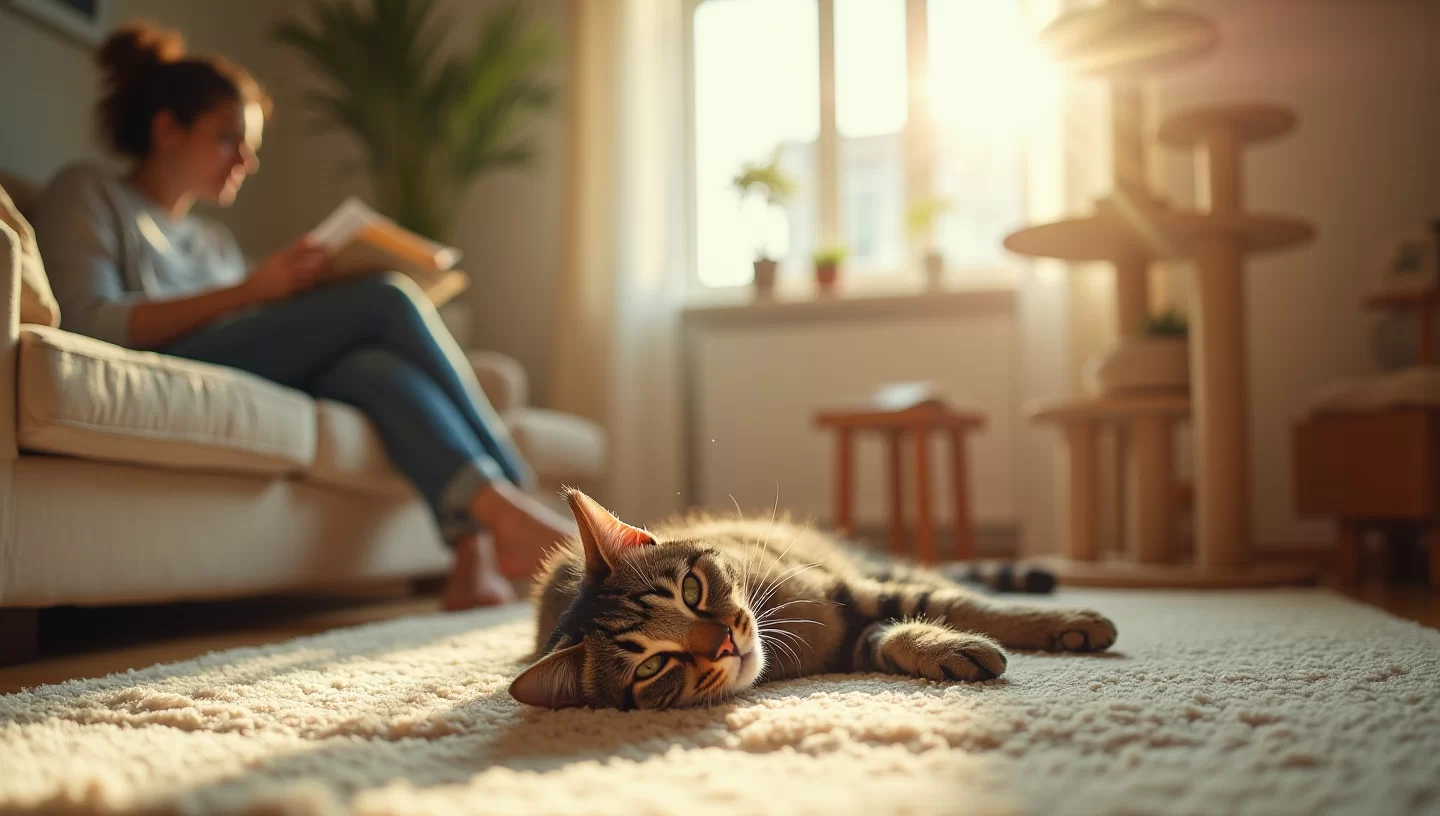
Exposing the belly is a prime example. The abdomen is one of a cat’s most vulnerable areas. Flopping over and showing the soft underside demonstrates profound trust. It is not always an invitation for a belly rub—many cats will react defensively to a hand there—but the posture itself is a transparent offering of defenselessness.
Following from room to room, sometimes silently, signals attachment that goes beyond the expectation of food. A cat that adjusts its location just to remain near an owner is exhibiting a companionable interest, even if it chooses to nap three feet away rather than on a lap.
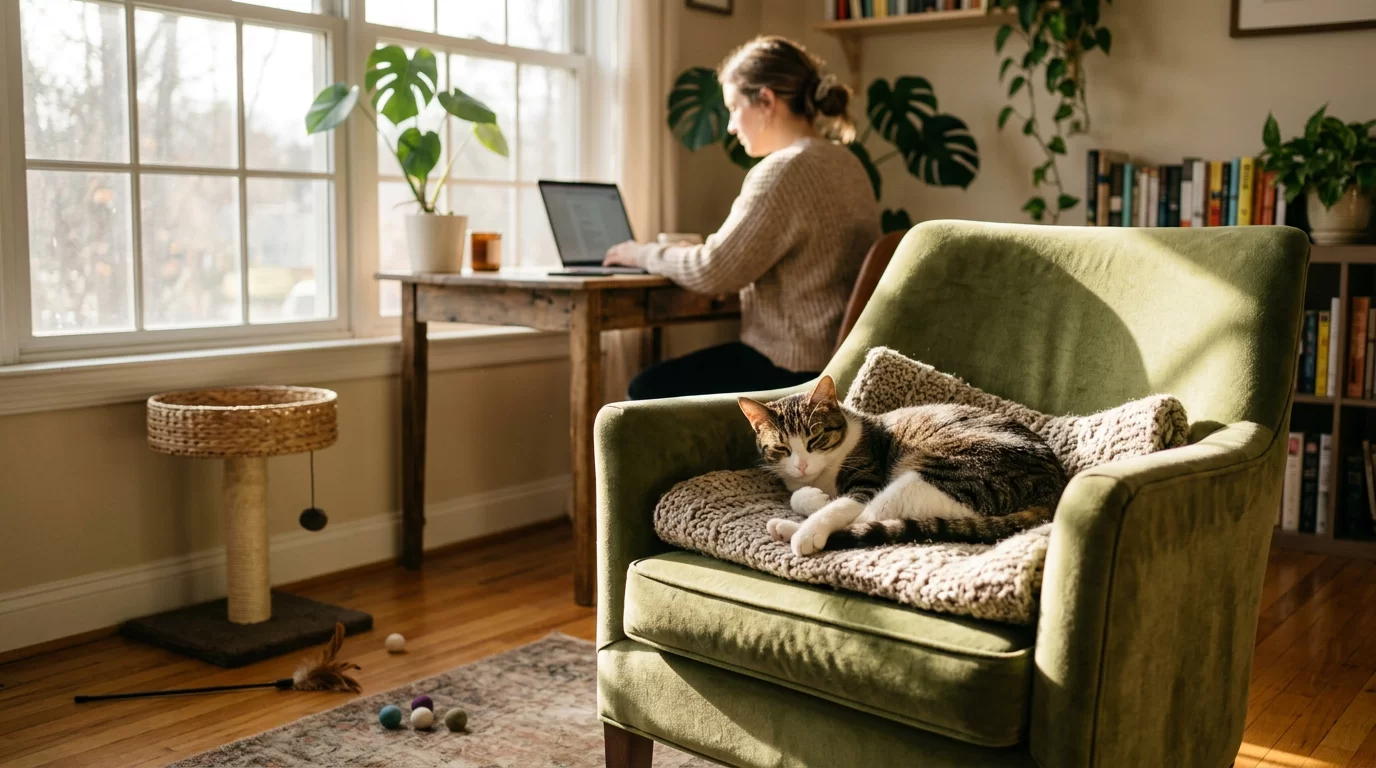
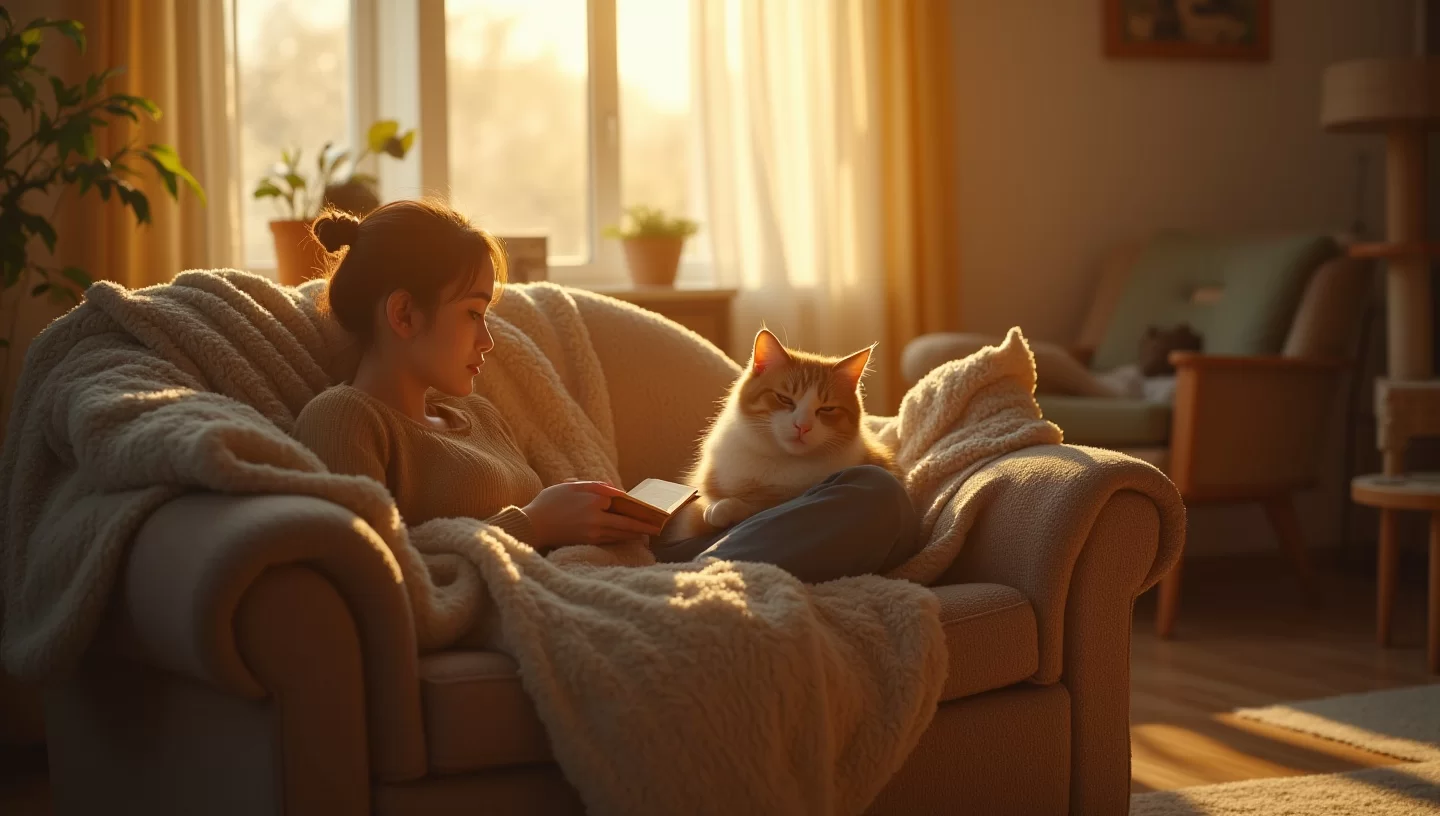
Sleeping on or beside you elevates the bond further. In sleep, a cat is at its most vulnerable. Choosing a person as a sleeping surface or tucking into the curve of a body at night means the cat considers that person a source of warmth and absolute protection. This behavior replicates the cuddling kittens do for both comfort and thermoregulation.
Slow, deliberate blinking during a greeting again deserves mention; when a cat enters a room and immediately begins a slow blink sequence, it is reaffirming the relationship every time.
Love vs. Tolerance: A Quick Comparison
Distinguishing true affection from simple coexistence can puzzle even long-time cat owners. The table below breaks down key behavioral differences that veterinarians and feline behaviorists use to assess the emotional quality of the human-cat bond.
| Behavior | Signals Affection and Trust | Signals Tolerance or Stress |
|---|---|---|
| Body posture near owner | Relaxed, belly exposed, muscles loose | Tensed body, tail tucked, ready to flee |
| Eye contact | Slow blinks, soft gaze, half-closed eyes | Wide eyes, dilated pupils, stare without blinking |
| Vocalizations | Trills, chirps, soft meows, companionable purring | Hissing, growling, excessive meowing, silence |
| Initiation of contact | Seeks out laps, rubs, sleeps on owner | Only approaches for food; avoids touch |
| Response to handling | Leans into petting, kneads, purrs | Flinch, skin rippling, tail lashing, ears back |
| Grooming behavior | Licks owner, grooms herself while relaxed | Overgrooming from stress, no social grooming |
Interpreting the whole picture matters more than isolating a single signal. A cat that occasionally flicks its tail while purring on a lap is not necessarily sending a mixed message; context and combined body language make the truth readable over time.
How to Strengthen Your Cat’s Emotional Trust
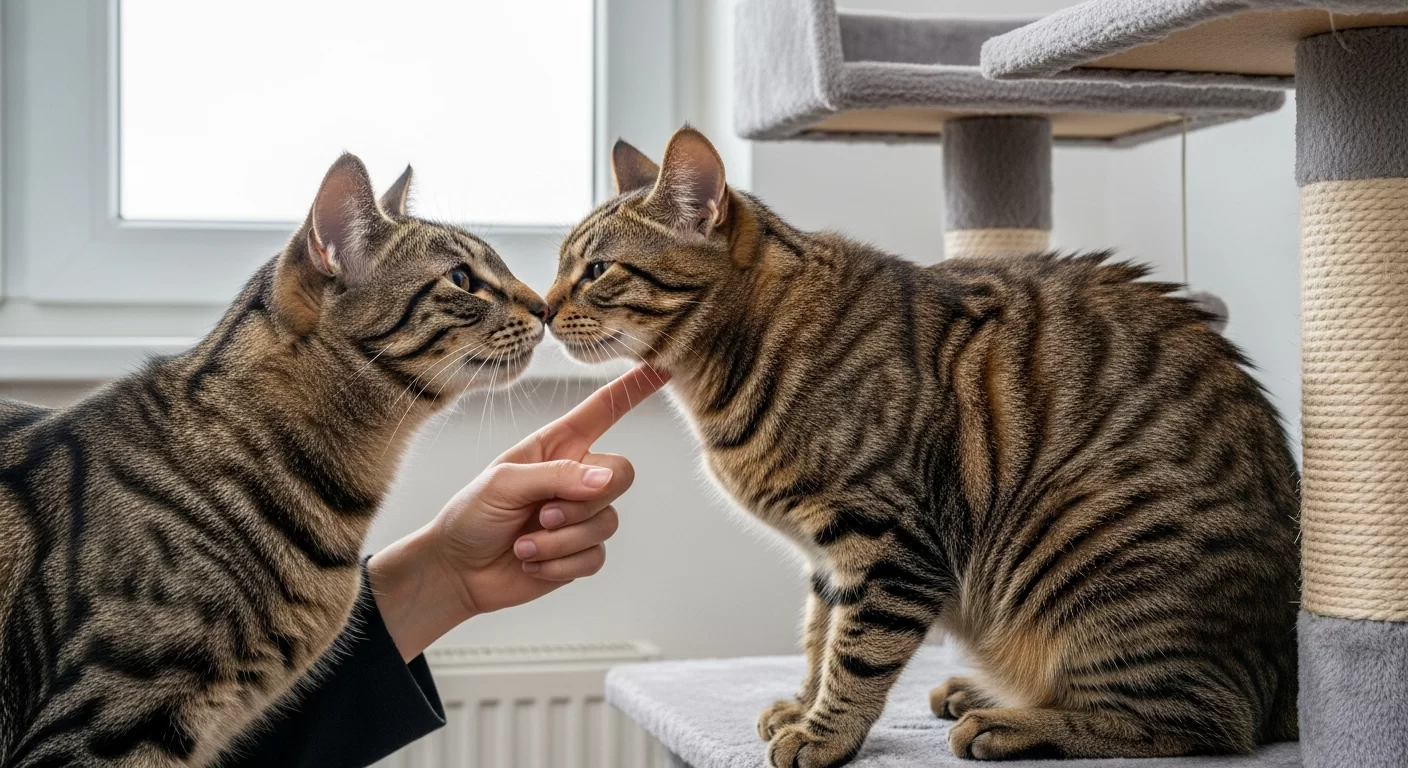
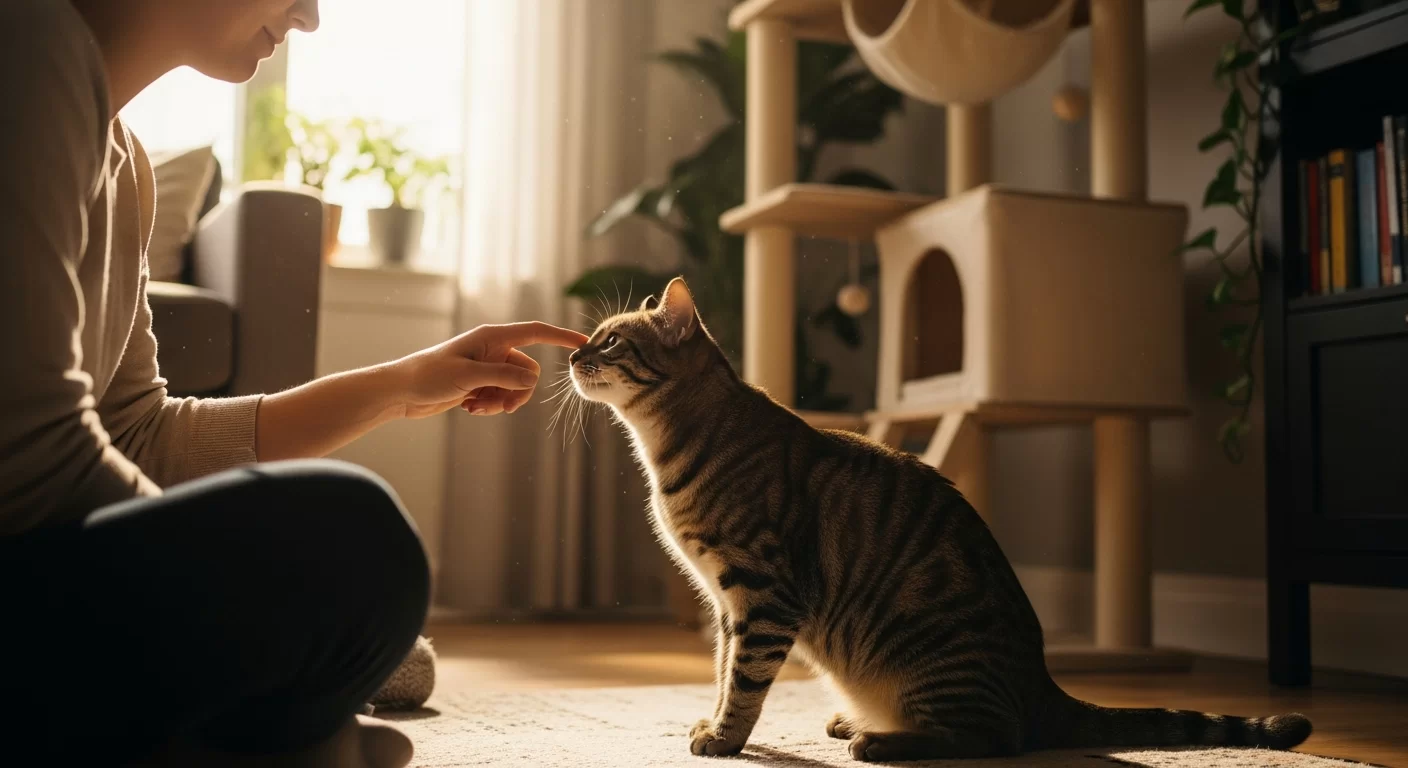
Let the cat initiate contact whenever possible. Extending a finger for a sniff and waiting for a rub or turn-away gives the cat control, which reduces anxiety and increases the likelihood of future affection. Responding consistently with slow blinks and gentle vocal tones builds a shared language of trust.
Routine predictability plays a large role. Cats are creatures of habit. Regular feeding times, clean litter boxes, and a quiet environment free from frequent loud disruptions build the base level of safety that allows affection to bloom. Environmental enrichment—cat trees, window perches, puzzle feeders, and daily interactive play—meets innate needs and lets the cat associate the owner with positivity.
Never punish a cat for not displaying love. Forced restraint, shouting, or spraying with water erodes trust and can extinguish the very signs an owner hopes to see. A cat that hides or flinches is communicating stress; respecting that space teaches the cat that the human is safe, not a threat. Over time, many shy cats become the most devoted companions precisely because they were allowed to set the pace.
Cat Love Changes Over a Lifetime
A kitten who once bounced off the walls may become a senior who expresses devotion through quiet, constant proximity. Age, health, and past experiences shape how a feline communicates. Senior cats often become more lap-oriented, while a previously neglected rescue may take years to offer a first slow blink. These shifts are not a reflection of diminished love but of a living relationship evolving under changing circumstances. Veterinary check-ups can rule out pain or illness when a formerly affectionate cat withdraws, but patience remains the most powerful tool. The cat who learns that its signals—no matter how small—are respected will keep offering them in its own way. That quiet consistency, a warm shape in the curve of a knee each evening, is the true answer to the question.