If your cat follows you from room to room, sleeps pressed against you, and rarely lets you out of sight, you may be asking yourself, “Why is my cat so attached to me?” Most of the time, a cat this attached to one person is showing a healthy, secure bond. It means you’ve become their trusted anchor—the source of safety, warmth, and predictability. The 9 common reasons below explain why some cats form such intense connections, from early kittenhood experiences and breed tendencies to daily routine and emotional comfort. Understanding what’s behind your cat’s clingy cat behavior will help you read it clearly, appreciate it when it’s normal bonding, and recognize when it might be a sign of stress or a health concern.
In This Article
- What This Behavior Usually Means
- 9 Common Reasons for a Cat’s Strong Attachment
- How to Tell If the Bond Is Healthy
- Signs Your Cat Feels Deeply Connected to You
- When Clinginess Needs More Attention
- How to Help Your Cat Feel Safe
What This Behavior Usually Means
A cat bonded to you this way is often showing what animal behavior researchers call a secure attachment style. A 2019 study published in Current Biology by researchers at Oregon State University found that the majority of domestic cats display attachment patterns similar to human infants—seeking proximity and comfort from their caregiver and using that person as a safe base. For most cats, following you everywhere and wanting to be near you isn’t anxiety; it’s affection and trust, shaped by a blend of personality, history, and daily life.
- Your cat likely sees you as a primary source of comfort and predictability.
- The behavior often develops early in kittenhood and strengthens through positive daily interactions.
- In many cases, a cat attached to one person still functions independently; they just choose to be near you when they can.
- True separation-related distress is less common, but it can look similar. Context and intensity make the difference.
- Changes in attachment intensity—especially sudden increases—can be a cat’s way of communicating that something feels off.
9 Common Reasons for a Cat’s Strong Attachment
1. You are their primary caregiver and comfort person
A cat bonded to their owner often forms this attachment because that person feeds them, speaks to them gently, plays with them, and maintains a steady routine. Over time, your presence becomes the most reliable, soothing part of their day, and they naturally want to stay close.
2. Early socialization left a lasting imprint
Kittens who receive gentle handling and positive human contact between about 2 and 7 weeks of age are more likely to grow into affectionate cats. If your cat was well-socialized as a young kitten—or if you hand-raised them—this early experience can create a deeply people-oriented adult who treats you as a constant companion.
3. They were separated from their mother or littermates too soon
Some cats who were orphaned, separated early, or who came from a single-kitten litter direct their natural need for closeness onto their human. This can result in a cat attached to one person who suckles on blankets, kneads frequently, and follows you more persistently than a cat who had a longer kittenhood with siblings.
4. You provide warmth, soft spots, and a feeling of safety
Cats are heat-seekers by nature. If you’re the warmest, most comfortable resting spot—and you offer laps, blankets, or a shared bed—your cat will gravitate toward you. This often shows up as a cat that sleeps on you, next to your head, or curled against your legs, especially during colder months.
5. Your energy and household rhythm feel predictable
Cats thrive on routine, and a calm, predictable home environment can make a cat feel secure enough to let their guard down completely. A cat who follows you everywhere may be doing so because your movements, voice, and daily habits signal that everything is okay. This is common in quieter homes where one person is the cat’s primary point of contact.
6. Breed tendencies play a role
Some cat breeds are famously people-focused. Siamese, Ragdoll, Sphynx, Burmese, and Maine Coon cats, for example, are often described as “Velcro cats” who shadow their owners, vocalize for attention, and dislike being alone for long periods. If you have one of these breeds, an especially strong attachment is often part of their genetic temperament.
7. They are bored or understimulated
A cat who doesn’t have enough environmental enrichment may follow you simply because you’re the most interesting thing in their world. This type of clingy cat behavior tends to ease when you add puzzle feeders, window perches, climbing shelves, and short interactive play sessions throughout the day.
8. A recent change has made you their anchor
Moving to a new home, the loss of another pet, a new baby, visitors, or even rearranging furniture can make a cat feel unsettled. During these times, many cats glom onto the one constant in their environment: you. This kind of attachment often softens as the cat regains confidence in their surroundings, though some cats remain more people-oriented after a disruption.
9. Positive reinforcement has strengthened the bond
If every time your cat comes to you something good happens—gentle petting, a treat, a soothing voice, or a warm lap—they quickly learn that staying close to you pays off. This is simple, positive association at work, and it’s one of the most common reasons a cat becomes a constant, happy shadow.
How to Tell If the Bond Is Healthy
Healthy cat attachment looks relaxed and flexible. The cat wants to be near you, but they can also eat, rest, and use the litter box normally when you’re in another room. A cat separation anxiety situation, on the other hand, involves distress when the person isn’t present—and the intensity matters. The ASPCA describes separation-related distress in pets as behaviors like persistent vocalization, house soiling, destructive actions, or excessive grooming that occur specifically when the owner is absent. The table below can help you notice the difference between a secure bond and a response that may deserve closer attention.
| Healthy bonded behavior | Behavior that may need attention |
|---|---|
| Your cat follows you but can still relax on their own. | Your cat seems unable to settle unless they are touching you or keeping you in sight. |
| They greet you at the door and then resume their usual routine. | They panic when you prepare to leave, vocalize excessively, or eliminate outside the litter box while you’re gone. |
| They enjoy lap time but also take breaks to nap in another spot. | They demand constant physical contact and become agitated when you shift position or leave the room. |
| They sleep near you calmly through the night. | They pace, overgroom, or hide—especially during your usual departure times. |
| They show curiosity about new people and explore confidently. | They withdraw, hiss, or seem panicked when the routine changes even slightly, or when visitors arrive. |
This isn’t a diagnostic checklist. It’s a gentle lens to help you notice what’s normal for your cat and what might be edging into distress. If you see signs in the right column frequently, a conversation with your veterinarian or a certified cat behavior professional can help you understand what’s driving the change.
Signs Your Cat Feels Deeply Connected to You
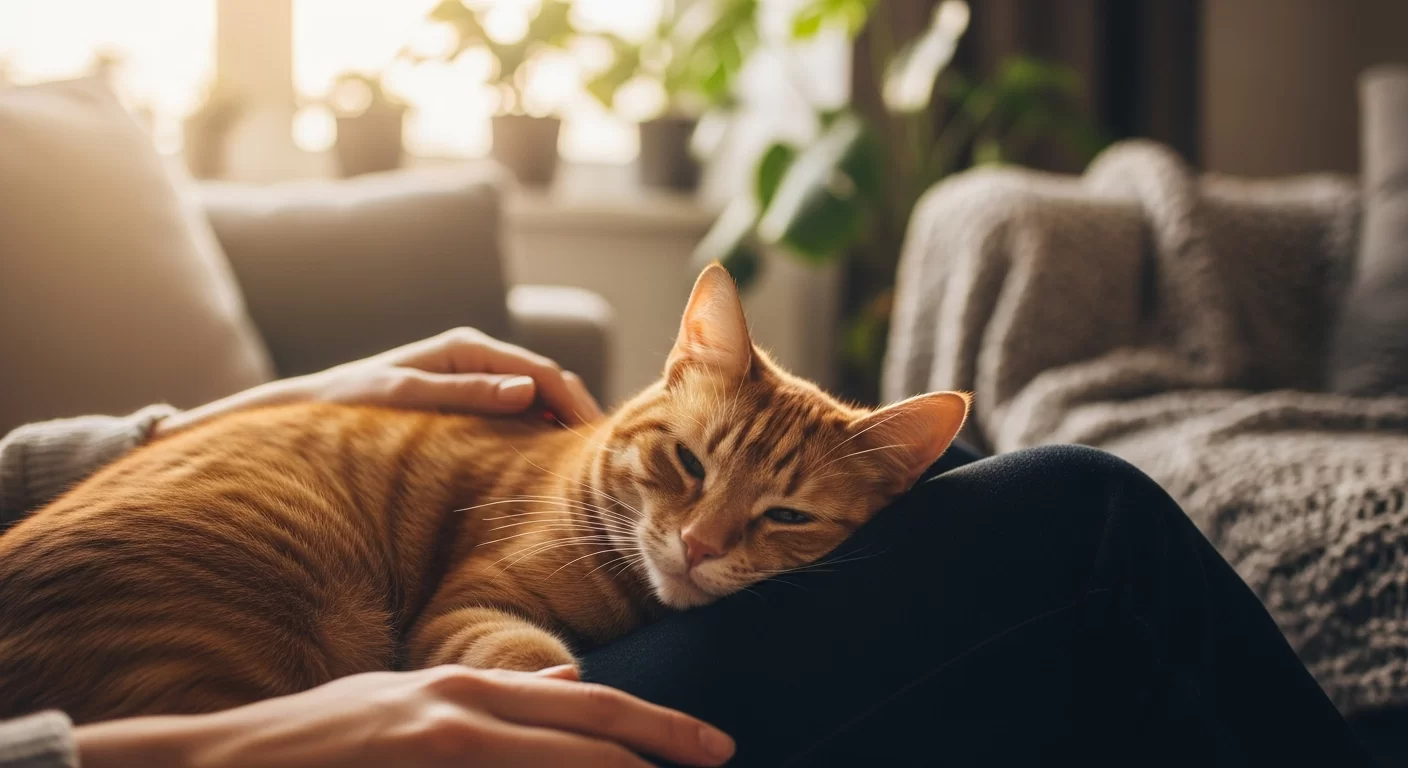
When a cat feels secure, their body language and daily habits tell the story. These bonding signs often show up alongside the following-me-everywhere behavior and help confirm your cat’s attachment is coming from a calm, trusting place. Check which of these you recognize in your own cat.
- Slow blinking in your direction. Often called “cat kisses,” slow blinks signal relaxation and trust—your cat is telling you they feel safe.
- Head bunting and cheek rubbing. Cats have scent glands on their cheeks and forehead. Rubbing against you marks you as part of their safe, familiar group.
- Kneading on you or on soft surfaces near you. This kittenhood nursing behavior often surfaces when an adult cat feels deeply content.
- Bringing you toys or “gifts.” A cat who drops a toy at your feet may be sharing a prized possession, which is a strong social signal.
- Tail language that says “happy to see you.” A tail held high with a slight curve or quiver at the tip often means your cat is pleased and confident in your presence.
- Purring and trilling when you walk into the room. Soft, chirp-like trills and steady purring are common greetings from a cat who has formed a close bond.
- Sleeping on or touching you. A cat who chooses to nap on your lap, chest, or pressed against your leg is combining warmth, safety, and deep trust.
- Following you without signs of hypervigilance. A relaxed cat may trail you from room to room but still stop to look out a window, grab a drink of water, or stretch and yawn.
- Grooming you or other bonded cats in your presence. Allogrooming is a social behavior that strengthens bonds, and a cat may lick your hand or hair as a sign of inclusion.
When Clinginess Needs More Attention
A sudden or intense shift in attachment can be a cat’s way of telling you something is wrong. A cat behavior change like this is worth investigating, not ignoring. There are several non-behavioral reasons that can make a cat cling more tightly, including pain, illness, sensory decline, and anxiety. The Cornell Feline Health Center notes that cats often hide signs of illness, so a subtle increase in shadowing behavior may be one of the few outward clues.
Pay particular attention if the clinginess arrives alongside:
- Appetite loss, weight change, or increased thirst
- Litter box avoidance or urination outside the box
- Hiding, flattened posture, or sudden aggression
- Excessive grooming, especially on the belly or inner legs
- Vocalizing that sounds strained or different from their usual meow
- Pacing, restlessness, or an inability to settle even when you’re near
- A major life change such as a move, a new pet, a new baby, or a change in your work schedule
These signs don’t mean your cat has permanent separation anxiety. In many cases, they point to an underlying medical issue or a temporary stressor that can be addressed with veterinary support and gentle environmental management. Always let your veterinarian rule out pain, illness, or age-related changes before assuming the problem is purely behavioral.
How to Help Your Cat Feel Safe and Secure
Supporting a cat attached to you in a healthy way doesn’t mean pushing them away—it means giving them more tools to feel secure, even when you aren’t in the same room. Small, consistent adjustments can make a big difference for both normal attachment and milder clinginess that edges toward distress.
- Stick to predictable daily routines. Feed, play, and rest times that happen at roughly the same time each day help your cat feel the world is steady.
- Create “safe alone” spaces. Provide cozy hideaways, cat trees near windows, and self-warming beds in quiet spots where your cat can retreat and still feel secure.
- Use environmental enrichment. Puzzle feeders, scratching posts, food-dispensing toys, and even a bird feeder outside a window offer healthy independent activity.
- Practice gentle departures. Step outside for just a minute or two, then return without fanfare. Gradually extend the time so your cat learns that leaving doesn’t mean abandonment.
- Reward calm, independent behavior. When your cat settles in a bed nearby rather than on top of you, offer a soft treat or a quiet word of praise at that moment.
- Consider calming aids thoughtfully. Pheromone diffusers, calming supplements, or music designed for cats can support relaxation—but should be paired with environmental changes, not used in isolation. Talk with your veterinarian before adding any supplement.
- Get professional input when needed. If the clinginess is intense, sudden, or paired with signs of distress, a vet visit comes first, followed by a consultation with a certified cat behavior consultant if medical causes are ruled out.
If your cat follows you everywhere but eats well, uses the litter box consistently, and can still enjoy a sunny windowsill nap when you’re not in the room, the attachment is very likely part of a loving, secure bond. You don’t need to fix it—you can simply appreciate it. Keep building that trust with predictable routines, gentle play, and safe resting spots. If the behavior appears suddenly or arrives with appetite changes, hiding, overgrooming, or litter box problems, treat the change as important information, not a personality flaw, and reach out to your veterinarian for guidance. Most clingy cat behavior reflects genuine affection, and with a little observation, you can learn to tell the difference between a cat who loves being near you and a cat who’s telling you they need a little extra help.