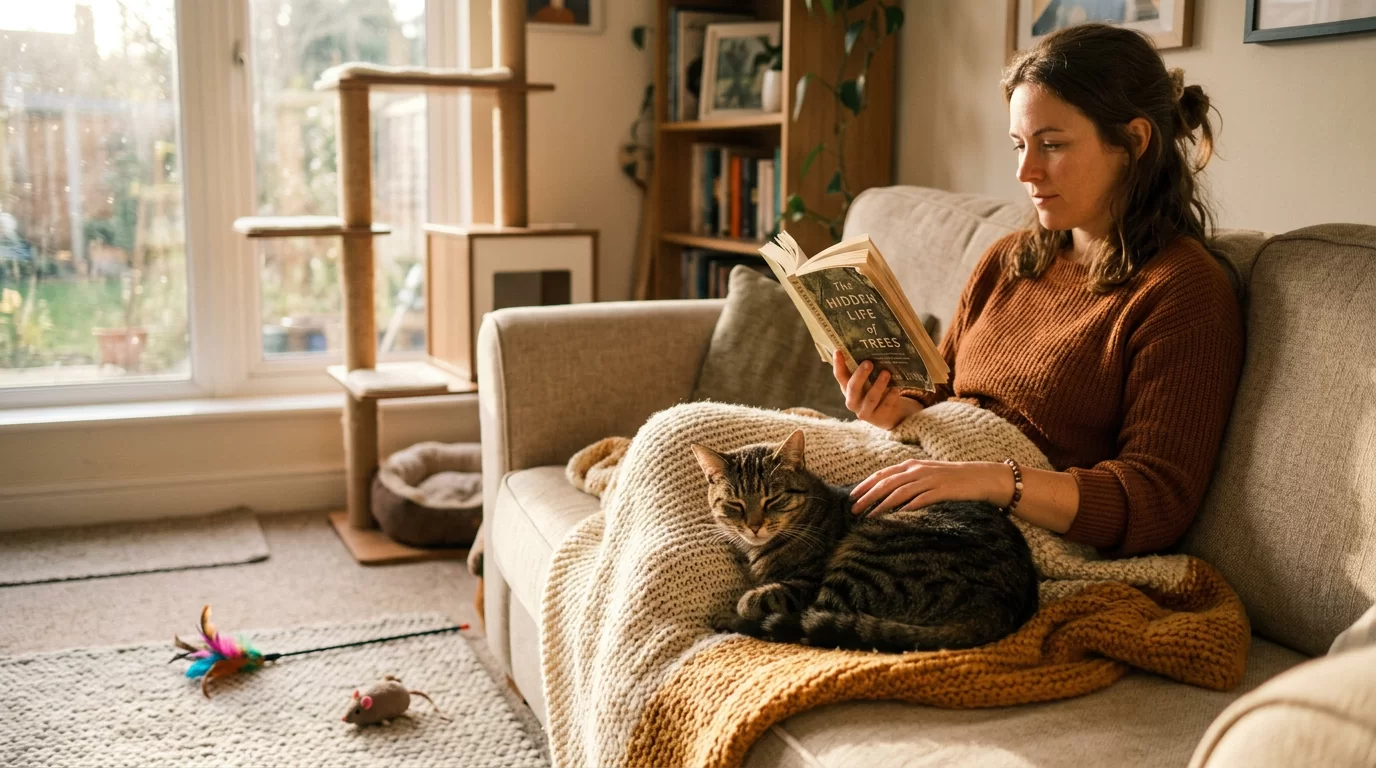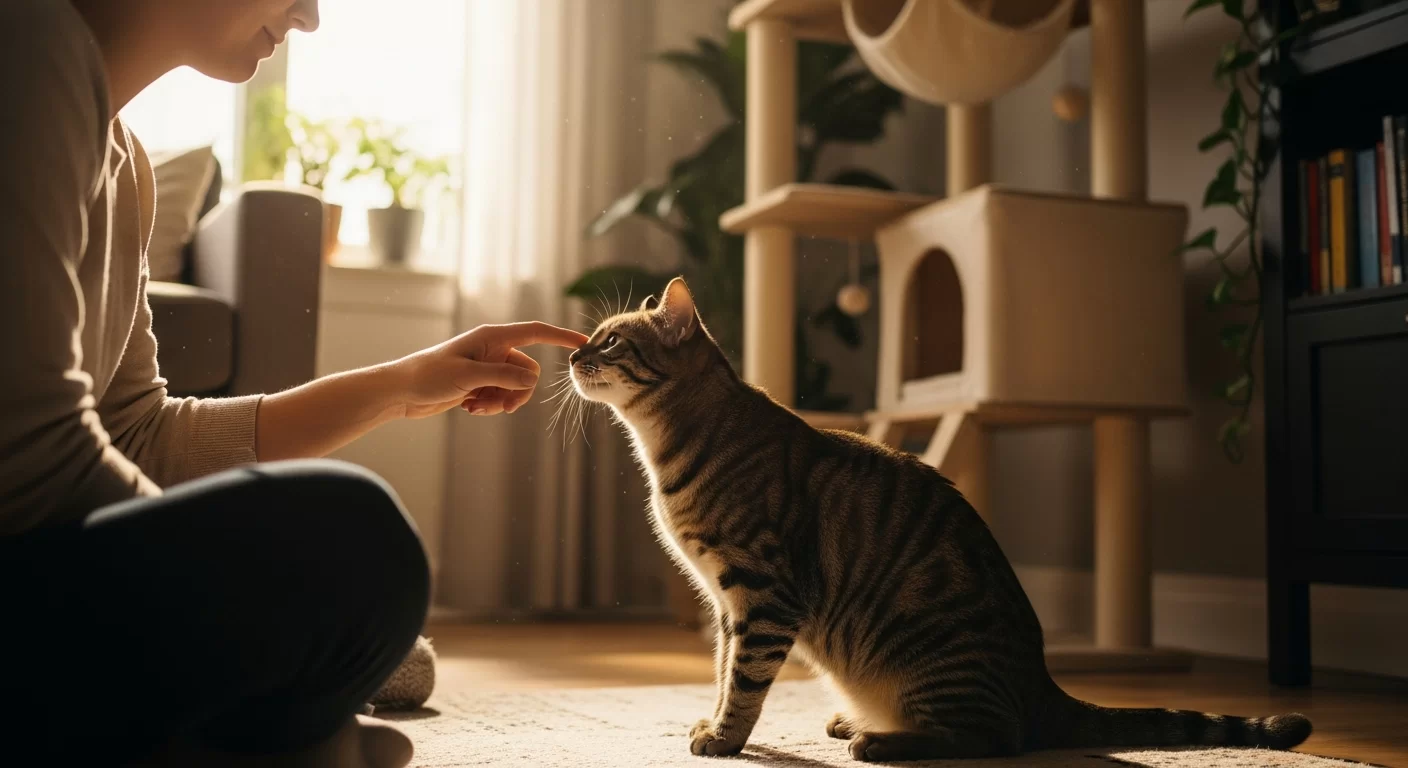
If your cat seems devoted to one person, you are probably seeing a normal feline attachment pattern, not a rejection of everyone else. Cats can form strong, selective bonds based on early socialization, communication style, and the sense of safety a specific individual provides. A cat attached to one person is often displaying a secure preference shaped by who meets their needs most predictably and who reads their body language well. This kind of single-person focus is common and, in most cases, simply reflects a deep, healthy bond rather than insecurity or anxiety.
In This Article
- What Your Cat’s Attachment Usually Means
- How to Tell If the Bond Is Healthy
- Signs Your Cat Feels Attached to You
- When the Behavior Deserves Attention
- How to Help Your Cat Feel Safe
What Your Cat’s Attachment Usually Means
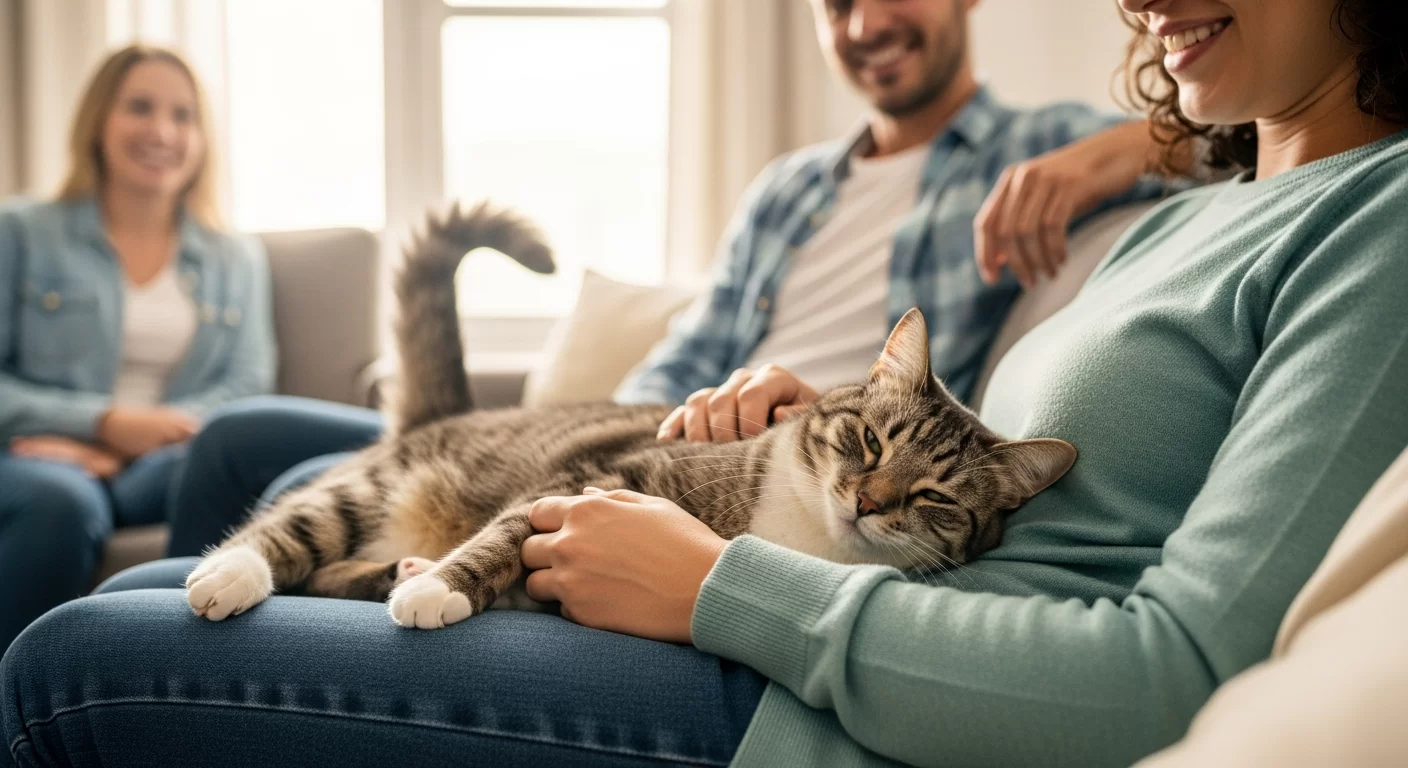
- Early socialization: Cats who had positive, calm handling by one person during kittenhood may imprint more strongly on that person or on people who act similarly.
- Communication match: A person who reads a cat’s subtle cues—slow blinks, tail flicks, ear movements—and responds respectfully often becomes the preferred human.
- Routine and resource provision: The one who feeds, plays at predictable times, and creates a low-stress environment tends to be seen as a source of security.
- Scent and voice familiarity: Cats use scent and vocal tone to identify safe individuals. A familiar, calm voice and a consistent personal scent can reinforce the bond.
- Personality alignment: A quieter cat may bond more tightly with a quieter person, while a playful, curious cat might choose someone who initiates interactive play.
In most households, this single-person attachment is not a sign that the cat dislikes others. It simply means the cat has found the person whose presence most reliably signals safety and comfort. As long as the cat can still coexist peacefully with other family members, this preference is part of normal feline social behavior.
How to Tell If the Bond Is Healthy
A healthy bond looks different from clingy cat behavior driven by anxiety. Recognizing the difference helps you decide whether you are seeing a confident attachment or a stress response. The table below compares typical bonded behavior with signs that may warrant a closer look.
| Healthy bonded behavior | Behavior that may need attention |
|---|---|
| Your cat follows you but can relax on their own when you are busy. | Your cat seems unable to settle unless they are touching you or can see you at all times. |
| Your cat greets you calmly when you return, with a raised tail and soft meows. | Your cat vocalizes excessively, paces, or seems panicked when you prepare to leave. |
| Your cat sleeps near you but also uses other resting spots. | Your cat refuses to eat or use the litter box unless you are nearby. |
| Your cat accepts attention from other people, even if they prefer you. | Your cat hisses, hides, or shows aggression toward others who approach you. |
| Your cat’s routine remains steady, with normal appetite, grooming, and litter habits. | You notice appetite loss, overgrooming, hiding, or litter box issues alongside the clinginess. |
A cat bonded to one person can certainly show some mild protest when that person leaves, but a resilient, securely attached cat will eat, rest, and engage with the environment normally. If the intensity tips into distress that disrupts daily functioning, the behavior may be rooted in feline separation anxiety, pain, or another underlying issue rather than a simple preference.
The ASPCA describes separation-related distress in pets as intense anxiety triggered by a specific person’s absence, often accompanied by vocalization, house soiling, or destructive behavior. A 2019 study published in Current Biology by researchers at Oregon State University found that cats display attachment styles toward caregivers that are similar to those seen in dogs and human infants, with most cats showing secure attachment markers when their environment feels stable. A cat who trusts their person typically explores, relaxes, and communicates without panic.
Signs Your Cat Feels Attached to You
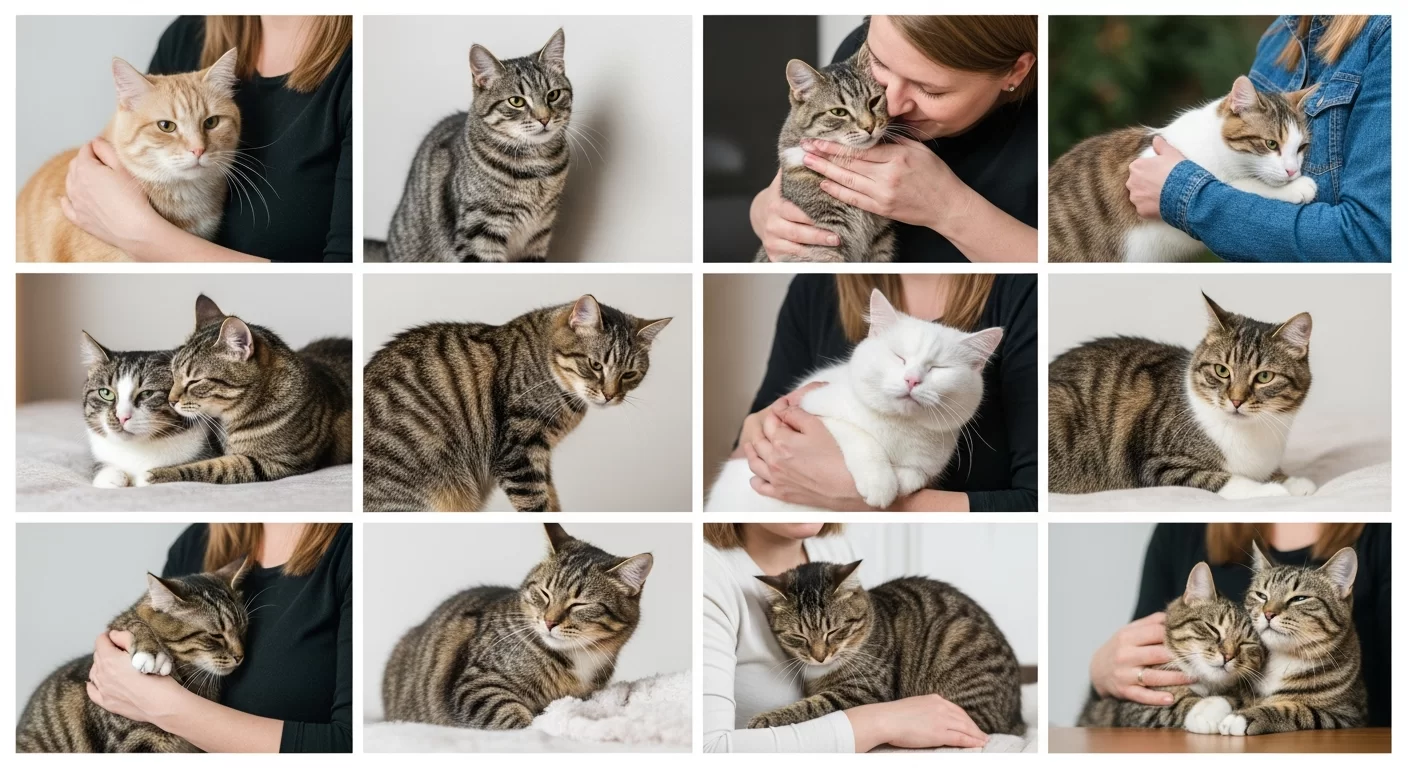
When a cat attaches to a particular person, the signs are often subtle but consistent over time. These bonding signals go beyond simply occupying the same room. They reflect a sense of safety and a willingness to be vulnerable.
- Following you from room to room without appearing frantic or anxious.
- Slow blinking in your direction, which communicates trust.
- Kneading on you or on soft surfaces near you, a behavior rooted in kittenhood comfort.
- Head-butting and cheek rubbing to deposit facial pheromones and mark you as part of their safe social group.
- Bringing you “gifts” such as toys or, in outdoor cats, prey items.
- Showing their belly near you—not always an invitation for a rub, but a sign of vulnerability and trust.
- Sleeping on or against you, especially if they choose to rest deeply with eyes fully closed.
- Responding to your voice with a lifted tail, ear movement, or a soft trill.
- Licking or grooming you, a social behavior called allogrooming.
- Purring when you handle them gently and settling into your lap or beside you.
- Seeking you out when they are startled rather than running into hiding.
- Waiting by the door or window when you are due home, then greeting you calmly.
- Rubbing against your legs with a relaxed posture and soft tail.
These affectionate cat behaviors are typically flexible. A securely attached cat may shadow you yet also nap alone in another room, showing confidence even in your absence.
When the Behavior Deserves Attention
Sometimes a cat attached to one person crosses into territory that deserves a conversation with a veterinarian. The concern is not the attachment itself, but a sudden shift or an intensity that interferes with the cat’s wellbeing. Medical issues, pain, aging, or environmental stress can all push a cat into more desperate, clingy behavior.
Pay attention if the single-person focus:
- Appears abruptly in a cat who was previously independent.
- Includes appetite changes, weight loss, or drinking less or more than usual.
- Is paired with litter box avoidance or urination outside the box.
- Brings new hiding, aggression, or overgrooming that leads to bald patches or skin irritation.
- Shows signs of pain—flinching, stiffness, vocalizing when picked up, or reluctance to jump.
- Follows a major routine disruption such as moving, a new baby, a new pet, or a household member leaving.
- Makes the cat unable to eat or rest without the preferred person being present.
These are not simply “clingy cat” traits. Pain from dental disease, arthritis, or an underlying illness can make a cat seek constant proximity to a trusted human. Cognitive decline in older cats can also heighten dependence. The Cornell Feline Health Center emphasizes that behavior changes are often the first outward sign of a medical problem. A thorough veterinary exam, including bloodwork, can rule out or confirm physical causes before assuming the behavior is purely emotional.
How to Help Your Cat Feel Secure
Whether the attachment is a lifelong pattern or a newer development, you can gently support a cat who relies heavily on one person while helping them feel secure in the wider household. The goal is not to break the bond, but to build a resilient sense of safety that reduces stress when routines shift.
- Keep daily rhythms predictable. Feed, play, and offer quiet time at similar times each day. Predictability reinforces security.
- Provide elevated perches, hiding boxes, and window spots. Vertical space and covered resting areas let a cat observe without feeling exposed.
- Use interactive play to burn energy and build confidence. Wand toys and food puzzles give your cat a healthy outlet and a sense of control.
- Let other trusted people offer high-value treats and gentle play. This should happen without force. If your cat retreats, honor that.
- Introduce scent-swapping items. A soft cloth rubbed gently on the preferred person’s cheeks can be placed near another family member’s resting area to build positive scent associations.
- Create calm departures and arrivals. Avoid dramatic goodbyes or excited reunions. A matter-of-fact tone helps a cat learn that absences are routine.
- Consider calming aids in consultation with your veterinarian. Feliway diffusers, calming supplements, or prescribed medications may be appropriate for cats with significant separation distress.
- Protect your cat from environmental stressors. Minimize loud noises, sudden changes to the home layout, and unsupervised interactions with young children or unfamiliar pets.
If your cat’s distress seems tied only to your absence and is severe—constant vocalizing, refusing to eat, soiling, or self-harm—reach out to a veterinarian or a certified cat behavior professional. PetMD explains that true feline separation anxiety often requires a combination of environmental management, behavior modification, and sometimes medication to help the cat feel safe again.
Most cats who choose one person are simply expressing a deep, secure bond. If your cat is relaxed, eating well, using the litter box normally, and choosing to stay near you while still showing moments of independence, their attachment is likely part of a healthy, trusting relationship. Keep supporting that bond with gentle consistency, play, and safe spaces. If the clinginess appears suddenly or arrives alongside appetite changes, hiding, overgrooming, aggression, or litter box issues, treat it as useful information—not a personality quirk—and ask your veterinarian for a thorough evaluation. A thoughtful, observant approach can help you distinguish between a loving bond and a behavior that needs care.