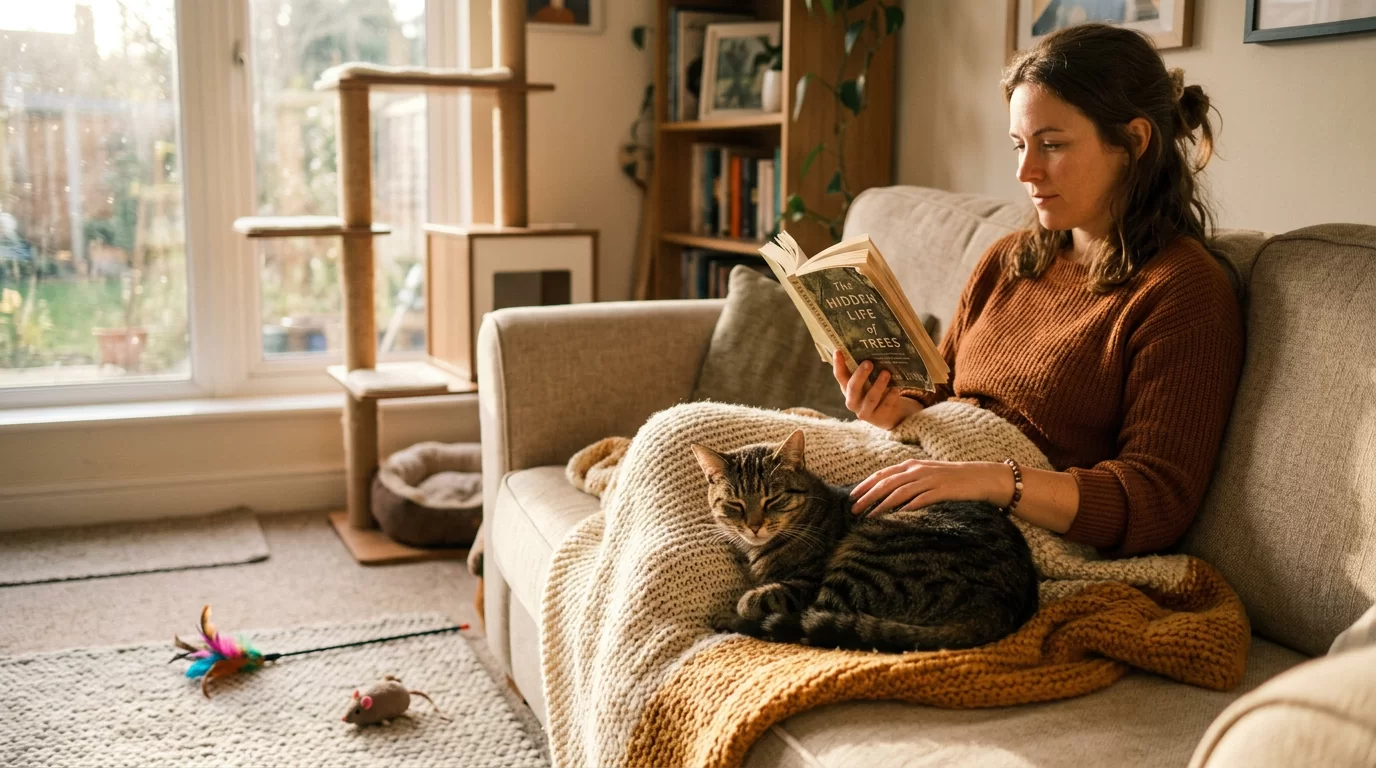
Cats are often described as independent, but independence is not the opposite of attachment. Many cats form deep social bonds with their owners, using them as a source of safety, predictability, affection, and routine. That attachment may appear as following someone from room to room, sleeping nearby, greeting at the door, slow blinking, vocalizing for attention, or becoming unsettled when a favorite person leaves.
Understanding cat attachment matters because it helps owners distinguish normal bonding from stress, separation-related problems, illness, boredom, or dependency created by an unstable environment. A cat that wants closeness is not necessarily “needy,” and a cat that prefers space is not necessarily unaffectionate. Feline attachment is shaped by early socialization, temperament, household routines, health, age, and the quality of human interaction.
This guide explains what cat attachment to an owner looks like, why it develops, when it is healthy, when it may signal anxiety, and how owners can support a secure relationship without encouraging distress. It also addresses common misconceptions about feline loyalty, “favorite person” behavior, clinginess, and separation anxiety using practical, veterinary-informed guidance.
In This Article
- What Cat Attachment to an Owner Means
- Signs a Cat Is Attached to Its Owner
- Why Cats Become Attached to Certain People
- Secure Attachment vs Clinginess vs Separation Anxiety
- The Science Behind Cat-Human Attachment
- How Early Socialization Shapes Cat Attachment
- How Cats Choose a Favorite Person
- When Strong Attachment May Signal a Problem
- How to Build a Secure Bond With a Cat
- Helping an Overly Attached Cat Feel More Independent
- Special Cases: Kittens, Senior Cats, Rescue Cats, and Multi-Cat Homes
- Common Myths About Cat Attachment
What Cat Attachment to an Owner Means
Cat attachment to an owner is a social and emotional bond in which a cat recognizes a person as familiar, safe, rewarding, and important to its daily life. It may include affection, proximity-seeking, communication, trust, and comfort-seeking during stress.
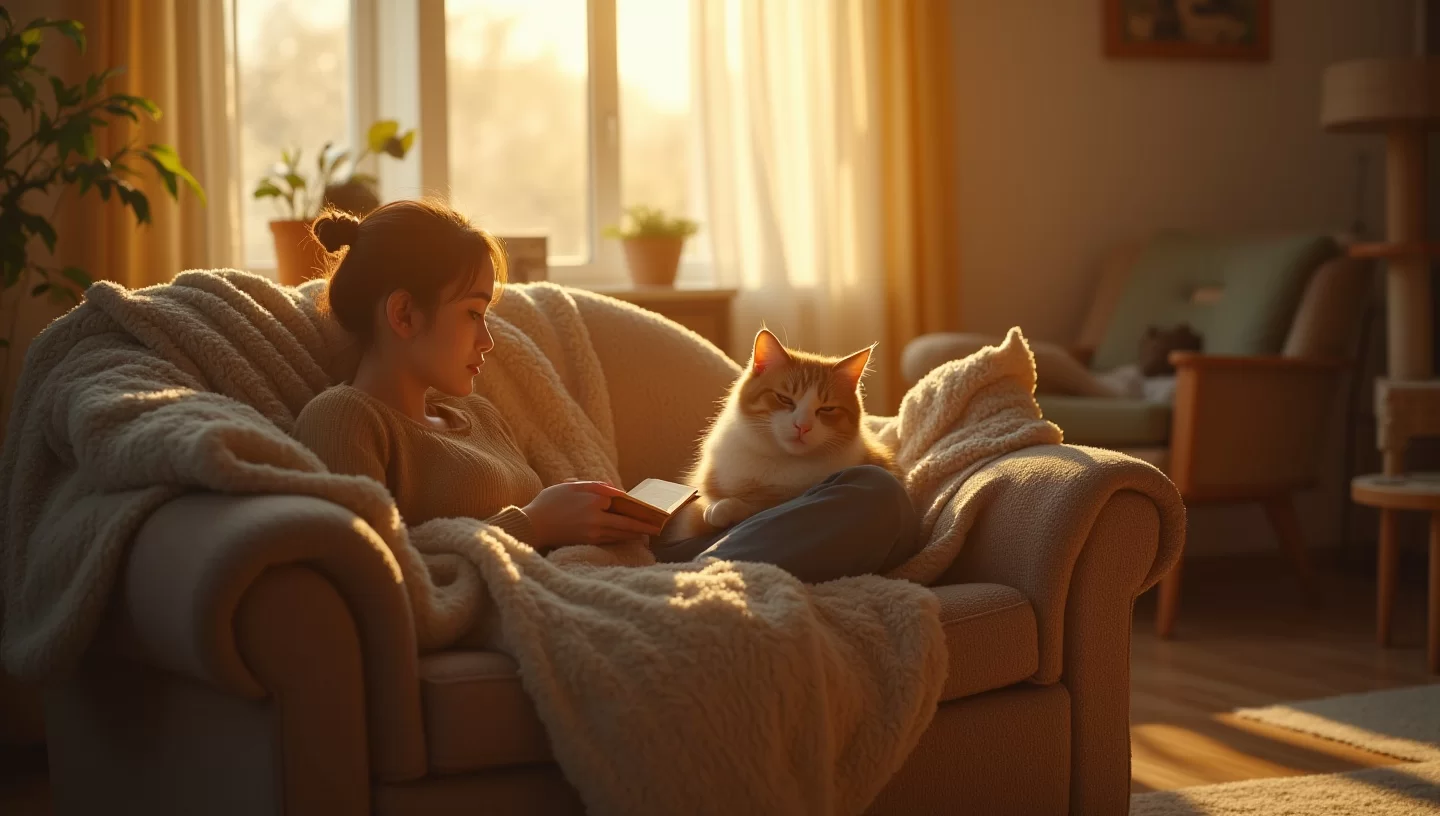
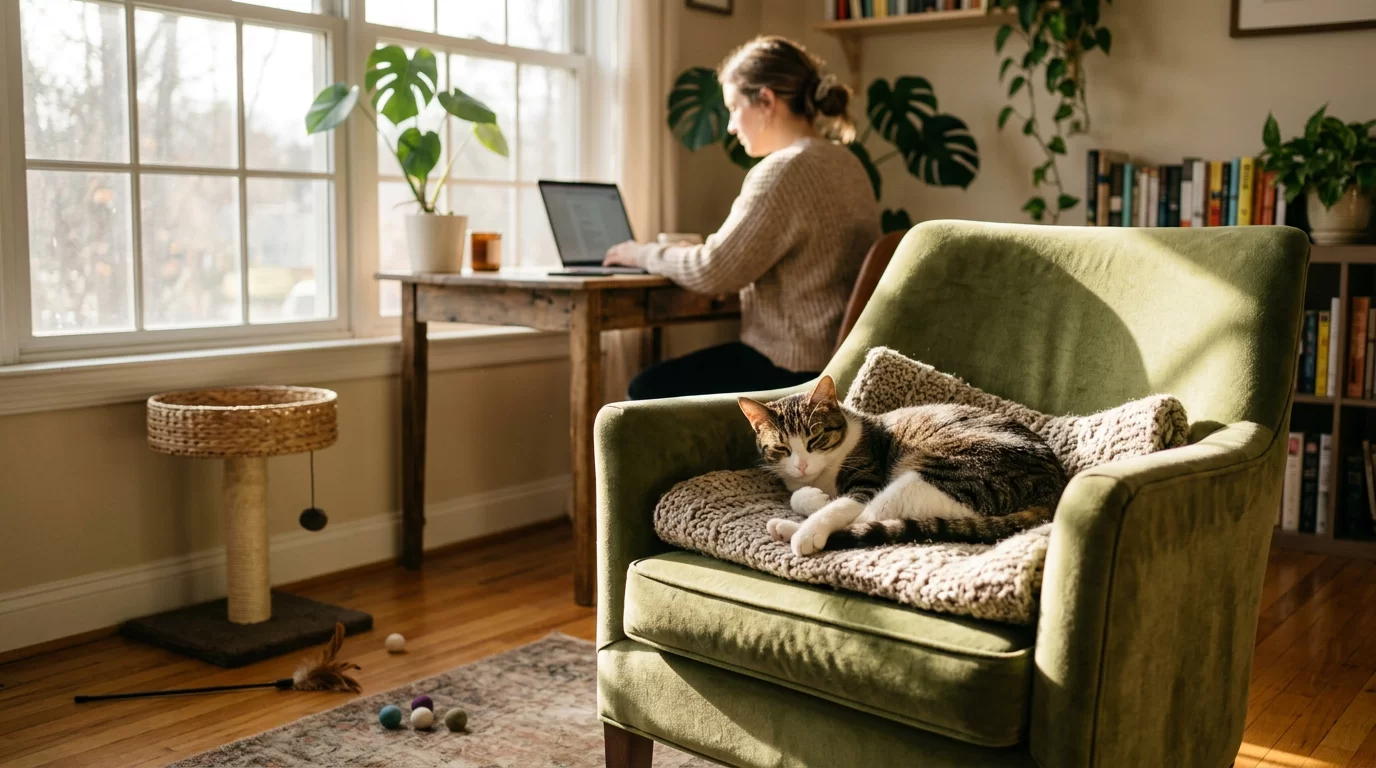
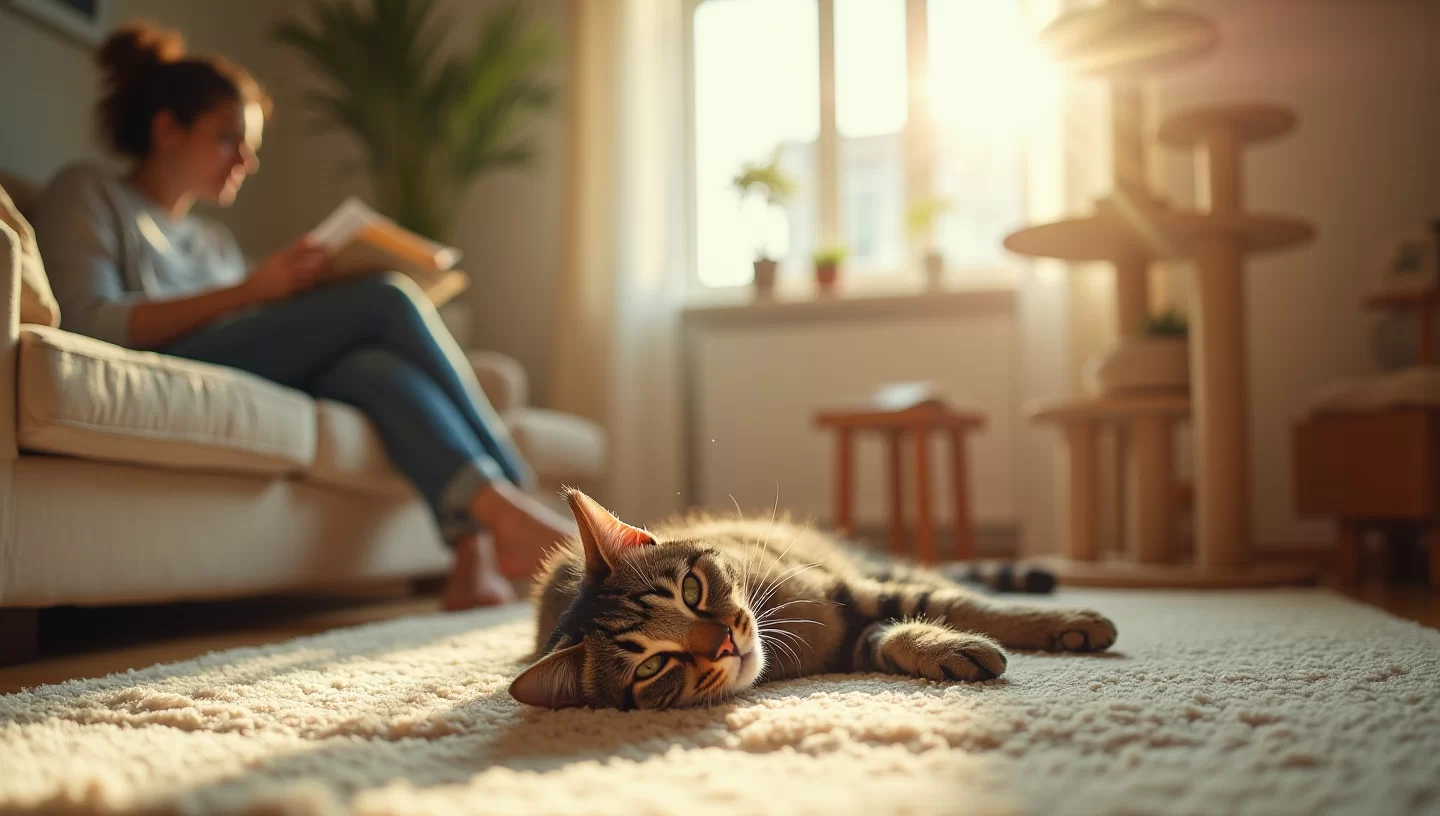
Attachment is not the same as obedience. Cats do not typically express social bonding through compliance in the way many dogs do. Instead, feline attachment is often subtle and context-dependent. A bonded cat may sit near its owner rather than directly on them, follow them quietly, relax with its belly exposed nearby, or choose to sleep in the same room.
A cat’s attachment style can be influenced by:
- Early handling and socialization
- Genetics and temperament
- Feeding and caregiving routines
- Predictability of the home environment
- Quality of play and interaction
- Past trauma, abandonment, or rehoming
- Medical comfort or discomfort
- Age-related cognitive or sensory changes
What does it mean when a cat is attached to its owner?
A cat attached to its owner sees that person as a source of safety, comfort, resources, and social connection. Healthy attachment usually includes relaxed closeness, trust, greeting behavior, and voluntary interaction. Problematic attachment may involve distress when separated, excessive vocalization, destructive behavior, inappropriate elimination, or inability to settle alone.
Healthy attachment gives a cat confidence. A secure cat may enjoy attention but can also rest, explore, eat, play, and use the litter box normally when the owner is not present. The goal is not to make a cat less loving, but to help it feel safe whether or not its favorite person is nearby.
Signs a Cat Is Attached to Its Owner
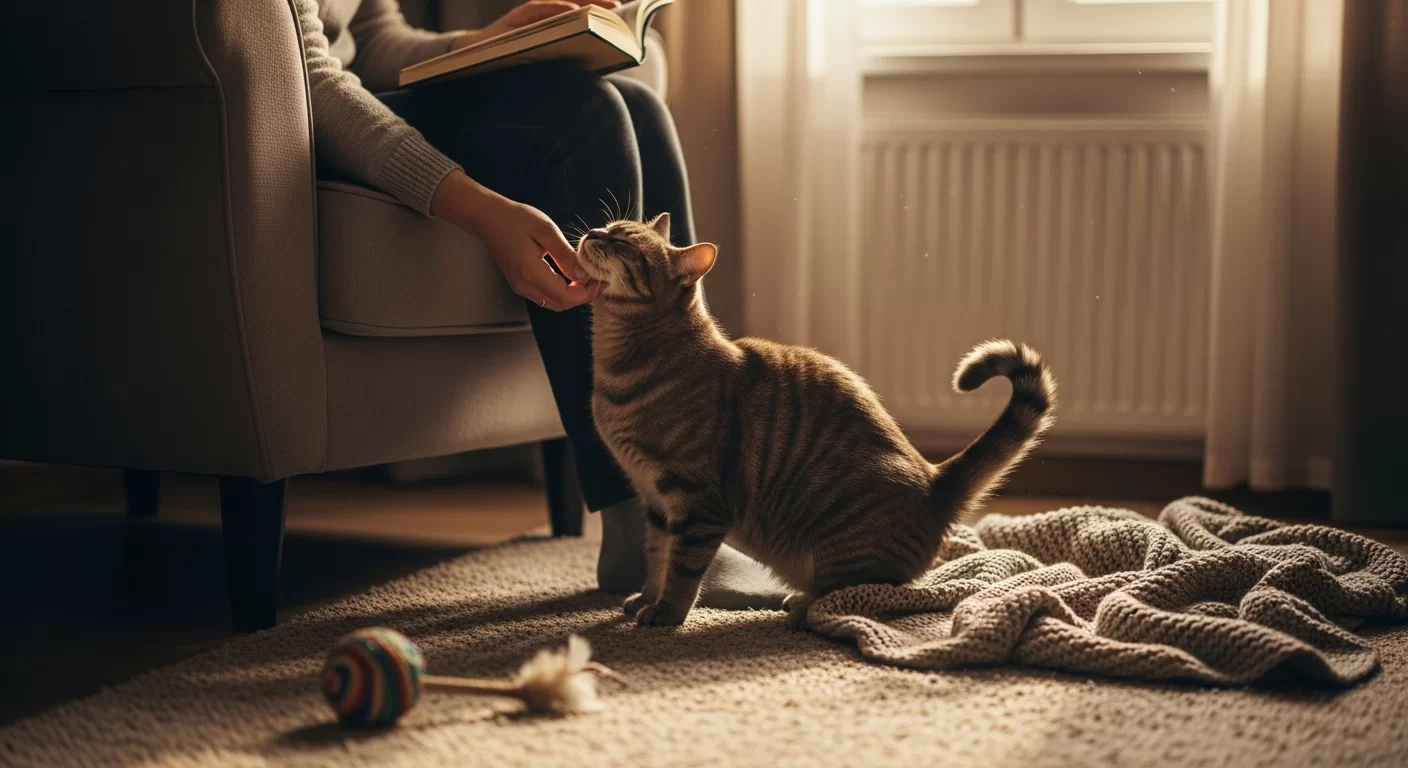
Common signs of cat attachment include:
- Greeting the owner at the door
- Following the owner between rooms
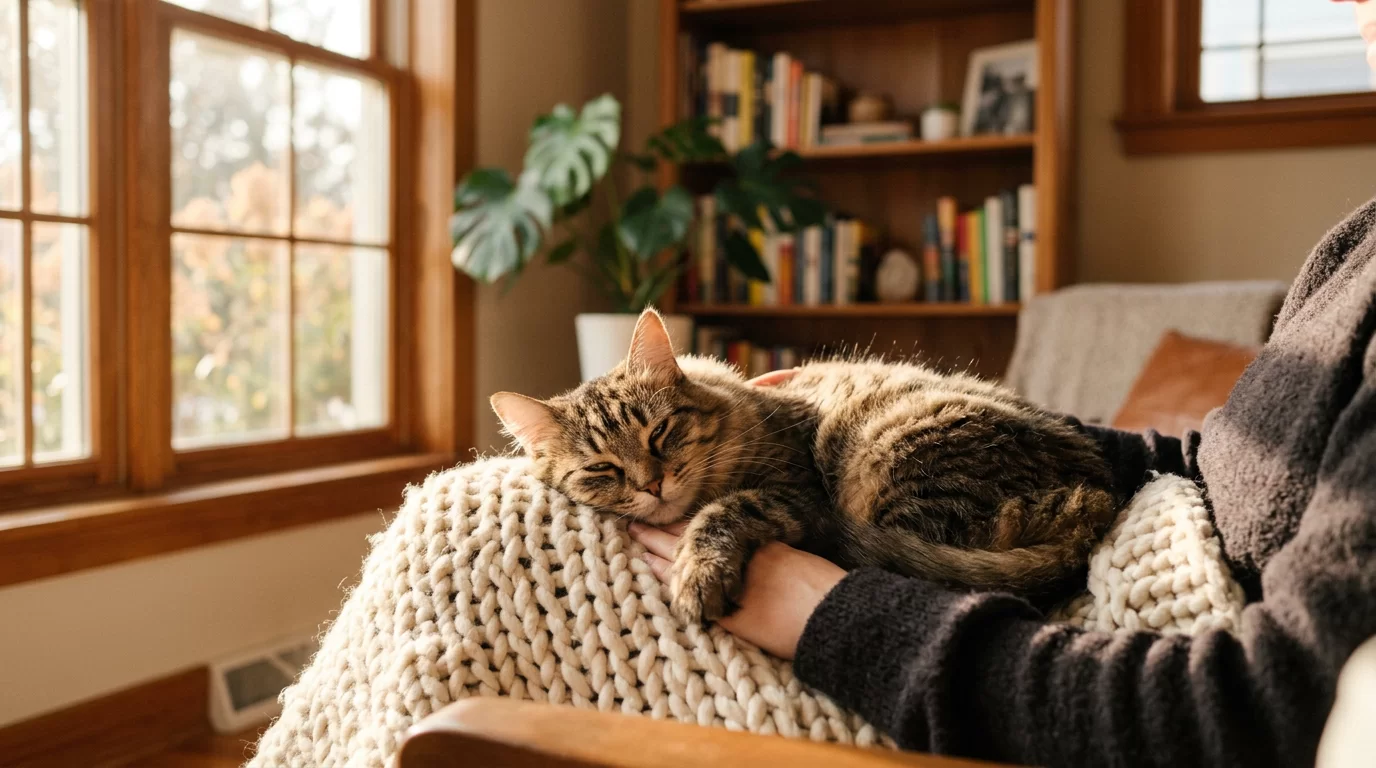
- Sleeping near or on the owner
- Slow blinking during eye contact
- Rubbing cheeks, head, or body against the owner
- Kneading on blankets, laps, or clothing
- Purring during close contact
- Bringing toys or initiating play
- Vocalizing when the owner returns
- Sitting nearby during work, reading, or television
- Showing relaxed body posture in the owner’s presence
- Seeking comfort from the owner after a scare
- Grooming the owner’s hair, hands, or clothing
- Exposing the belly while resting nearby, even if not inviting touch
Cats also use scent to maintain social bonds. When a cat rubs its face against a person, it deposits pheromones from scent glands around the cheeks and chin. This behavior is part communication, part familiarity-building. International Cat Care notes that scent is central to feline social organization and environmental security, particularly in multi-cat homes and territorial spaces.
| Behavior | What It Often Means | When to Watch More Closely |
|---|---|---|
| Following the owner | Social interest, routine, anticipation of food or play | If the cat panics when separated |
| Sleeping nearby | Trust and comfort | If sleep is disrupted by constant attention-seeking |
| Slow blinking | Relaxed affiliative communication | Rarely concerning on its own |
| Rubbing against legs | Scent marking and greeting | If paired with agitation or over-arousal |
| Excessive meowing when alone | Possible distress, boredom, or learned behavior | If new, intense, or accompanied by elimination issues |
| Hiding until owner returns | Insecurity or environmental stress | If the cat refuses food, water, or litter box use |
A cat does not need to display every behavior to be attached. Some cats are lap cats; others are “nearby cats.” Both can be deeply bonded.
Why Cats Become Attached to Certain People
Cats usually become attached to people who provide safety, consistency, and respectful interaction. Food matters, but it is not the only factor. A cat may love the person who feeds it, but bond most deeply with the person who understands its signals, plays gently, and does not force contact.
Common causes of strong cat attachment include:
- Consistent caregivingFeeding, cleaning the litter box, providing water, and maintaining routines can make a person highly predictable and important.
- Positive social interactionCats often prefer people who allow them to initiate contact, use gentle touch, and stop petting before the cat becomes overstimulated.
- Early exposure to humansKittens handled calmly during the sensitive socialization period are more likely to become comfortable with people later in life.
- TemperamentSome cats are naturally more social, vocal, or proximity-seeking. Breed, genetics, and early development may influence this, although individual personality matters more than breed stereotypes.
- Emotional associationCats learn patterns. A person who plays at the same time each evening or offers calm comfort during storms may become associated with security.
- Stress or changeMoving homes, new pets, new babies, construction noise, or changes in work schedules may cause some cats to cling more tightly to a trusted person.
- Health changesPain, hyperthyroidism, cognitive dysfunction, sensory decline, or other medical issues can change social behavior. A suddenly clingy cat should not be dismissed as merely affectionate.
Expert Insight:
The American Association of Feline Practitioners emphasizes that cats need environments that support choice, predictability, and control. Their feline-friendly handling and environmental guidance reflects a central principle of cat behavior: cats feel safer when they can approach, retreat, hide, perch, and interact on their own terms. See the AAFP Feline Environmental Needs Guidelines.
Secure Attachment vs Clinginess vs Separation Anxiety
Not all strong attachment is a roblem. The key distinction is whether the cat can function calmly when the owner is unavailable.
| Pattern | Typical Behaviors | Cat’s Emotional State | Owner Response |
|---|---|---|---|
| Secure attachment | Greets owner, rests nearby, seeks affection, plays normally | Comfortable and confident | Maintain routine, enrichment, respectful interaction |
| Clinginess | Follows constantly, demands frequent attention, interrupts activities | May be bored, insecure, or reinforced by attention | Add enrichment, predictable play, independence-building |
| Separation-related distress | Vocalizes when alone, eliminates outside box, refuses food, destructiveness, overgrooming | Anxiety or panic-like distress | Veterinary evaluation and behavior plan |
| Medical behavior change | Sudden neediness, restlessness, nighttime vocalizing, hiding, irritability | Possible pain, illness, cognitive change | Veterinary exam promptly |
Is it normal for a cat to follow its owner everywhere?
It can be normal if the cat is relaxed, eating well, using the litter box normally, and able to settle when alone. It becomes concerning if following is paired with distress, panic at closed doors, excessive vocalization, inappropriate urination or defecation, appetite changes, aggression, overgrooming, or sudden onset.
Separation anxiety in cats is less discussed than in dogs, but it is recognized in veterinary behavior medicine. Signs may include excessive vocalization, inappropriate elimination, destructive scratching near exits, pacing, vomiting, overgrooming, or unusually intense greetings after absences. The Merck Veterinary Manual and veterinary behavior resources describe anxiety disorders in cats as multifactorial conditions that often require environmental management, behavior modification, and sometimes medication under veterinary supervision.
Owners should avoid punishing separation-related behaviors. A cat that urinates on bedding when left alone may not be acting out; it may be communicating distress, experiencing urinary disease, or seeking familiar scent. Because urinary issues can be medically urgent, any litter box change deserves veterinary attention.
The Science Behind Cat-Human Attachment
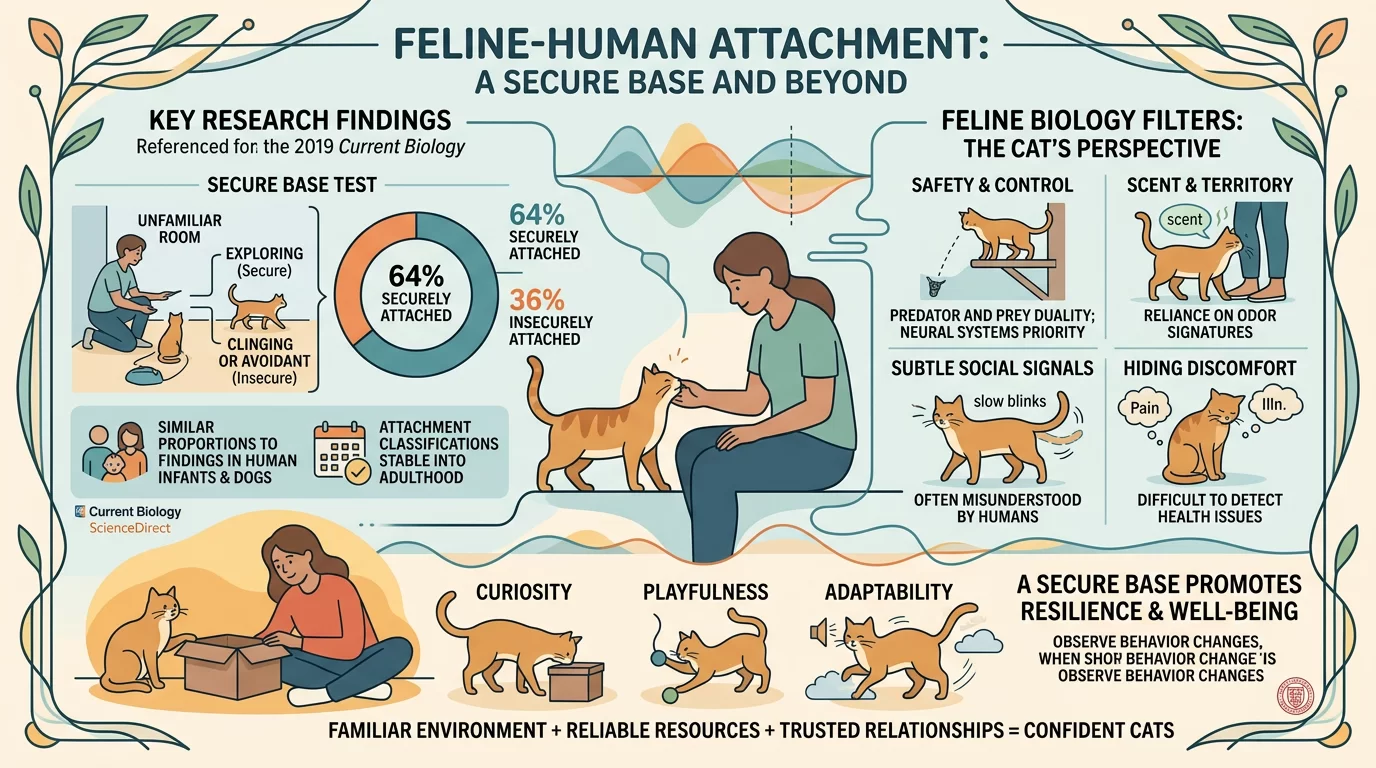
A widely cited 2019 study published in Current Biology found that cats displayed secure and insecure attachment patterns toward caregivers in a secure-base test similar to those used in human infant and dog attachment research. In that study, about 64% of kittens were classified as securely attached, a proportion similar to findings in human infants and dogs. The authors also reported that attachment classifications appeared relatively stable into adulthood. The study is available through ScienceDirect: Attachment bonds between domestic cats and humans.
This does not mean cats attach in exactly the same way humans or dogs do. Feline attachment is filtered through feline biology:
- Cats are both predators and small prey animals, so safety is central.
- They rely heavily on scent and territory.
- They prefer control over social interaction.
- They may hide discomfort until illness or stress becomes advanced.
- Their social signals can be subtle.
Veterinary behaviorists often describe cats as needing a secure base: a familiar environment, reliable resources, and trusted relationships. When those elements are present, many cats become more curious, playful, and resilient.
Cornell Feline Health Center also notes that behavior changes can be important health clues. Their educational resources on feline behavior emphasize the value of observing changes in appetite, litter box habits, activity, and social interaction.
How Early Socialization Shapes Cat Attachment
A cat’s comfort with people often begins in kittenhood. The sensitive period for kitten socialization is commonly considered to occur between roughly 2 and 7 weeks of age, though learning continues beyond that window. Gentle handling, exposure to normal household sounds, positive play, and calm human presence can help kittens develop confidence.
Kittens that receive little human contact during early development may still bond later, but the process may take more time and patience. Fearful cats are not “broken.” They may need predictable routines, safe hiding spaces, and low-pressure interaction.
Important early socialization experiences include:
- Gentle handling by different people
- Exposure to normal home sounds
- Positive carrier experiences
- Play with appropriate toys
- Calm introduction to grooming
- Respectful touch and release
- Safe interactions with other friendly animals when appropriate
The ASPCA Cat Care Guide provides general care guidance that supports healthy social and environmental development, including safe indoor living, enrichment, and veterinary care.
For adult cats, socialization becomes less about creating a universally outgoing personality and more about building trust. A shy adult cat may never enjoy being picked up, but may form a strong attachment by sleeping nearby, accepting treats, or choosing to sit beside a trusted person.
How Cats Choose a Favorite Person
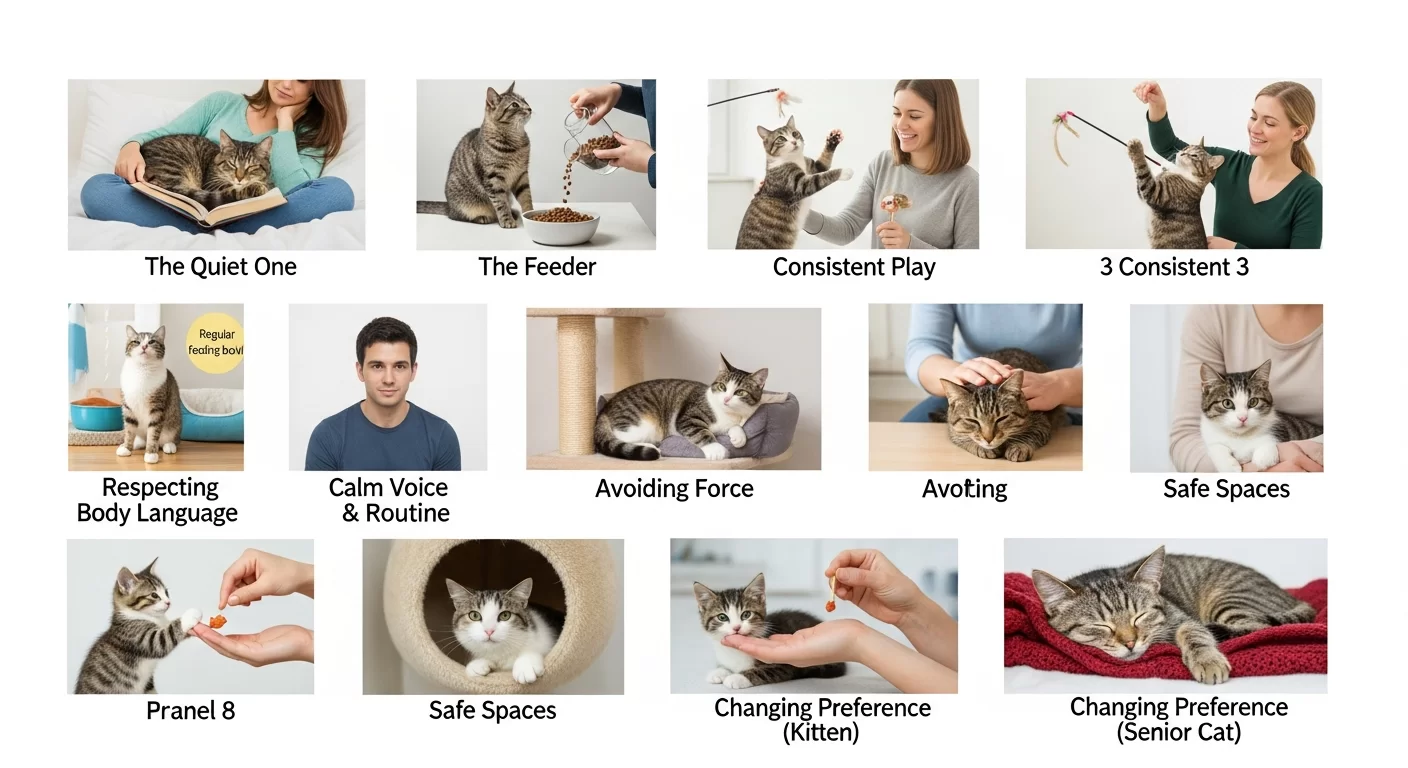
Many cats appear to have a favorite person, and the choice is not always obvious. It may be the quietest person in the home, the one who feeds them, the one who plays most consistently, or the person who does not pursue them.
Cats often favor people who:
- Respect their body language
- Use a calm voice
- Offer predictable routines
- Provide food, play, or comfort without pressure
- Avoid forced holding or rough petting
- Understand when to stop interaction
- Create safe spaces rather than demanding attention
A cat’s favorite person may also change over time. A kitten may attach to the main feeder, while an adult cat may shift toward someone who offers calm companionship. Senior cats may prefer the person who provides warmth, medication, or a quiet resting place.
Do cats get emotionally attached to one person?
Yes, many cats form a particularly strong bond with one person, though they can also bond with multiple household members. A preferred person is usually someone the cat associates with safety, routine, food, play, comfort, or respectful interaction.
It is important not to treat feline preference as rejection of others. Cats may divide relationships by function: one person for play, one for lap time, one for meals, and one for nighttime companionship. In multi-person households, the goal is not to compete for affection but to allow the cat to build positive associations with everyone at its own pace.
When Strong Attachment May Signal a Problem
Strong attachment becomes concerning when it appears suddenly, disrupts normal behavior, or is paired with signs of stress or illness. Cats are skilled at masking pain, so changes in affection can be medically meaningful.
A veterinary appointment is recommended if a cat suddenly becomes unusually clingy and also shows:
- Appetite increase or decrease
- Weight loss or weight gain
- Increased thirst or urination
- Vomiting or diarrhea
- Restlessness or nighttime vocalization
- Hiding or irritability
- Litter box accidents
- Overgrooming or hair loss
- Limping or reluctance to jump
- Confusion or disorientation
- Aggression when touched
- Excessive dependence after a household change
Medical conditions that may alter attachment behavior include hyperthyroidism, chronic pain, arthritis, dental disease, kidney disease, urinary tract disease, cognitive dysfunction syndrome, sensory decline, and gastrointestinal problems. PetMD and veterinary clinics often note that behavioral changes in cats should be interpreted alongside physical symptoms, not in isolation.
| Change in Attachment | Possible Explanation | Best Next Step |
|---|---|---|
| Suddenly follows owner constantly | Pain, anxiety, household stress, hunger, cognitive change | Monitor symptoms and schedule veterinary exam |
| Cries at night near owner | Hyperthyroidism, cognitive dysfunction, boredom, hearing loss | Veterinary evaluation, nighttime enrichment |
| Urinates on owner’s bed | Stress, urinary disease, scent-seeking, litter box aversion | Veterinary visit; do not punish |
| Hides except with one person | Fear, social stress, new pet conflict | Add safe zones and assess household dynamics |
| Demands food and attention nonstop | Medical hunger, learned behavior, boredom | Vet check; structured feeding and play |
Expert Insight:
The American Veterinary Medical Association encourages pet owners to seek veterinary care when behavior changes are sudden, persistent, or accompanied by physical signs. Behavioral symptoms can be the first visible indication of illness in cats.
How to Build a Secure Bond With a Cat
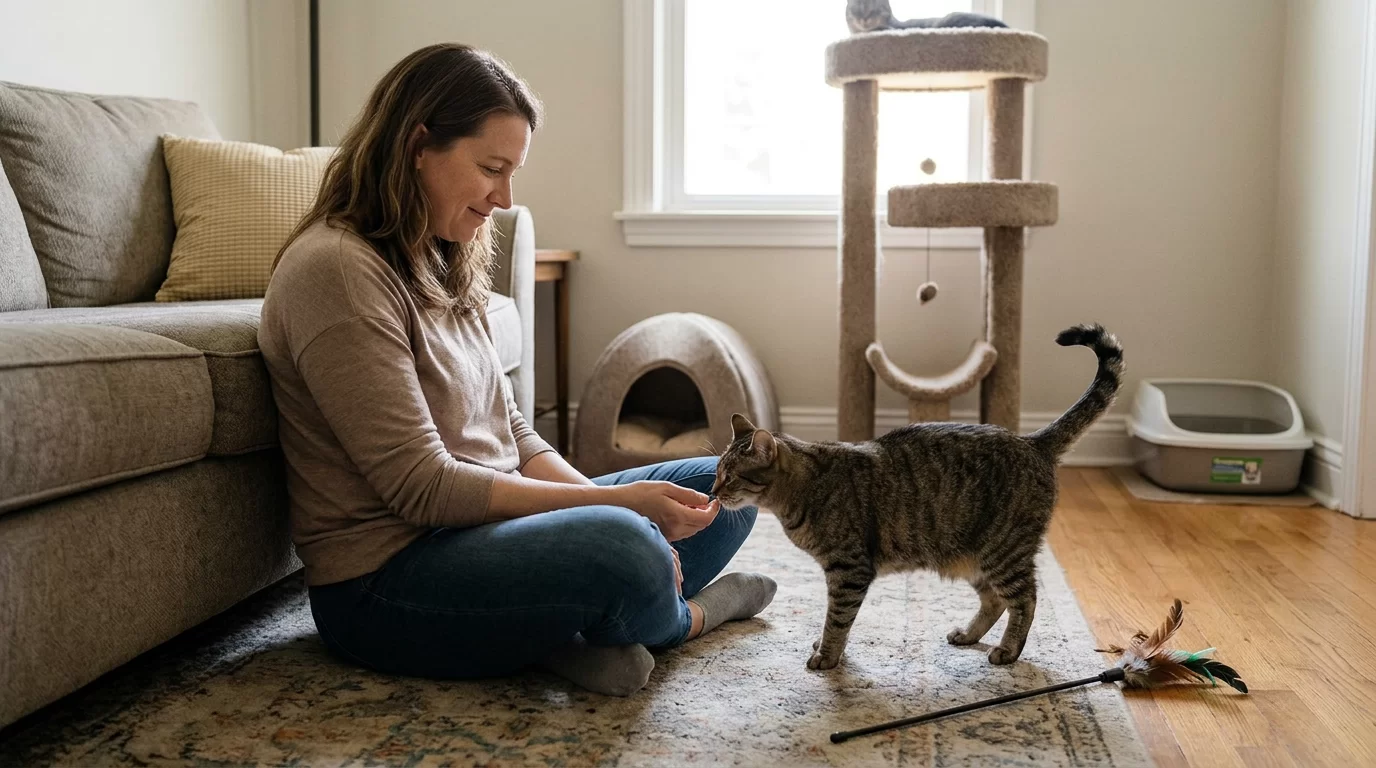
Effective ways to build attachment include:
- Let the cat initiate contact when possible.
- Use slow blinks and soft eyes instead of direct staring.
- Offer predictable feeding and play routines.
- Use interactive wand toys to mimic hunting.
- Provide vertical territory such as cat trees or shelves.
- Keep litter boxes clean and accessible.
- Avoid punishment, yelling, spraying water, or forced restraint.
- Learn signs of overstimulation: tail twitching, skin rippling, ear rotation, sudden head turns, or tense posture.
- End petting before the cat becomes agitated.
- Reward calm independence, not only attention-seeking.
Play is especially important. Cats are predatory animals, and interactive play allows them to stalk, chase, pounce, and “capture” safely. A predictable hunt-eat-groom-sleep routine can reduce frustration and help anxious cats feel more settled.
Useful enrichment items often include:
| Item | Purpose | Typical Price Range |
|---|---|---|
| Wand toy | Interactive hunting play | $5–$20 |
| Puzzle feeder | Slows eating, adds mental stimulation | $10–$30 |
| Cat tree | Vertical territory and resting | $40–$200+ |
| Window perch | Visual enrichment | $20–$60 |
| Scratching post | Scent marking and claw health | $15–$80 |
| Cardboard scratcher | Low-cost scratching outlet | $5–$25 |
| Covered or open bed | Resting security | $15–$60 |
Prices vary across retailers such as Chewy, Petco, Amazon, Walmart, and local pet stores. The most valuable enrichment is not always expensive. Cardboard boxes, paper bags without handles, rotated toys, and daily interactive play can be highly effective.
Helping an Overly Attached Cat Feel More Independent
An overly attached cat should not be abruptly ignored. Sudden withdrawal can increase anxiety. The better approach is gradual independence-building: predictable routines, environmental enrichment, and calm separation practice.
A practical framework includes:
- Rule out medical problemsAny sudden clinginess, vocalization, elimination change, or appetite shift should be assessed by a veterinarian.
- Create resource securityProvide multiple resting places, scratching surfaces, water stations, and litter boxes. In multi-cat homes, follow the common veterinary guideline of one litter box per cat plus one extra.
- Use scheduled attentionOffer play, grooming, or affection at predictable times so the cat does not need to demand interaction constantly.
- Practice short separationsClose a door briefly while the cat has food puzzles or toys, then return before distress escalates. Build duration gradually.
- Avoid dramatic departures and returnsCalm exits and low-key greetings can reduce emotional spikes.
- Reward settled behaviorQuiet resting on a bed, cat tree, or window perch can be reinforced with treats, praise, or gentle attention.
- Use food puzzles and scent comfortPuzzle feeders, treat hunts, and bedding with familiar scent may help some cats cope with alone time.
- Consider veterinary behavior supportSevere separation distress may require a certified applied animal behaviorist, veterinary behaviorist, or veterinarian-guided medication plan.
How can an owner stop a cat from being too clingy?
The safest approach is not to reject the cat, but to increase confidence. Provide daily interactive play, predictable routines, food puzzles, vertical spaces, safe resting areas, and gradual alone-time practice. If clinginess is sudden or intense, a veterinary exam should come first.
Pheromone diffusers may help some cats feel more secure, though results vary. Synthetic feline facial pheromone products are commonly sold through veterinary clinics and major pet retailers, often costing about $20–$35 for a starter diffuser and $15–$30 for refills. They should be considered a support tool, not a replacement for medical care or behavior modification.
Special Cases: Kittens, Senior Cats, Rescue Cats, and Multi-Cat Homes
Attachment can look different depending on a cat’s life stage and background.
Kittens
Kittens are naturally dependent and may follow people, cry when alone, or seek warmth and contact. This is often normal, especially after adoption. However, kittens also need to learn gentle independence through safe spaces, play routines, and gradual exposure to normal household life.
A kitten should not be left without adequate food, water, litter access, warmth, and supervision. Very young kittens require specialized care, especially if orphaned.
Senior cats
Senior cats may become more attached due to sensory decline, arthritis, cognitive dysfunction, or changes in confidence. A cat that once slept alone may begin sleeping near an owner for warmth or reassurance. Nighttime vocalization, confusion, or increased dependence should be discussed with a veterinarian.
Senior-friendly support may include:
- Low-entry litter boxes
- Heated pet-safe beds
- Ramps or steps
- Night lights
- Regular veterinary exams
- Pain management when prescribed
- Consistent furniture placement
Rescue and rehomed cats
Rescue cats may attach quickly or slowly. Some appear intensely bonded within days, while others need months to trust. A newly adopted cat that follows constantly may be seeking security after instability. Another may hide for weeks but still be learning the household’s rhythms.
Patience is essential. Forced affection can delay trust. A safe room, predictable feeding, quiet presence, and gradual access to the home often work better than immediate full-house freedom.
Multi-cat homes
In multi-cat households, attachment to an owner may be affected by competition, bullying, or resource stress. A cat that clings to one person may be avoiding another cat. Owners should watch for blocking behavior near food bowls, litter boxes, hallways, or resting spots.
International Cat Care and AAFP environmental guidance both emphasize resource distribution. Each cat should have access to food, water, litter, scratching, hiding, and resting areas without needing to pass through another cat’s preferred territory.
| Situation | Attachment Pattern | Helpful Support |
|---|---|---|
| New kitten | Follows, cries, sleeps close | Routine, warmth, play, safe room |
| Senior cat | Increased closeness, nighttime calling | Vet exam, comfort, pain assessment |
| Rescue cat | Clingy or avoidant | Patience, safe spaces, predictable care |
| Multi-cat tension | Clings to owner, avoids rooms | Resource mapping, vertical space, conflict reduction |
| Owner schedule change | More vocal, restless | Gradual transition, enrichment, routine anchors |
Common Myths About Cat Attachment
Cat attachment is surrounded by myths, many of which come from comparing cats unfairly with dogs. Cats are social in feline ways, not canine ways.
| Myth | Fact |
|---|---|
| Cats only care about food. | Food is important, but cats also seek safety, play, scent familiarity, warmth, and social contact. |
| A cat that is not a lap cat is not attached. | Many bonded cats prefer sitting nearby rather than being held. |
| Following an owner always means separation anxiety. | Following can be normal social behavior, curiosity, or routine anticipation. |
| Cats do not miss their owners. | Many cats show behavior changes when a familiar person is absent, though the signs may be subtle. |
| Ignoring a clingy cat fixes the problem. | Abrupt withdrawal can worsen stress. Gradual independence-building is safer. |
| Punishment teaches cats to be less demanding. | Punishment often increases fear and damages trust. |
| Only traumatized cats become strongly attached. | Secure, well-socialized cats can also form strong bonds. |
| A favorite person means the cat dislikes everyone else. | Cats may have different relationships with different people. |
A more accurate understanding begins with recognizing that cats are both social and territorial. They form preferences, routines, and attachments, but they also need control over space and contact.
How to Tell What a Cat’s Attachment Means in Daily Life
The meaning of attachment depends on the full picture: behavior, health, environment, and timing. A cat sleeping next to its owner every night may be showing trust. A cat suddenly refusing to eat unless the owner is present may be signaling anxiety or illness.
A simple decision framework can help:
| Question | If Yes | If No |
|---|---|---|
| Is the behavior new or suddenly more intense? | Consider veterinary check and recent stressors | Likely part of personality or routine |
| Can the cat relax when alone? | Attachment is more likely secure | Assess separation distress or boredom |
| Are appetite, litter box habits, and energy normal? | Less urgent, continue monitoring | Veterinary evaluation recommended |
| Does the cat have enrichment and safe spaces? | Strengthen existing routine | Improve environment and resource access |
| Is there household conflict or change? | Address stress source | Focus on bond-building and routine |
Owners often ask whether a cat’s attachment means love. While “love” is a human word, many feline behaviors reflect trust, preference, comfort, and social bonding. From a practical standpoint, a cat that chooses proximity, communicates gently, relaxes in a person’s presence, and seeks reassurance is demonstrating a meaningful attachment.
The most important question is not whether the cat loves “enough,” but whether the relationship supports the cat’s welfare. A healthy bond helps the cat feel safe, curious, playful, and emotionally steady.
When to Seek Professional Help
Professional help is appropriate when attachment-related behavior becomes distressing, unsafe, or medically suspicious. A veterinarian should be the first step when behavior changes suddenly or includes physical symptoms.
Seek veterinary or behavior support if a cat:
- Cries for long periods when alone
- Eliminates outside the litter box
- Overgrooms or develops bald patches
- Stops eating when the owner is away
- Shows aggression when the owner leaves or returns
- Becomes destructive near doors or windows
- Appears disoriented, restless, or unable to settle
- Has a sudden personality change
- Shows signs of pain or illness
- Experiences severe stress after a move, adoption, or loss of a companion
A qualified professional may recommend medical testing, pain assessment, environmental changes, behavior modification, pheromone support, nutraceuticals, or prescription medication when appropriate. Medication should never be started without veterinary guidance, especially because many human medications are unsafe or toxic to cats.
For complex cases, a board-certified veterinary behaviorist or certified applied animal behaviorist can help design a plan that protects both the cat’s emotional welfare and the household’s quality of life.
A cat’s attachment to its owner is one of the clearest signs that domestic cats are not detached household ornaments, but socially responsive animals with preferences, memories, routines, and emotional needs. Some cats express that bond dramatically, with constant companionship and vocal greetings. Others show it quietly, through proximity, scent marking, relaxed posture, or choosing the same room day after day.
The healthiest attachment is secure rather than desperate. It allows affection without panic, closeness without dependence, and routine without rigidity. Owners can support that balance by respecting feline body language, providing environmental enrichment, maintaining predictable care, and responding thoughtfully to changes in behavior. When clinginess appears suddenly or comes with signs of distress, veterinary guidance is essential.
Understanding what cat attachment means helps transform everyday behaviors into useful information. A cat’s following, blinking, rubbing, sleeping nearby, or calling from another room may all be part of a larger conversation about trust. When that conversation is answered with patience and informed care, the human-cat bond becomes not only stronger, but healthier for the cat over a lifetime.