The sound of a cat crying in the dark is uniquely unsettling. For many guardians, those mournful meows or persistent yowls trigger immediate concern—but the reason behind them can be completely different depending on whether the noise is coming from a tiny kitten or an older, greying cat. A kitten’s nighttime cries are rarely cause for alarm, usually tied to developmental stages, loneliness, or hunger. When a senior cat begins vocalizing after the lights go out, the situation often shifts. Underlying medical conditions, sensory decline, or cognitive changes frequently drive the behavior. Mistaking one for the other can lead to delayed care for a senior in pain or, conversely, unnecessary panic over a kitten’s normal growth phase. Understanding how age reshapes the meaning of nighttime crying helps guardians respond in a way that genuinely supports their cat’s well-being.
In This Article
- The Developmental Whys Behind Kitten Night Crying
- Medical Causes That Make Senior Cats Cry After Dark
- Cognitive Dysfunction and the Confusion That Loudens at Night
- How to Tell Attention-Seeking from a Medical Emergency
- Environmental Triggers That Amplify Nighttime Vocalization in All Ages
- When a Veterinary Visit Cannot Wait
- Age-Appropriate Comfort Measures That Bring Peaceful Nights
The Developmental Whys Behind Kitten Night Crying
Kitten night crying is most often a normal, transient phase rooted in early life transitions. Separated from littermates and mother, a young kitten may vocalize to signal loneliness, hunger, or a need for warmth. This behavior is especially common during the first few nights in a new home and tends to fade as the kitten builds secure attachments and learns household rhythms.
A kitten’s cries after dark are rarely manipulative. They echo the hardwired communication patterns kittens use with their mother—contact calls designed to bring a caregiver close. At eight to twelve weeks of age, the kitten is still neurologically immature, with a strong instinct to stay near a safe source of body heat and milk. When placed in an unfamiliar sleep space, that absence triggers genuine distress vocalizations. Additionally, many kittens cry because their small stomachs empty overnight, and hunger quickly becomes urgent. Unlike adult cats, a kitten cannot comfortably fast for eight hours.
This developmental crying almost always diminishes once a kitten reaches around four months, provided their environment feels predictable. Consistent meal timing, a warm bed, and gentle nighttime routines help the kitten learn that the dark is not dangerous. Some kittens also comfort themselves with behaviors like kneading blankets while purring—a self-soothing carryover from nursing. In those moments, the crying is less about panic and more about settling. Kneading as a comfort behavior in cats is often seen when a kitten transitions between wakefulness and sleep, not unlike a child clutching a security blanket.
Medical Causes That Make Senior Cats Cry After Dark
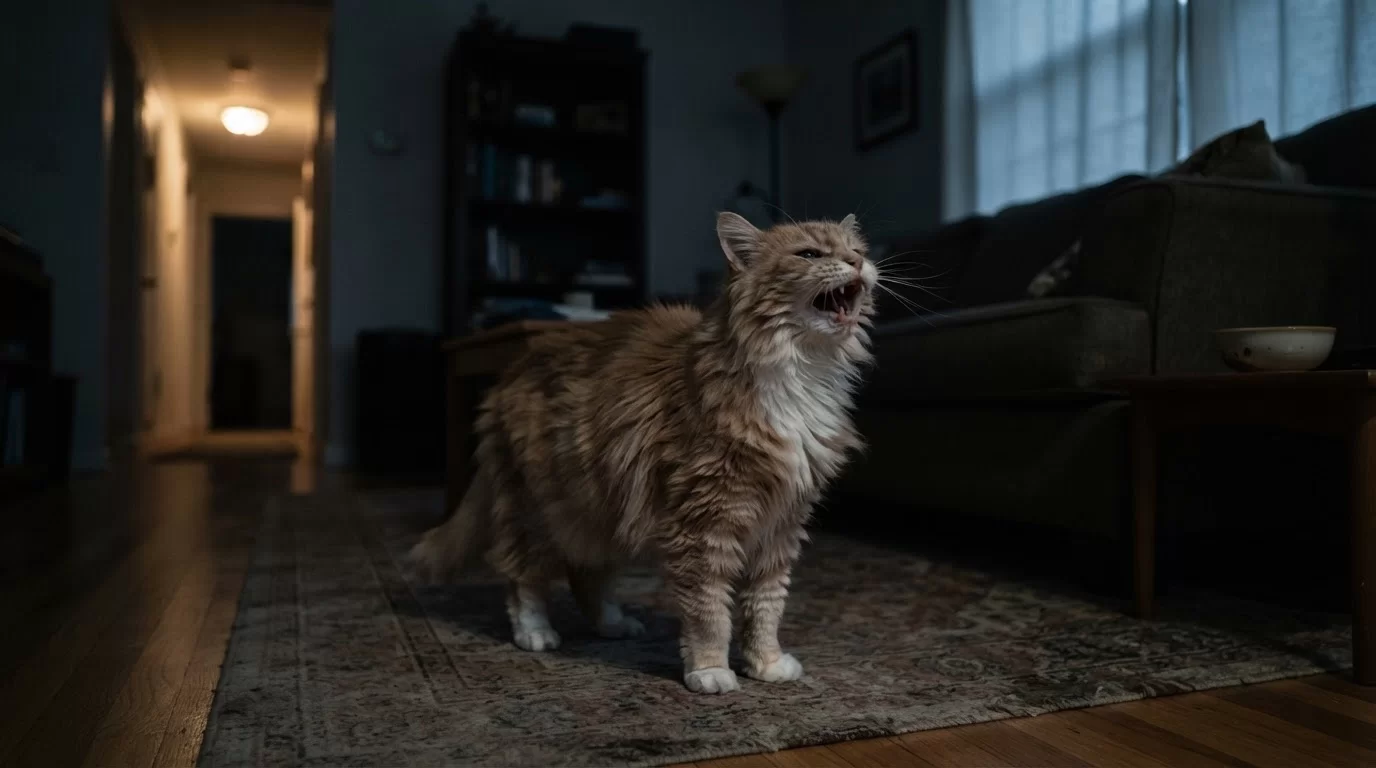
When a cat over the age of ten begins crying at night, the first step is always to rule out pain and metabolic disease. The most common medical triggers include hyperthyroidism, hypertension, chronic kidney disease, dental pain, and osteoarthritis. Unlike kitten crying, which resolves with consistent care, senior night vocalization demands a thorough veterinary workup because the cause often sits deeper than behavior.
Hyperthyroidism—an overproduction of thyroid hormone—creates a state of constant restlessness. Cats with this condition often pace and yowl at night, driven by ravenous hunger and an inability to settle. The Cornell Feline Health Center notes that affected cats frequently vocalize loudly, even when they previously were quiet. High blood pressure, or hypertension, further intensifies nighttime distress because it can cause sudden headaches and retinal damage that leave a cat feeling disoriented in low-light conditions.
Chronic pain from degenerative joint disease is another silent engine of nighttime crying. Arthritic cats find it difficult to move from a deep sleep position, and the stiffness they experience when rising often triggers sharp yowls. Similarly, unrecognized dental disease can make a cat groan or moan while resting, as pain signals spike when the house is still. These medical conditions rarely announce themselves during daytime vet visits; guardians often notice them first through a cat’s nighttime vocal habits.
| Factor | Kitten Night Crying | Senior Cat Night Crying |
|---|---|---|
| Primary cause | Developmental loneliness, hunger, separation anxiety | Medical disease, cognitive decline, sensory loss |
| Typical sound | High-pitched mews, persistent but plaintive | Loud yowling, mournful howling, sometimes raspy |
| Onset pattern | Starts in first days in new home, then gradually fades | Develops in a previously quiet adult, often after age 10 |
| Response to owner | Calms down with presence, food, or warmth | May continue vocalizing even when comforted, or seem dazed |
| Urgency | Low; supportive environment resolves most cases | High; veterinary evaluation is essential |
This distinction matters because comforting a kitten through a developmental leap is appropriate, while repeatedly soothing a senior cat without addressing the underlying pain risks masking a treatable condition. When vocalizing persists despite warmth and companionship in an older cat, the next step is never to assume it is simply “old age.”
Cognitive Dysfunction and the Confusion That Loudens at Night
Feline cognitive dysfunction syndrome (CDS), a condition similar to dementia in humans, is one of the most underrecognized drivers of senior night crying. A cat with CDS may howl as if lost, even in familiar surroundings, especially after sundown. Sundowning—a worsening of disorientation during evening and nighttime hours—affects many geriatric cats and turns the quietest part of the day into a period of intense anxiety.
The neurological changes of cognitive dysfunction disrupt the normal sleep-wake cycle. A cat who used to sleep through the night may wake at 2 a.m. confused, walking into corners, and vocalizing with a hollow, repetitive tone. According to the Cornell Feline Health Center, additional signs often include spatial disorientation, altered interactions with family members, and house soiling. The nighttime crying in CDS is not a call for food or attention—it is a cry of confusion from a mind that cannot locate its own safe place.
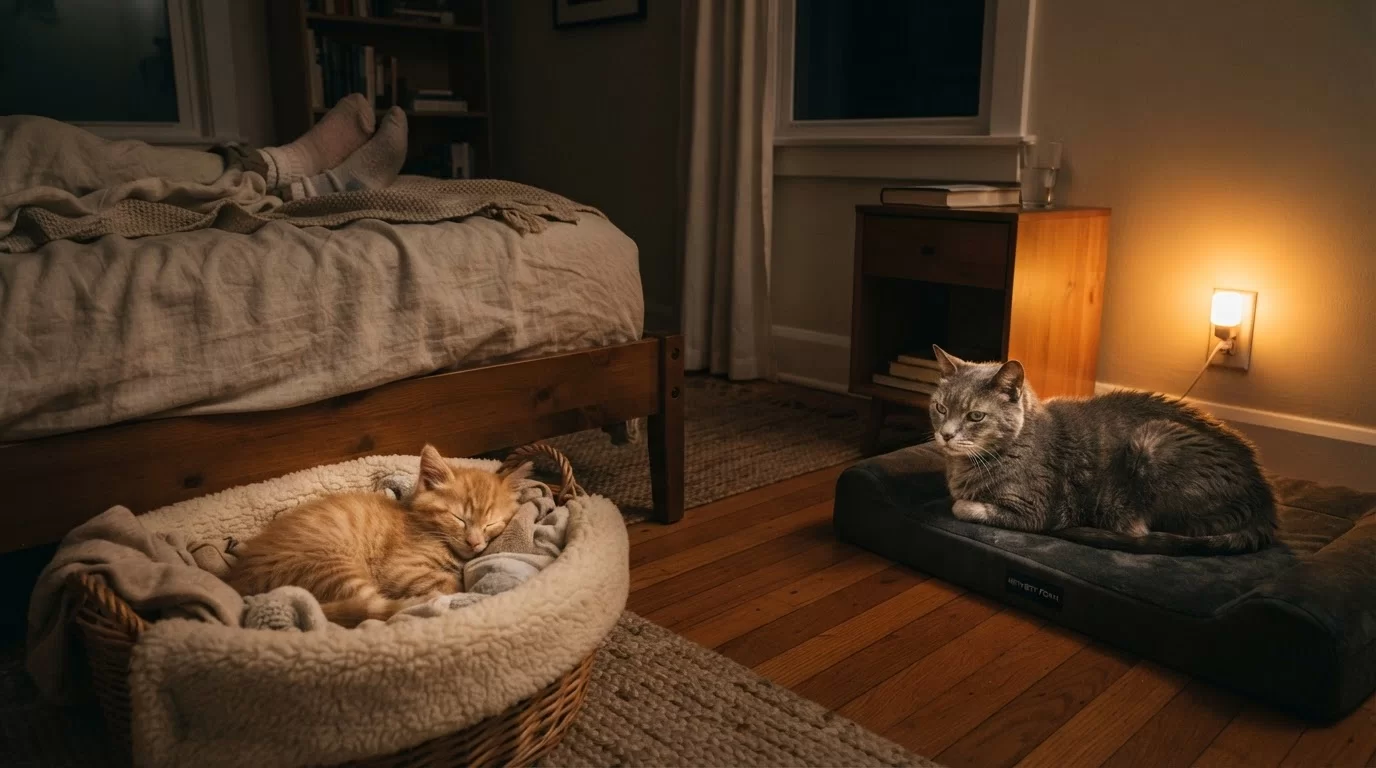
Understanding this helps owners reframe their response. While a kitten’s cry will usually quiet with gentle holding and a warm pad, a senior cat with CDS may require environmental management that works with neurological decline. Nightlights, consistent furniture layouts, and pheromone diffusers can reduce panic. These approaches are not about training; they are about accommodating a brain that no longer processes the dark the same way.
How to Tell Attention-Seeking from a Medical Emergency
Most guardians struggle to tell whether a cat is crying because it wants something simple—like a midnight snack—or because it is genuinely suffering. The key differentiator is often pattern and response. A cat that stops crying the moment you stir, then immediately runs toward the kitchen, is more likely making a learned request. A cat who cries whether you are present or not, and whose cry has a strange, hollow quality, raises a red flag for pain or cognitive distress.
Attention-seeking night cries in kittens and young adult cats are frequent but situational. The cat quiets quickly once interaction begins, and the behavior does not return for the rest of the night once the need is met. These are often reinforced inadvertently: if a guardian hops up every time a kitten mews, the kitten learns that night is prime time for human engagement. Feline vocalization and excessive meowing in otherwise healthy cats can be reshaped by breaking that reward loop.
In contrast, medical crying resists easy soothing. A senior cat with hyperthyroidism may accept food, eat briefly, then resume yowling within thirty minutes. A cat with severe dental pain might flinch away from touch near the mouth and continue groaning. These patterns do not track with a simple demand; they speak to an internal state that will not improve without veterinary intervention. When in doubt, recording the vocalization on video and noting the timing and context helps a veterinarian see what happens in the middle of the night.
Environmental Triggers That Amplify Nighttime Vocalization in All Ages
While kittens and senior cats cry for fundamentally different reasons, certain environmental factors can amplify nighttime vocalizing across both age groups. Sudden changes in household routine, moving furniture, new pets, or even a different nighttime temperature can erode a cat’s sense of security after dark. Cats of any age rely on territorial predictability, and when that is lost, vocal protest often follows.
For kittens, an environment that feels too exposed—a large empty room, a bed far from familiar human scent—can trigger intensified night crying. Providing an enclosed, den-like sleeping space with a heartbeat toy or old t-shirt that smells like the owner often reduces those distress calls. Senior cats, on the other hand, are more vulnerable to sensory-environmental mismatches. Diminished vision and hearing make a pitch-black house unnavigable, prompting a cat to cry out for an auditory anchor. A series of soft nightlights can restore spatial confidence without overstimulating the cat.
Sound also plays a role. Outdoor wildlife, wind rattling windows, or a new ticking clock can unsettle both kittens and seniors. In multi-cat households, subtle territorial pressure from another cat blocking access to litter boxes or sleeping spots may manifest as nighttime vocalizing under the cover of darkness. Identifying these triggers requires methodical observation—often the last step before turning to medical investigation, but no less important.
When a Veterinary Visit Cannot Wait
Nighttime crying in a senior cat should always be taken seriously, but certain signs indicate a need for an urgent veterinary appointment rather than a routine checkup. If the vocalizing is accompanied by unsteady gait, sudden collapse, vomiting, panting, or an inability to settle despite obvious fatigue, the cat may be experiencing a hypertensive crisis, severe pain, or cardiac distress.
Cats are masters at hiding daytime discomfort. A senior cat who suddenly begins crying at night and has not had a wellness exam in six months should be seen promptly. The American Association of Feline Practitioners recommends biannual exams for cats over ten because conditions like hyperthyroidism and kidney disease can advance rapidly. Early bloodwork, thyroid screening, and blood pressure measurement often reveal a manageable condition before it becomes a crisis. Waiting to see if the crying stops on its own can allow a treatable disease to progress to a stage where comfort is much harder to restore.
For kittens, the veterinary urgency is lower, but not zero. A kitten who cries all night, refuses food, and fails to gain weight needs immediate assessment for fading kitten syndrome or congenital defects. Most kitten crying, however, is resolved with consistent care and time—not medical intervention.
Age-Appropriate Comfort Measures That Bring Peaceful Nights
Solutions that work for a kitten will not serve a senior cat with cognitive decline, and vice versa. The art of responding well to nighttime crying lies in matching the strategy to the phase of life. Kittens thrive on rhythm, security objects, and a final small meal just before the household goes to bed. Placing the kitten’s bed near the guardian’s sleeping area—initially within sight and scent—then gradually moving it to a preferred permanent spot often breaks the nighttime crying cycle within a week.
Senior cats require a different playbook. Environmental management for CDS includes low-wattage nightlights in every room the cat uses, heated orthopedic beds that ease arthritic joints, and consistent evening routines that signal safety. Puzzle feeders given just before sleep can engage a hyperthyroid cat’s restlessness in a constructive way, though they do not replace medical treatment. For cats with hearing loss, gentle vibration-based communication, such as tapping the floor near the cat, can reduce the startle response that often triggers yowling.
Above all, guardians do well to avoid punishing the vocalization. Scolding a kitten creates fear, and scolding a senior with dementia only deepens disorientation. Instead, they can work through a checklist of common needs—pain management, hunger, toilet access, and security—in an age-informed manner. The result is rarely instant silence, but rather a gradual quiet that tells the cat the night is safe.
Nighttime cries in cats never occur in a vacuum; they are a thread tied directly to developmental stage, physical health, and emotional state. A kitten’s midnight mew is overwhelmingly a signal of growth, not harm. A senior cat’s howl is almost always a message that something internal needs attention. Distinguishing between the two is perhaps the most important form of night listening a guardian can do—because the right response can mean the difference between a peaceful sleep and a quiet suffering that goes unheard.