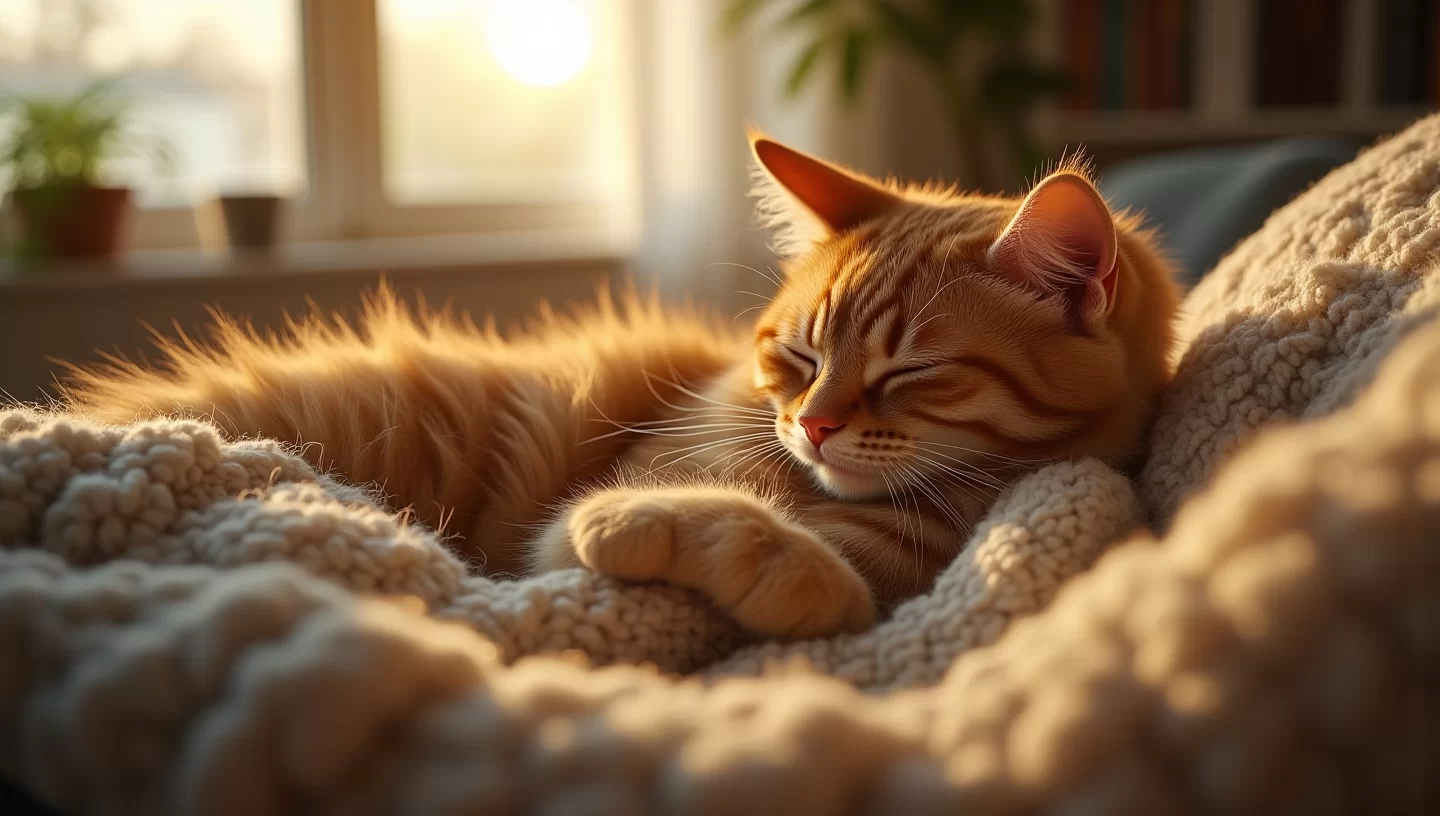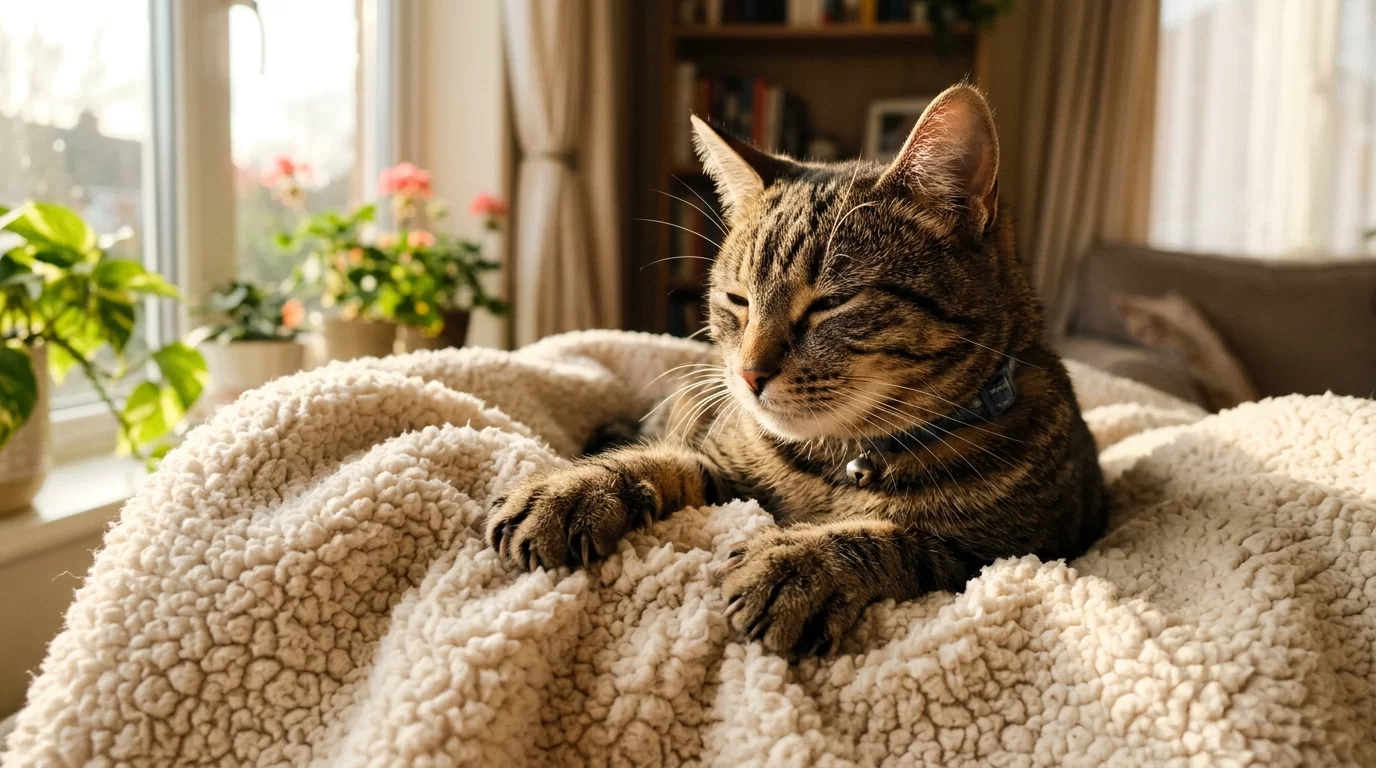
Cats knead blankets because the behavior is deeply tied to comfort, kittenhood, scent communication, stretching, and instinct. The familiar push-push motion—often called “making biscuits”—usually appears when a cat feels safe, sleepy, affectionate, or emotionally settled. For many cat owners, kneading is one of the most endearing feline habits, especially when it comes with purring, half-closed eyes, and a favorite fleece blanket.
Still, the behavior can raise questions. Why does one cat knead every night while another never does? Why do some cats use claws? Can kneading mean anxiety, pain, or overstimulation? As more pet owners look to understand feline body language rather than dismiss it as “weird cat behavior,” kneading has become a useful window into how cats self-soothe, bond, and communicate with their environment. In most cases, blanket kneading is normal and healthy. The context—where, when, how intensely, and whether anything has changed—matters most.
In This Article
• Why Cats Knead Blankets
• The Kittenhood Connection Behind Making Biscuits
• How Kneading Helps Cats Mark Safe Spaces
• Why Blankets Are So Appealing to Kneading Cats
• When Kneading May Signal Stress or Discomfort
• How to Respond When Your Cat Kneads
• What Kneading Reveals About Long-Term Cat Behavior
Why Cats Knead Blankets
Cats knead blankets because the soft texture triggers instinctive comfort behaviors that began early in life and continued into adulthood. The motion involves alternating the front paws, pressing into a surface, and often flexing the claws. Some cats knead silently, while others purr, drool, suckle fabric, or settle into sleep afterward.
Cat kneading is usually a normal feline behavior linked to nursing memories, relaxation, scent marking, muscle stretching, nesting instincts, and emotional security. A cat kneading a blanket is most often expressing comfort, not trying to damage the fabric or ask for food.
Veterinary behavior experts commonly describe kneading as a multi-purpose behavior rather than one with a single cause. Best Friends Veterinary Hospital, in its discussion of “The Science Behind Cat Kneading,” notes that the behavior has roots in both kitten development and evolutionary survival. Wild feline ancestors likely used similar pawing motions to pat down grass, leaves, or nesting material before resting or giving birth. Modern house cats no longer need to flatten foliage in a living room, but the instinct remains.
Kneading is also part of a broader feline communication system. A cat’s paws contain scent glands, so pressing and rubbing the pads against a blanket may leave chemical signals that make the area smell familiar. To the cat, that blanket may become a claimed, comforting space.
The Kittenhood Connection Behind Making Biscuits
One of the most accepted explanations for cat kneading is its link to nursing. Kittens knead their mother’s mammary area to help stimulate milk flow. The movement is associated with warmth, nourishment, safety, and closeness. Many adult cats retain this reflex long after they stop nursing.
This does not mean an adult cat was necessarily weaned too early, though early weaning can sometimes intensify suckling or fabric-chewing behaviors. For many cats, kneading is simply a carried-over comfort ritual. Much like purring, it can appear when a cat is relaxed, bonded, or trying to soothe itself. Cats may also combine the two behaviors, which is why a kneading cat often sounds like a tiny engine. For a deeper look at the emotional range behind purring, see why cats purr and what different purrs can mean.
The kittenhood explanation also helps explain why cats often knead people they trust. A lap, chest, or soft robe may recreate the warmth and softness associated with early security. This is not dominance or “claiming ownership” in the human sense. It is more accurately understood as a blend of comfort, familiarity, and attachment.
How Kneading Helps Cats Mark Safe Spaces
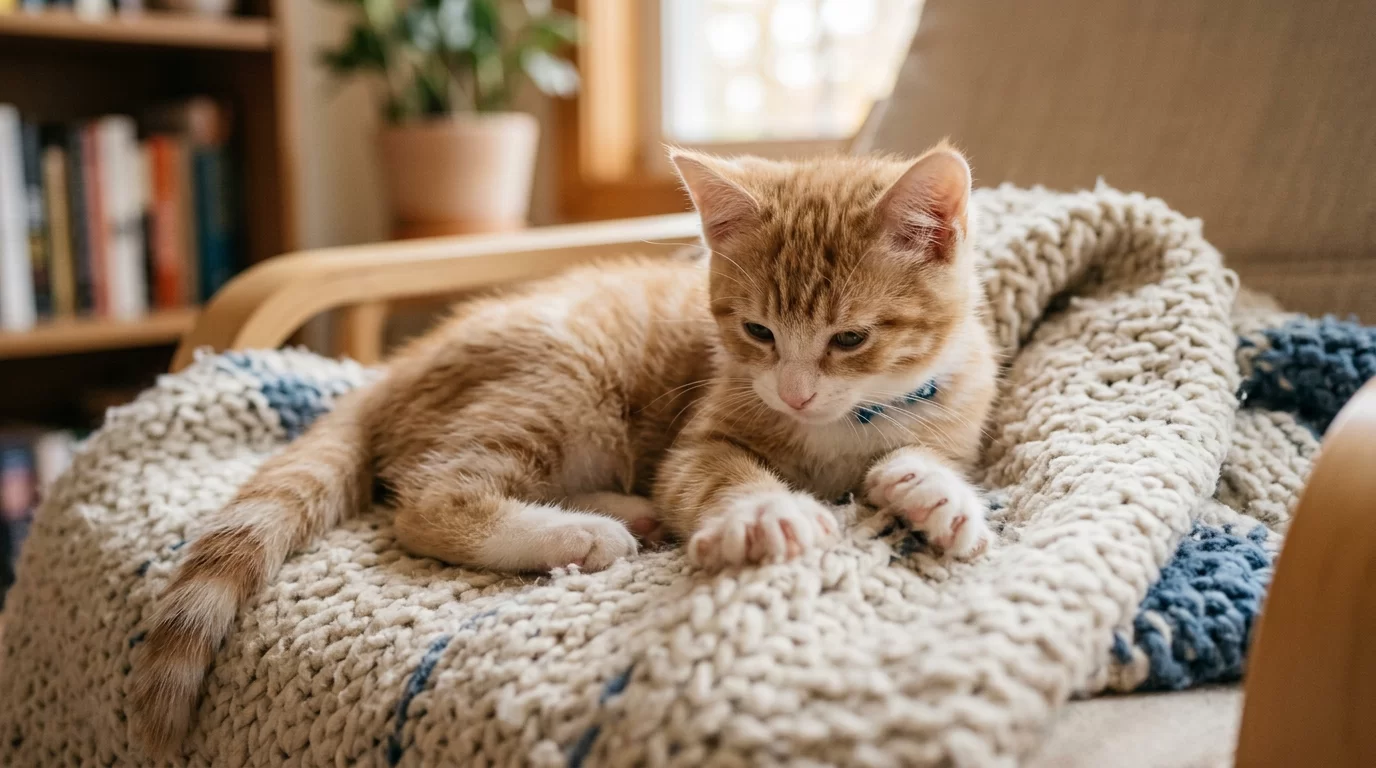
This does not mean a cat is aggressively marking territory. In many cases, scent marking is reassuring rather than competitive. The cat is making the blanket smell like home. This may be especially noticeable when:
- A new blanket or bed is introduced
- The laundry has removed familiar scents
- Another pet has used the same resting area
- The household has recently changed
- The cat is preparing to nap
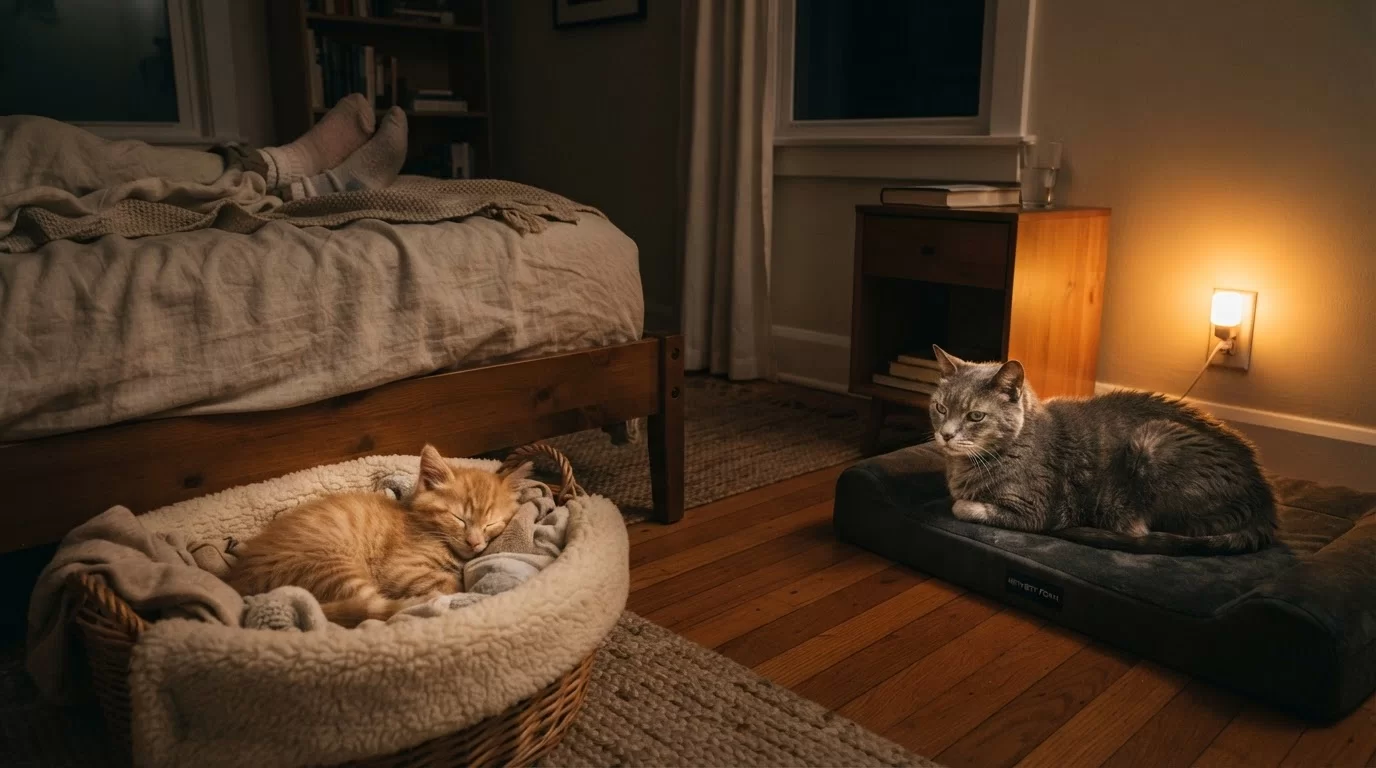
A kneaded blanket may function almost like a comfort object. The familiar scent can help the cat feel anchored, especially in multi-cat homes or busy households. This is one reason cats often return to the same blanket, pillow, or corner of the couch.
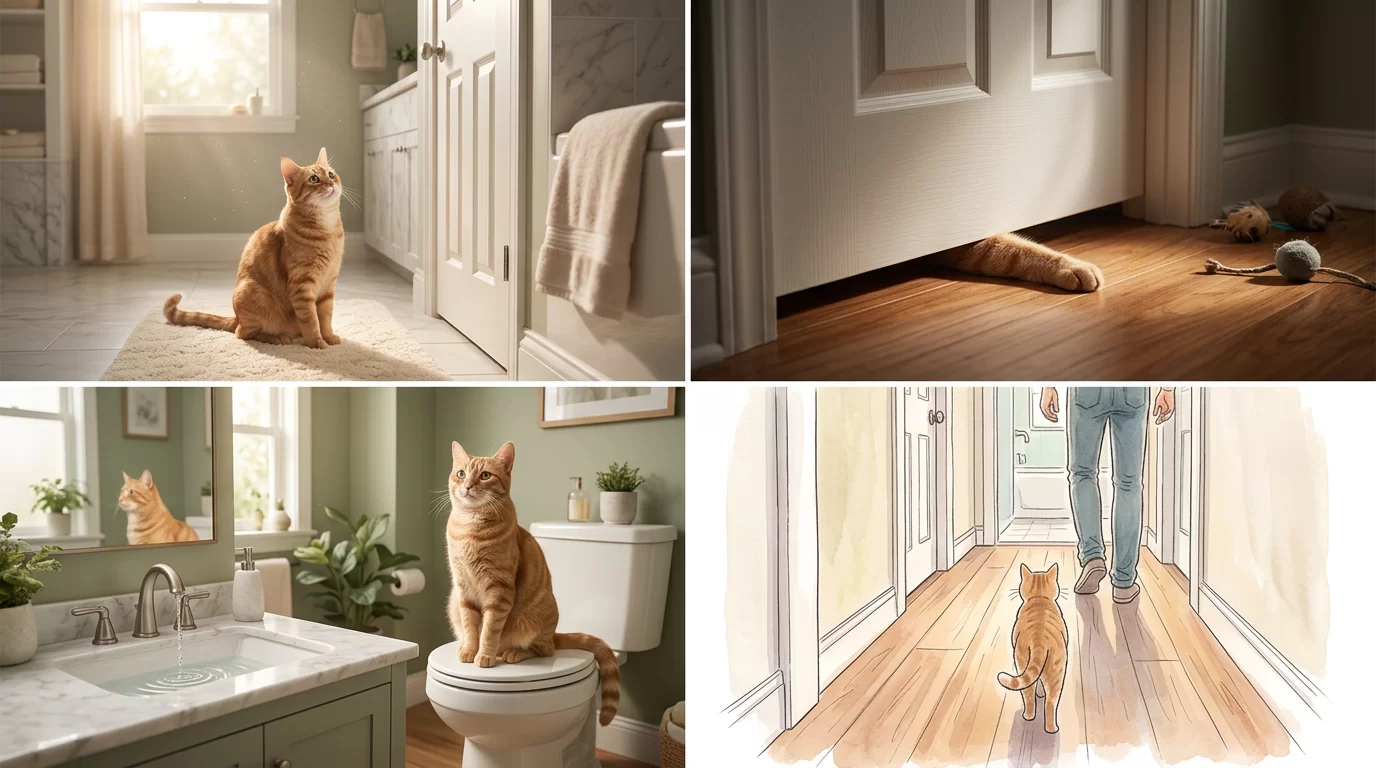
Kneading can also overlap with other attachment behaviors, including following a favorite person, sleeping nearby, or waiting outside closed doors. Cats that form strong routines around their people may show several of these behaviors together; cat attachment and following behavior can help explain how these patterns develop.
Why Blankets Are So Appealing to Kneading Cats
Blankets are ideal kneading surfaces because they are soft, yielding, warm, and stable. Many cats prefer textures that mimic the softness of a mother’s belly or a protected nest. Fleece, sherpa, wool, plush throws, and thick comforters are especially popular.
| Kneading Surface | Why Cats May Like It | Common Behavior Seen |
|---|---|---|
| Fleece blanket | Soft, warm, and easy to grip | Purring, slow kneading, napping |
| Wool or knit blanket | Textured and scent-retentive | Kneading, suckling, licking |
| Human lap with blanket | Warmth plus social bonding | Kneading with eye contact or purring |
| Pillow or cat bed | Stable resting surface | Kneading before sleep |
| Fresh laundry | Warm and strongly scented | Kneading, rolling, nesting |
Some cats also knead as part of a pre-sleep ritual. The behavior may help them settle their body and prepare a resting spot. Best Friends Veterinary Hospital describes this as a remnant of ancestral nesting behavior: wild cats would pat down foliage or grass to create a more comfortable place to rest. A domestic cat kneading a throw blanket before curling up is likely expressing a modern version of that instinct.
Kneading also stretches the muscles in the shoulders, forelimbs, paws, and back. The repeated extension and retraction of the paws may feel physically satisfying, especially after a long nap.
When Kneading May Signal Stress or Discomfort
Most kneading is harmless. The behavior becomes more noteworthy when it changes suddenly, becomes compulsive, or appears alongside other signs of distress.
A veterinarian should be consulted if kneading is accompanied by:
- Sudden aggression or unusual vocalization
- Limping, paw sensitivity, or reluctance to walk
- Excessive licking or chewing of the paws
- Loss of appetite or hiding
- Restlessness that prevents sleep
- New fabric chewing or ingestion
- Kneading that seems frantic rather than relaxed
Stress kneading can look different from comfort kneading. A content cat usually has loose muscles, soft eyes, relaxed ears, and a steady rhythm. A stressed cat may knead intensely, switch positions repeatedly, vocalize, overgroom, or seem unable to settle. Understanding the full body-language picture matters because kneading alone is not enough to diagnose anxiety or pain. For related context, cat kneading meaning and anxiety signs can help distinguish comfort behavior from possible stress signals.
Pain is less common as a cause of kneading, but it should not be ignored. Cats are skilled at hiding discomfort. Changes in paw use, claw extension, posture, or temperament may point to arthritis, injury, nail problems, or skin irritation.
How to Respond When Your Cat Kneads
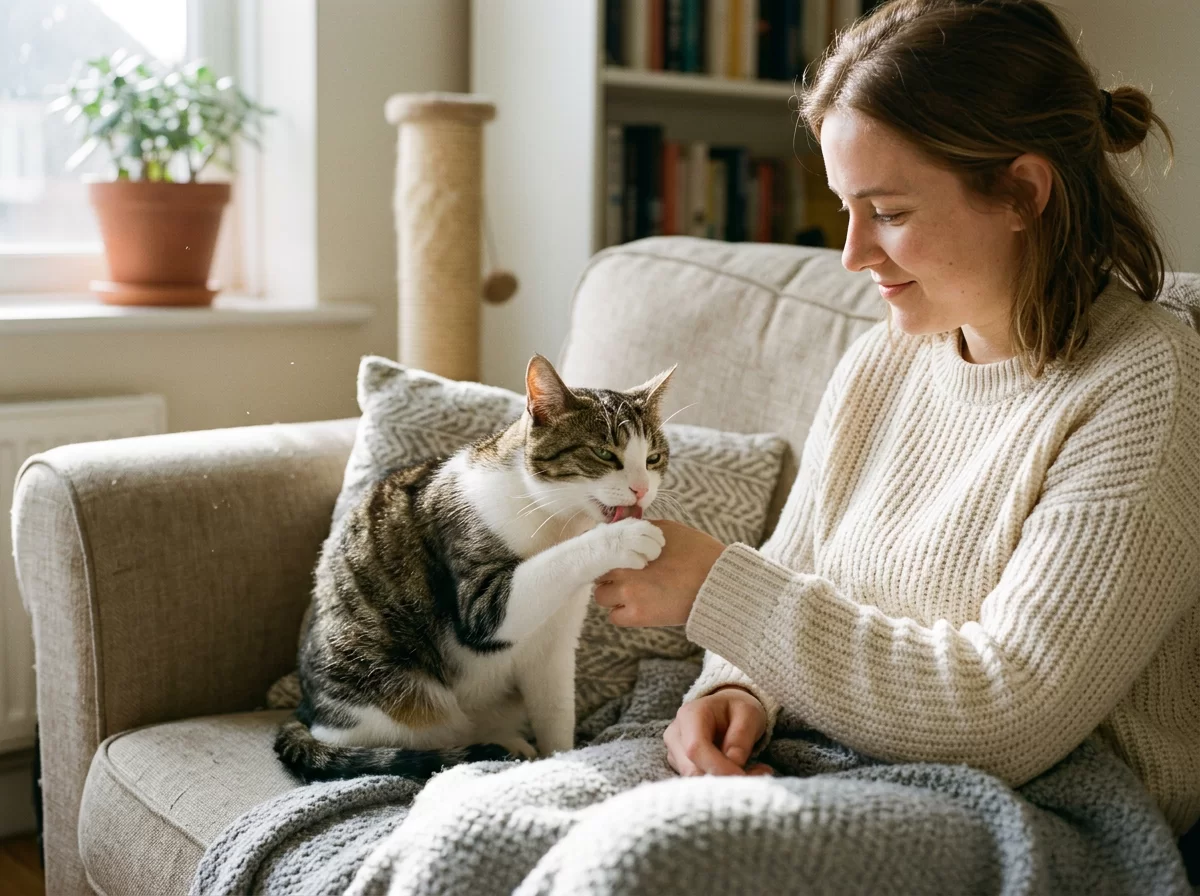
The best response depends on whether the kneading is comfortable, disruptive, or painful. If the cat is relaxed and the behavior is not causing harm, there is usually no need to stop it. Kneading is a natural behavior and can be part of a healthy cat-human bond.
Helpful ways to manage kneading include:
- Keep nails trimmed. Shorter claws reduce accidental scratches when a cat kneads a lap or thin blanket.
- Use a dedicated kneading blanket. A thick fleece or washable throw can protect clothing and furniture.
- Avoid punishment. Scolding or pushing a cat away harshly can create confusion or anxiety.
- Redirect gently. If kneading hurts, slide a folded blanket between the cat’s paws and the skin.
- Watch for overstimulation. Some cats shift from kneading to biting if they become too excited or sensitive during petting.
If a cat kneads on a person’s lap and begins using claws, the goal is not to punish the instinct but to manage the surface. A folded towel, plush blanket, or cat bed placed nearby can preserve the comfort ritual while preventing scratches.
Some cats may lick, nibble, or suckle blankets while kneading. Mild suckling is often benign, but fabric eating is different. If a cat chews and swallows threads, wool, or blanket fibers, the behavior can become a medical concern because swallowed fabric may cause gastrointestinal obstruction.
Kneading can also merge with overstimulation behaviors. A cat may purr, knead, then suddenly nip when the interaction becomes too intense. Owners often interpret this as “mixed signals,” but cats can move quickly from pleasure to sensitivity. The behavior is related to feline body language and petting tolerance; cat biting then licking and overstimulation behavior offers useful context for these moments.
Why Some Cats Knead More Than Others
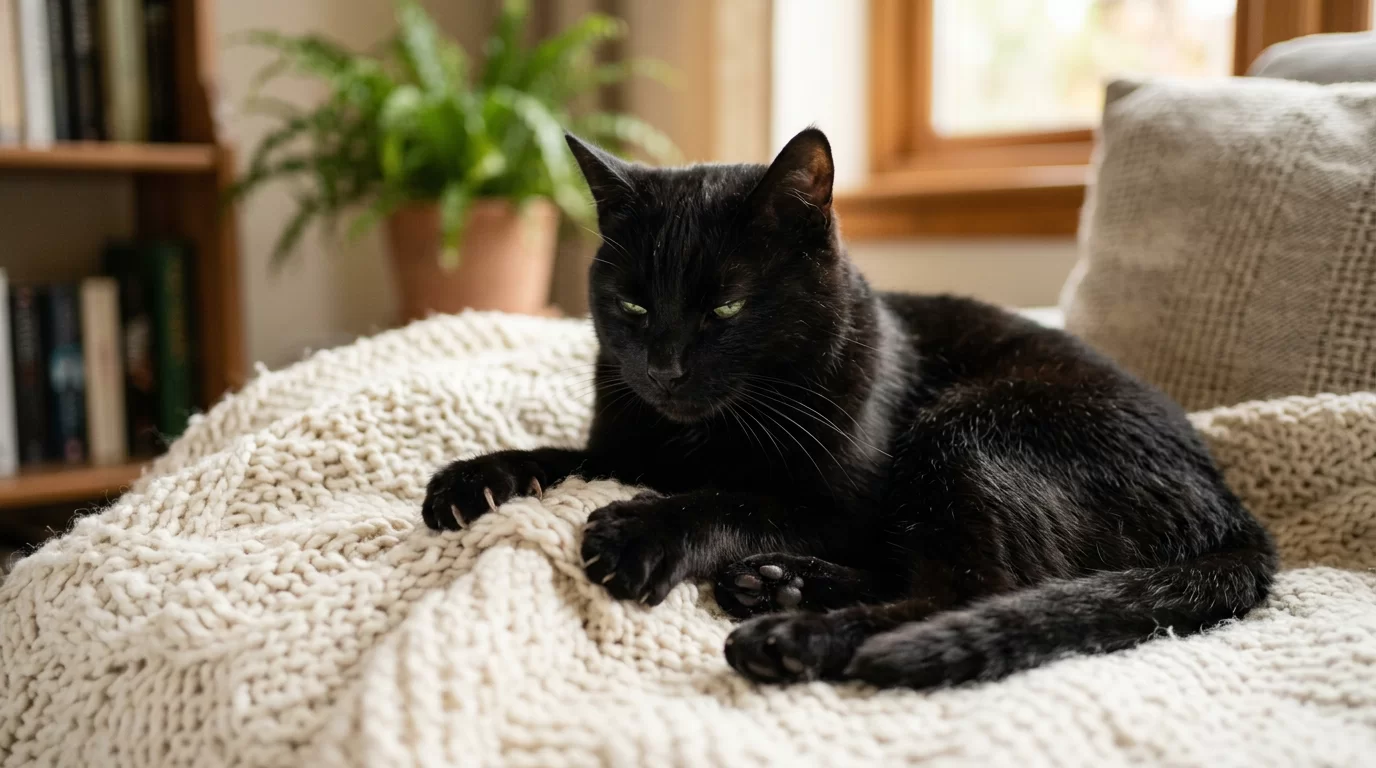
A cat may knead more often when:
- Settling down for sleep
- Greeting a trusted person
- Enjoying a warm blanket
- Seeking comfort during change
- Recovering from a stressful event
- Relaxing after play or grooming
A cat may knead less often if it prefers other calming behaviors, such as rubbing, purring, hiding in cozy spaces, or sleeping near a person without physical contact. Lack of kneading is not a problem by itself. It does not mean a cat is unhappy or unaffectionate.
Age can also influence kneading. Senior cats may knead more slowly or choose softer surfaces if they have joint stiffness. Kittens and young adults may knead with more energy. Any sudden increase or decrease in kneading, especially in an older cat, is worth viewing alongside appetite, mobility, litter box habits, and social behavior.
What Kneading Reveals About Long-Term Cat Behavior
Kneading is a small behavior with a surprisingly rich meaning. It connects a domestic cat’s present-day life to early nursing reflexes, scent communication, nesting instincts, and emotional regulation. In many homes, the favorite kneading blanket becomes part of the cat’s daily rhythm—an object that carries warmth, scent, and predictability.
For owners, the most useful approach is observation. A relaxed kneading cat with soft posture, gentle purring, and a predictable routine is usually showing comfort. A cat that suddenly kneads frantically, cries, chews fabric, guards a spot, or seems physically uncomfortable may need closer attention.
The behavior should be respected as natural, but boundaries are allowed. Keeping claws trimmed, offering washable blankets, and redirecting painful kneading can protect both the cat and the household. When the pattern changes without an obvious reason, a veterinary visit is the safest next step. Most of the time, though, a cat making biscuits on a blanket is simply doing what cats have done for generations: creating comfort, claiming safety, and settling into a place that feels like home.