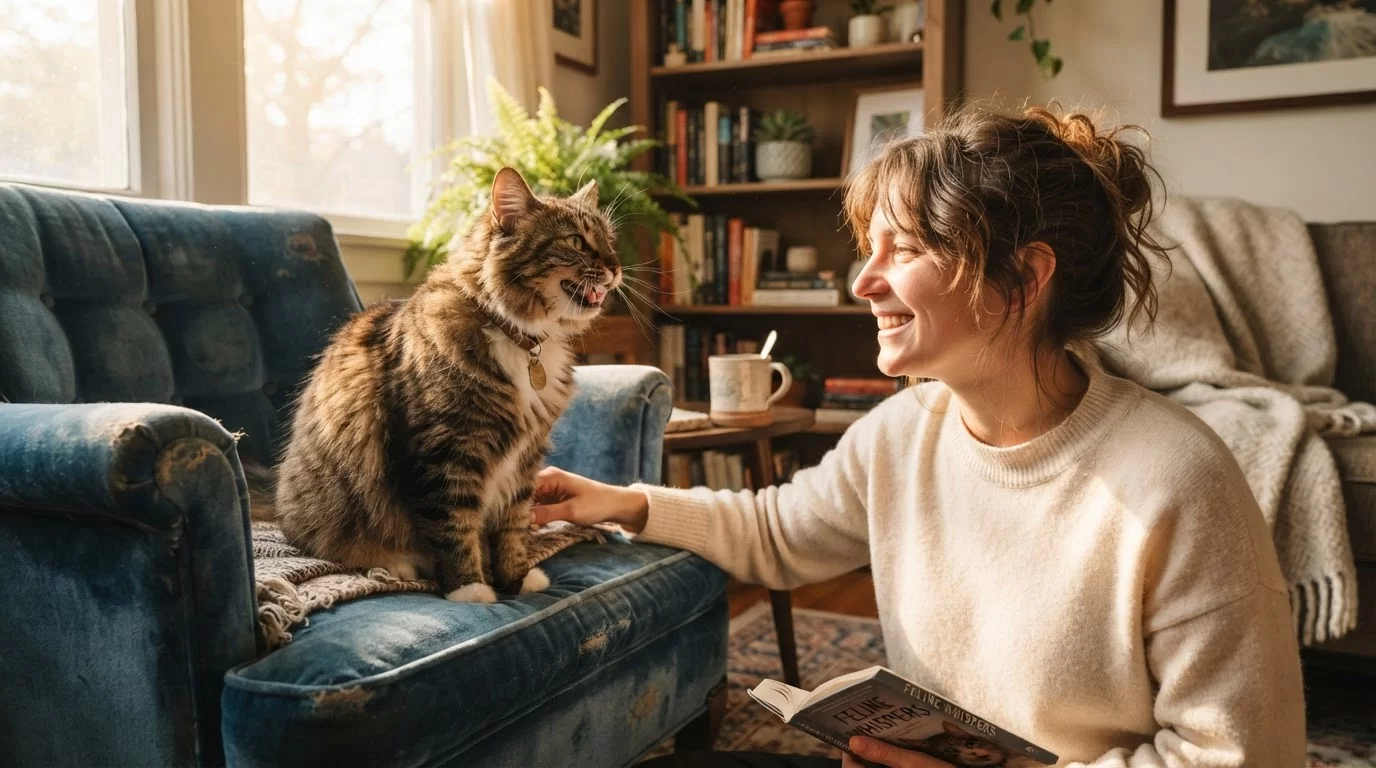
Most cat owners know the routine: a plaintive meow at dawn demanding breakfast, a chirpy trill when you walk through the door, or an insistent mew at 3 a.m. for no apparent reason. Yet when two adult cats meet, they rarely exchange a single meow. Instead, they communicate through subtle body language, scent, and occasional hisses. So why do adult cats meow at humans but not at other cats? The answer lies in the unique way domestic cats have evolved alongside people. Meowing is a behavior they primarily reserve for the human members of their social group, a language they developed to get our attention, and one that we unwittingly reinforce every day.
In This Article
• A Language Designed Specifically for People
• The Kitten Connection: How Meowing Persists Into Adulthood
• What Cats Say to Each Other Without Making a Sound
• Why Some Breeds Are Chattier Than Others
• When Excessive Meowing Signals a Problem
A Language Designed Specifically for People
Adult cats in the wild rarely meow after kittenhood. Feral cats live largely silent lives, relying on scent marking and body posture to maintain their territories and avoid conflict. The classic “meow” is almost entirely a product of domestication, shaped by thousands of years of living alongside humans. Unlike hisses or growls, which are universal across all cat populations, meows are flexible, learned vocalizations. Cats quickly discover that these sounds reliably grab human attention, whether it’s for food, access to a closed room, or simply a moment of affection.
What makes this even more fascinating is that cats tailor their meows to individual owners. Research published in the journal Behavioural Processes has shown that cats develop specific vocal patterns that their owners learn to interpret, creating a private pidgin language between pet and person. Alongside meowing, many cats develop a specialized purr—a high-frequency, urgent purr known as a solicitation purr—that mimics the acoustic qualities of a human baby’s cry, further proving how exquisitely they have adapted their vocal toolbox to influence human behavior.
The Kitten Connection: How Meowing Persists Into Adulthood
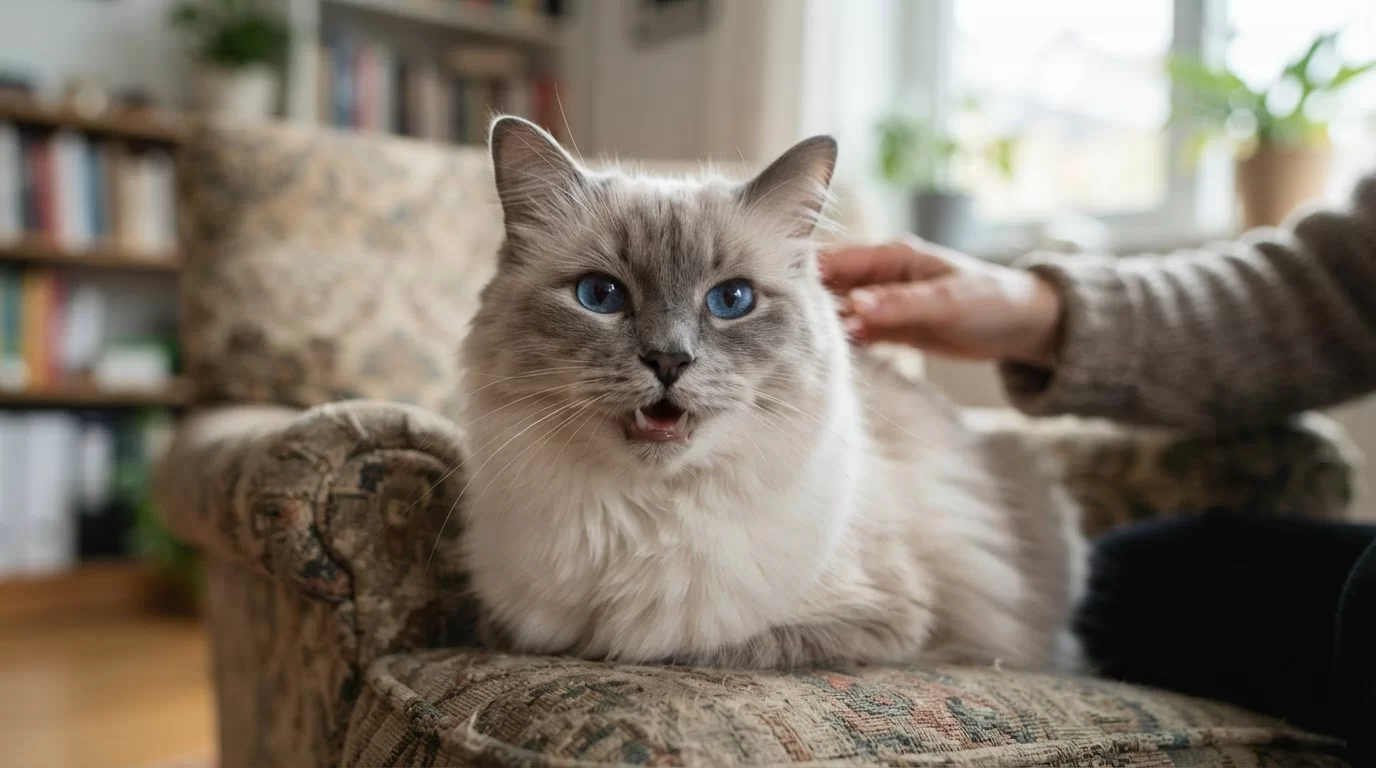
To understand why cats meow at us, it helps to look at the first weeks of life. Kittens are born blind and deaf, but they can mew loudly to signal their mother when they are cold, hungry, or separated from the litter. This dependency-based vocalization is essential for survival. In the wild, as kittens mature into independent hunters, they stop meowing; an unnecessary noise would only alert predators or scare off prey. A feral mother cat no longer responds to a grown offspring’s meow, so the behavior naturally fades.
Domestic cats, however, never completely grow up in the eyes of their owners. We continue to provide food, shelter, and care throughout their lives, keeping them in a state of extended juvenile dependence. This phenomenon, known as neoteny, explains why adult house cats retain so many kitten-like traits—from kneading to playfulness—and meowing is a prime example. When a senior cat meows at a human, it is effectively using a language born from the kitten-mother dynamic, repurposed for a lifelong relationship with a human caregiver.
What Cats Say to Each Other Without Making a Sound
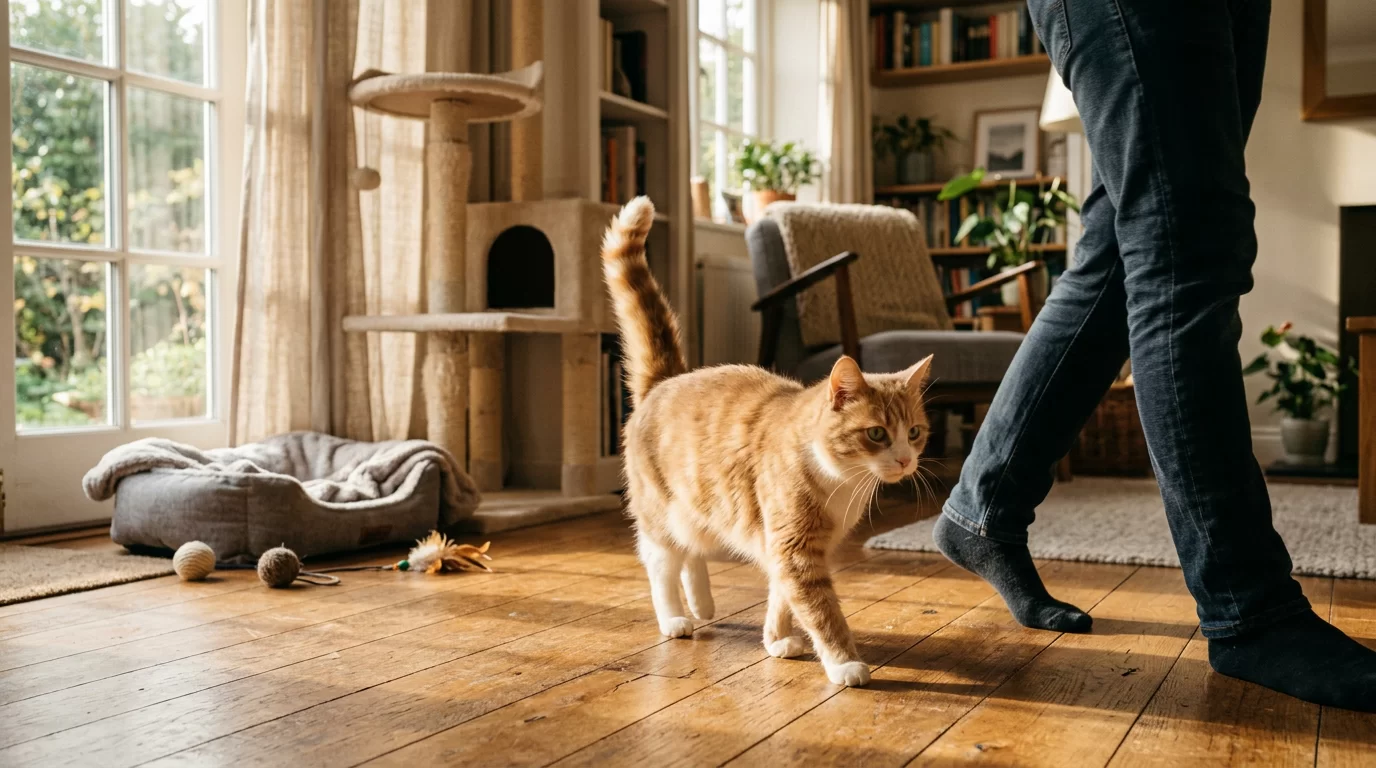
When two adult cats meet, they have no need for meows. Their communication operates on a completely different sensory channel, one that relies on scent, visual signals, and a repertoire of subtle vocalizations rarely used with people. A cat approaching another cat will first assess the tail position, ear orientation, and whisker set of the other animal. A slow blink signals trust, a puffed tail signals fear, and a direct stare can be a challenge.
Scent is arguably the most important part of feline social life. Cats have scent glands on their cheeks, paws, and the base of their tail, and they leave chemical messages—pheromones—on furniture, walls, and even other cats to mark territory and convey information about identity and reproductive status. This form of communication is completely invisible to humans, yet for cats it is a rich, time-released conversation. The comparison table below highlights just how differently cats communicate with their own species versus the way they talk to us.
| Communication Method | Between Adult Cats | Directed at Humans |
|---|---|---|
| Vocalization | Hisses, growls, yowls, and trills; meows are rare | Meows, chirps, and personalized vocal patterns |
| Body Language | Tail posture, ear flattening, whisker positioning, slow blinking | Tail-up greetings, figure-eight weaving between legs, head-butting |
| Scent Marking | Facial rubbing, urine spraying, scratching | Bunting against hands and ankles, kneading on soft surfaces |
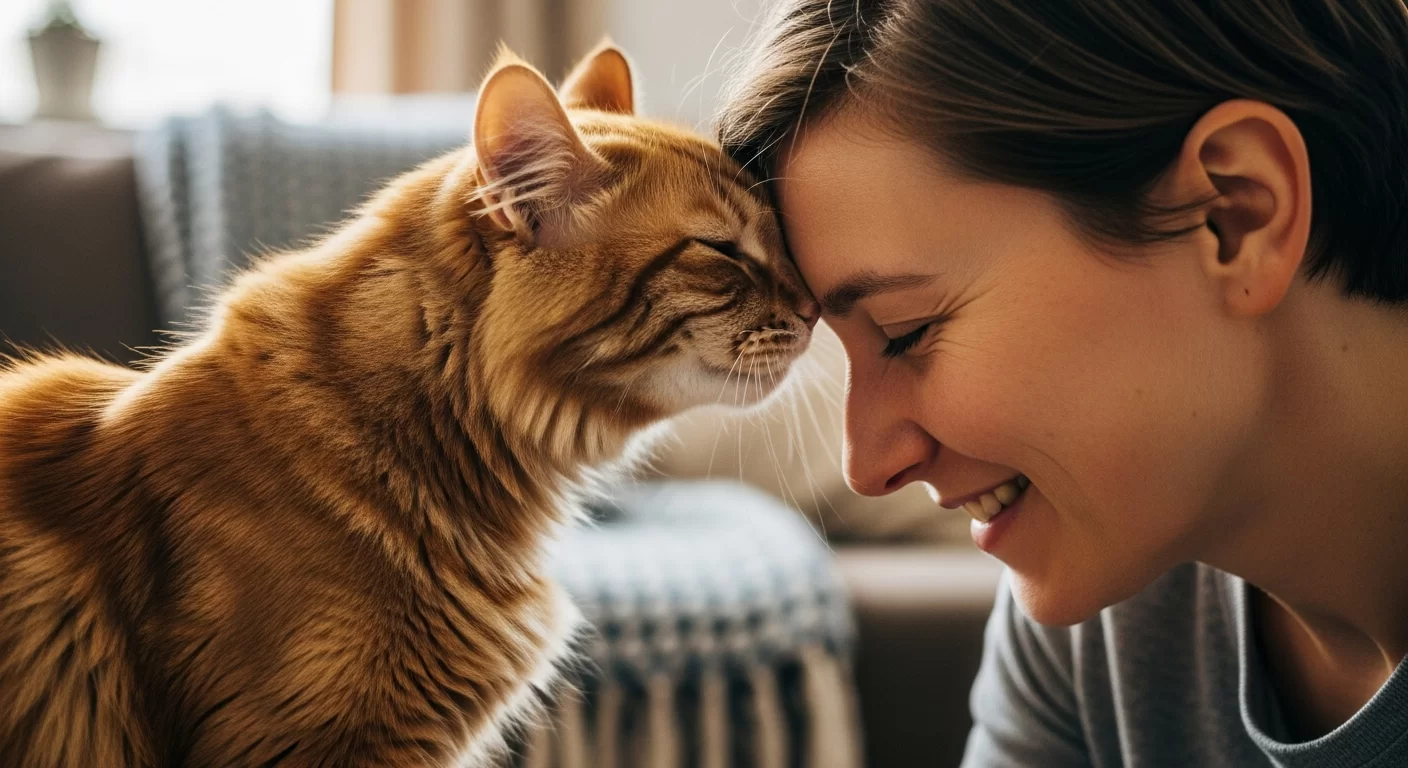
The occasional chin rub a cat gives your hand isn’t just affection—it’s also a scent deposit, though it’s one of the few interspecies signals that overlaps. But the meow remains uniquely human-targeted, a behavior cats simply don’t need to use with their own kind.
Why Some Breeds Are Chattier Than Others
Not all cats are equally vocal. While every domestic cat is capable of meowing at humans, genetics and breed predispositions heavily influence how much and how often they do it. Oriental breeds like Siamese, Burmese, and Tonkinese are famously talkative, producing a wide range of loud, raspy meows and chatter that many owners describe as conversational. On the other end of the spectrum, breeds like the Persian, British Shorthair, and Russian Blue tend to be much quieter, preferring to communicate with their eyes and body language.
Breed-related vocal tendencies are thought to stem from selective breeding practices that inadvertently favored more socially demanding or attention-seeking cats. A Siamese cat, for example, may meow insistently not just for food, but to engage in a back-and-forth dialogue with its owner. Environment also plays a role: an outgoing, highly interactive cat in a busy household may meow more simply because it receives more reinforcement for doing so. The presence of other cats in the home rarely influences this human-directed chatter; even in multi-cat households, most meowing is still saved exclusively for the people.
When Excessive Meowing Signals a Problem
While meowing is a normal part of the cat-human bond, a sudden increase in frequency, intensity, or timing can be a red flag. Cats are masters at masking illness, and persistent vocalization—especially at night—can indicate several underlying issues. Hyperthyroidism, hypertension, and cognitive dysfunction in senior cats are all associated with increased vocalization. Pain from dental disease or arthritis may also cause a cat to meow more often, particularly when a sensitive area is touched or when the cat is trying to settle down.
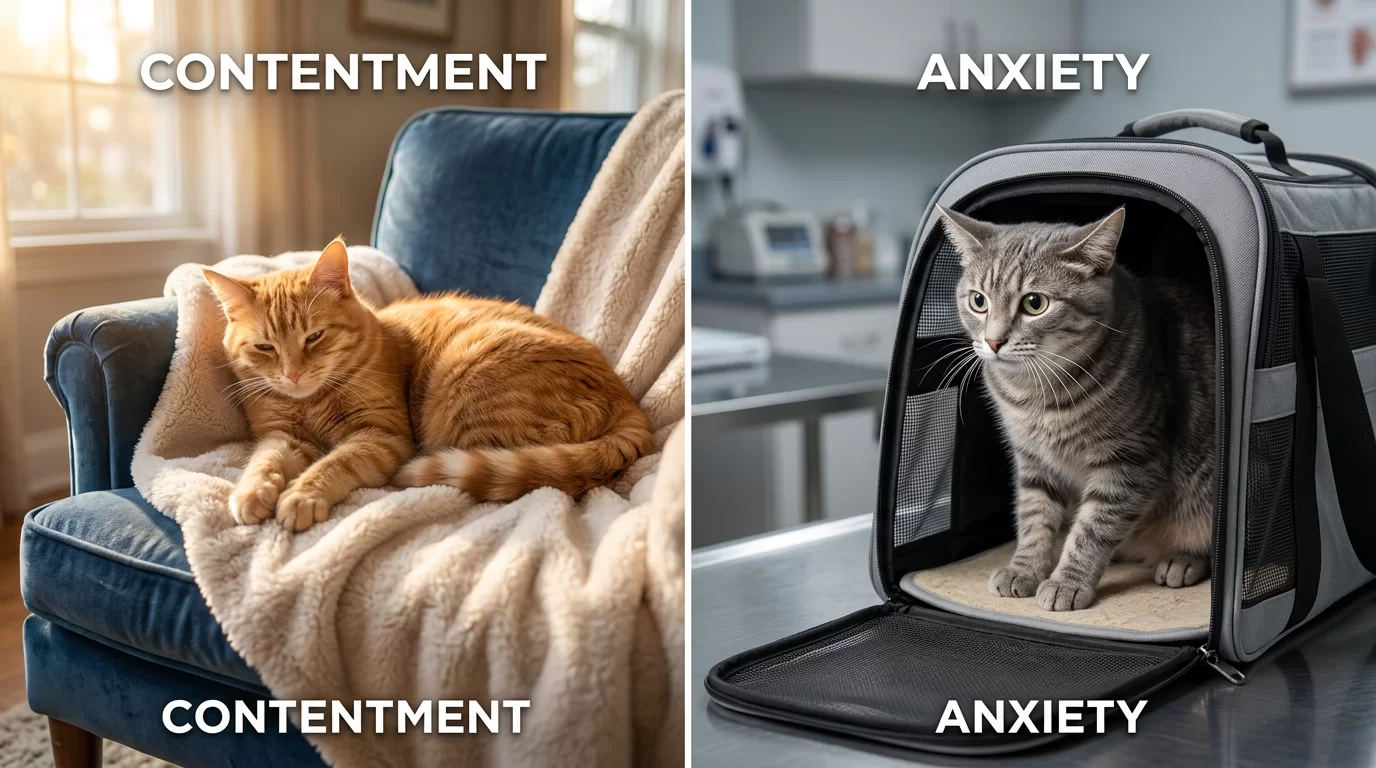
Anxiety and stress are other common culprits. A cat that begins meowing excessively after a move, the addition of a new pet, or a change in the owner’s schedule may be expressing distress. These cats often exhibit other behaviors alongside the vocalization, such as hiding, over-grooming, or following their humans into every room, including the bathroom, as a way to seek reassurance. It’s important to look at the whole picture. A cat that meows while eating or using the litter box, for instance, may have an upset stomach or urinary tract issue and should be seen by a veterinarian promptly.
If a cat receives a clean bill of health but the excessive meowing continues, behavioral modification and environmental enrichment are often effective. Scheduled play sessions, puzzle feeders, and predictable routines help reduce anxiety-related vocalizing. The key is to resist the urge to punish or ignore a suddenly vocal cat without investigation. What sounds like a nuisance could be the only way your cat can tell you something is wrong.
Cats have spent thousands of years quietly studying us, and the meow is one of their most successful inventions—a sound uniquely engineered to tap into human nurturing instincts. It’s a behavior built on the trust that we will listen and respond, a remnant of kittenhood that they choose to keep alive only for us. Learning to hear the nuance behind each meow, rather than simply wishing for silence, opens a deeper window into the emotional life of the animal that shares your home. In a house where a cat meows, it’s not noise—it’s a conversation that no other cat will ever be invited to join.