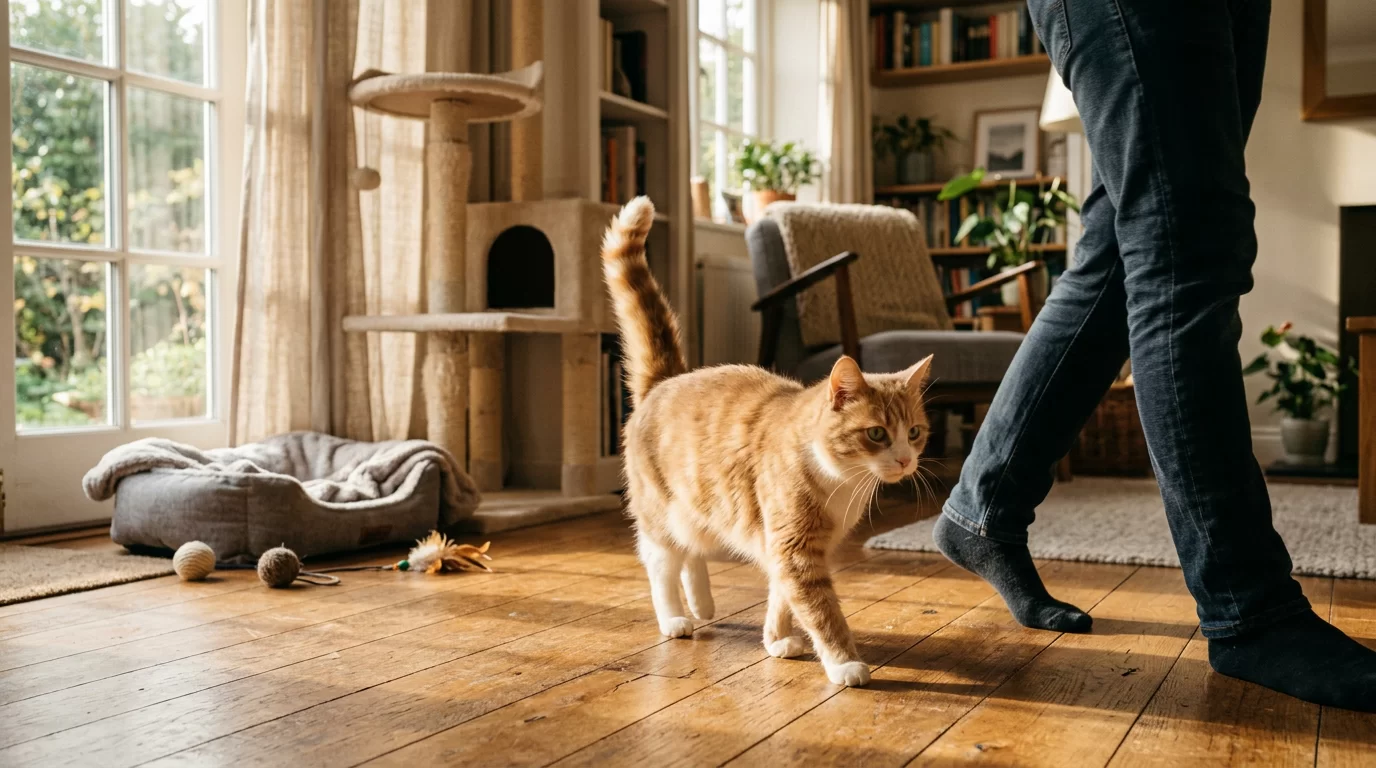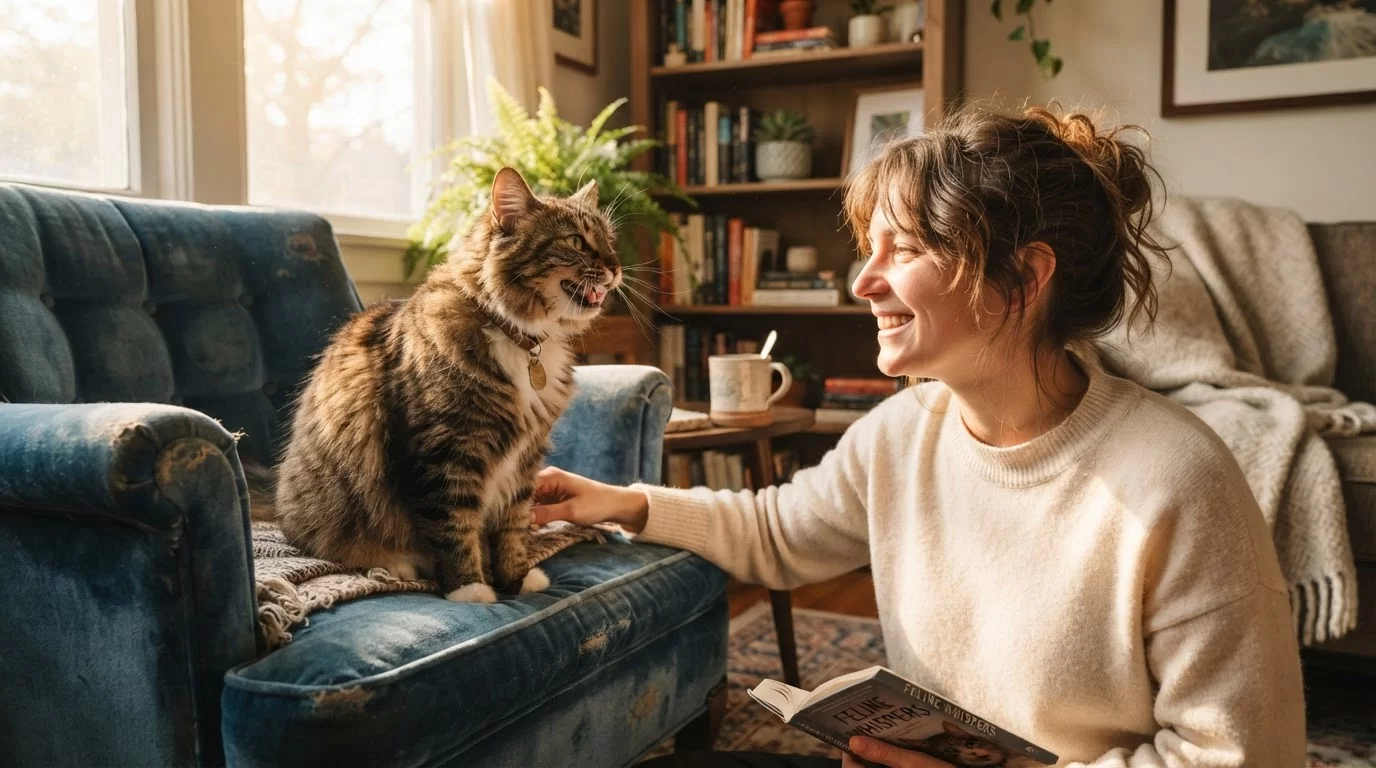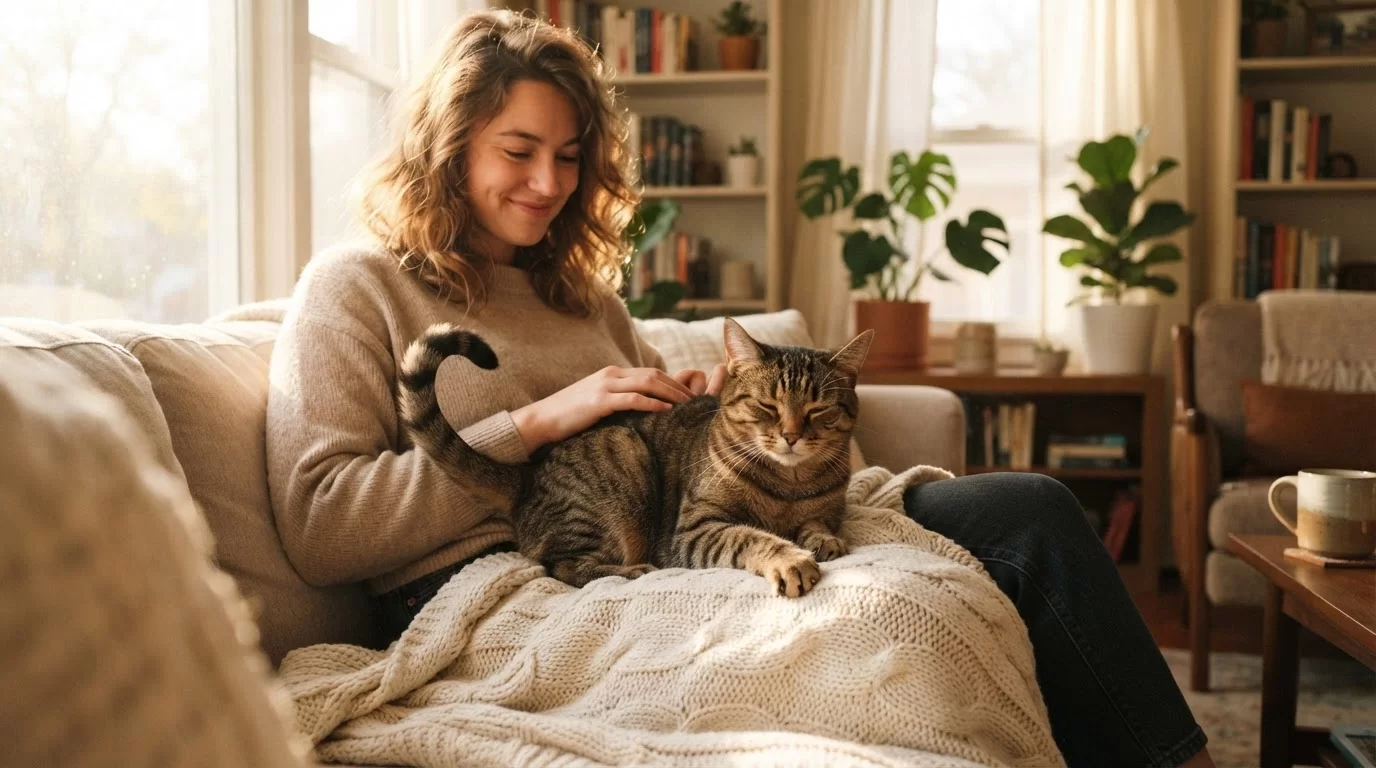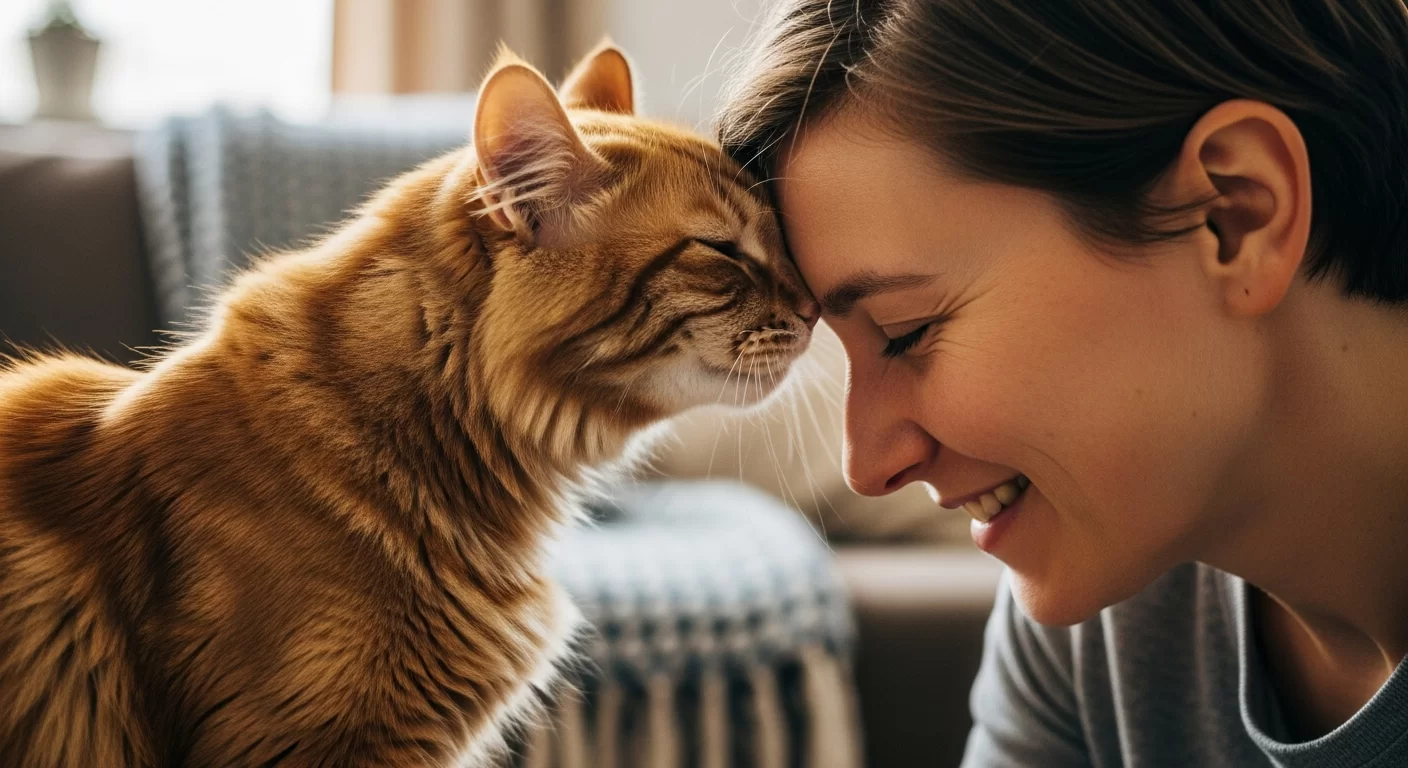
It starts small—a gentle nudge against a shin while coffee brews, a soft bump to the forehead during a quiet evening on the couch. For many cat guardians, the headbutt is one of those mysterious, endearing rituals that feels deeply personal but begs the question: what is actually going on behind those whiskers? Far from a random quirk, this behavior has a name—bunting—and it sits at the intersection of feline communication, scent chemistry, and emotional bonding. In a world where cats are often stereotyped as aloof, understanding why they press their heads into us offers a rare glimpse into how they build trust and express affection. It’s a conversation starter without words, and decoding it can transform the way owners relate to their cats every day.
In This Article
• What Is Cat Bunting?
• Why Do Cats Headbutt People?
• The Science of Feline Scent Marking
• Head Bunting vs. Head Pressing: A Critical Difference
• How to Encourage Positive Bunting Behavior
• When to See a Veterinarian
What Is Cat Bunting?
Cat bunting is the technical term for that head-first nudge cats give to people, other cats, and even furniture. It involves a cat pushing or rubbing its forehead, cheeks, chin, and sometimes the entire side of its head against a target. The behavior originates in kittenhood, when tiny cats nuzzle their mother’s face and body to solicit care and stimulate milk flow. As they mature, bunting evolves into a multifaceted social signal that continues throughout a cat’s life.
Understanding bunting requires knowing what a cat’s head carries. Cats possess scent glands concentrated around the face—on the lips, chin, cheeks, and temple area. These glands secrete pheromones, chemical messages that are species-specific and undetectable to the human nose. When a cat headbutts, it deposits a personalized scent signature onto the recipient. In essence, bunting is a way of labeling something as safe, familiar, and part of the cat’s inner circle.
Why Do Cats Headbutt People?
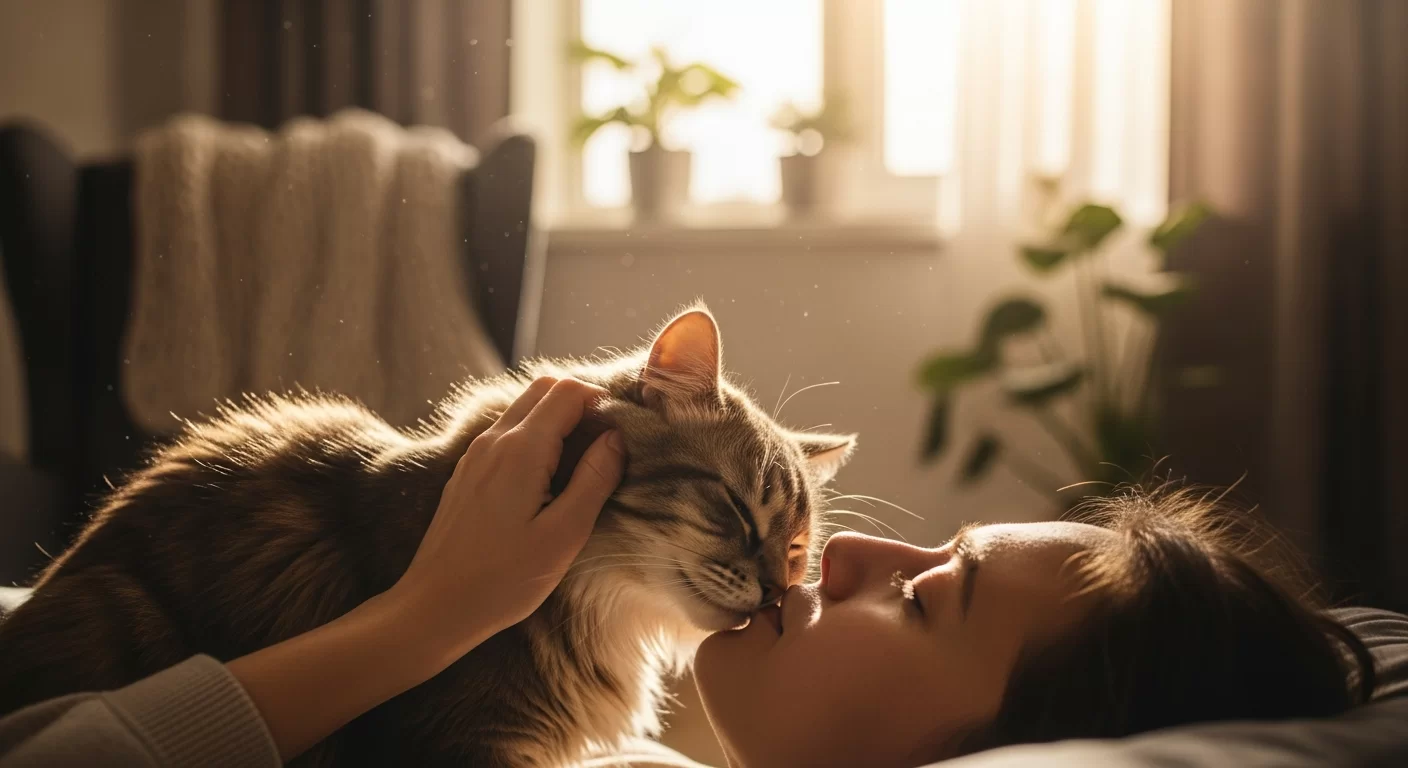
Headbutting also serves as a greeting. Cats often reserve bunting for the moments their owners wake up, return home, or settle into a quiet space. In the feline social playbook, approaching with a lowered head and nudging is a non-threatening, friendly overture. It can be the equivalent of a human hug, though cats tend to appreciate consent. A cat that headbutts and then leans into a hand is soliciting physical interaction on its own terms, which is a hallmark of a confident, comfortable animal.
Affection is undeniably part of the equation. While science frames bunting as a chemical signaling behavior, any devoted cat owner can testify that the gesture feels like love. And in many ways, it is. Trust is the foundation of affection in any relationship, and a cat that offers its head—exposing vulnerable eyes and throat—demonstrates a profound absence of fear. That emotional context is just as real as the pheromones.
The Science of Feline Scent Marking
To fully appreciate the headbutt, it helps to understand the broader landscape of feline scent communication. Cats rely on scent the way humans rely on spoken language. In addition to facial pheromones, cats have scent glands in their paw pads, flanks, and the base of their tail. Each gland releases different pheromone fractions that convey distinct information—territorial boundaries, reproductive status, stress levels, and individual identity.
Facial pheromones, specifically the F3 fraction, are associated with familiarity and comfort. Synthetic versions of these pheromones, found in products like Feliway diffusers, are often used to ease anxiety in multi-cat households or during environmental changes. When a cat bunts, it’s releasing its natural version of that same calming chemical signal. This explains why many cats seek out headbutting during stressful times—a visit to the vet’s waiting room might prompt a cat to bunt repeatedly against its carrier or its owner’s hands, attempting to self-soothe and re-establish a sense of safety.
From an evolutionary standpoint, this behavior may also have roots in communal living. Feral cat colonies that share overlapping territories benefit from a shared scent profile, which helps identify intruders and minimize conflict. A headbutt between colony members is a peaceful gesture that maintains harmony. When a house cat bunts its human, it’s treating that person as a core colony member, strengthening a bond that goes back thousands of years.
Head Bunting vs. Head Pressing: A Critical Difference
While headbutting is a normal, healthy behavior, it must not be confused with head pressing—a serious neurological symptom. This distinction is one every cat owner should know, because mistaking one for the other could delay critical veterinary care.
The following table outlines the key differences between bunting and head pressing:
| Behavior | Purpose | Posture | Accompanying Signs | When to Act |
|---|---|---|---|---|
| Bunting | Scent marking, social bonding, greeting | Cat actively moves head toward a person or object, often with rubbing or nudging; body language is relaxed, eyes may be half-closed | Purring, kneading, tail up, ears forward | Enjoy and reciprocate gently |
| Head Pressing | None; it’s a compulsive neurological response | Cat pushes the top of its head against a wall, corner, or hard surface for extended periods, often while standing still or pacing | Disorientation, vocalization, seizures, vision problems, circling, seeming “stuck” | Seek emergency veterinary attention immediately |
Head pressing is associated with conditions such as hepatic encephalopathy, brain tumors, toxic poisoning, or metabolic disorders. If a cat presses its head against a surface and does not engage in the social, interactive nudge of bunting, a veterinarian should evaluate the animal without delay. The rule of thumb: bunting is interactive and purposeful; head pressing is stationary and detached.
How to Encourage Positive Bunting Behavior
Responding to a cat’s headbutt in a way that respects its boundaries strengthens the behavior. Many cats appreciate a gentle scratch behind the ears or under the chin in return, but reaching over the top of the head can be intimidating. Let the cat dictate the pace: if it leans into a hand, it’s asking for more contact. If it pulls back, it’s satisfied with the exchange. Reinforcing bunting with a calm voice, slow blinks, or a small treat can help a skittish cat build positive associations with physical closeness.
In multi-cat homes, owners may notice cats bunting each other. This mutual scent exchange can be a sign of a stable hierarchy and social harmony. When a cat bunts its owner after an inter-cat bunting session, it’s including that human in the scent circle. Recognizing these subtle dynamics allows guardians to better understand the emotional currents of their home.
Situations that diminish bunting behavior are often stress-related. A cat that suddenly stops headbutting may be feeling anxious, unwell, or displaced by changes such as a new pet, a move, or a shift in household routine. While a temporary absence of bunting isn’t an emergency, a sustained behavior change paired with hiding, reduced appetite, or litter box issues warrants a checkup.
When to See a Veterinarian
Because bunting sits so close to normalcy, it can be easy to overlook when head-related behaviors stray into concerning territory. Aside from the urgent distinction of head pressing, there are other scenarios that call for professional evaluation. Any abrupt increase in head rubbing if accompanied by hair loss, red skin, or wounds may indicate allergies, ear infections, or skin conditions rather than behavioral marking. A cat that begins bunting obsessively against furniture or walls, to the exclusion of eating or sleeping, might be displaying a compulsive disorder triggered by anxiety or neurological changes.
Similarly, a cat that once headbutted daily and now refuses all contact—including bunting—may be masking pain. Dental disease, arthritis, and systemic illness can make a cat withdraw from physical interaction, even beloved rituals. A veterinary examination, including baseline bloodwork and a neurological assessment, can rule out underlying medical issues. Trustworthy sources such as the American Association of Feline Practitioners and board-certified veterinary behaviorists provide guidelines that help owners distinguish between behavioral quirks and genuine red flags. Owners should never hesitate to video-record odd head-related behavior and share it with their vet; footage often speaks louder than a description.
The headbutt, at its heart, is a small daily reminder that cats communicate in a language older than domestication. It’s a ritual of mutual recognition that bridges the gap between species elegantly and silently. For a creature that so often gets labeled as mysterious, the headbutt is actually an open invitation—an overt declaration of trust that says more than a meow ever could. By understanding the layers underneath that gentle nudge, owners can deepen not only their knowledge of feline behavior but also the quiet, steady bond that makes sharing a life with a cat so uniquely rewarding. The next time a cat leans in and gently presses its forehead to yours, it’s not asking for anything more than what it already knows: you are part of its colony, and it is right where it belongs.