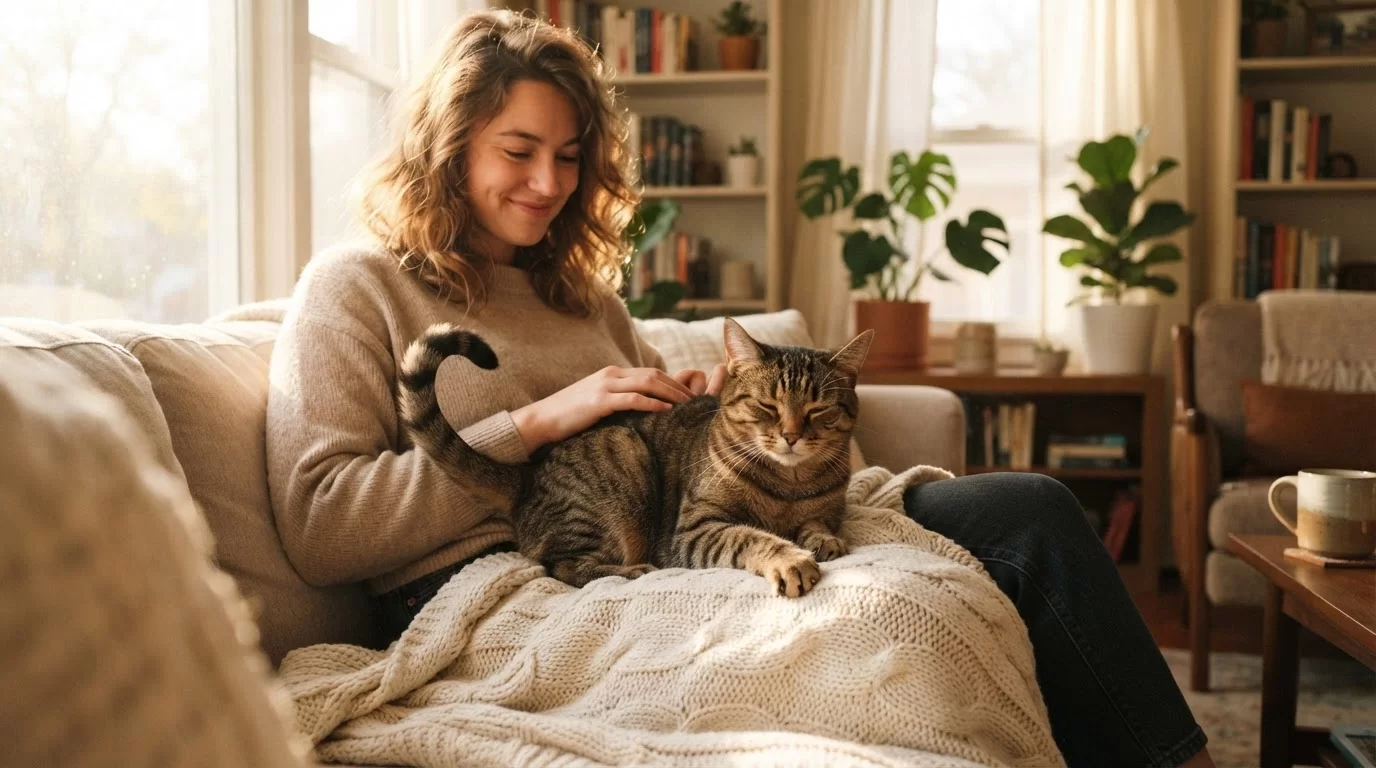
For generations, cats have been labeled aloof, independent, and sometimes even indifferent. That reputation, however, overlooks the subtle, deeply ingrained ways felines express connection. Unlike dogs, who often wear their hearts on their paws, cats communicate affection through a quiet language of scent, body posture, and ritualized behaviors inherited from kittenhood. Understanding that language matters now more than ever. With multi-cat households on the rise and more owners treating pets as family members, deciphering whether a cat truly bonds with its human has become a central question. The answer lies not in expecting a wagging tail or an excited bark, but in learning to recognize the signs that, in a cat’s own way, mean “I love you.”
In This Article
- The Slow Blink: A Cat’s Version of a Kiss
- Head Bunting and Cheek Rubbing: Scent Marking as Affection
- The Gift of “Prey”: Decoding a Feline Offering
- Kneading: A Cozy Behavior Rooted in Kittenhood
- Following You Around: Attachment Beyond the Food Bowl
- Tail Language That Says “I Love You”
- Purring: It’s Not Always About Contentment
- Exposing the Belly: The Ultimate Trust Display
- When Affection Signals Something More: Separation Anxiety
The Slow Blink: A Cat’s Version of a Kiss
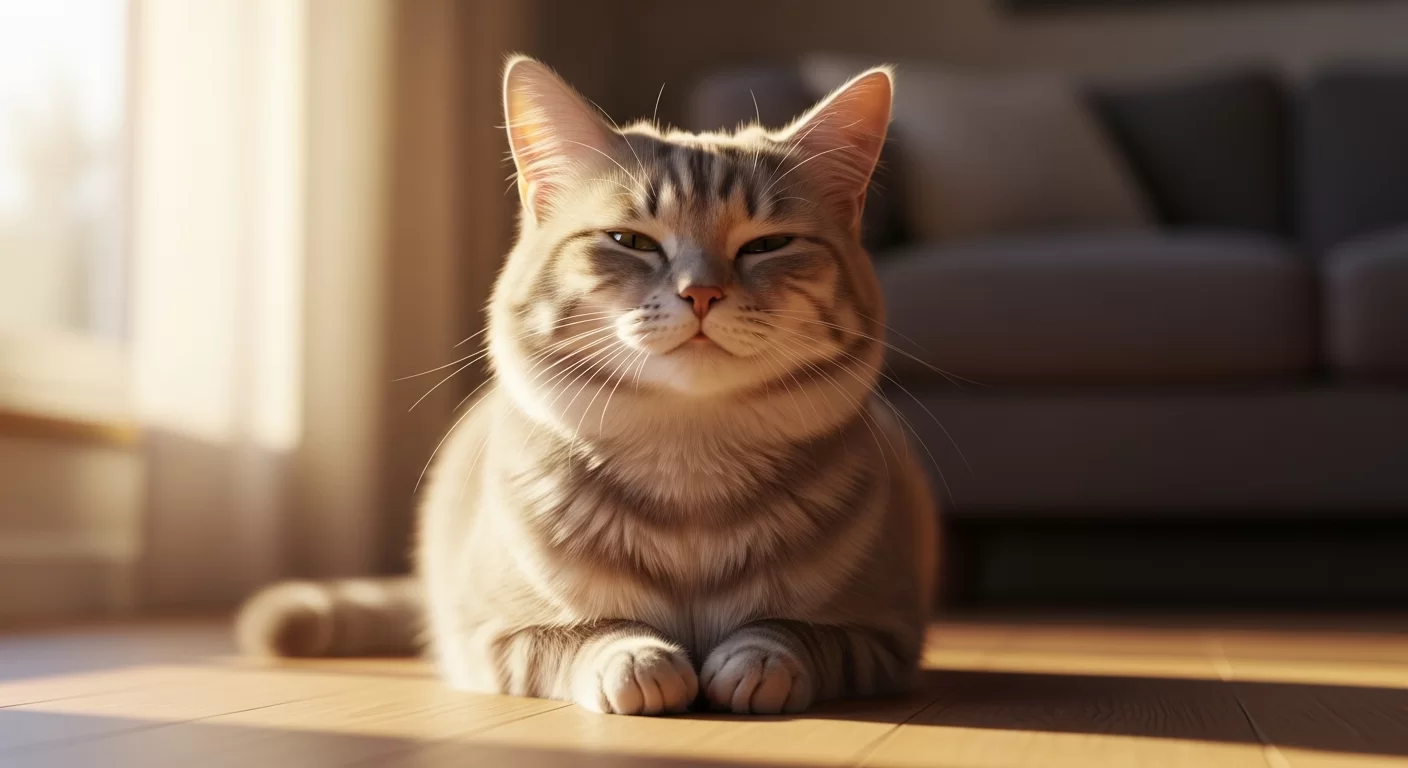
Research on cat-human communication suggests that people who slow-blink at their cats are more likely to receive the gesture in return, and cats tend to approach a blinking human more readily than a neutral expression. This back-and-forth can strengthen the bond over time. Owners can test the theory: the next time a cat looks their way from across the room, they should try relaxing their own face, closing their eyes for a second or two, and opening them gently. A reciprocal blink is a small but genuine declaration of love.
Head Bunting and Cheek Rubbing: Scent Marking as Affection
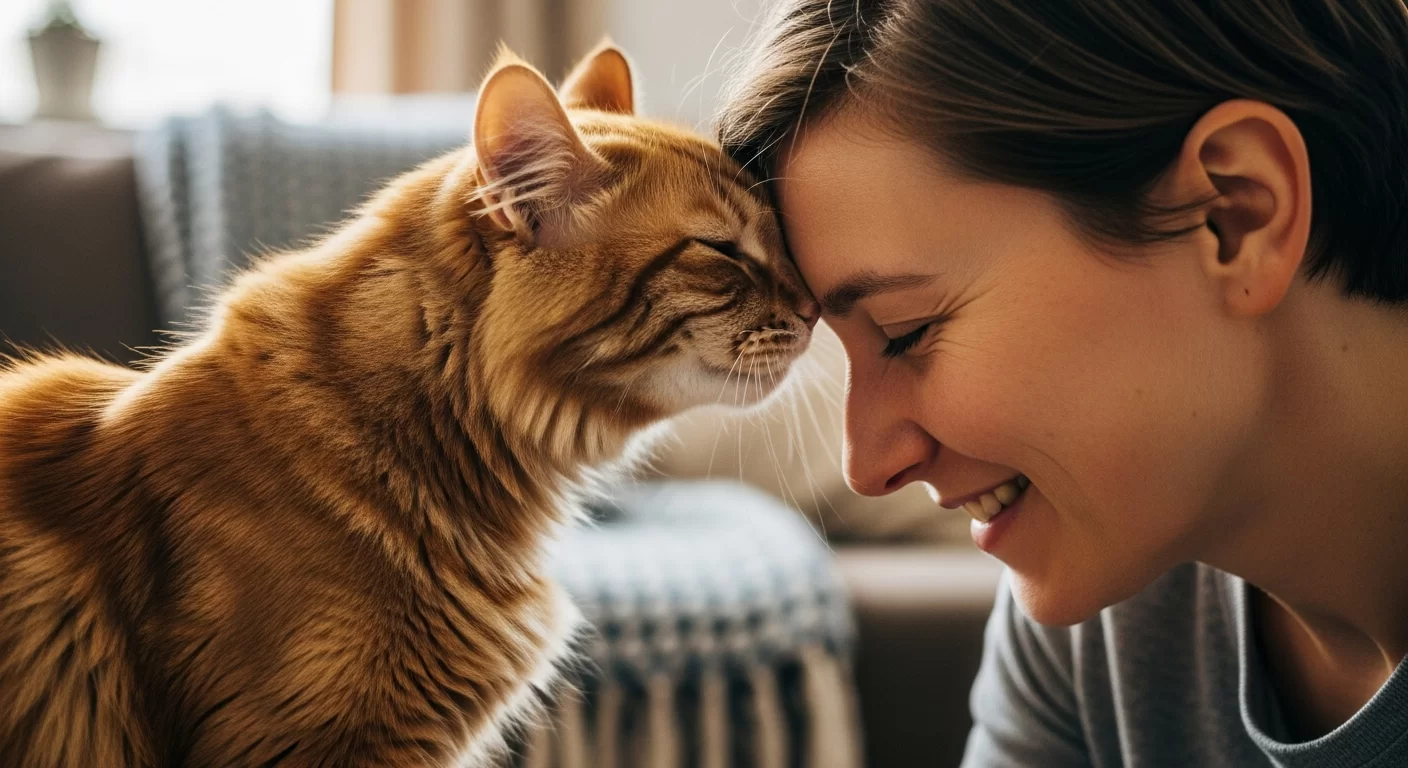
When a cat pushes its forehead or cheek against a person’s leg, hand, or face, it is performing a behavior known as bunting or allorubbing. This action deposits pheromones from scent glands located around the forehead, cheeks, and chin. While this does mark territory, among bonded individuals—feline or human—it serves as a social glue. By mingling scents, the cat is creating a shared family odor, essentially claiming the person as part of its colony.
Bunting often comes with a purr and a relaxed posture, and it usually targets a human’s head or hands. Some cats will even attempt to bunt against a smartphone or book, redirecting the gesture when direct contact is momentarily unavailable. It’s a clear, olfactory-based affirmation that the cat feels a deep, familial connection. Rejection of this advance can cause confusion, so understanding what’s happening helps owners welcome the gesture rather than push it away.
The Gift of “Prey”: Decoding a Feline Offering
Few behaviors puzzle owners as much as finding a dead mouse, lizard, or even a favorite toy left on the doorstep—or worse, on the bed. While it’s easy to recoil, this is a profoundly meaningful expression of feline care. In the wild, mother cats bring prey back to their kittens to teach hunting skills and ensure their young are fed. When a domestic cat delivers a “gift” to its human, it is extending this caregiving role, viewing the owner as family that needs providing for.
Toys are often substituted when real prey isn’t available, but the intent remains the same. The cat is not presenting a trophy to impress; it is acting on a deep instinct to nurture. Discouraging the behavior with punishment damages trust. Instead, owners can accept the offering quietly, dispose of it discreetly, and recognize the message: “You are part of my pride, and I look after you.”
Kneading: A Cozy Behavior Rooted in Kittenhood
That rhythmic pushing of paws against a soft blanket—or a lap—is more than a pre-nap ritual. Kneading, sometimes called “making biscuits,” begins at birth when kittens knead their mother’s belly to stimulate milk flow. The behavior is often accompanied by a deep, trance-like purr and, in some cats, gentle drooling. When an adult cat kneads on a person, it associates that human with the comfort, safety, and nourishment of early life.
Kneading also activates scent glands in the paw pads, discreetly marking the person as safe territory. For owners with sensitive skin, the prick of claws can be uncomfortable, but placing a thick folded blanket on the lap can allow the interaction to continue without pain. It’s a behavior that speaks to profound emotional security—the cat is literally and figuratively reaching back to its most vulnerable and contented state.
Following You Around: Attachment Beyond the Food Bowl
A cat that trails its owner from room to room, even when not hungry, is demonstrating something scientists now recognize as secure attachment. A landmark study from Oregon State University used a test similar to the “strange situation” experiment used with human infants and dogs. The results showed that cats, like dogs and children, form attachment bonds with their caregivers. Many cats displayed a secure attachment style, using their owner as a safe base from which to explore and becoming distressed upon separation.
Following behavior often peaks during routine moments—walking to the kitchen, heading to the bathroom, or going upstairs for the evening. This isn’t about food anticipation; it’s a desire for proximity and social closeness. Some cats even match their sleep-wake cycles to their owners’ schedules, another layer of quiet, steady devotion.
| Tail Position | Emotional Meaning |
|---|---|
| Upright, slight curve at tip (like a question mark) | Friendly greeting, happy to see you, invitation for interaction |
| Upright, quivering | Intense excitement and affection, often seen during mealtime or when you return home |
| Wrapped around your arm or leg | A bonding gesture akin to holding hands; expresses companionship |
| Puffed-up or thrashing | Fear, agitation, or overstimulation—not affection, a signal to give space |
Tail Language That Says “I Love You”
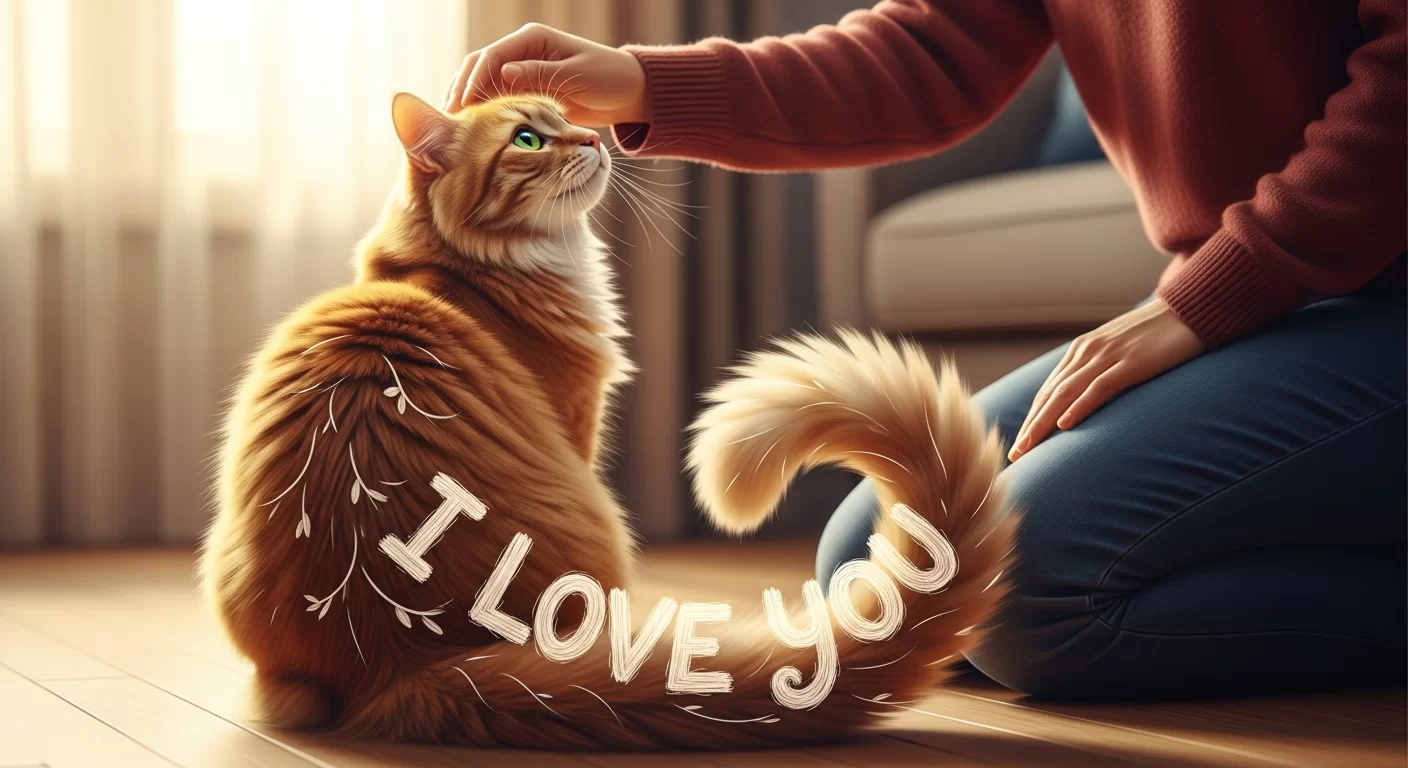
A cat’s tail is an emotional barometer, and several positions specifically signal warmth and trust. An upright tail with a slight hook at the tip—shaped like a question mark—is a classic friendly greeting, often seen when a cat trots toward a beloved person. When that upright tail gives a subtle quiver, it’s a sign of extremely positive excitement, frequently observed when an owner comes home after a long day.
More intimate still is the tail wrap. Some cats will delicately curl their tail around a human’s wrist, arm, or calf, mirroring the way they entwine tails with other bonded cats. Research into feline social behavior interprets this as an affiliative gesture, a form of companionable contact that reinforces social bonds. Recognizing these subtle positions helps owners understand that affection is often being shown in real time, without a single sound.
Purring: It’s Not Always About Contentment
The rumor that purring equals happiness is mostly true, but the full story is more complex. Cats also purr when in pain, during labor, or when extremely anxious—a self-soothing mechanism with a frequency (25-150 Hz) that some studies suggest may promote tissue regeneration and bone density. However, within a social context with a trusted human, the meaning is often crystal clear. A cat curled on a lap, kneading and purring with eyes half-closed, is communicating deep relaxation and trust.
There’s an additional layer: the solicitation purr. Researchers at the University of Sussex identified a specific type of purr that cats use when seeking food, which embeds a high-frequency cry within the purr, creating a sense of urgency reminiscent of a baby’s cry. While that’s a request, the low, rhythmic purr given freely during cuddle sessions remains a genuine, affectionate response. Context and body language clarify whether it’s “I adore you” or “I need you.”
Exposing the Belly: The Ultimate Trust Display
A cat rolling onto its back to expose its underside is showing a remarkable act of vulnerability. The abdomen houses vital organs, and in the wild, exposing it is a defensive risk. When a cat does this in a human’s presence, it signals an extraordinary level of safety. The cat is communicating that it does not perceive the person as a threat and that the bond is strong enough to momentarily drop its guard.
This is also one of the most misinterpreted signals. For many cats, a belly display is not an invitation for a rub. Attempting to touch it can trigger an instinctive defensive reaction—teeth and claws engaged—out of reflex rather than conscious aggression. Respecting the display for what it is—a silent, powerful statement of trust—allows the cat to remain comfortable and the relationship to deepen. Words aren’t needed.
When Affection Signals Something More: Separation Anxiety
Sometimes, behaviors that look like love can cross into dependency. A cat that cannot tolerate being alone, vocalizes excessively when the owner leaves, stops eating, or eliminates outside the litterbox in the owner’s absence may be suffering from separation anxiety. The line between attachment and distress can be thin. Clingy behavior paired with destructiveness or self-neglect is not an intensified sign of affection but a cry for help. Consulting a veterinarian or feline behaviorist is essential. They can help differentiate a healthy bond from a condition requiring environmental enrichment, gradual desensitization, or medical support.
Learning to speak a cat’s love language unlocks a relationship that is rich, reciprocal, and deeply rewarding. The slow blink across a sunlit room, the gentle head nudge against a shin, the softly vibrating purr in the quiet of night—these are not random moments. They are intentional, biologically rooted declarations of trust and fondness. Cats may not love in the loud, demonstrative way humans sometimes expect, but their affection is no less profound. It simply asks for a patient observer who understands that a tucked tail can mean fear, a quivering tail can mean joy, and a dead mouse on the doorstep might be the most sincere Valentine a feline can offer.