Cats rarely hand out trust all at once. For many, feeling safe with a person is built through quiet routines: the same voice at mealtime, a predictable hand reaching down, a favorite spot left undisturbed. This is why cat owners often search for subtle signs that their cat feels secure, especially when a cat is shy, newly adopted, previously stressed, or simply less physically affectionate than expected.
Unlike dogs, cats often show attachment in small, controlled behaviors. A cat may not leap into someone’s arms, but may choose to nap nearby, blink slowly from across the room, or expose their belly without wanting it touched. These moments matter. They are part of feline body language, and understanding them can help strengthen the relationship while avoiding common mistakes that make cats feel pressured.
In This Article
- What Trust Looks Like in Cats
- 15 Signs Your Cat Trusts You
- Why Cats Show Trust Differently Than Dogs
- When Trusting Behavior May Actually Signal Stress or Illness
- How to Build More Trust With a Cat
- What Deep Trust Looks Like Over Time
What Trust Looks Like in Cats
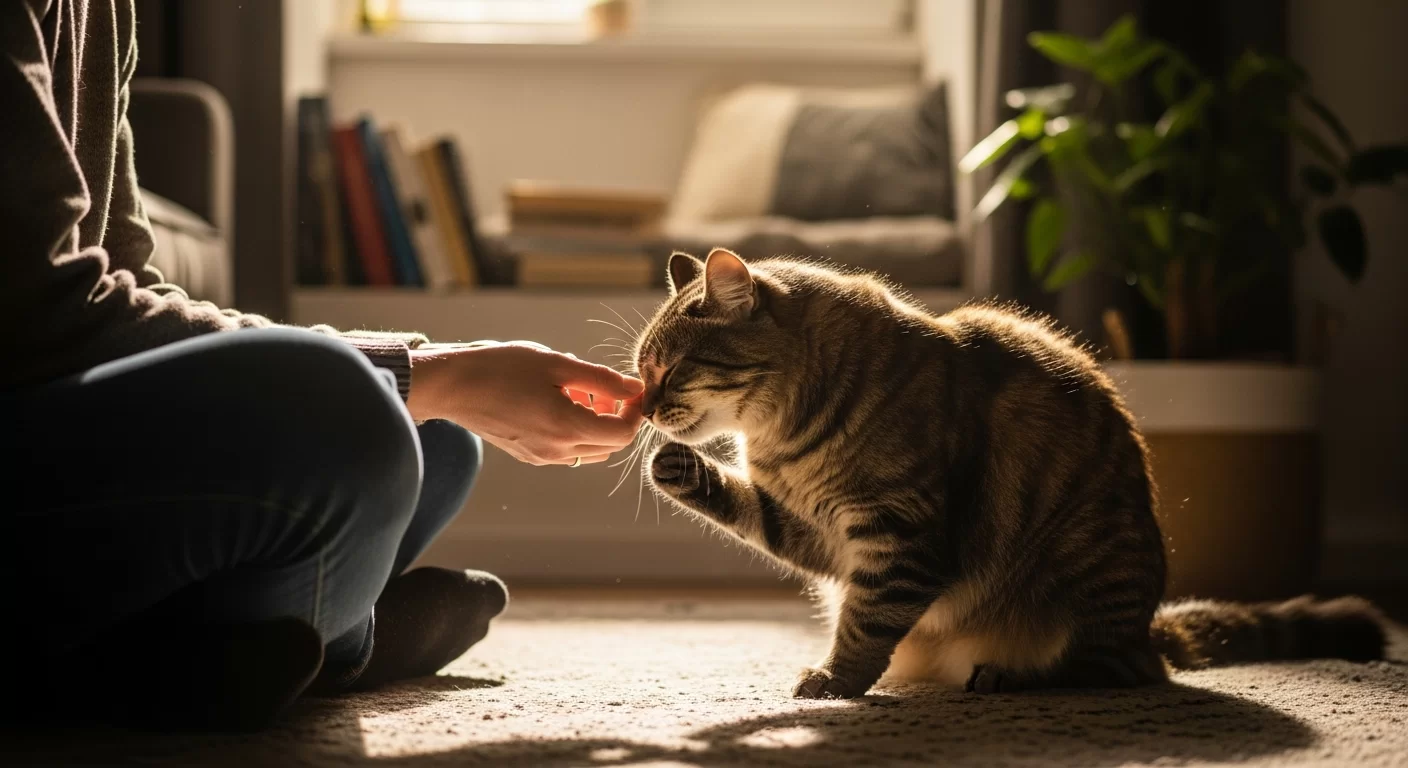
Trust does not always look like cuddling. Some cats feel deeply bonded while still preferring physical space. A confident cat may sit beside a person rather than on their lap. A cautious cat may begin by staying in the same room, then gradually move closer over days or weeks.
In feline behavior, choice is central. A cat that approaches voluntarily, stays relaxed, and can leave whenever they want is usually showing comfort and trust.
15 Signs Your Cat Trusts You
Cats communicate with posture, scent, movement, eye contact, and routine. These 15 behaviors are among the clearest signs a cat feels safe.
| Behavior | What It Usually Means |
|---|---|
| Slow blinking | Relaxed social communication and comfort |
| Sleeping near you | Feeling safe enough to be vulnerable |
| Showing the belly | Trust, relaxation, or playfulness |
| Head bunting | Scent marking and social bonding |
| Kneading | Comfort, contentment, and kittenhood-associated security |
| Following you | Attachment and curiosity |
| Grooming near you | Feeling relaxed in the environment |
| Grooming you | Social bonding behavior |
| Tail held upright | Friendly greeting |
| Sitting with their back to you | Confidence that they are not threatened |
| Bringing toys or prey-like objects | Social offering, play invitation, or instinctive behavior |
| Eating while you are nearby | Environmental security |
| Purring with loose posture | Contentment or social comfort |
| Rolling onto the side | Relaxation and playful trust |
| Seeking contact on their terms | Secure attachment and confidence |
1. Slow blinking at you
A slow blink is one of the most recognized signs of feline trust. Cats use soft, partially closed eyes when they are relaxed and not preparing to defend themselves. Research published in Scientific Reports has also explored slow blinking as a form of positive cat-human communication.
A trusted person may notice a cat looking over, narrowing the eyes, blinking slowly, then looking away. Looking away is part of the comfort signal; it shows the cat does not feel the need to stare or monitor for danger.
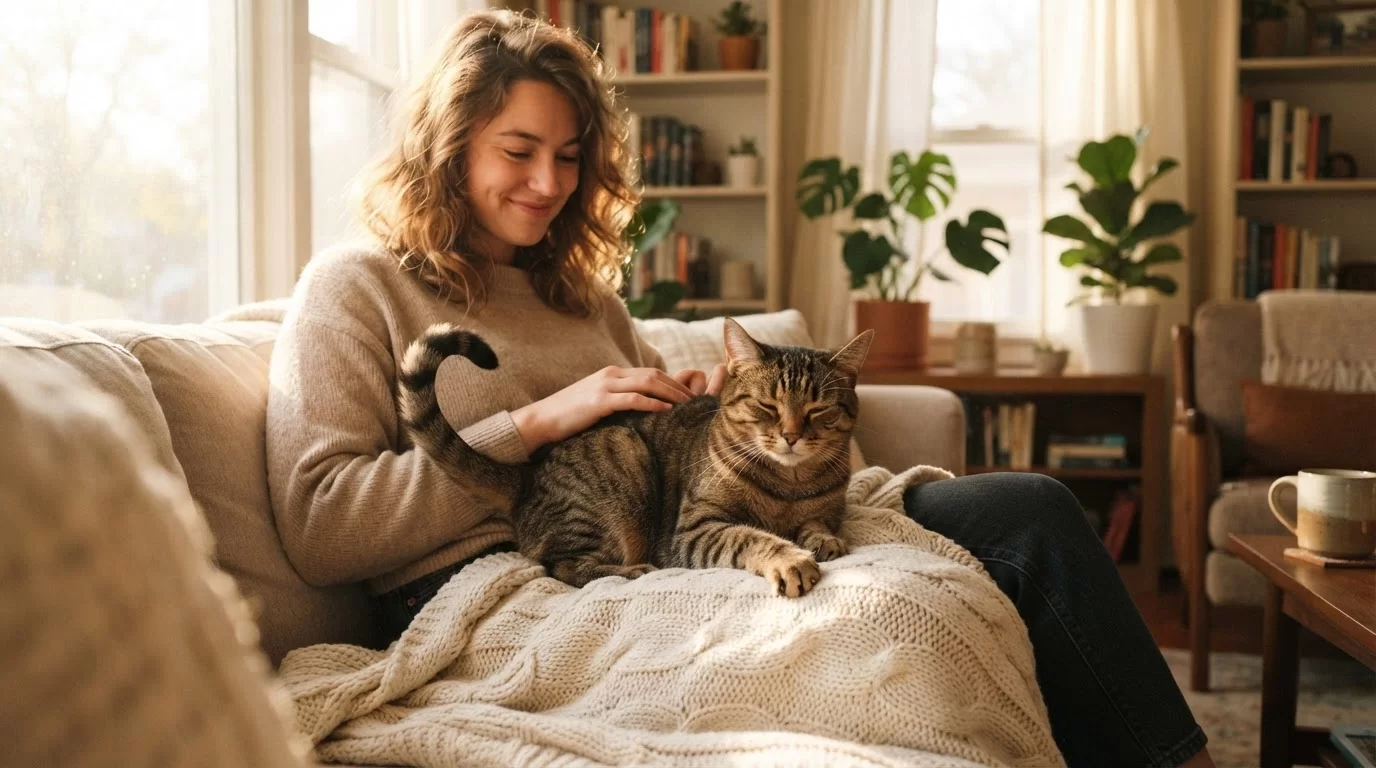
2. Sleeping near you
Sleep is a vulnerable state for cats. A cat that naps beside a person, at the foot of the bed, on a nearby chair, or against a leg is choosing safety. The cat does not need to be curled on someone’s chest for this to count.
Many cats prefer proximity without full contact. That is still a meaningful sign of trust.
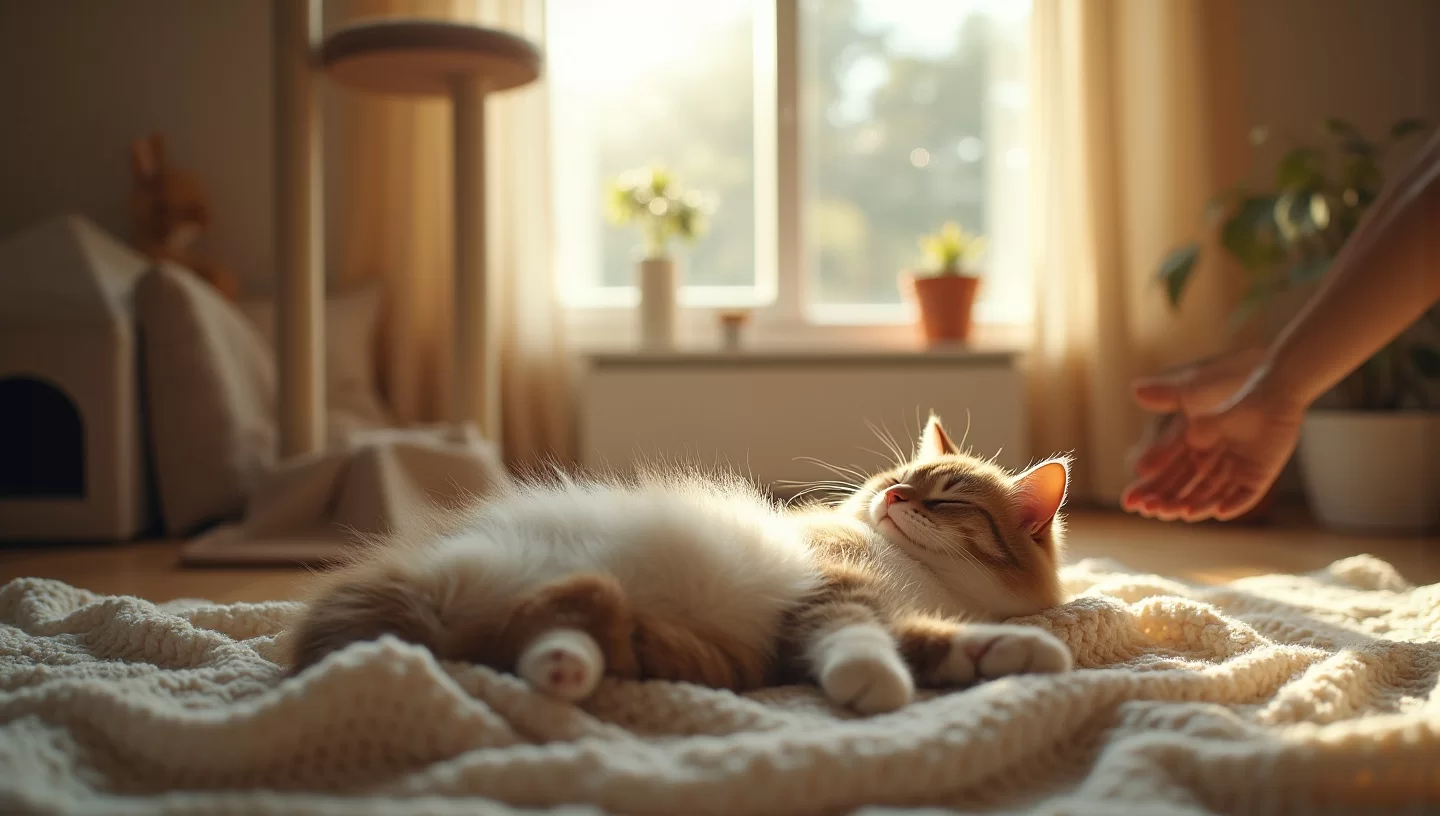
3. Showing their belly
A cat’s belly is physically vulnerable. When a cat rolls over and exposes it, the behavior often signals relaxation or confidence. However, it is not always an invitation for belly rubs.
Some cats enjoy belly contact, but many respond with grabbing, kicking, or biting because the exposed belly can also be part of play or defensive readiness. The trust is in the exposure, not necessarily in permission to touch.
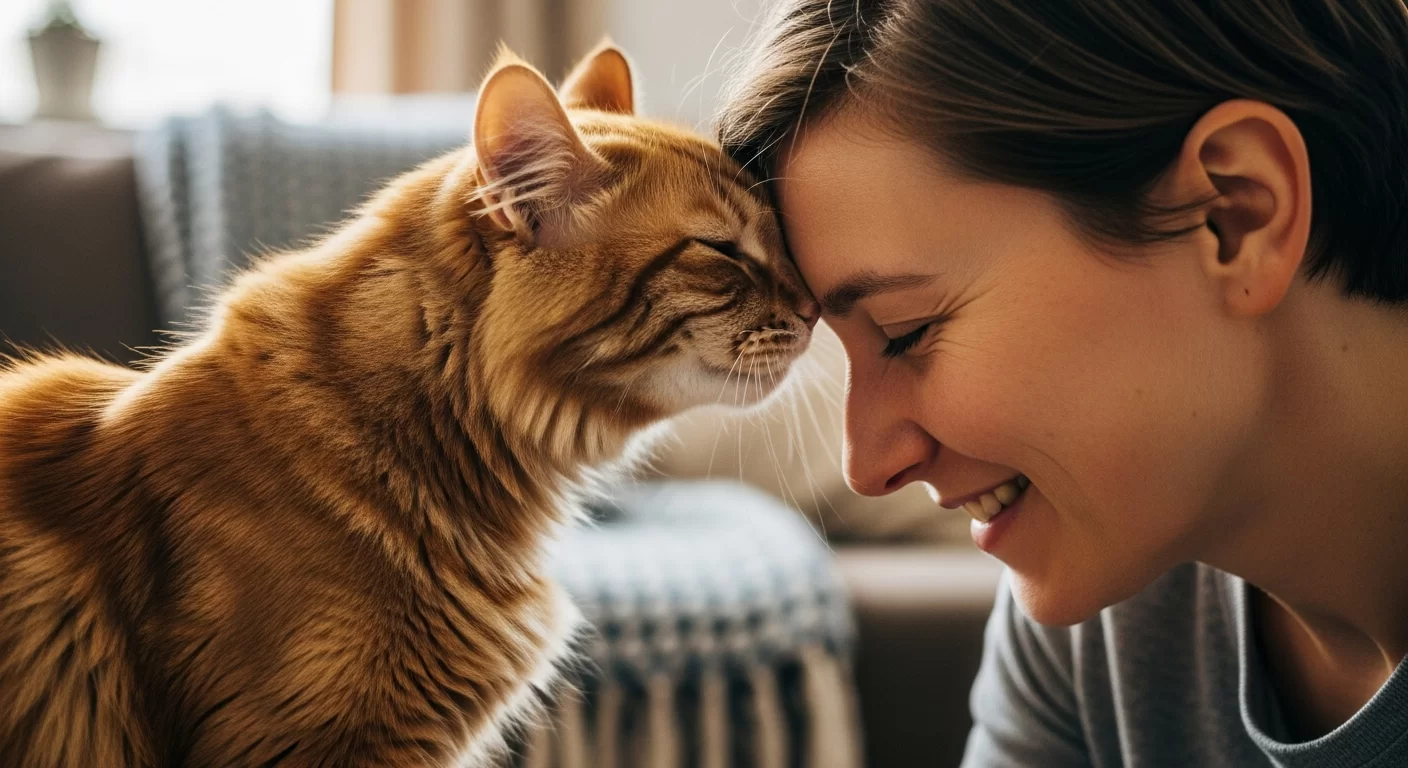
4. Head bunting and cheek rubbing
When a cat bumps their head against a person or rubs their cheeks along a hand, leg, or face, they are depositing scent from glands around the head. This behavior is often called bunting.
International Cat Care notes that scent communication is central to feline social life. A cat that marks a person with facial scent is treating that person as part of their familiar, safe environment.
5. Kneading with their paws
Kneading, sometimes called “making biscuits,” is often linked to kitten nursing behavior. Adult cats may knead soft blankets, laps, pillows, or a person’s body when relaxed.
Kneading can include purring, drooling, or a dreamy expression. Sharp claws may make it uncomfortable, but the behavior itself is usually affectionate and comfort-driven.
6. Following you from room to room
A cat that trails behind a person may be seeking companionship, stimulation, food, or routine. When paired with relaxed body language, following is often a sign that the cat enjoys being near that person.
This behavior can be especially meaningful in cats that are not lap cats. Some bond through presence rather than touch.
7. Grooming near you
Cats groom when they feel safe enough to lower their guard. A cat that settles nearby and begins washing their face, paws, or coat is usually comfortable in the space.
Sudden excessive grooming, however, can signal stress, skin irritation, pain, or parasites, so context matters.
8. Grooming you
Licking a person’s hand, hair, arm, or face may be a social bonding behavior. Cats that live together peacefully often groom one another, a behavior known as allogrooming.
Human skin and hair may also carry interesting tastes or textures, but gentle grooming often reflects familiarity and social closeness.
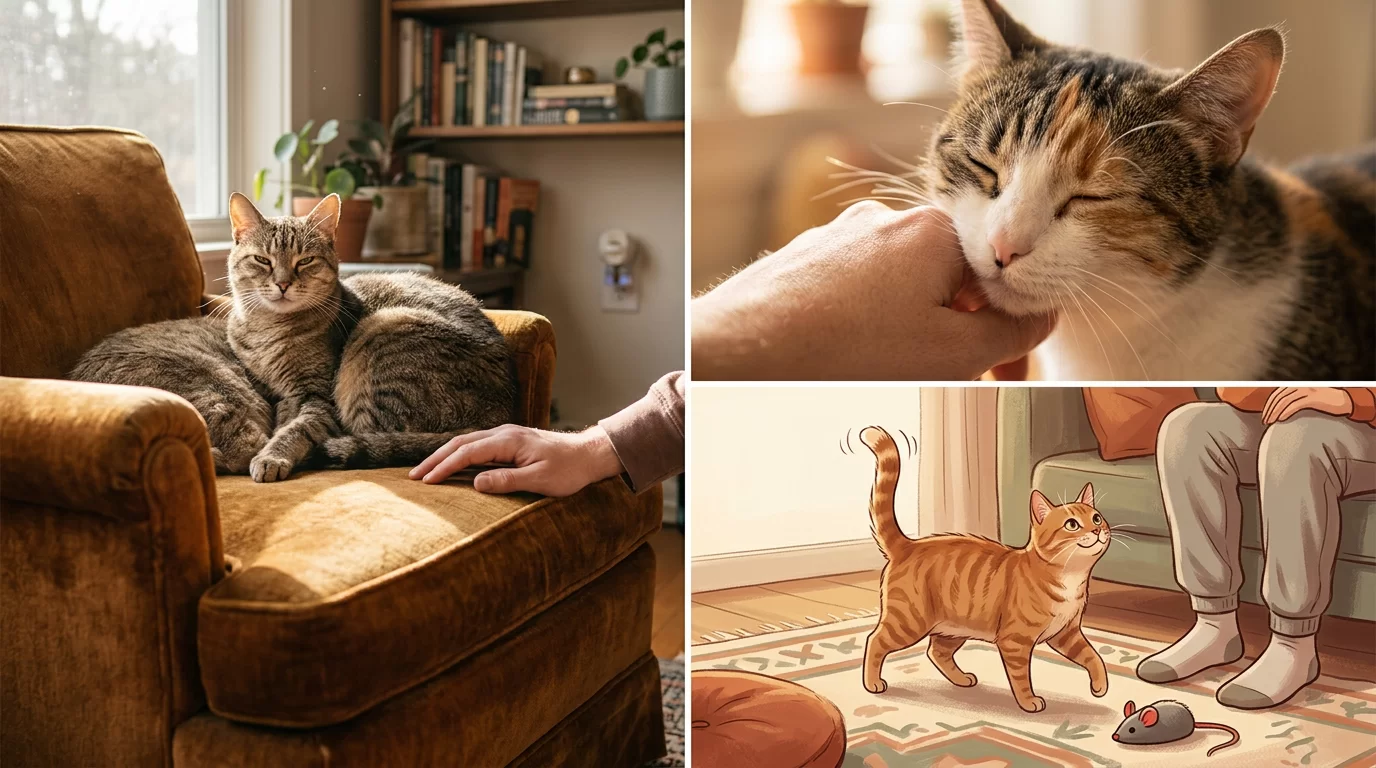
9. Greeting you with an upright tail
A tail held upright, sometimes with a slight curve at the tip, is a friendly feline greeting. Kittens use this signal with their mother, and adult cats often use it with trusted companions.
A cat walking toward someone with an upright tail, relaxed ears, and soft eyes is generally showing confidence and positive anticipation.
10. Turning their back to you
To humans, turning away can seem dismissive. In cats, sitting with the back turned may mean the opposite. A cat that faces away from a person is not positioning for defense and may be signaling that they feel secure.
This is especially meaningful if the cat stays close while doing it.
11. Bringing toys, socks, or prey-like objects
Some cats bring toys to a trusted person as part of play, excitement, or hunting behavior. Outdoor cats may bring prey, while indoor cats may deliver toy mice, hair ties, or soft objects.
The behavior is not always a “gift” in the human sense, but it often shows social engagement and a desire to interact.
12. Eating while you are nearby
Cats prefer to eat where they feel safe. A cat that comfortably eats with a person in the room is showing that the person’s presence does not feel threatening.
For nervous cats, eating near someone may be one of the first measurable signs of growing trust.
13. Purring with relaxed body language
Purring can signal contentment, but it is not always a happiness indicator. Cats may also purr when anxious, in pain, or seeking comfort.
A trust-related purr usually appears with soft eyes, a loose body, normal breathing, gentle kneading, or voluntary closeness.
14. Rolling onto their side
A relaxed side roll can be an invitation to play, stretch, or simply lounge near a trusted person. The cat may chirp, purr, or gently swat at a toy.
Like belly exposure, this does not automatically mean the cat wants to be touched.
15. Asking for contact, then staying relaxed
A cat that approaches, rubs, climbs into a lap, presses against a hand, or curls beside someone is choosing contact. The strongest sign is not just approaching but remaining relaxed once contact begins.
A cat that trusts a person may also leave calmly when finished. Respecting that exit helps preserve the trust.
Why Cats Show Trust Differently Than Dogs
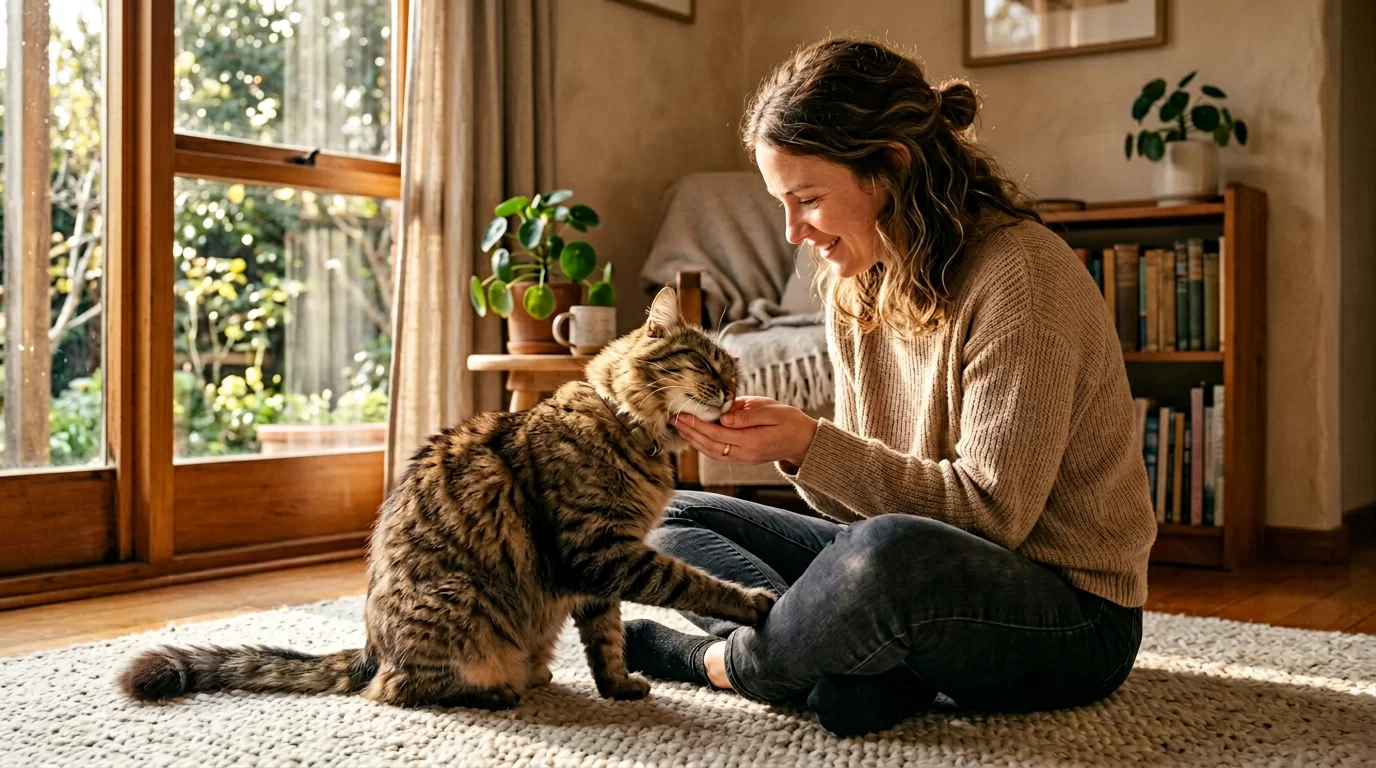
A cat’s trust is influenced by several factors:
- Early socialization with humans during kittenhood
- Previous trauma, neglect, or inconsistent handling
- Household noise, children, dogs, or other cats
- Predictable feeding, play, and litter box routines
- Whether the cat can retreat to safe resting spaces
- Individual temperament and breed tendencies
Some cats become affectionate quickly. Others need months before they offer the same behaviors. Slow progress is still progress.
When Trusting Behavior May Actually Signal Stress or Illness
Not every close or affectionate behavior means a cat is simply happy. A sudden change in social behavior deserves attention, especially in cats that normally have stable routines.
| Behavior Change | Possible Concern |
|---|---|
| Suddenly hiding after being social | Pain, fear, illness, household stress |
| Sudden clinginess | Anxiety, discomfort, cognitive changes, illness |
| Purring while withdrawn | Pain or self-soothing |
| Excessive grooming | Stress, allergies, fleas, skin disease |
| Reduced appetite near people | Fear, nausea, dental pain, environmental tension |
| Aggression during petting | Overstimulation, pain, poor handling history |
The American Veterinary Medical Association advises cat owners to watch for changes in appetite, behavior, litter box habits, grooming, and activity level. Cats often mask illness, so behavioral shifts can be early clues.
A veterinarian should evaluate sudden personality changes, hiding, appetite loss, unexplained aggression, limping, weight loss, or litter box changes.
How to Build More Trust With a Cat
Trust grows fastest when a cat feels in control of interaction. Forcing affection may create avoidance, while predictable, low-pressure engagement usually strengthens the bond.
Helpful ways to build trust include:
- Let the cat approach first rather than reaching immediately.
- Use slow blinks and soft glances instead of direct staring.
- Offer play with wand toys to create positive shared routines.
- Keep food, water, scratching posts, and litter boxes in consistent locations.
- Provide vertical spaces, hiding spots, and quiet resting areas.
- Pet preferred areas first, such as cheeks, chin, and the base of the ears.
- Stop petting when the tail flicks, skin twitches, ears rotate, or the cat shifts away.
- Avoid punishment, yelling, or spraying water, which can increase fear.
For shy cats, trust may begin with simply sitting nearby while reading or working, without trying to touch them. Calm presence can be more persuasive than constant attention.
What Deep Trust Looks Like Over Time
A deeply trusting cat often develops rituals. They may greet a certain person at the door, sleep in the same spot each night, wait near the bathroom, supervise work at a desk, or ask for play at predictable times. These routines become part of the relationship.
Trust may also become visible during stressful moments. A cat that hides from visitors but emerges for a familiar person, accepts medication more easily from one household member, or seeks comfort after a loud noise is showing selective security.
The goal is not to make every cat behave the same way. A confident, independent cat may show trust by sharing a room. A cuddly cat may show it by climbing into a lap. A cautious rescue cat may show it by eating while someone sits across the room. Each version counts when the cat is relaxed, voluntary, and able to choose.
Recognizing trust in a cat requires attention to small, consistent signals rather than dramatic displays. Slow blinks, upright tails, nearby naps, gentle rubbing, and relaxed companionship all point to the same message: the cat feels safe enough to let their guard down. The most secure relationships are built by respecting those signals, not rushing them. When a cat learns that their boundaries are understood, affection often becomes more frequent, more confident, and more expressive. For many cats, trust is not a single milestone but a quiet pattern repeated day after day.