It’s a question that crosses every cat owner’s mind during quiet moments — does this mysterious creature genuinely love me, or am I just a reliable source of food and a warm lap? Cats don’t offer the same exuberant greetings as dogs, and their independent nature can make affection harder to read. Yet feline behavior research is catching up with what devoted cat people have long suspected: cats form deep emotional attachments, and they express those bonds through a subtle vocabulary of body language, vocalizations, and daily rituals. Recognizing these quiet declarations can transform a relationship, replacing doubt with the quiet confidence that, yes, a cat can and does love. In a world where pet parenthood is increasingly viewed through the lens of emotional well-being, learning to interpret these signs is more relevant than ever.
In This Article
• How to Tell Immediately If a Cat Feels Close to You
• The Slow Blink: A Feline Love Letter
• Kneading, Headbutting, and Bunting: Physical Expressions of Trust
• Why a Cat That Follows Every Step Sees You as Family
• Tail Talk: How the Tail Reveals Affection
• The Gift-Giving Instinct and What It Really Means
• Subtle Signs vs. Clingy Behavior: Key Differences
• Building a Stronger Bond Through Feline Communication
How to Tell Immediately If a Cat Feels Close to You
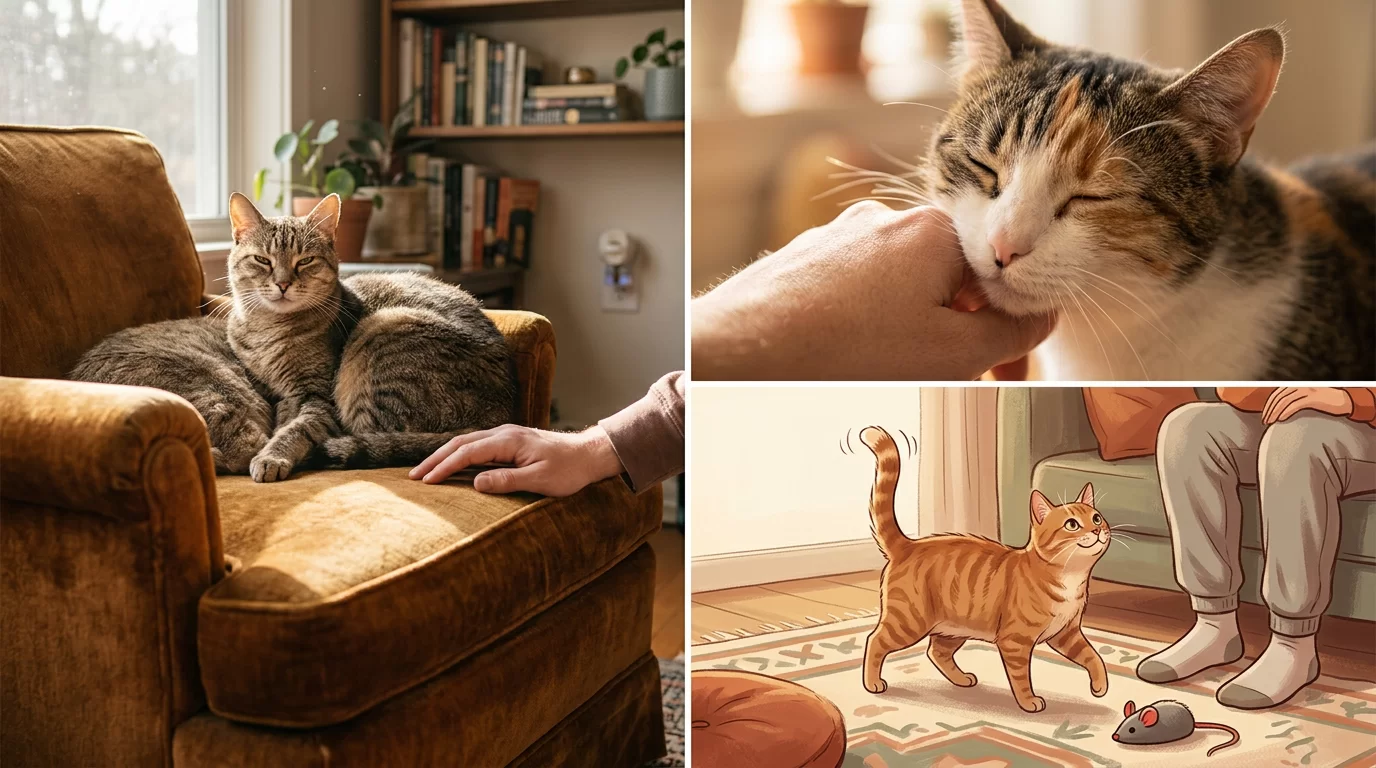
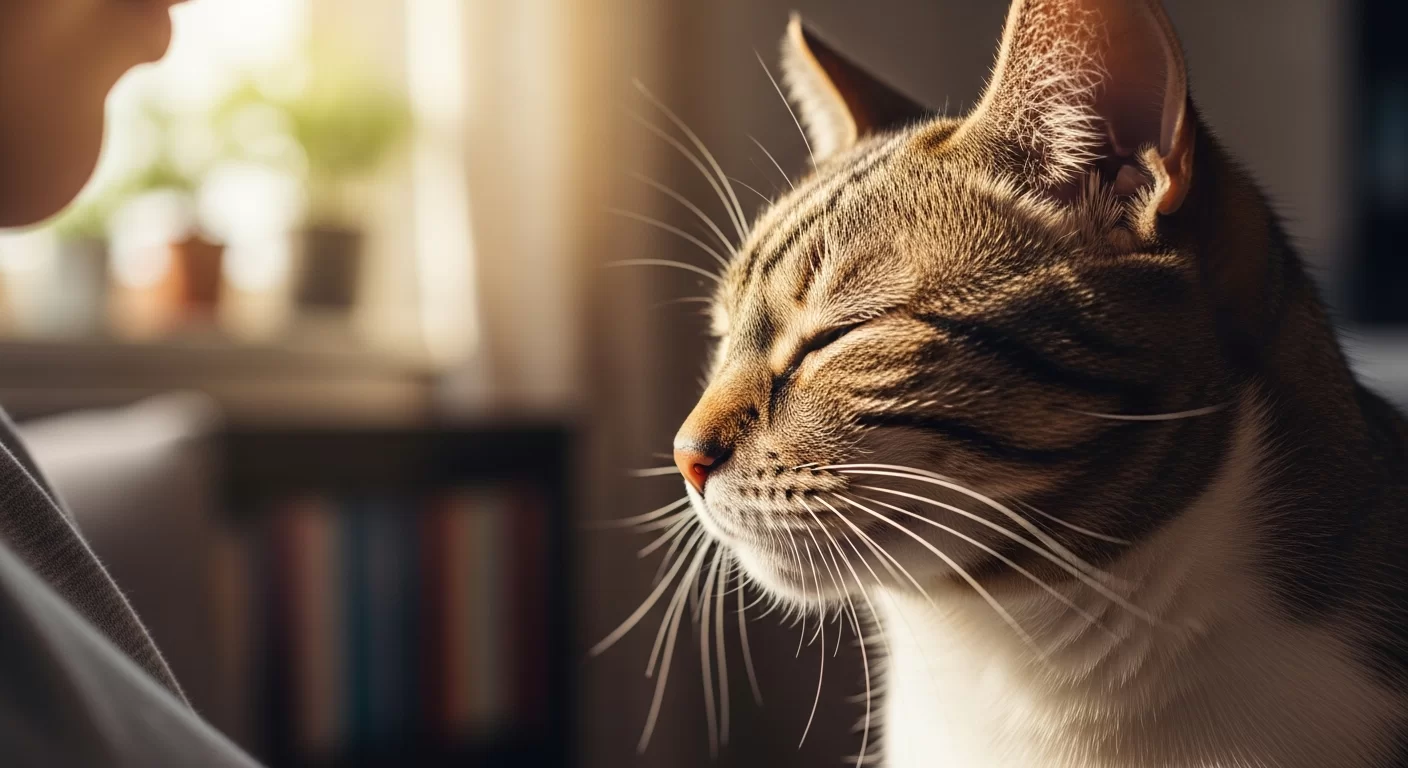
The fastest way to gauge a cat’s emotional state is to look for a cluster of behaviors centered around trust and vulnerability. A cat that exposes its belly — not necessarily as an invitation for a rub, but simply by lying on its back in a relaxed posture — is demonstrating ultimate ease. Slow blinking, where the cat looks at you and deliberately closes its eyes for a moment before reopening them, is another powerful sign. This is so reliable that a 2020 study from the University of Sussex, published in Scientific Reports, confirmed that cats slow blink more often after their owners initiate the behavior, and they are more likely to approach a person who slow blinks at them. Researchers described it as a form of positive emotional communication, similar to a feline smile. When a cat also chooses to nap on or beside you, kneads your lap, or greets you at the door with an upright tail that quivers slightly, you’re witnessing a bond that goes far beyond cupboard love.
The Slow Blink: A Feline Love Letter
Kneading, Headbutting, and Bunting: Physical Expressions of Trust
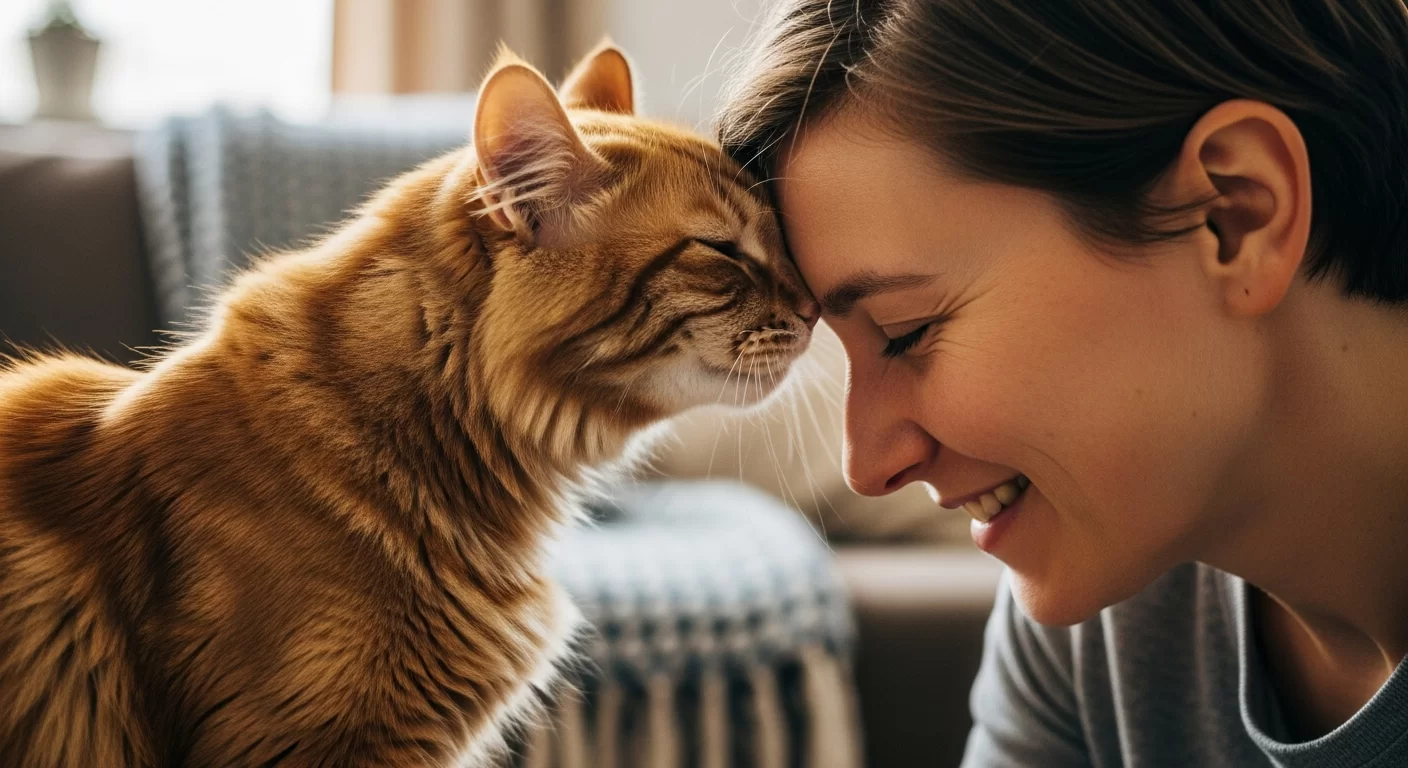
Physical touch initiated by a cat often carries deep affection. Headbutting, known as bunting, involves a cat pressing its forehead or cheeks against a person. Facial scent glands release pheromones that mark you as part of the cat’s safe territory. Far from being a possessive claim, this is a bonding behavior typically reserved for other cats within a colony. When a cat bunting you, it’s including you in its inner circle.
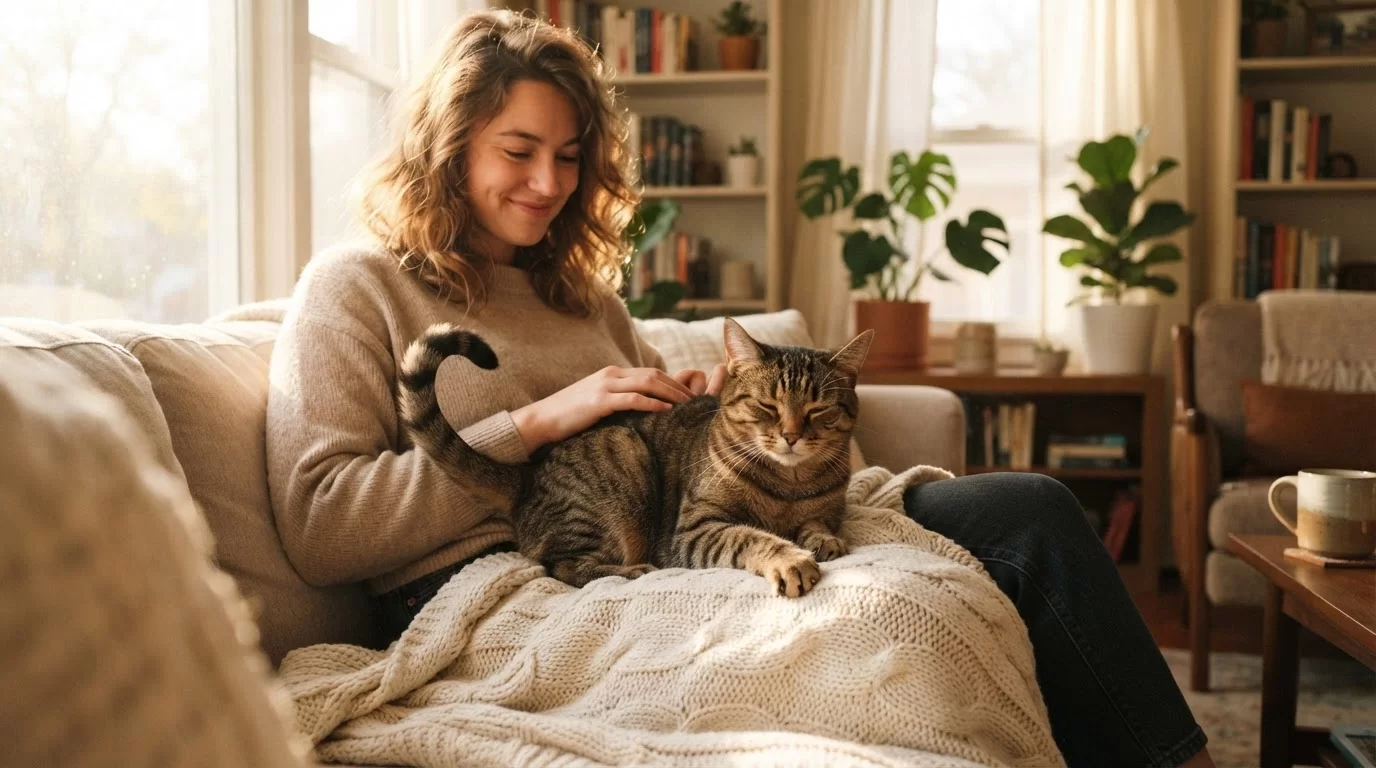
Kneading — the rhythmic pushing of paws against a soft surface — traces back to kittenhood, when nursing triggers milk flow. An adult cat that kneads on a lap or blanket is self-soothing and expressing contentment. The behavior is often accompanied by purring and half-closed eyes, a state of near-trance. Some cats also knead while lightly drooling, a response associated with intense relaxation. These actions are not demands for food; they’re a return to a primal comfort state, only offered where absolute security exists.
| Behavior | What It Looks Like | What It Means |
|---|---|---|
| Slow blinking | Half-closed eyes, deliberate blink | Trust, positive emotional signal |
| Bunting (headbutting) | Rubbing forehead or cheeks on you | Scent marking, colony bonding |
| Kneading | Pushing paws rhythmically on soft surface | Comfort, kitten-like security |
| Upright tail with quiver | Tail straight up, tip twitching | Happy greeting, excitement to see you |
| Belly exposure | Lying on back, belly visible | Vulnerability, ultimate trust |
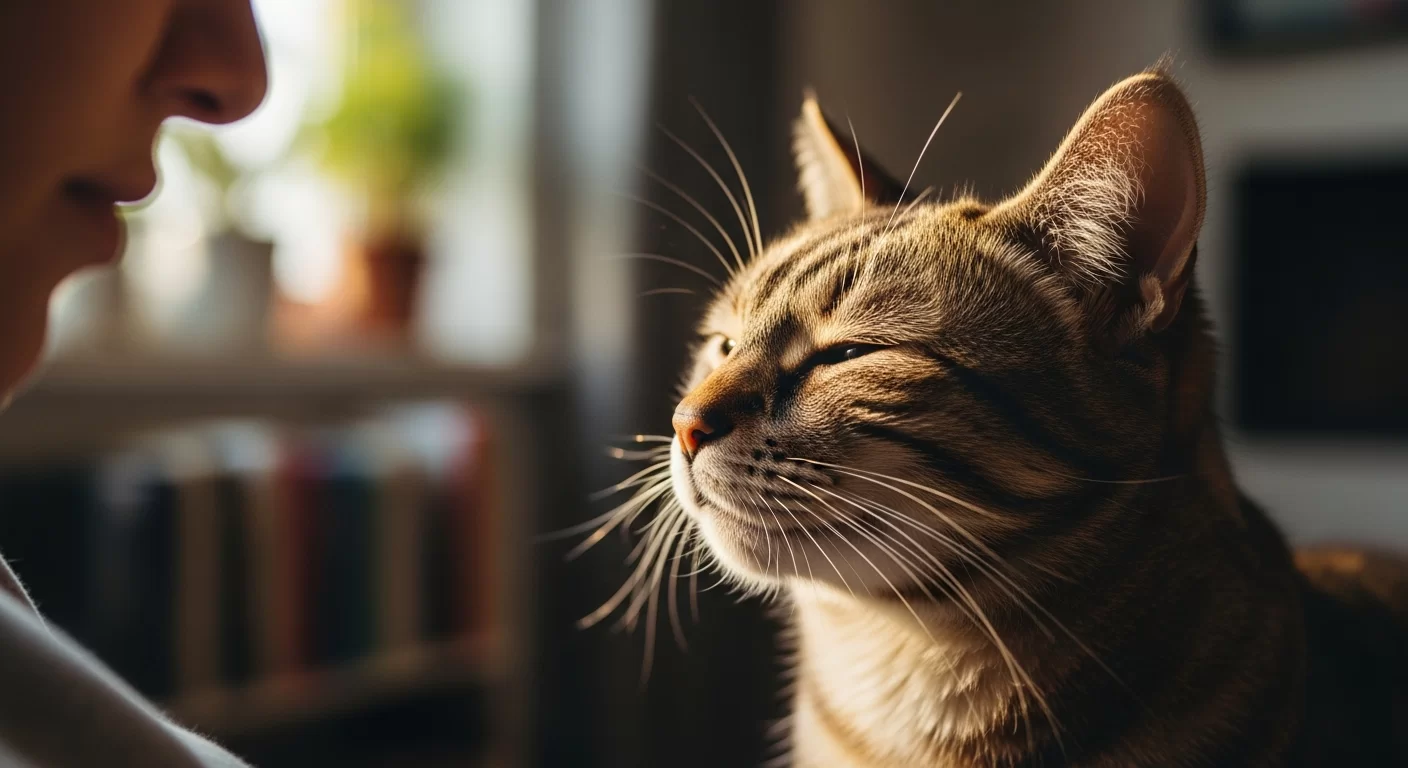
| Gift bringing | Dropping a toy or prey at your feet | Sharing resources, teaching behavior |
Why a Cat That Follows Every Step Sees You as Family
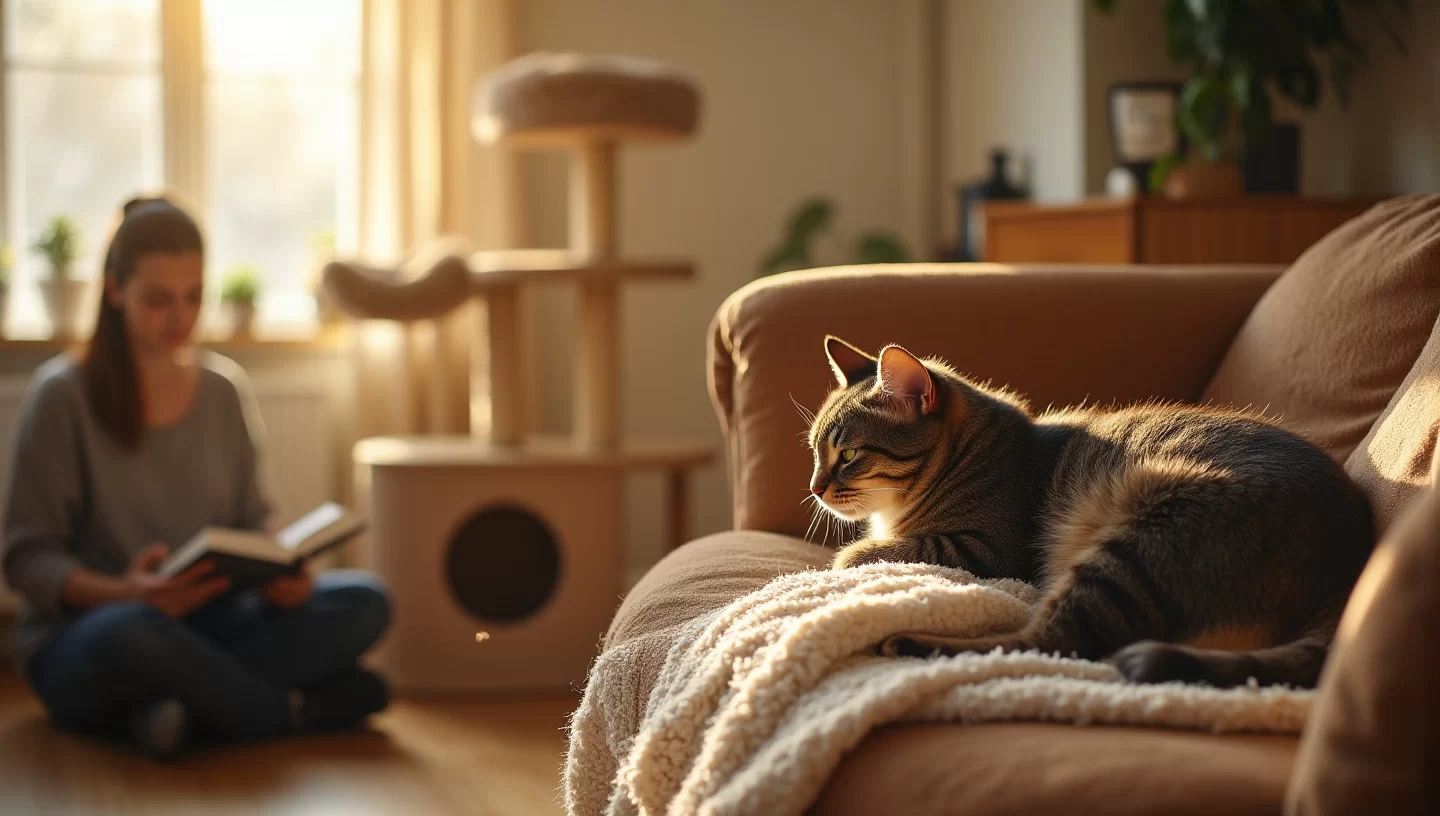
Many cat owners joke that they can’t move from room to room without a feline shadow in tow. While hunger can sometimes prompt this behavior, true following goes beyond the kitchen. A cat that accompanies a person to the bathroom, sits outside the shower, or curls up on the desk during work hours is displaying affiliative behavior — the same tendency that leads cats in bonded pairs to stay within sight of one another. Cats in a feral colony maintain proximity to colony members they trust; a house cat maps that social structure onto its human caregivers. If the cat also sleeps pressed against you or seeks you out in the house, it is actively choosing proximity as comfort. This is not clinginess in a pathological sense but a sign of secure attachment, much like a toddler who explores the world more confidently when a parent is nearby.
Tail Talk: How the Tail Reveals Affection
A cat’s tail is a mood barometer, and several positions point directly to love. An upright tail held straight up like a flagpole signals confidence and a friendly disposition. When that upright tail quivers or vibrates at the tip, the cat is experiencing a surge of positive emotion — often seen when an owner comes home. Some behaviorists liken it to the tail-up greeting cats give their mothers as kittens. A relaxed tail that forms a gentle curve or question-mark shape indicates playful, affectionate curiosity. Conversely, a tail wrapped around a person’s leg or arm is a deliberate embrace. These signals appear without training; they’re instinctive communications honed to maintain social harmony, and when directed at a human, they indicate that the cat sees the relationship as one worth sustaining.
The Gift-Giving Instinct and What It Really Means
Subtle Signs vs. Clingy Behavior: Key Differences
Not every shadowing behavior is a sign of pure affection. Distinguishing between healthy closeness and anxiety-driven clinginess can protect a cat’s emotional well-being. A cat that follows but eats normally, uses the litter box consistently, and engages in play and rest without distress is securely attached. A cat that vocalizes excessively when left alone, refuses to eat during the owner’s absence, or eliminates outside the litter box may be experiencing separation anxiety. These signs warrant a veterinary consultation to rule out medical causes and a review of environmental enrichment. True affection coexists with independence; a cat that loves you will also confidently nap alone, explore, and entertain itself, returning to you as a home base.
Building a Stronger Bond Through Feline Communication
Responding to subtle signs can deepen a cat’s sense of security. Start with the slow blink: get on the cat’s level, soften your gaze, slowly close your eyes for two to three seconds, then open them gently and look away. Many cats will mirror the gesture. Let the cat initiate touch; offer a relaxed index finger at cat-nose height and allow the cat to bunting or ignore as it wishes. Respect the belly display by admiring without touching — most cats expose the belly as a sign of trust, not an invitation. Engage in brief, positive play sessions using wand toys that mimic hunting, and reward interaction with a small treat. Consistency matters more than grand gestures. Over time, the cat will associate you with choice, safety, and quiet joy. Some cat owners find success using synthetic feline facial pheromone diffusers, such as Feliway Classic, in areas where the cat rests, which can support a calm emotional environment. These products, available at retailers like Chewy and Amazon for roughly $20–$30 per diffuser, are not a substitute for bonding but can complement behavioral work. The most powerful tool, however, remains the daily, patient recognition of what a cat is already saying.
Understanding a cat’s quiet language changes everything. What once seemed like aloofness becomes a series of gentle, constant declarations: the blink across a sunlit room, the tail that shakes with joy at a familiar footstep, the soft weight that settles into a lap at the end of a long day. Cats do not love loudly, but they love thoroughly, weaving their people into the same tapestry of colony, comfort, and care that has sustained their species for millennia. The next time a pair of green eyes meets yours and closes slowly, you’ll know exactly what it means.