Cats rarely show affection in the dramatic, unmistakable ways humans often expect from social animals. A cat may not rush to greet every guest, obey on command, or tolerate endless handling. Yet within feline behavior, trust is rich, specific, and deeply meaningful. A slow blink across the room, a tail held upright like a question mark, a quiet nap beside a person, or a soft head rub against a hand can all signal safety, familiarity, and attachment.
Understanding cat trust and affection matters because many relationship problems between cats and people begin with misread signals. A cat that turns away may not be rejecting affection. A cat that bites during petting may not be “mean.” A cat that hides after adoption may simply be protecting itself while it learns whether the environment is safe. Reading feline body language accurately helps owners build stronger bonds, reduce stress, prevent behavior problems, and recognize when a change in affection may point to illness or pain.
This guide explains how cats show love, how they decide someone is safe, why affection varies between individuals, and what people can do to earn trust without forcing closeness. It also covers common myths, environmental needs, multi-cat dynamics, kitten and senior cat differences, and signs that affectionate behavior may require veterinary attention.
In This Article
- What Trust Means to a Cat
- How Cats Show Affection: The Main Signs of Feline Love
- Cat Body Language: Reading Safety, Comfort, and Stress
- Why Some Cats Are More Affectionate Than Others
- How to Build Trust With a Cat
- Petting, Holding, and Physical Contact: What Cats Usually Prefer
- Creating a Home Where Cats Feel Safe
- Trust and Affection in Kittens, Adult Cats, and Senior Cats
- Multi-Cat Homes: Affection, Territory, and Social Trust
- Common Myths About Cat Love and Attachment
- When Changes in Affection Signal Stress, Pain, or Illness
- Helpful Tools That Support Cat Trust and Comfort
What Trust Means to a Cat
Trust for a cat is not the same as obedience, constant cuddling, or dependence. It is the cat’s assessment that a person, place, or routine is predictable, non-threatening, and worth approaching voluntarily.
Cat trust
Cat trust is a learned sense of safety in which a cat feels comfortable resting, eating, grooming, playing, exploring, or seeking contact in the presence of a person or environment.
Cats are both predators and prey animals. This dual role shapes much of feline behavior. They may hunt toys, insects, or small animals, but they also remain alert to potential danger. Sudden movement, loud noise, unfamiliar scents, forced restraint, or blocked escape routes can quickly reduce a cat’s sense of safety.
The American Association of Feline Practitioners emphasizes that cats need safe spaces, key resources, opportunities for natural behavior, positive human interaction, and a predictable scent environment. These environmental needs are not luxuries; they are part of normal feline welfare.
How does a cat show it trusts someone?
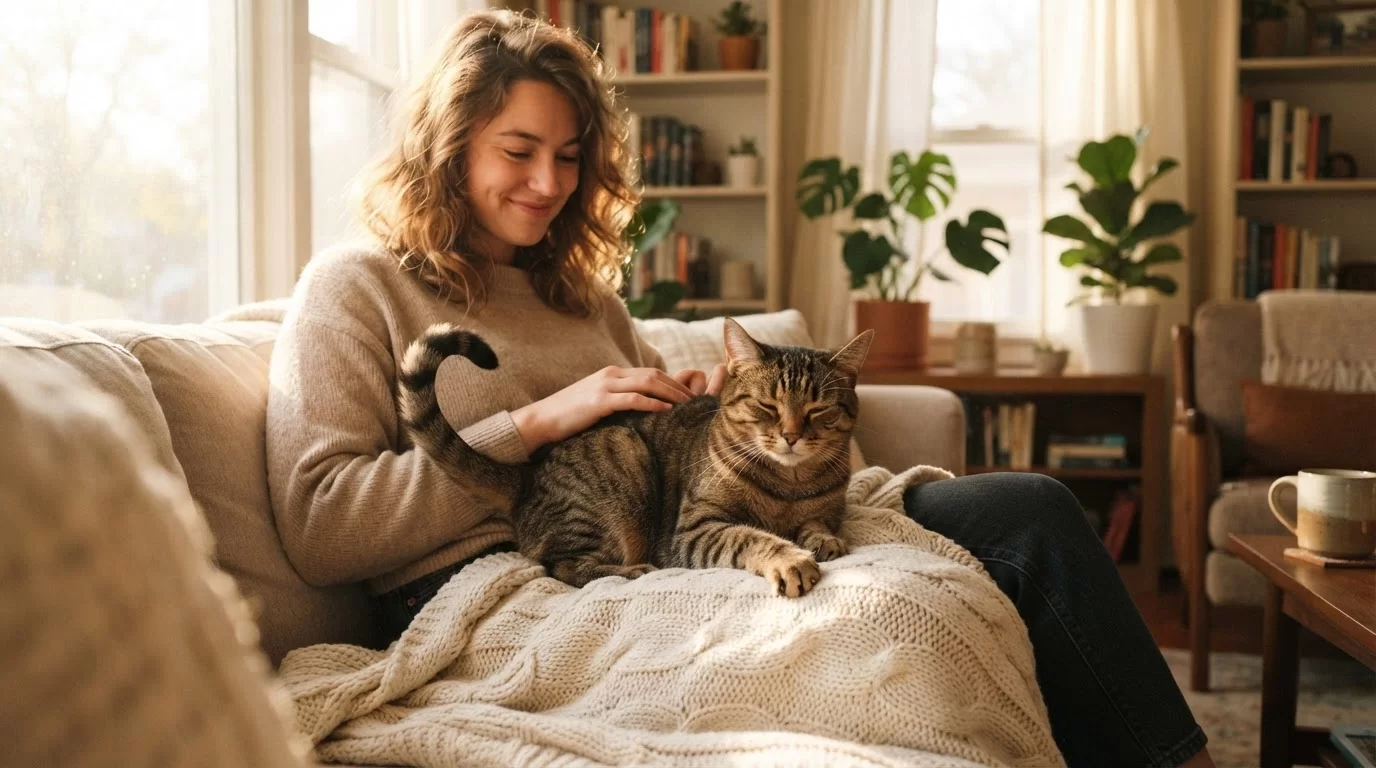
A trusting cat may sleep nearby, expose its belly while relaxed, approach with an upright tail, slow blink, rub its face or body on a person, groom in the person’s presence, follow them from room to room, or choose to sit close without being forced.
Trust is also highly contextual. A cat may trust one person but avoid another. It may feel affectionate in the bedroom but defensive near the front door. It may tolerate brushing but dislike being picked up. These preferences are not inconsistencies; they are part of the cat’s individual safety map.
A strong bond grows when humans respect that map.
How Cats Show Affection: The Main Signs of Feline Love
Cats express affection through proximity, scent exchange, body language, vocalization, and routine. Many signals are subtle, but they become easier to recognize when viewed as part of a larger pattern.
| Affection Signal | What It Often Means | Important Context |
|---|---|---|
| Slow blinking | Relaxation, trust, friendly intent | Best returned with a soft blink, not staring |
| Head bunting | Scent marking, social bonding | Often directed toward trusted people or animals |
| Rubbing cheeks/body | Familiarity, ownership of shared scent | Common during greetings |
| Upright tail | Friendly approach, confidence | A curved tip may show interest or warmth |
| Sitting nearby | Social comfort without pressure | Many cats prefer closeness over lap sitting |
| Sleeping near a person | High trust and perceived safety | Sleep makes cats vulnerable |
| Kneading | Comfort behavior linked to kittenhood | Can occur when relaxed or self-soothing |
| Grooming or licking | Social bonding, scent sharing | Some cats lick briefly, others not at all |
| Following from room to room | Interest, attachment, routine awareness | Not always separation anxiety |
| Bringing toys or prey | Social behavior, play invitation, instinct | Interpretation varies by cat |
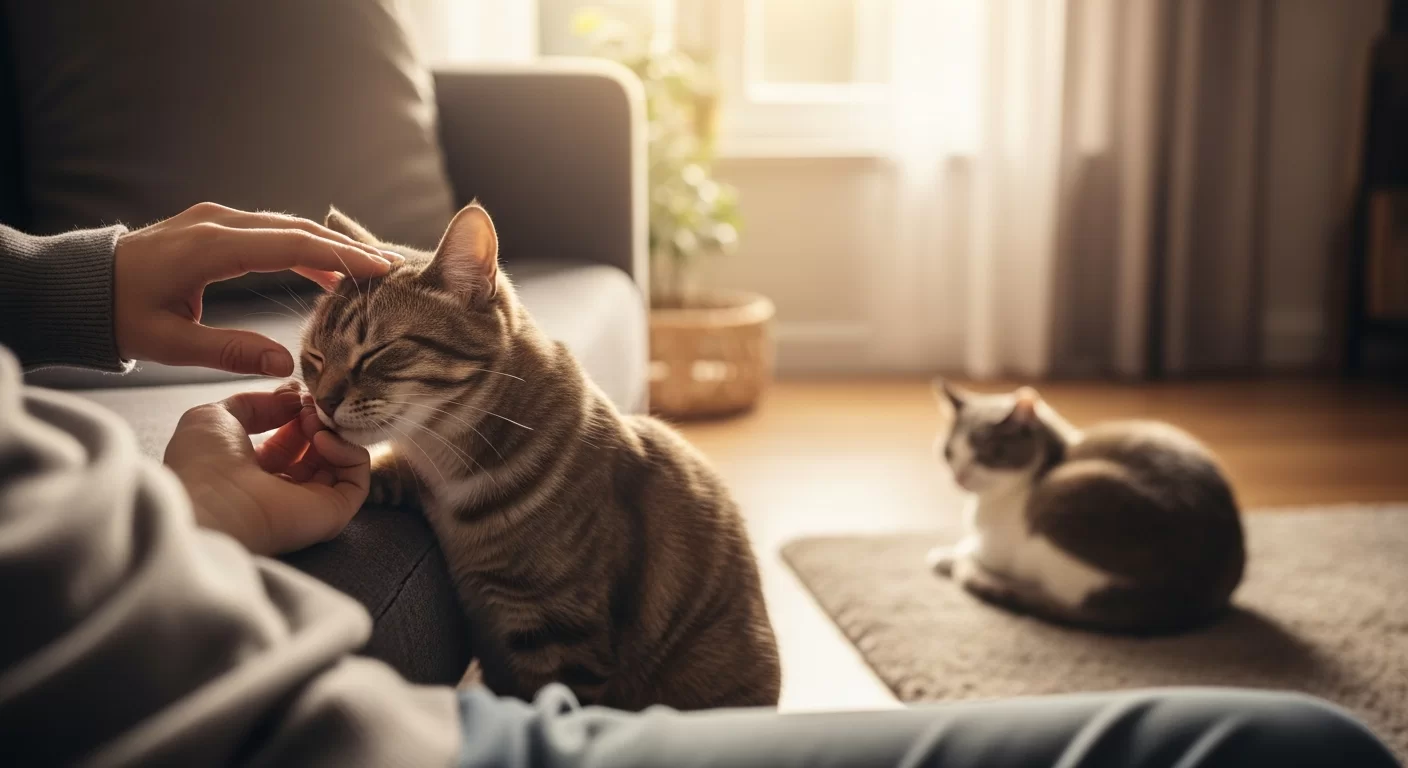
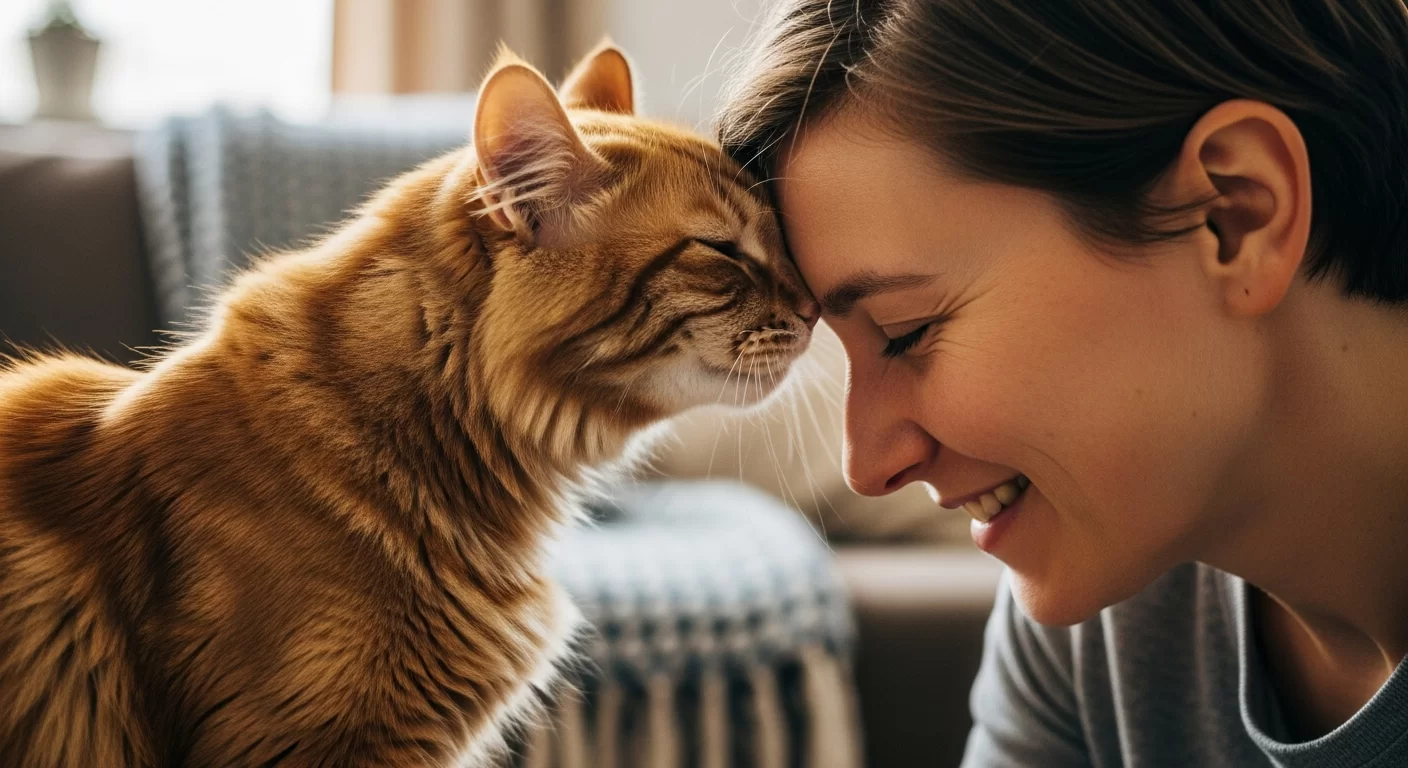
Slow blinking is another widely recognized sign. In feline communication, a direct stare can feel threatening, while soft eyes and slow blinks suggest relaxation. Research published in Scientific Reports found that slow-blink interactions between humans and cats can increase affiliative behavior, such as a cat approaching a person more readily.
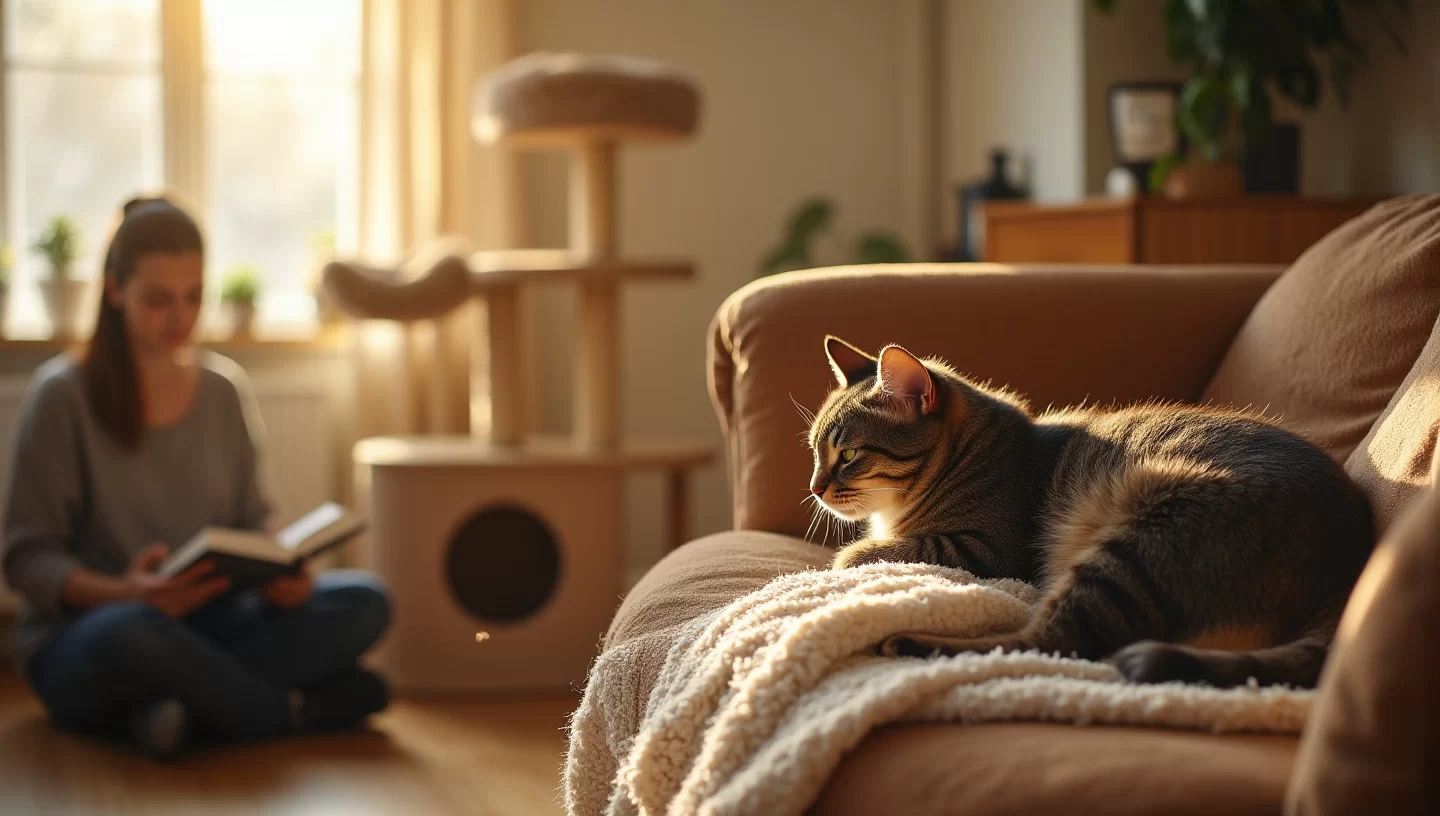
Affection does not always involve touch. A cat that lies two feet away, facing outward while half-asleep, may be offering a profound sign of confidence: it trusts the person enough to let down its guard.
International Cat Care notes that cats benefit from having control over social interactions. A cat choosing to approach is very different from a cat being chased, lifted, or held against its will. Voluntary contact is one of the strongest foundations for long-term trust.
Cat Body Language: Reading Safety, Comfort, and Stress
Cat body language should be read as a full picture, not a single signal. Tail position, ear angle, eyes, whiskers, body posture, movement, and vocalization all matter.
| Body Area | Relaxed / Trusting | Uncertain / Stressed | Defensive / Fearful |
|---|---|---|---|
| Eyes | Soft, blinking, partially closed | Wide, alert, scanning | Dilated pupils, hard stare |
| Ears | Forward or gently neutral | Turning sideways | Flattened or pinned back |
| Tail | Upright, still, softly curved | Low, twitching, wrapping body | Puffed, tucked, lashing |
| Whiskers | Neutral or slightly forward | Pulled back or tense | Flattened back |
| Body | Loose, stretched, side-resting | Crouched, tense | Arched, frozen, hiding |
| Voice | Chirps, trills, soft meows | Repeated meows, low growls | Hissing, spitting, yowling |
A relaxed cat often moves fluidly. It may stretch, roll partly to one side, groom, or loaf with paws tucked under the body. A stressed cat tends to compress itself, hide, freeze, or monitor the environment intensely.
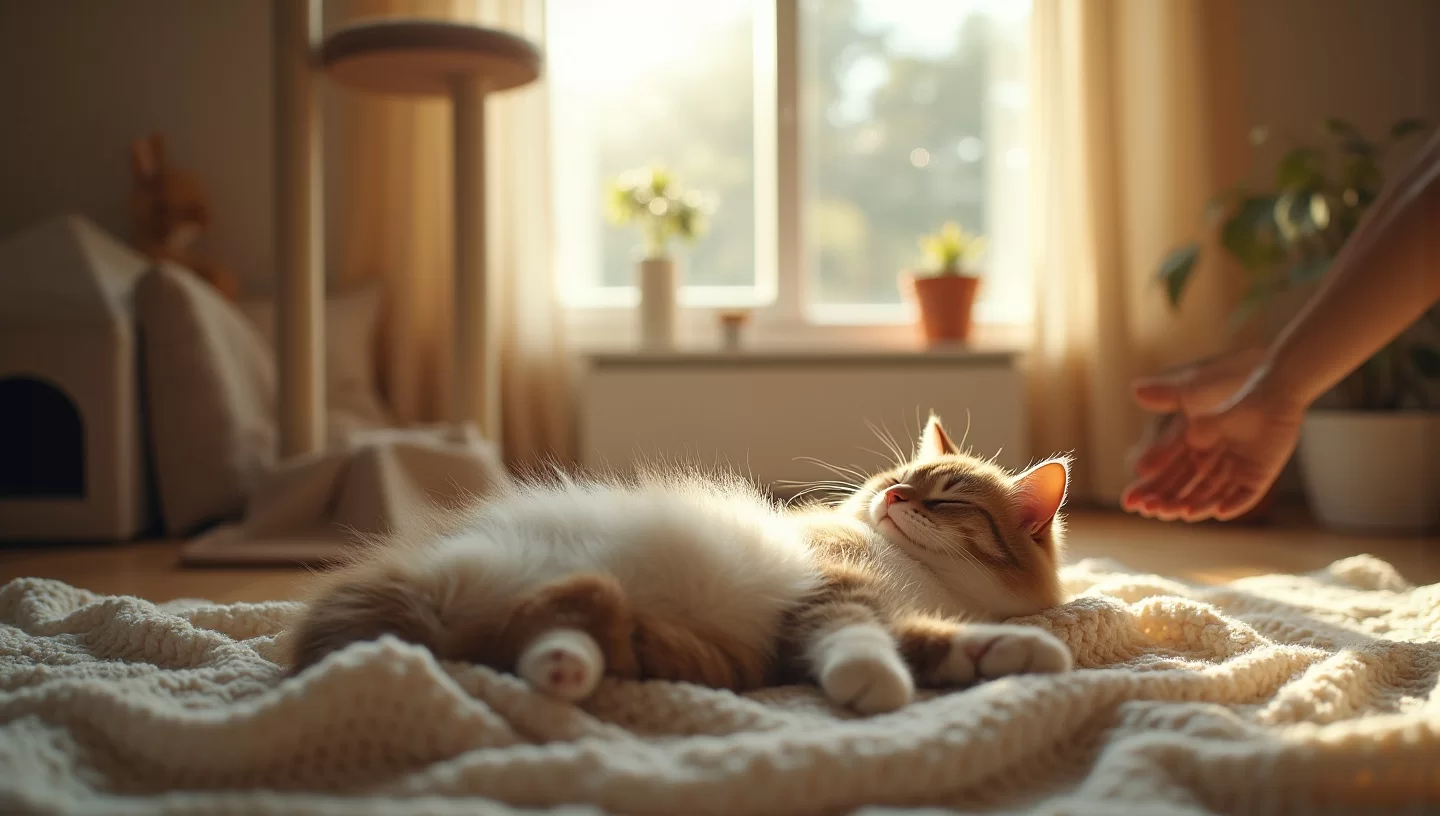
The belly display is one of the most misunderstood signals. When a cat rolls over and exposes its abdomen, it may be showing trust, playfulness, or relaxation. It is not always an invitation for belly rubbing. The abdomen is vulnerable, and many cats respond defensively if touched there.
Does a cat showing its belly mean it wants pets?
Not necessarily. A relaxed belly-up posture can mean a cat feels safe, but many cats still dislike belly touch. Safer petting areas usually include the cheeks, chin, forehead, and shoulders.
Common signs a cat feels safe include:
- Eating and drinking normally
- Grooming in open areas
- Sleeping in relaxed postures
- Exploring with a loose body
- Approaching people voluntarily
- Playing with curiosity rather than fear
- Using the litter box consistently
- Resting with the back or side partially turned toward trusted people
Common signs a cat feels unsafe include:
- Hiding for long periods
- Flattened ears or crouched posture
- Hissing, growling, or swatting
- Avoiding food when people are present
- Overgrooming or reduced grooming
- Urinating outside the litter box
- Sudden aggression during handling
- Startling easily or staying hypervigilant
A single hiss does not mean a cat is bad or permanently fearful. It is communication: “Please stop,” “Move away,” or “This is too much.” Respecting early stress signals prevents escalation and teaches the cat that communication works.
Why Some Cats Are More Affectionate Than Others
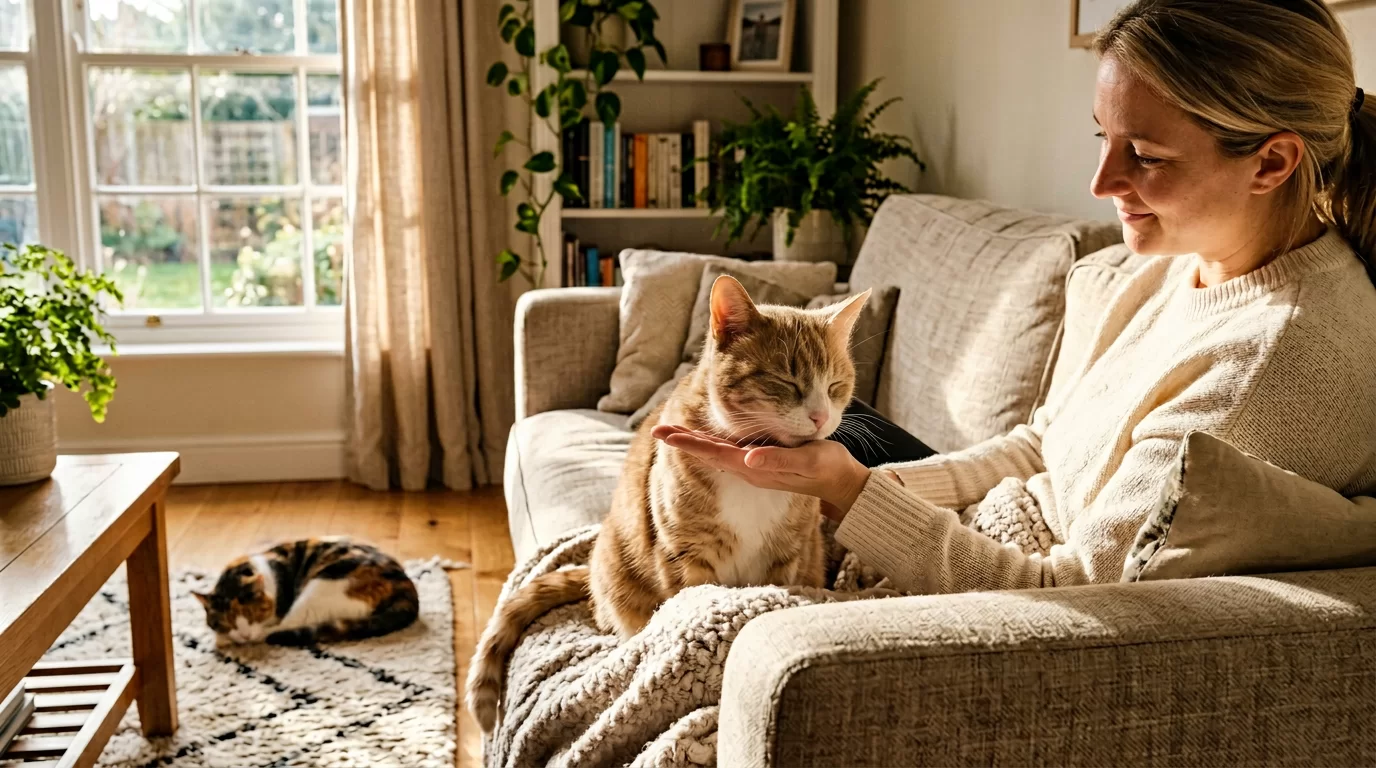
The main influences include genetics, early socialization, life experience, health, environment, and individual personality.
Kittens have an important early socialization period, often described as roughly between 2 and 7 weeks of age, when gentle exposure to humans and normal household experiences can influence later confidence. Cats that had positive human contact during this period may be more comfortable with handling. Cats that missed it can still form strong bonds, but they may need slower, more structured trust-building.
Breed tendencies can play a role, though they are never guarantees. Ragdolls, Burmese, Siamese, Tonkinese, and Maine Coons are often described as people-oriented, while many domestic shorthairs and longhairs vary enormously by individual background. A breed label should not be treated as a personality contract.
Attachment research also challenges the old idea that cats are socially detached. A 2019 study in Current Biology found that many cats display secure attachment patterns toward human caregivers, similar in broad structure to attachment seen in children and dogs. In that study, about 64% of kittens showed secure attachment behavior during a secure-base test.
Factors that can reduce visible affection include:
- Previous trauma or rough handling
- Chronic pain or dental disease
- Undersocialization
- Household conflict
- Competition with other pets
- Lack of hiding places or vertical space
- Frequent punishment or unpredictable routines
- Excessive noise or forced interaction
A cat’s affection style can also change over time. Some newly adopted cats hide for weeks and later become deeply attached. Others are affectionate at first, then become more selective as they gain confidence and no longer feel the need to cling. Trust is not always linear.
How to Build Trust With a Cat
Trust is earned through predictability, patience, and choice. The most effective strategy is not to convince a cat to love people quickly, but to create conditions where the cat can safely choose connection.
What is the fastest way to get a cat to trust someone?
The fastest reliable path is to stop forcing interaction. Offer food, play, gentle routines, safe hiding spots, and calm presence. Let the cat approach first, then reward that choice with respectful attention.
A practical trust-building framework:
| Step | What to Do | Why It Works |
|---|---|---|
| 1. Reduce pressure | Avoid chasing, grabbing, staring, or cornering | Lowers perceived threat |
| 2. Create routine | Feed, play, and clean litter at predictable times | Builds environmental confidence |
| 3. Use distance | Sit nearby without reaching | Allows observation without risk |
| 4. Offer choice | Let the cat approach, sniff, and leave | Protects autonomy |
| 5. Reward calmly | Use treats, play, or soft praise | Creates positive associations |
| 6. Keep sessions short | End before the cat becomes overstimulated | Prevents setbacks |
| 7. Repeat consistently | Build patterns over days and weeks | Trust grows through repetition |
For shy or fearful cats, sitting sideways on the floor can be less intimidating than standing over them. A hand can be offered low and still, allowing the cat to sniff. If the cat rubs or leans in, gentle petting may be welcome. If the cat turns away, the best response is to pause.
Food can be useful, but it should not become coercion. Placing treats near a hiding cat and backing away is often better than trying to lure the cat into a stressful situation.
Interactive play is one of the best trust-building tools. Wand toys allow a cat to engage from a comfortable distance while practicing natural hunting behaviors: stalking, chasing, pouncing, catching, and resting. A short play session followed by a meal can mimic a natural hunt-eat-groom-sleep rhythm.
Avoid punishment. Yelling, spraying water, tapping the nose, or scruffing can damage trust and increase fear-based behavior. The ASPCA Cat Care resources emphasize humane handling and behavior support rather than punishment-based methods.
Petting, Holding, and Physical Contact: What Cats Usually Prefer
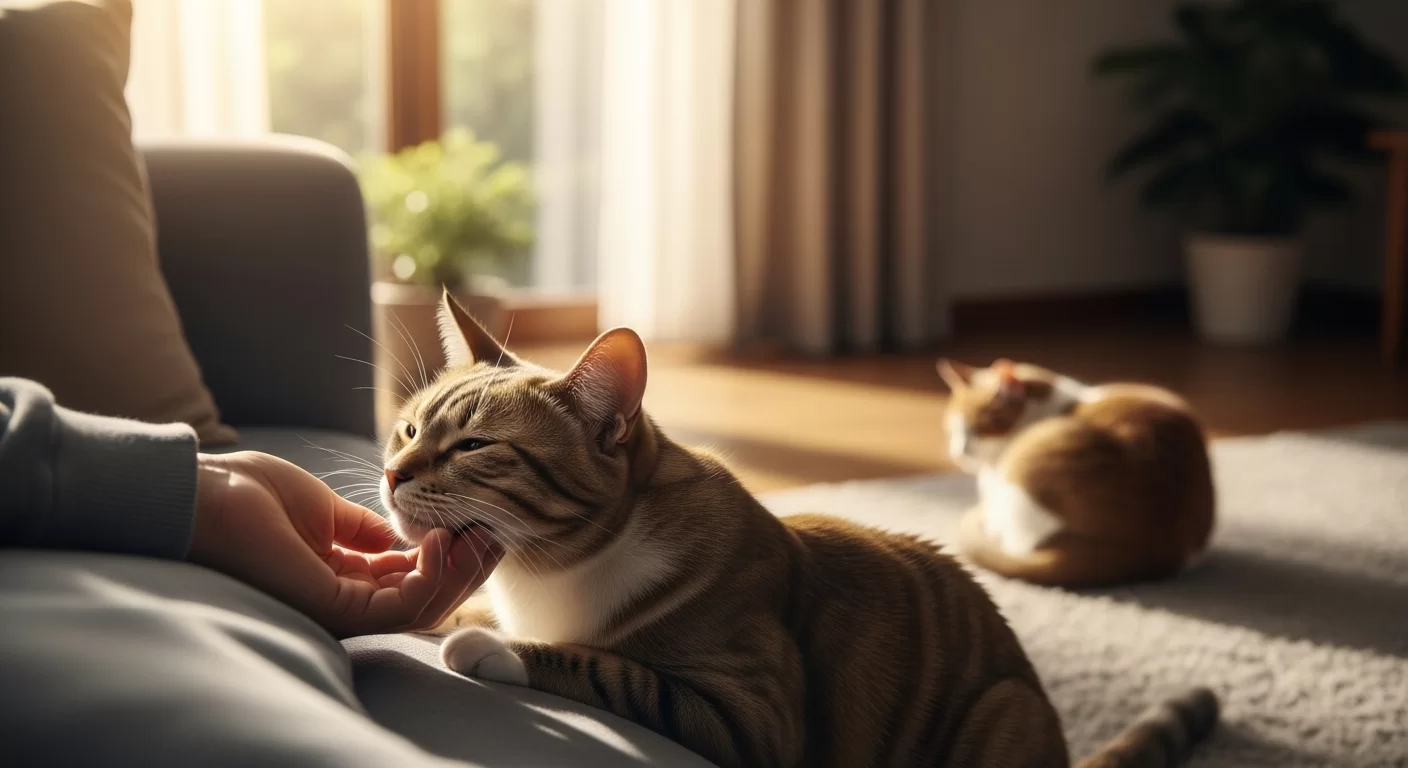
Less reliable areas include the belly, paws, tail, and lower back. Some cats love these areas; many do not.
Petting consent test
A simple consent-based approach can prevent overstimulation:
- Pet the cat for two or three seconds in a preferred area.
- Stop and wait.
- If the cat leans in, nudges, or stays relaxed, continue.
- If the cat turns away, twitches, stiffens, or flicks its tail, stop.
This “pause and wait” method gives the cat control. It also teaches people to recognize early signals before a bite or swat occurs.
Signs a cat is enjoying petting:
- Leaning into the hand
- Purring with a relaxed body
- Soft eyes or slow blinking
- Gentle kneading
- Returning after a pause
- Rubbing the face against the person
Signs petting should stop:
- Tail lashing or thumping
- Skin rippling along the back
- Sudden head turn toward the hand
- Ears rotating sideways or back
- Body stiffening
- Paw lifting
- Low growl or sharp meow
- Biting, even lightly
Purring can signal contentment, but it is not always proof of happiness. Cats may also purr when anxious, injured, or seeking comfort. Context matters.
Holding is another area where human expectations often conflict with feline comfort. Some cats tolerate being picked up; others find it frightening because restraint limits escape. A cat that dislikes being held may still be affectionate in other ways.
When lifting is necessary, the body should be fully supported, with one hand under the chest and another supporting the hindquarters. Cats should never be dangled under the front legs or restrained tightly for casual affection.
Creating a Home Where Cats Feel Safe
A cat’s ability to show affection depends heavily on the home environment. Even a friendly cat may become distant or reactive if it lacks secure resting places, clean litter access, predictable feeding, or escape routes.
The AAFP and International Society of Feline Medicine describe five pillars of a healthy feline environment:
- A safe place
- Multiple and separated key resources
- Opportunity for play and predatory behavior
- Positive, consistent human-cat interaction
- Respect for the cat’s sense of smell
These principles are central to feline welfare.
Key resources include food, water, litter boxes, scratching surfaces, resting areas, and elevated spaces. In multi-level homes or multi-cat homes, resources should be distributed rather than clustered in one location.
A cat-safe home includes:
- Hiding places such as covered beds, boxes, or quiet rooms
- Vertical territory such as cat trees, shelves, or window perches
- Scratching posts in both vertical and horizontal styles
- Litter boxes in quiet, accessible areas
- Water placed away from food and litter when possible
- Predictable routines for feeding, play, and rest
- Reduced exposure to loud, sudden household stressors
- Safe retreat zones where children and guests do not intrude
Scent is especially important. Cats rely on familiar scent to identify safe territory. Sudden deep cleaning, new furniture, visiting animals, scented litter, strong air fresheners, or frequent movement of resources can disrupt scent security.
Cornell Feline Health Center educational resources frequently emphasize that behavior changes can reflect medical or environmental stress. A cat that seems “unfriendly” may be responding to pain, fear, resource insecurity, or an environment that does not meet feline needs.
Trust and Affection in Kittens, Adult Cats, and Senior Cats
Cats show affection differently throughout life. Age affects energy level, social needs, tolerance for handling, sleep patterns, and vulnerability to stress.
| Life Stage | Trust and Affection Patterns | Helpful Support |
|---|---|---|
| Kitten | Playful, curious, easily shaped by gentle handling | Socialization, routine, safe exploration |
| Young adult | Energetic, territorial, personality becomes clearer | Daily play, enrichment, consistent boundaries |
| Mature adult | Often stable preferences and routines | Respect established likes and dislikes |
| Senior cat | May seek warmth, quiet, and predictability | Veterinary care, soft bedding, accessible resources |
Kittens often bond through play. They may climb, nibble, chase feet, or pounce on hands. These behaviors are normal but should be redirected to toys so the kitten does not learn that human skin is a play target.
Adult cats often have more defined boundaries. A cat may have a favorite chair, person, petting style, or daily routine. Respecting these patterns helps preserve trust.
Senior cats may become more affectionate, less tolerant, or more withdrawn depending on health and environment. Arthritis, dental disease, kidney disease, hyperthyroidism, hypertension, cognitive dysfunction, and sensory decline can all affect social behavior. The Merck Veterinary Manual provides veterinary information on many age-related feline conditions that may alter behavior.
A senior cat that suddenly avoids touch may be painful. A senior cat that becomes unusually clingy may be anxious, disoriented, or seeking warmth and reassurance. Either change deserves attention, especially if paired with appetite changes, weight loss, vocalization, litter box changes, or altered sleep patterns.
Multi-Cat Homes: Affection, Territory, and Social Trust
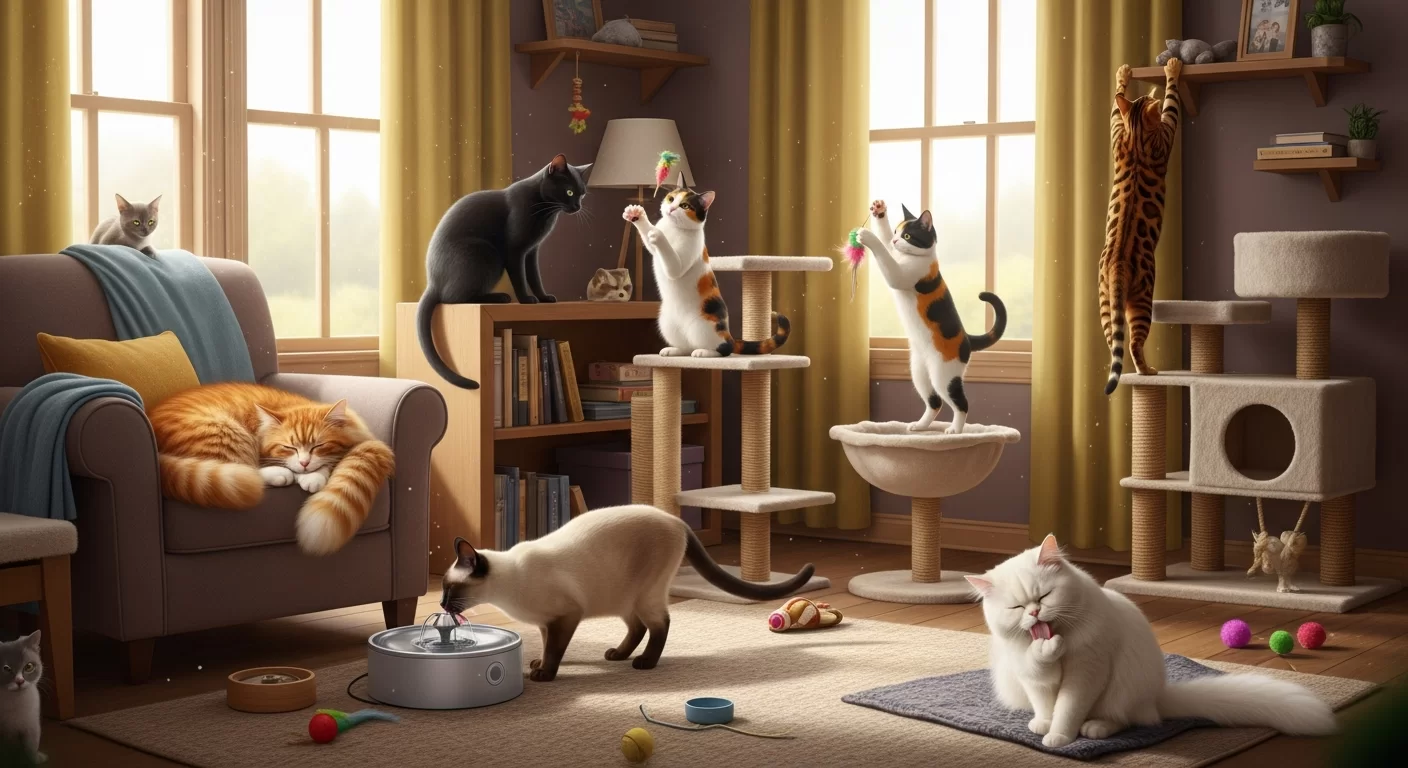
Cats can form strong bonds with other cats, but they are not automatically social with every feline housemate. Some cats become close companions that sleep together, groom each other, and play. Others coexist through careful avoidance. Conflict may be obvious, such as chasing and fighting, or subtle, such as blocking doorways, staring, or guarding resources.
Signs of bonded cats include:
- Sleeping in physical contact
- Mutual grooming
- Greeting with upright tails
- Playing with role reversal
- Rubbing against each other
- Sharing space without tension
Signs of social stress include:
- One cat blocking another from food, litter, or rooms
- Chasing that always has the same victim
- Staring, stalking, or ambushing
- Hissing near resources
- One cat hiding more often
- Urine marking
- Overgrooming
- Reduced play or appetite
Multi-cat trust depends on resource abundance and placement. A common veterinary behavior guideline is to provide one litter box per cat plus one extra, placed in separate locations when possible. Food and water stations should also be separated so one cat cannot control access.
Introductions should be gradual. Scent swapping, feeding on opposite sides of a door, visual access through a barrier, and short supervised meetings are safer than placing unfamiliar cats together and hoping they “work it out.”
Human affection can also create tension if one cat monopolizes attention or if petting sessions happen in contested areas. Giving each cat individual playtime and safe retreat options helps reduce competition.
Common Myths About Cat Love and Attachment
Cat behavior is surrounded by persistent myths. Many of them lead people to underestimate feline affection or misinterpret fear as stubbornness.
| Myth | Fact |
|---|---|
| Cats are not affectionate. | Cats often show affection subtly through proximity, scent marking, slow blinking, and voluntary contact. |
| A cat that does not sit on laps does not love its owner. | Many bonded cats prefer sitting nearby rather than on a person. |
| Purring always means happiness. | Purring can occur during comfort, stress, pain, or self-soothing. |
| Belly exposure means “pet my belly.” | It often means trust or relaxation, but not necessarily permission to touch. |
| Cats should be made to face fears. | Forced exposure can intensify fear. Gradual desensitization is safer. |
| Hissing is bad behavior. | Hissing is communication that a cat feels threatened or overwhelmed. |
| Cats are low-maintenance emotionally. | Cats need enrichment, predictable care, and respectful social interaction. |
| Only kittens can learn trust. | Adult and senior cats can build trust with time, consistency, and appropriate handling. |
One of the most damaging myths is that cats are spiteful. A cat that urinates outside the litter box, hides from guests, or swats during petting is not plotting revenge. These behaviors usually reflect stress, illness, pain, fear, territorial insecurity, or unmet needs.
The American Veterinary Medical Association encourages veterinary consultation when behavior changes appear, because medical issues often influence behavior. Treating behavior as communication rather than defiance leads to better outcomes.
When Changes in Affection Signal Stress, Pain, or Illness
A change in affection can be one of the earliest clues that something is wrong. Because cats often hide illness, subtle social shifts deserve attention.
A normally social cat may become withdrawn. A reserved cat may become clingy. A cat that loved chin scratches may suddenly bite when touched. A cat that slept on the bed may move to a closet. These changes may be behavioral, environmental, or medical.
| Change in Behavior | Possible Causes | Recommended Response |
|---|---|---|
| Sudden hiding | Pain, fear, illness, household stress | Monitor closely; schedule veterinary exam if persistent |
| Avoiding touch | Arthritis, injury, skin pain, dental pain | Veterinary evaluation |
| Increased clinginess | Anxiety, cognitive changes, illness | Look for other symptoms; discuss with veterinarian |
| Aggression during petting | Overstimulation, pain, fear | Stop handling; assess triggers |
| Less grooming | Pain, obesity, illness, senior decline | Veterinary check and supportive grooming |
| Overgrooming | Stress, allergies, parasites, pain | Veterinary diagnosis needed |
| Litter box changes | Urinary disease, stress, mobility issues | Prompt veterinary attention |
| Night vocalization | Hyperthyroidism, hypertension, cognitive dysfunction, sensory loss | Veterinary evaluation, especially in seniors |
Urgent signs include difficulty breathing, inability to urinate, collapse, repeated vomiting, severe lethargy, sudden paralysis, seizures, or signs of extreme pain. These require immediate veterinary care.
Behavior professionals can help when medical issues have been ruled out. A board-certified veterinary behaviorist or qualified feline behavior consultant may assist with fear, aggression, inter-cat conflict, or severe anxiety.
The goal is not to force affectionate behavior to return, but to identify why the cat’s sense of safety or comfort changed.
Helpful Tools That Support Cat Trust and Comfort
Products cannot replace patience, veterinary care, or good handling, but the right tools can make a cat’s environment more secure. Prices vary by retailer, size, and region, but common ranges are useful for planning.
| Tool | Typical Price Range | Useful For | Buying Considerations |
|---|---|---|---|
| Wand toys | $5–$20 | Play, bonding, confidence | Choose sturdy toys with replaceable attachments |
| Puzzle feeders | $10–$35 | Enrichment, slower eating | Start with easy designs |
| Cat trees | $40–$250+ | Vertical territory, safety | Stability matters more than height alone |
| Scratching posts | $15–$80 | Stress relief, scent marking | Sisal, cardboard, and wood appeal to different cats |
| Covered or cave beds | $15–$60 | Hiding and secure rest | Washability and size matter |
| Window perches | $20–$60 | Environmental enrichment | Check weight limits and mounting style |
| Pheromone diffusers | $20–$35 starter kits; refills $15–$30 | Stress support in some cats | Effects vary; use alongside environmental changes |
| Litter boxes | $10–$50+ | Core resource access | Large, low-entry boxes help many cats |
| Soft grooming brush | $8–$25 | Gentle bonding, coat care | Use short sessions and avoid painful mats |
Recognized retailers such as Petco, Walmart, and Amazon commonly carry these categories. Editorially, the best choice is usually the item that solves a specific welfare need rather than the most expensive or visually appealing option.
For example, a tall cat tree may help a confident climber but may not help an arthritic senior cat. A low, wide scratching ramp may be more useful for an older cat with stiff joints. A covered bed may comfort one cat but trap another if placed in a busy hallway. Product selection should follow the cat’s behavior, not the room’s décor.
Pheromone products, such as synthetic feline facial pheromone diffusers, may support some cats during transitions, introductions, or stress. They are not sedatives and should not be treated as a cure for pain, aggression, or medical problems. They work best as part of a broader plan that includes resource distribution, hiding spaces, and predictable routines.
Building a Relationship That Respects the Cat
The strongest human-cat relationships are built on consent, observation, and consistency. Cats tend to trust people who are predictable, gentle, and willing to let the cat set the pace. A person who notices a tail flick and pauses, who offers play before cuddles, who provides a quiet retreat during guests, and who respects a cat’s preferred touch zones becomes part of the cat’s safety system.
Affection may look different from one cat to another. One cat may greet with loud trills and leap into a lap. Another may sit nearby in silence every evening. A third may show love through play, slow blinks, or sleeping at the foot of the bed. These differences do not make one bond more real than another.
Understanding feline trust also helps owners respond compassionately when behavior changes. A cat that withdraws, hides, bites, or stops seeking contact is communicating something important. The answer may be environmental, emotional, social, or medical.
When cats are given safety, choice, enrichment, and respectful care, affection often becomes clearer. It may remain subtle, but it is rarely empty. In the feline world, trust is not demanded; it is offered. Recognizing that offer is the beginning of a better life together.