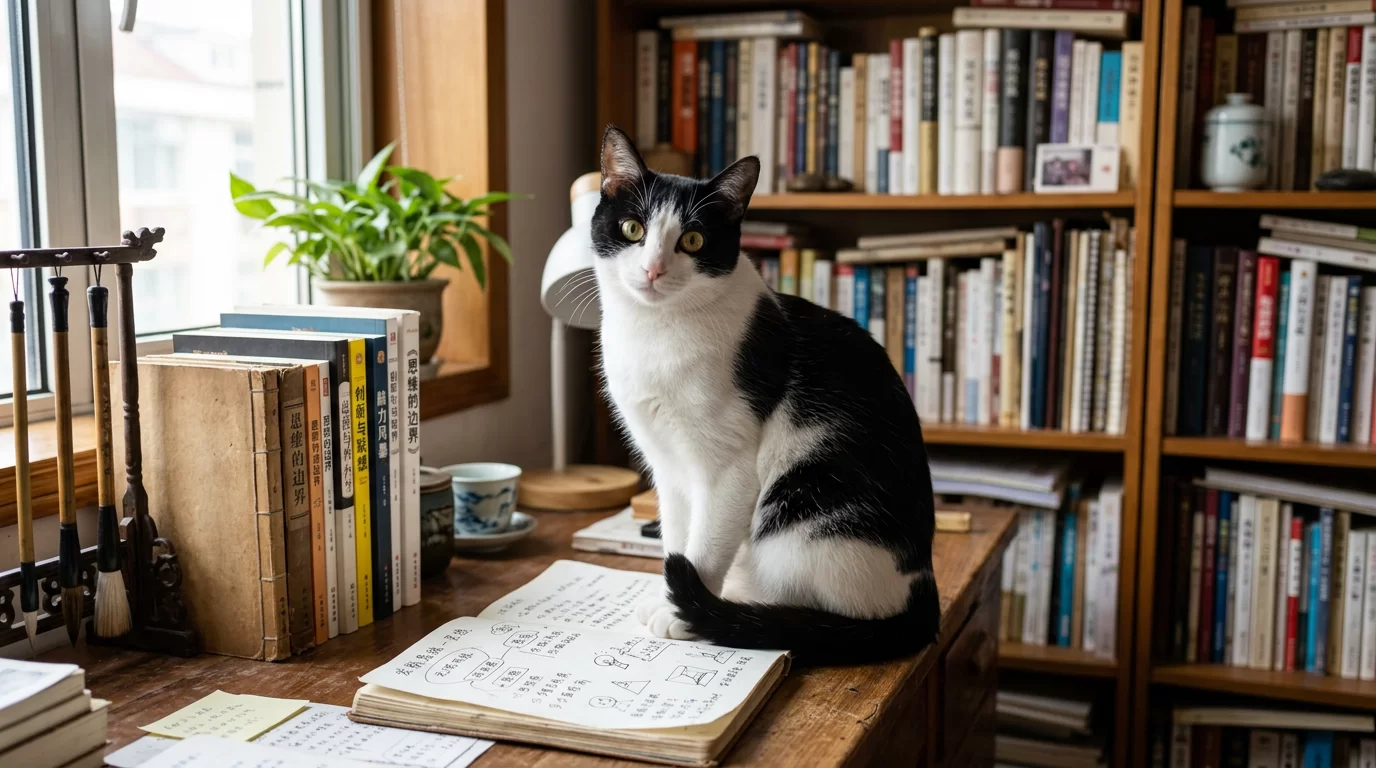
Cat happiness is less about grand gestures and more about reading the subtle, consistent clues your feline companion weaves into everyday life. Unlike dogs, cats don’t wear their emotions on their paws. Instead, they signal contentment through a combination of relaxed body language, soothing vocalizations, and a deep sense of security within their territory. Two often-overlooked concepts are at the heart of feline well-being: homeostatic comfort—the state where a cat’s internal physical and emotional systems feel balanced—and territorial comfort, which assures a cat its environment is predictable and safe. Paying attention to these layers can transform the way you interpret your cat’s mood and strengthen your bond. It’s not about finding one magic sign; it’s about observing a cluster of behaviors that say, “I feel good in my own fur.”
In This Article
- The Clearest Signs Your Cat Is Happy
- What Homeostatic Comfort Means for Your Cat
- Why Territorial Security Is a Happiness Essential
- How Body Language Reveals a Happy Cat
- Vocal Cues That Mean Your Cat Is Thriving
- Daily Habits That Point to Feline Contentment
- When Comfort Behaviors Signal Something Else
- Simple Ways to Support Your Cat’s Happiness
The Clearest Signs Your Cat Is Happy
A truly content cat displays several behaviors that, when seen together, paint a clear picture of emotional and physical ease. Instead of searching for a single clue, look for these hallmarks:
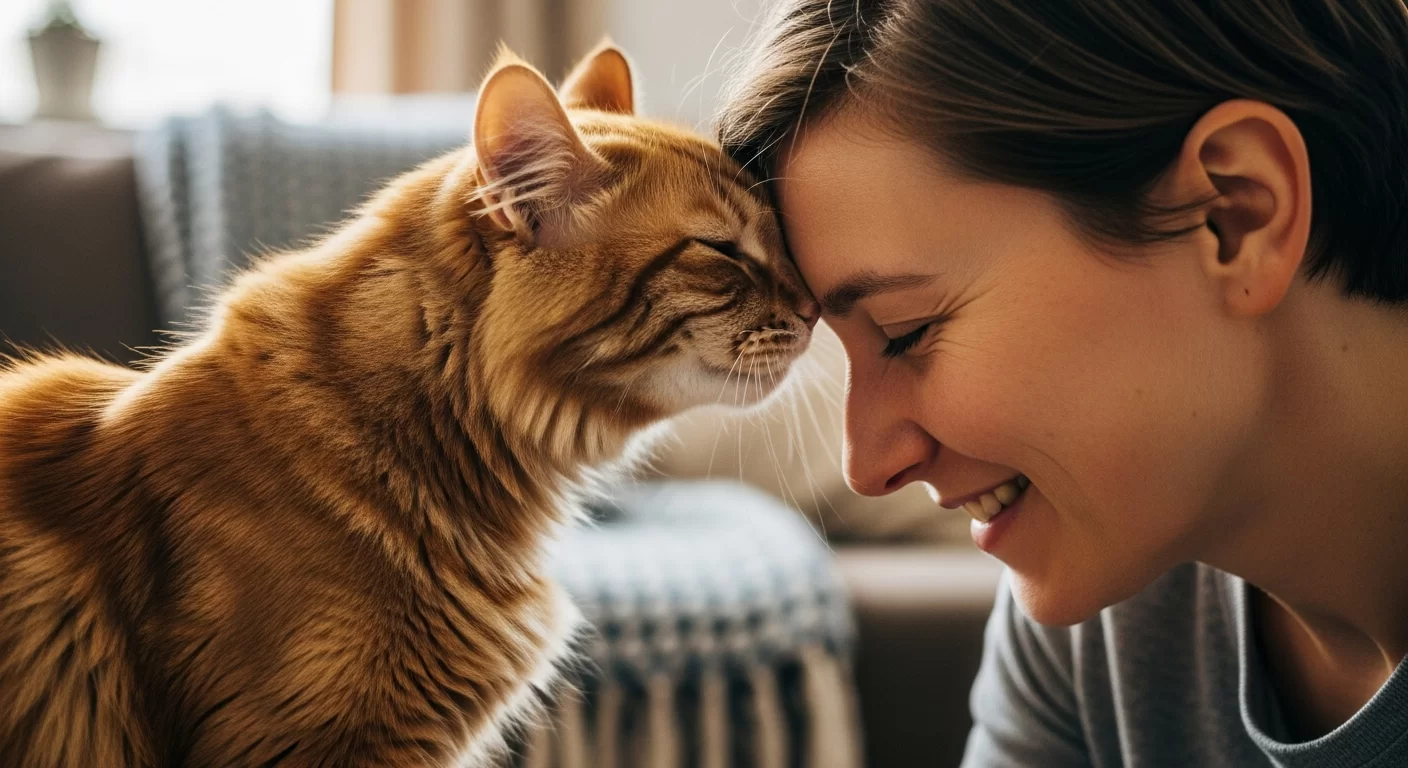
- Slow blinking: A cat that looks at you and deliberately closes its eyes halfway or fully is offering what many call a “cat kiss.” This gesture signals trust and a lack of threat.
- Forward-facing, relaxed whiskers: When a cat’s whiskers are slightly fanned out to the sides and not pulled back against the face, it’s a strong indicator of calmness.
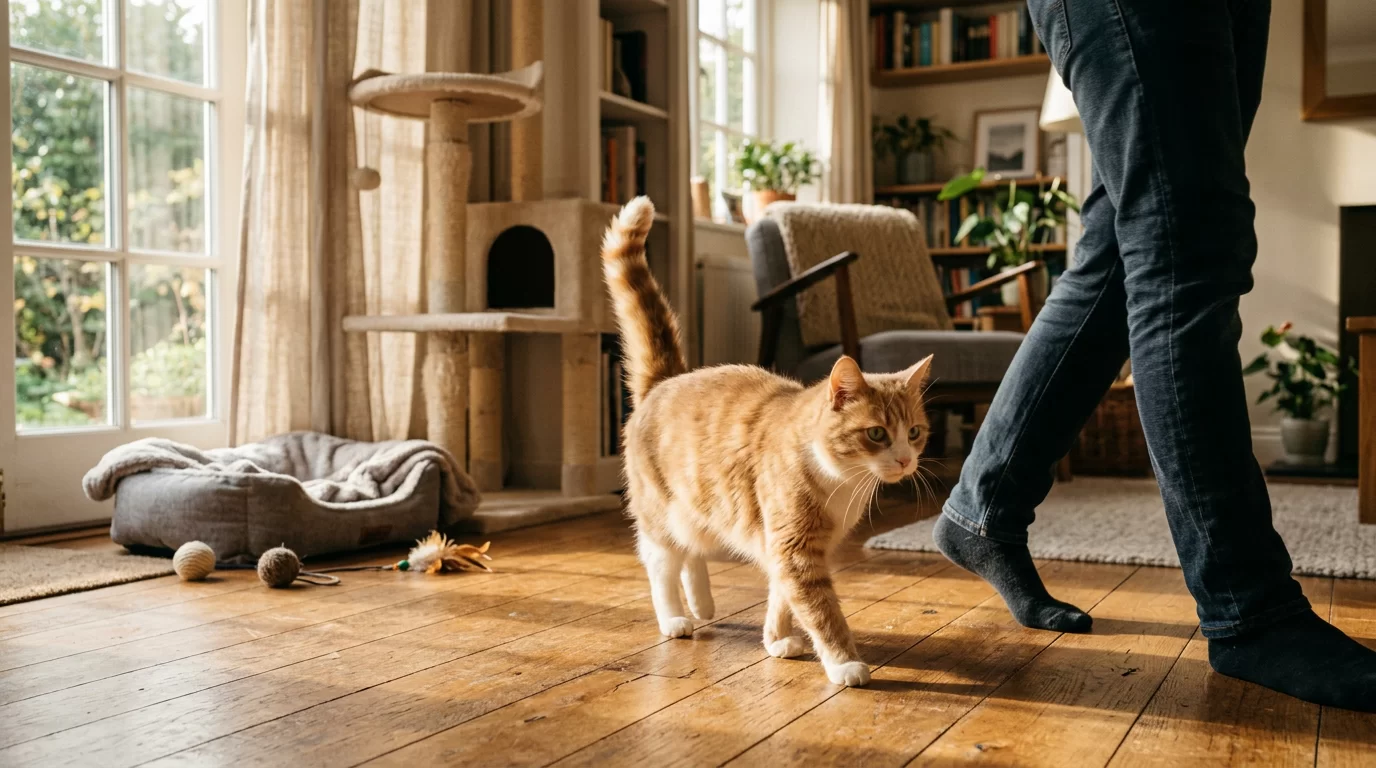
- Upright tail with a slight curve at the tip: This is the feline equivalent of a friendly wave. A tail held high often means confidence, while a gentle curl at the end adds an extra layer of approachability.
- Kneading and purring in repose: When a cat rhythmically pushes its paws into a soft surface while purring, it’s tapping into kittenhood comfort behaviors—a clear sign of emotional safety.
- Grooming in visible areas: A cat that grooms itself or another cat in the open, rather than hiding, feels secure enough to let its guard down.
These signs don’t exist in isolation. A happy cat will typically show several of them simultaneously, and they’re most reliable when the cat is awake, relaxed, and not actively seeking food or play.
What Homeostatic Comfort Means for Your Cat
Homeostasis in biology refers to the body’s ability to maintain a stable internal state. For cats, homeostatic comfort goes beyond temperature regulation and digestion—it includes emotional equilibrium, too. A cat in homeostatic balance eats and drinks regularly, uses the litter box without hesitation, and maintains a consistent sleep-wake cycle. Subtle shifts, like a sudden loss of appetite or hiding more than usual, often signal that something has disrupted that internal harmony.
Veterinary behaviorists note that cats are masters at masking pain, so a truly comfortable cat won’t just appear physically healthy; it will actively engage in routine maintenance behaviors. You might see it stretch fully, roll onto its back to expose its belly (a vulnerable position that requires trust), or clean its coat to a glossy shine. These actions reflect a body that feels good from the inside out. When homeostatic comfort is intact, stress hormones remain low, and the cat is more likely to express personality—whether it’s chirping at birds or curling up in a sunbeam.
Why Territorial Security Is a Happiness Essential
Cats are territorial by nature, and a sense of ownership over their space is deeply tied to happiness. A cat that feels secure in its territory will patrol, scent-mark by rubbing its cheeks on furniture, and rest in open areas without constantly scanning for threats. This isn’t about dominance; it’s about certainty. When a cat knows every corner of its environment and believes its resources are stable, its brain dials down vigilance.
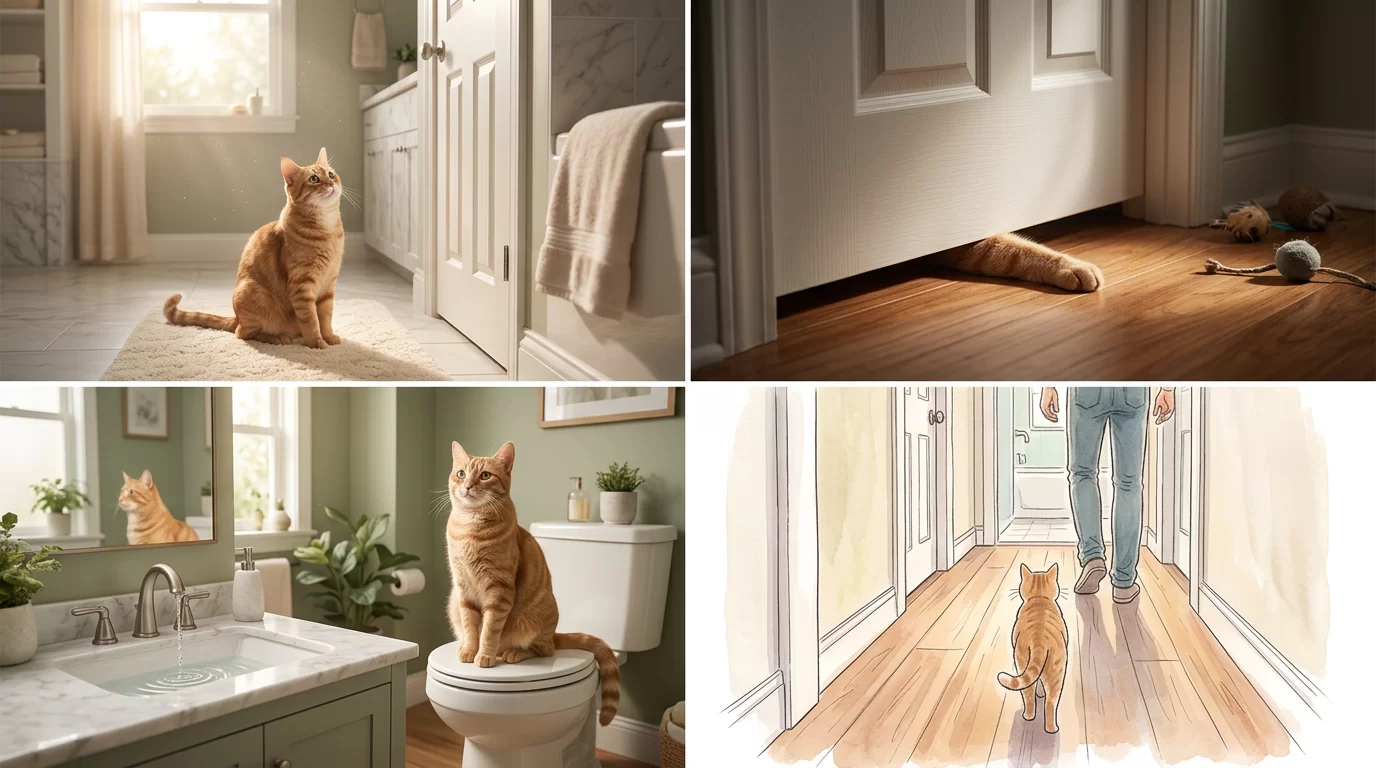
One quirky but telling sign of territorial comfort is what some owners call “bathroom escort behavior.” A cat that follows you from room to room, including into the bathroom, isn’t just being clingy—it’s monitoring its shared territory and reinforcing social bonds, a topic explored in depth in why cats follow you to the bathroom. Similarly, a cat that claims a specific chair or windowsill and returns to it daily is demonstrating that its territory feels safe and consistent. Environmental threats—ranging from outdoor cats visible through a window to rearranged furniture—can chip away at this security, so a happy cat’s comfort relies on a predictable, well-resourced space.
How Body Language Reveals a Happy Cat
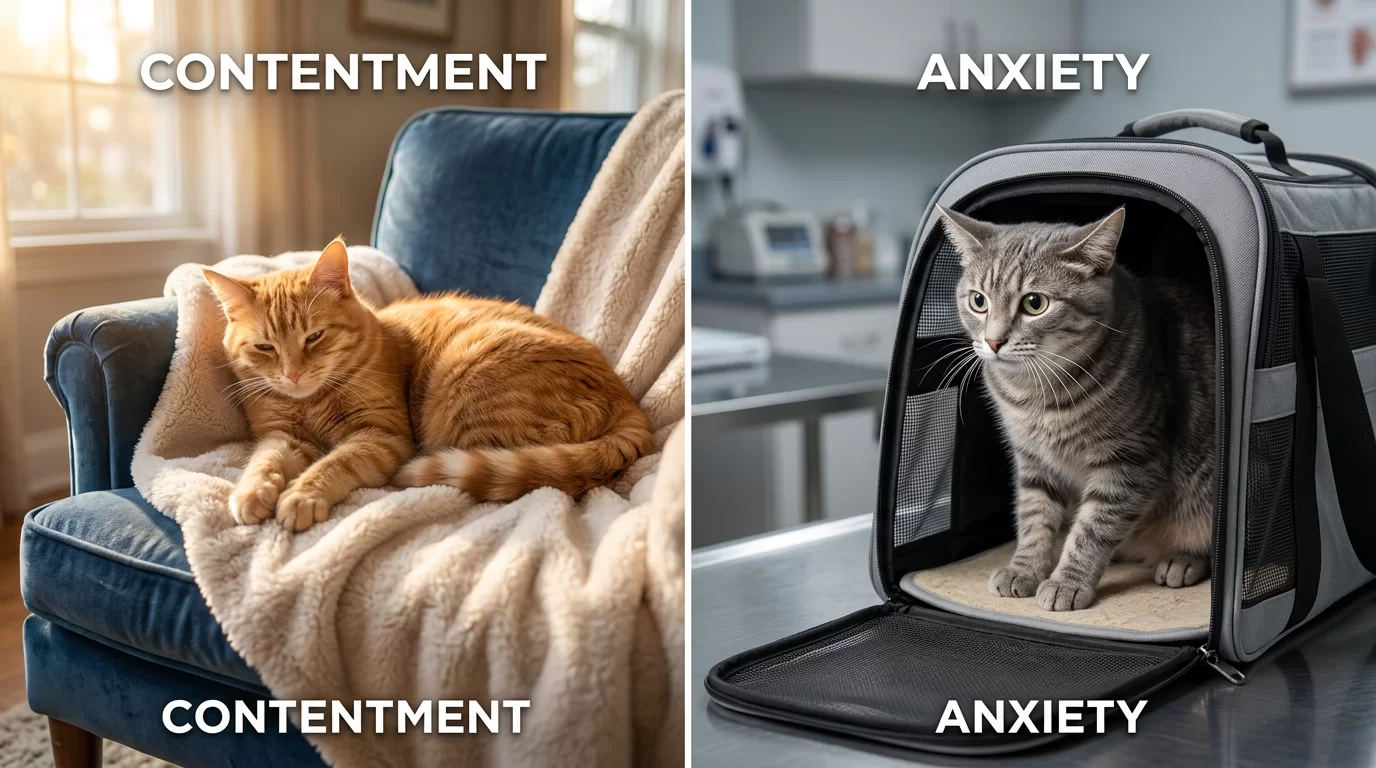
Body language is the most honest dictionary of feline emotion. Ears held slightly forward or gently swiveled indicate curiosity without anxiety, while a fully relaxed posture—often called a “loaf” position with paws tucked under—suggests deep relaxation. The tail, whiskers, and even the way a cat holds its head provide constant feedback. A cat lying on its side with a slowly swishing tail tip might be enjoying a lazy morning, whereas a cat crouched with dilated pupils and a twitching tail is likely overstimulated or agitated.
To help distinguish between contentment and stress, the table below compares common postures:
| Body Area | Happy Cat Signals | Stressed or Unhappy Cat Signals |
|---|---|---|
| Ears | Forward or slightly to the side, gentle rotation | Flattened sideways or pinned back |
| Eyes | Half-closed, slow blinking, normal pupil size | Wide-open with dilated pupils, hard stare |
| Whiskers | Relaxed, gently curved forward and sideways | Pulled back tight against the cheeks |
| Tail | Upright with a curl, or gently wrapped around body when lying | Puffed up, tucked under, or thrashing rapidly |
| Body Posture | Lying on side or back, loaf position, fluid stretching | Crouched, tense, or arched back with raised fur |
These physical cues are best read as a collective, not in pieces. A cat that shows three or more happy signals is likely feeling genuinely at ease.
Vocal Cues That Mean Your Cat Is Thriving
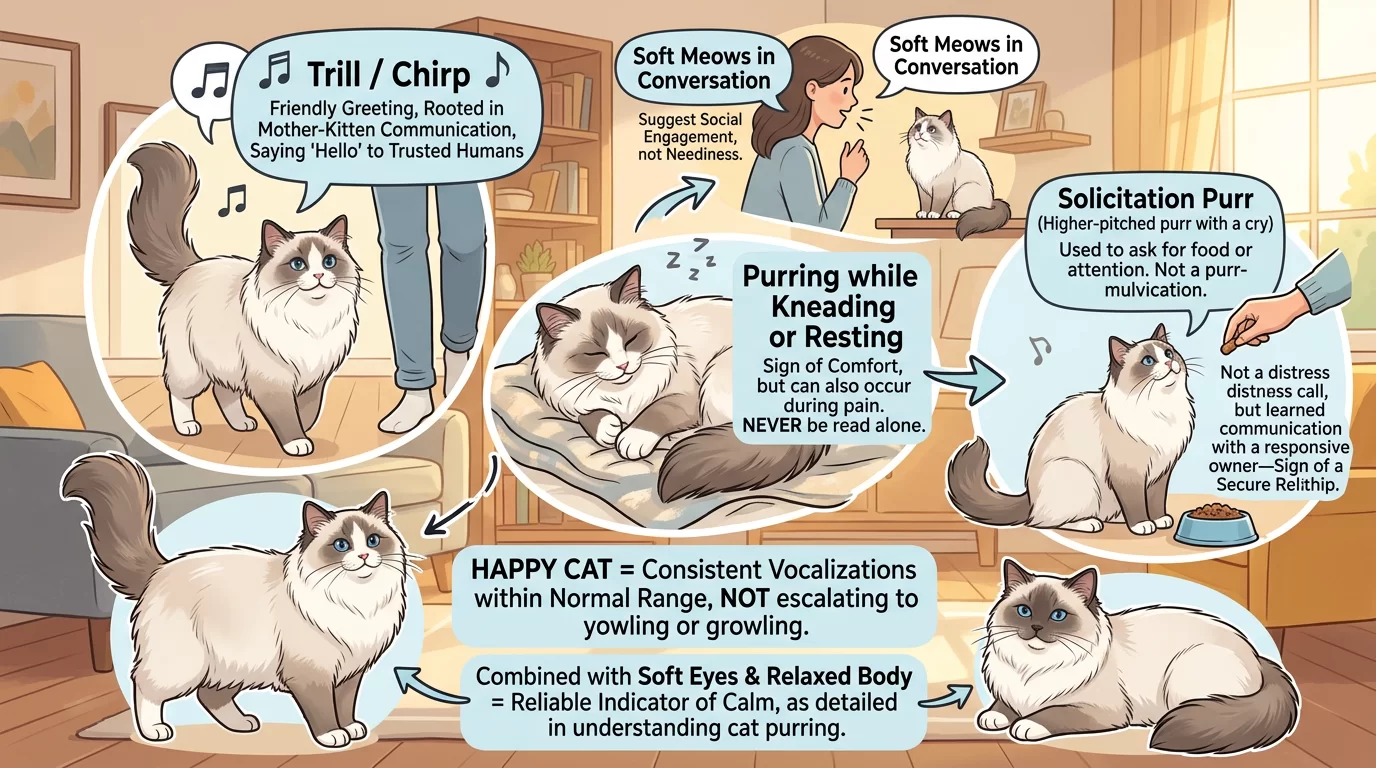
Another hallmark is the solicitation purr, a slightly higher-pitched purr mixed with a cry that some cats use to ask for food or attention. Rather than a distress call, it reflects a cat that has learned to communicate its desires to a responsive owner—a sign of a secure relationship. Occasional soft meows exchanged in conversation with a person also suggest social engagement, not neediness. The key is that the vocalizations are consistent with the cat’s normal range and don’t escalate into yowling or growling.
Daily Habits That Point to Feline Contentment
Routine behaviors offer a window into a cat’s inner life. A content cat will follow a predictable rhythm: it wakes, stretches, maybe grooms itself or a housemate, eats with enthusiasm, and seeks out comfortable resting spots. Playfulness is another green flag. A cat that chases toys, initiates hide-and-seek, or pounces at dangling strings is demonstrating both mental and physical well-being.
Kneading blankets or soft surfaces—often called “making biscuits”—is a carryover from kittenhood that comforts many adult cats. This rhythmic motion helps them self-soothe and release calming pheromones from paw pads. When a cat kneads in your presence, it’s often a sign of deep trust, a behavior explored more fully in why cats knead blankets. Other daily habits, like a healthy appetite and regular, well-formed litter box deposits, are baseline indicators of internal comfort. A cat that skips these patterns may be feeling off, even if still purring occasionally.
When Comfort Behaviors Signal Something Else
The same behaviors that signal happiness can sometimes mask discomfort or illness. Purring, for instance, appears during injury or labor as a self-soothing mechanism. Kneading can escalate into obsessive wool-sucking in stressed cats. Even seeking out a favorite lap may intensify when a cat is unwell and seeking warmth or security.
The difference lies in the overall pattern. A cat that is purring but also refusing food, hiding, or hissing when touched needs veterinary attention, not just comfort. Changes in grooming—either a sudden decline or excessive licking to the point of bald patches—point to underlying stress or medical issues. Likewise, a cat that suddenly stops playing or using shared spaces may be feeling territorially insecure. When in doubt, a checkup with a feline-friendly veterinarian can rule out pain, as cats rarely announce their distress openly.
Simple Ways to Support Your Cat’s Happiness
Nurturing a happy cat often comes down to respecting its need for control and predictability. Provide multiple comfortable resting spots at different heights, maintain clean litter boxes in quiet locations, and keep feeding times consistent. Interactive play sessions using wand toys mimic hunting and satisfy prey drive, which reduces stress and boredom. A view of the outdoors, whether through a secure window perch or a catio, can offer mental stimulation without threatening territorial security.
Scent also matters. Avoid harsh cleaning products near your cat’s favorite areas, and allow them to scent-mark new objects naturally. If you’re introducing a new pet or person, do so gradually to preserve your cat’s sense of safety. Even small choices, like offering a cardboard box or leaving a worn t-shirt in a favorite nap spot, can reinforce feelings of security. These simple acts communicate that your cat’s world is steady, resource-rich, and safe—the foundation of true feline happiness.
Watching a cat bask in a patch of sunlight, tail curled around its paws, with a soft blink directed your way is one of the most reassuring sights a pet owner can witness. Those moments are earned through consistency and trust. By learning to decode the layered language of homeostatic and territorial comfort, you move beyond the guesswork and into a relationship where your cat’s quiet joy becomes unmistakable. Whether through a gentle purr, an upright tail, or a string of “biscuits” kneaded into a blanket, a happy cat is always telling you something—if only you know how to listen.