Kneading—the rhythmic pushing of paws against soft surfaces—is one of the most recognizable feline behaviors, yet it often leaves owners wondering whether their cat is blissfully content or silently distressed. The confusion arises because kneading can emerge from both deep comfort and underlying anxiety. A cat kneading a favorite blanket while purring may look the same as one kneading compulsively in a veterinarian’s waiting room. Discerning the difference matters because responding to stress-driven kneading as if it were a happy habit can mean missing an opportunity to address a cat’s emotional needs. This article clarifies when kneading is a comforting self-soothing mechanism and when it might signal stress, helping owners interpret what their cats are truly communicating.
In This Article
- When Kneading Is Simply a Sign of Contentment
- When Kneading Crosses Into Stress Territory
- The Kittenhood Connection: Why Kneading Begins
- Reading the Full Body Language Beyond the Paws
- Environmental Triggers That Shift Kneading From Comfort to Anxiety
- When Excess Kneading Disrupts Daily Life
- Home Adjustments That Support Healthy Kneading
- What Veterinary Behaviorists Want Owners to Know
When Kneading Is Simply a Sign of Contentment
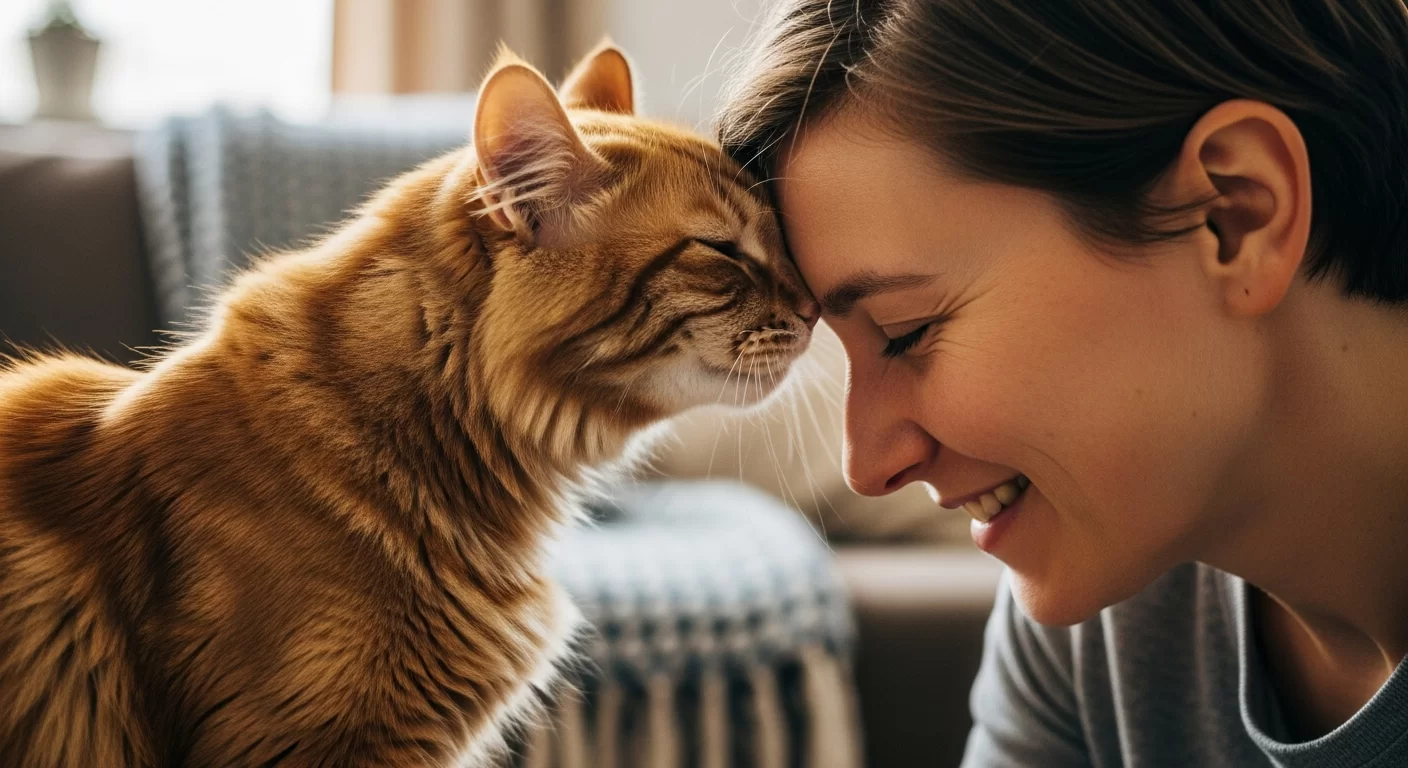
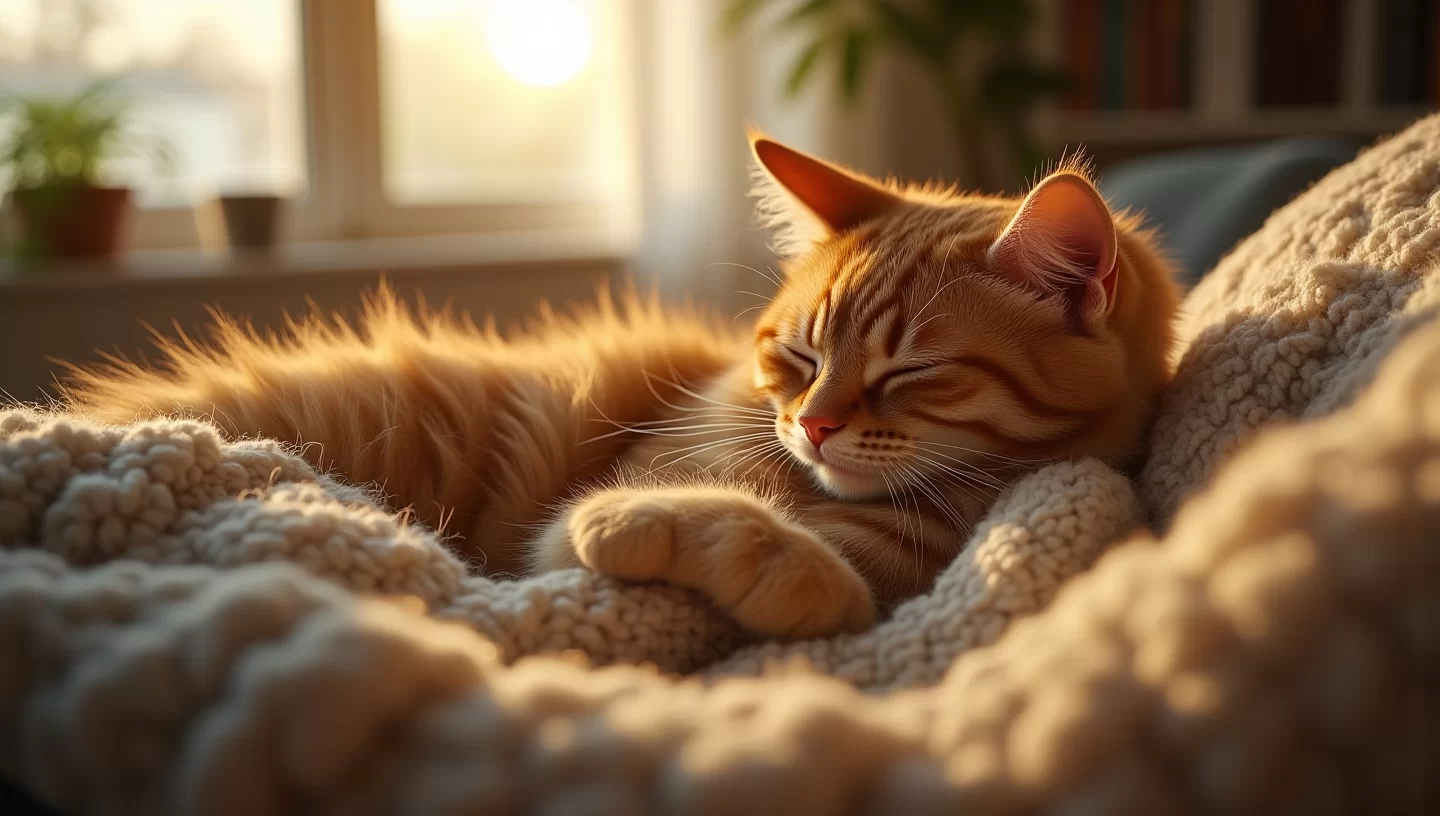
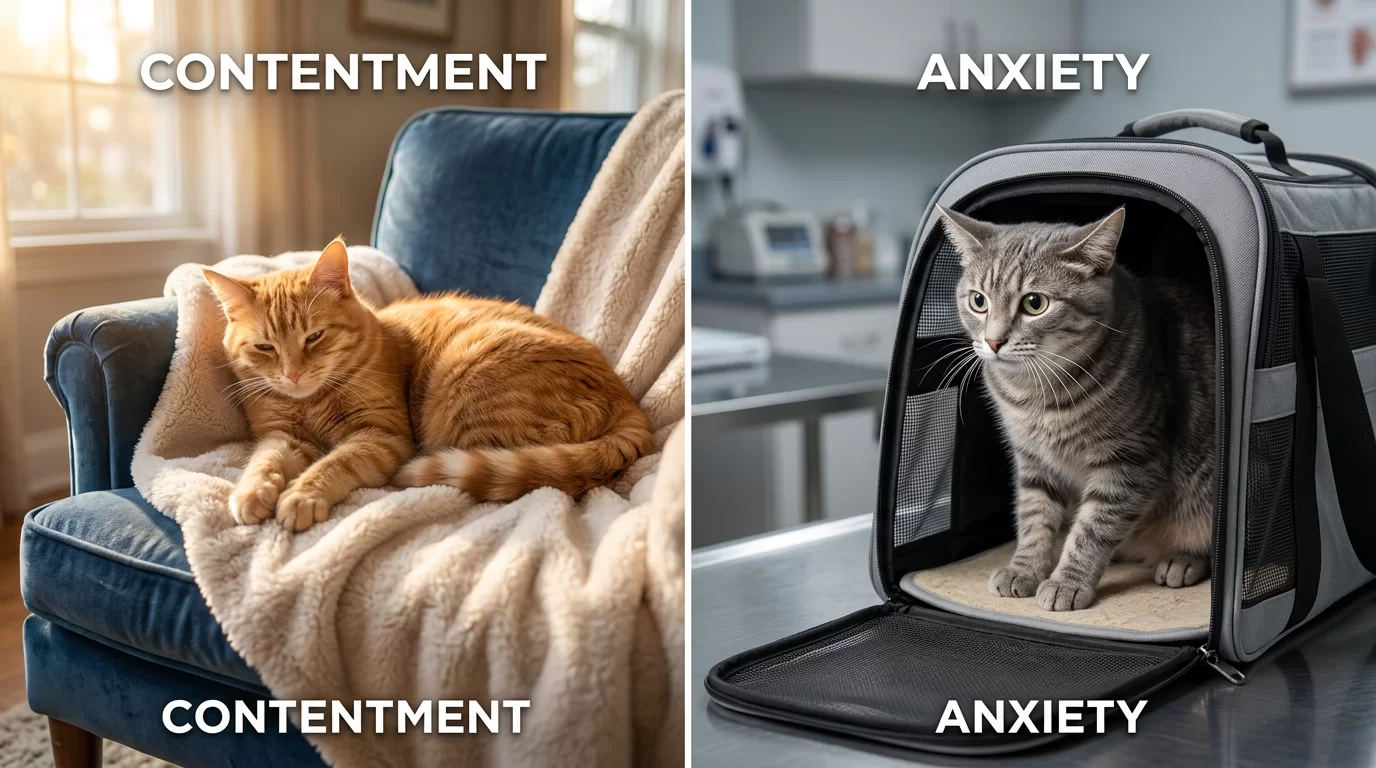
Kneading accompanied by a relaxed body posture, slow blinking, soft purring, and a familiar, safe setting is almost always a comfort signal. A cat that kneads before settling down for a nap on its owner’s lap or on a trusted blanket is displaying a behavior deeply rooted in kittenhood security.
In these moments, the cat’s entire demeanor signals ease. The eyes may be half-closed, the ears gently forward or swiveling casually, and the tail still or lazily swishing. The kneading is unhurried, often paused as the cat drifts toward sleep. According to the Cornell Feline Health Center, this type of kneading is a holdover from nursing, when kittens press their mother’s belly to stimulate milk flow. Adult cats who feel safe and loved often revert to this infantile behavior. It is not merely a habit but a tangible expression of trust. When a cat kneads you or your bedding, you are being included in its intimate circle of security.
Owners can see this as a green light. It rarely needs intervention, and it means the cat views its environment as predictable and kind. Some cats may even drool slightly, which further underscores the depth of relaxation. The behavior typically occurs in predictable, low-stress times—right before sleep, during quiet evening hours, or after a meal—reinforcing its role as a comfort ritual.
When Kneading Crosses Into Stress Territory
Compulsive, frantic, or contextually inappropriate kneading—such as kneading hard surfaces, kneading while cowering, or kneading for prolonged periods without settling—often points to anxiety or an attempt to self-soothe during stress. A cat that begins kneading relentlessly in the carrier, at the vet clinic, or after a household upheaval is likely trying to calm itself down.
Stress kneading looks different under the surface. The cat’s body is tense; it may crouch low, flatten its ears, and hold its tail tightly. While comfort kneading tends to be rhythmic and dreamy, stress kneading can appear mechanical, rapid, and detached. A cat may also produce a low, staccato purr that is more about self-regulation than enjoyment—something the ASPCA notes can occur in frightened or painful animals. In these cases, the behavior is a coping mechanism, not a sign of a happy cat. It can escalate quickly if the underlying stressor is not removed, and it may be accompanied by other displacement behaviors like overgrooming or hiding.
The Kittenhood Connection: Why Kneading Begins
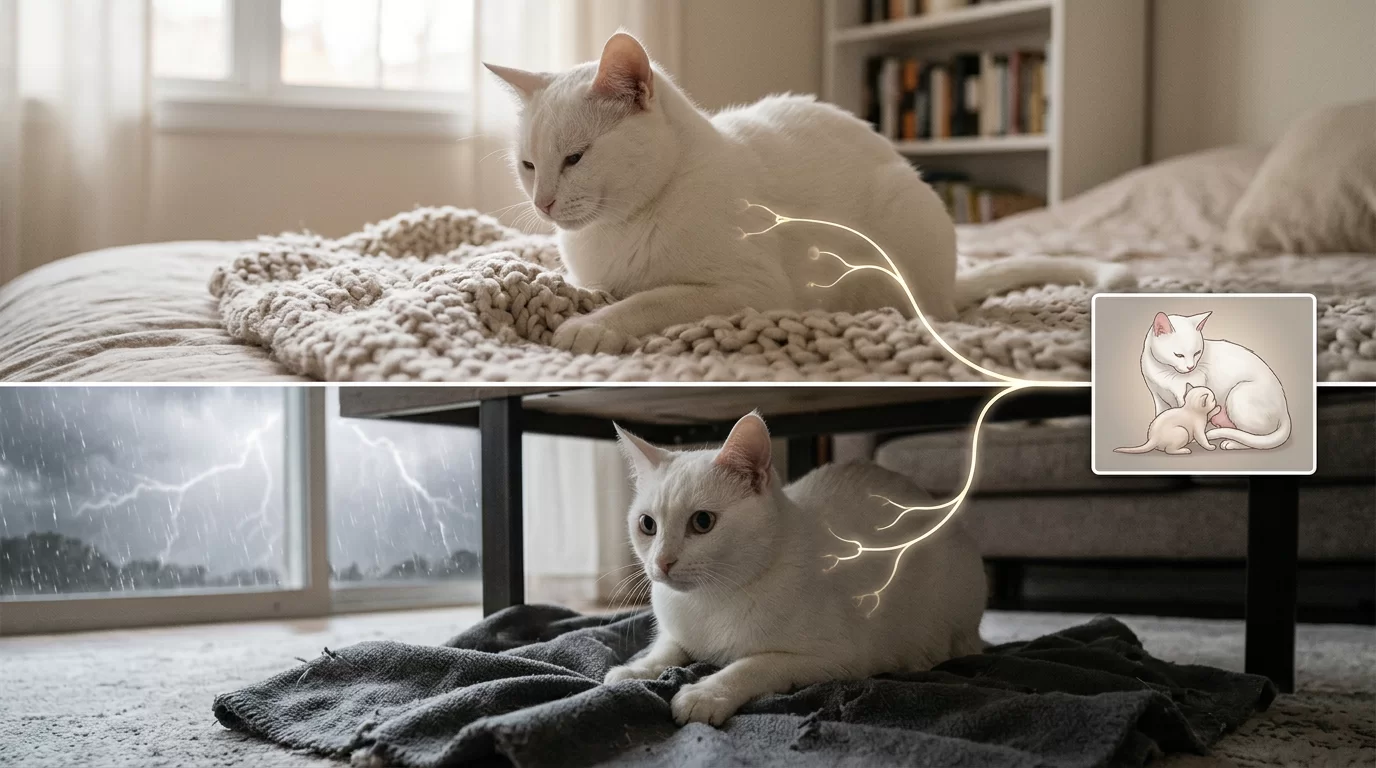
Kneading originates in the neonatal period as a way for kittens to stimulate milk flow while nursing. This early life association with comfort, safety, and nourishment persists into adulthood, but the behavior can resurface in stressful situations as a throwback to kittenhood security.
The neurological and behavioral roots are well documented. Kittens push their forepaws against the mother’s mammary gland in a rhythmic pattern that maintains milk let-down. At the same time, they experience warmth, satiation, and the mother’s heartbeat—a multi-sensory package of safety. Because the brain encodes this as overwhelmingly positive, adult cats may access the same motor pattern when they need emotional regulation. The International Cat Care organization explains that many adult behaviors labeled as “infantile” are simply the cat’s way of re-creating a calming sensory experience. That’s why the same kneading action can appear both in a sleepy, happy cat and in a cat attempting to self-soothe through a thunderstorm. The act itself is neutral; context dictates its meaning.
Reading the Full Body Language Beyond the Paws
To accurately interpret kneading, owners must look at the entire cat: ear position, tail movement, pupil dilation, and vocalizations all provide critical context. A relaxed cat kneads with soft eyes and ears forward; a stressed cat may flatten its ears, twitch its tail, and knead rigidly.
The table below breaks down the telltale differences between comfort-driven and anxiety-driven kneading.
| Signal | Comfort Kneading | Stress Kneading |
|---|---|---|
| Body posture | Loose, relaxed, often in a resting position | Tense, crouched, may be hunched or trying to hide |
| Ear position | Forward or slightly to the side, mobile | Flattened sideways or pinned back |
| Eye expression | Half-closed, slow blinking | Wide-eyed, pupils dilated, staring |
| Tail movement | Still or gently swishing | Thumping, twitching, or tightly wrapped around body |
| Vocalization | Soft purring, occasional chirps | High-pitched purring, growling, or tense silence |
| Kneading rhythm | Steady, relaxed, often with pauses | Rapid, frantic, repetitive, no pauses |
| Context | Familiar resting spot, owner’s lap, soft bedding | New environment, absence of owner, at the vet, during loud events |
Comfort kneading usually gives the impression of a cat “zoned out” in bliss. Stress kneading, by contrast, looks forced—the body stays rigid, and the cat may space out not from pleasure but from emotional overload. Dilated pupils and a twitching tail are red flags that signal the cat is not enjoying the moment. Noticing these peripheral signals is the single most reliable way to determine whether kneading is healthy or heading toward problematic. It’s worth noting that some cats who knead with intensity may suddenly shift into biting or licking, a behavior pattern tied to overstimulation. For a deeper dive into that specific body language sequence, owners can explore the dynamics of cat bite then lick behavior and how it connects to feline social signals.
Environmental Triggers That Shift Kneading From Comfort to Anxiety
Common triggers include changes in routine, new people or pets, loud noises, or the absence of a bonded human. A cat that once kneaded only at bedtime may begin kneading frantically throughout the day after a household move or a family member leaves for an extended trip.
Kneading behaviors are highly sensitive to environmental stability. Cats are territorial animals that thrive on predictability. When that predictability is disrupted—even by something that seems minor, like rearranging furniture or a shift in feeding times—some cats respond with displacement activities. Kneading often appears alongside other stress signs such as urine marking, hiding, or a significant increase in vocalizations. In homes where a cat is strongly bonded to one person, separation anxiety can trigger kneading that borders on compulsive. The cat may follow the owner constantly before departure and then knead as a self-soothing ritual in their absence. This is closely related to why cats follow their owners, a behavior that can indicate attachment, but also at times anxiety. Recognizing the trigger is the first step toward restoring a sense of safety. Even positive changes, like a new, cherished blanket, can lead to excessive kneading if the cat uses it to cope with an underlying unease.
When Excess Kneading Disrupts Daily Life
When kneading becomes so frequent that it interferes with eating, sleeping, or social interaction—or when it causes skin irritation, damaged bedding, or self-injury—it has crossed into a maladaptive stress response that needs professional attention.
In some cats, the behavior escalates into an apparent compulsion. They may knead for hours, losing weight or sleep, and ignore other normal activities. Owners might notice raw, red paw pads from the repetitive motion, or threads and fabric constantly being ingested. The AAFP advises that any behavioral pattern so persistent it hampers the cat’s routine welfare warrants a veterinary evaluation to rule out underlying pain, neurological issues, or severe anxiety disorders. A veterinarian may recommend a combined approach: a physical exam, blood work, and potentially a consultation with a veterinary behaviorist. Obsessive kneading is not a quirk to be ignored but a genuine cry for help. Left unaddressed, it can evolve into self-mutilation or profound psychological distress.
Home Adjustments That Support Healthy Kneading
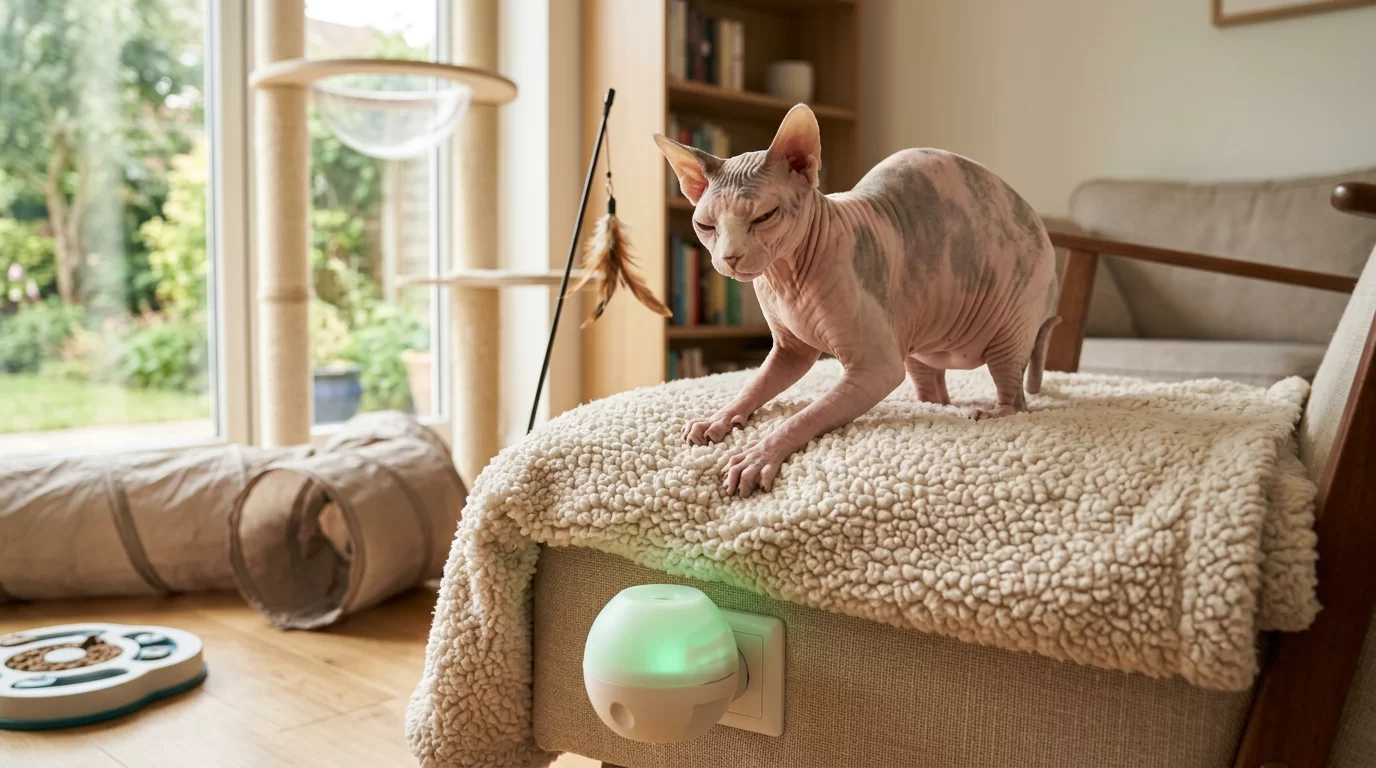
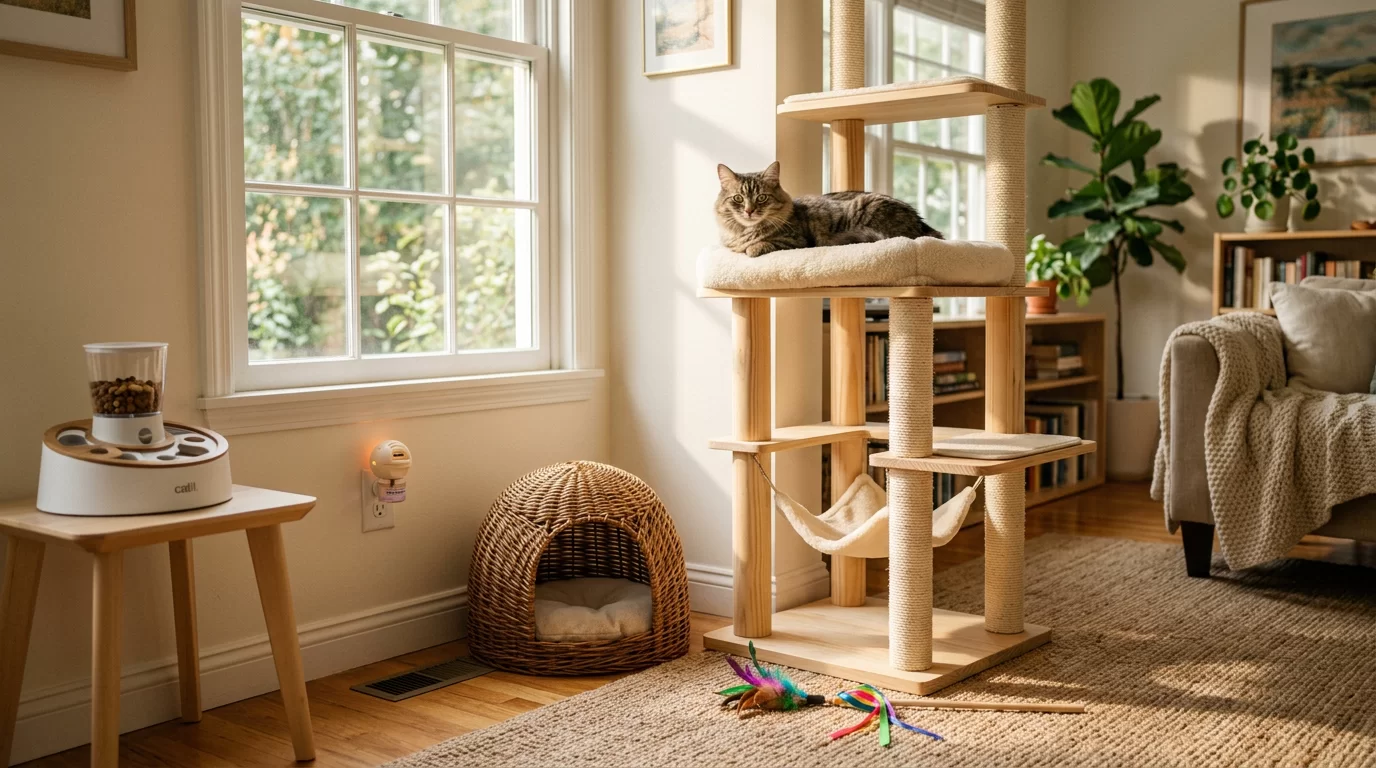
Practical environmental tweaks often make a dramatic difference. If a cat is compulsively kneading the same spot on the couch, placing a durable, washable blanket there can save the furniture and give the cat a “kneading zone.” Increasing interactive play sessions, hiding food puzzles, or introducing a window perch can reduce underlying anxiety by addressing boredom and pent-up energy. The ASPCA suggests that mental stimulation and a predictable schedule significantly lower stress-related behaviors in cats. Additionally, pheromone products such as Feliway can help create a chemically familiar, reassuring atmosphere. When kneading starts to edge into stress territory, the goal should never be punishment—which only heightens fear—but rather a calm, systematic expansion of the cat’s comfort zone. Gentle redirection to a preferred kneading surface, combined with anxiety-reducing activities, can gradually shift the behavior back toward its original contentment roots.
What Veterinary Behaviorists Want Owners to Know
Veterinary behaviorists emphasize that kneading itself is not harmful; the context and the cat’s overall well-being are what matter. Punishing a cat for kneading can increase anxiety, while ignoring chronic stress signals may allow an underlying medical condition to worsen.
A sudden change in kneading frequency or intensity—especially when accompanied by other physical signs like weight loss, inappropriate elimination, or hiding—should always trigger a veterinary visit. Pain from dental disease, arthritis, or gastrointestinal discomfort can present as anxious kneading because the cat attempts to self-soothe. As noted by the Cornell Feline Health Center, behavioral changes are often the first—and sometimes only—indication of a medical problem in cats. Behaviorists also caution against labeling cats as “neurotic” too quickly. Some cats are simply more orally fixated or have a stronger neonatal response. It is the cat’s overall emotional state and ability to engage in normal feline activities that define whether the kneading is a quirk or a red flag. A cat that kneads contentedly each night and then plays, eats, and grooms normally is not a cause for concern. A cat that kneads obsessively while withdrawing from life is a cat asking for help.
Understanding the nuance between a kneading cat who is blissfully happy and one who is quietly struggling can deepen the human–feline bond in lasting ways. Instead of stopping the behavior, owners can build an environment where kneading remains a sign of trust and ease. Watching for shifts in body language, the rhythms of the household, and the cat’s overall daily functioning allows a thoughtful response—whether that means offering a warm lap, a stress-reducing routine, or a veterinary consultation. When in doubt, a cat’s kneading tells a story; learning to read it correctly transforms a simple paw motion into a meaningful conversation about safety, health, and connection.