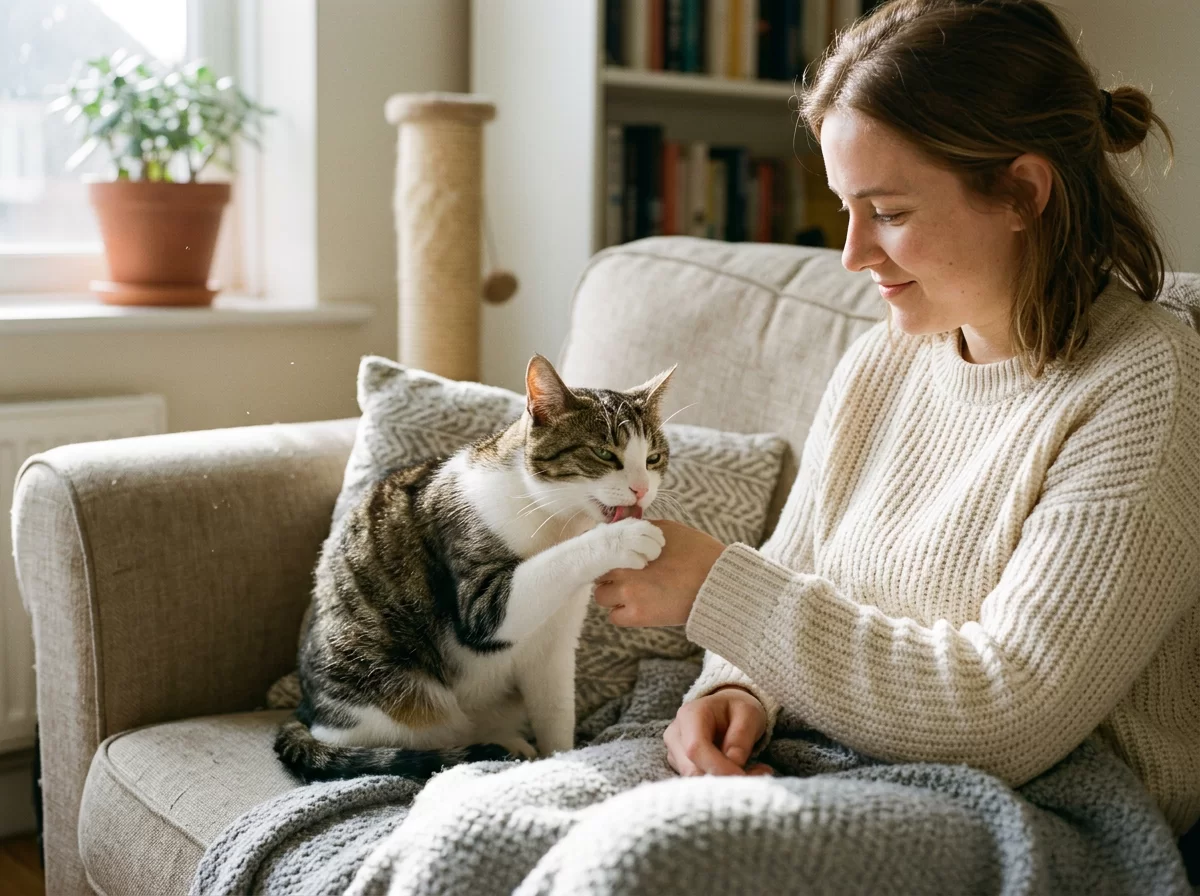
A cat that bites and then licks can leave an owner wondering whether the moment was affectionate, playful, irritated, or something else entirely. The behavior is common, but it is not always simple. Cats use their mouths during grooming, play, social bonding, and communication, and a quick bite followed by licking can mean different things depending on the cat’s body language and the situation.
For many households, this happens during petting, cuddling, lap time, or play. One moment the cat seems relaxed; the next, there is a small nip, followed by a few gentle licks. In most cases, this is not a sign that a cat is “being mean.” It is usually a mixed social signal, a grooming behavior, or a response to overstimulation. Understanding the difference helps owners respond calmly, avoid reinforcing unwanted biting, and notice when the behavior may point to stress, pain, or discomfort.
In This Article
• Why Cats Bite Then Lick
• What a Bite Followed by Licking Usually Means
• How to Tell Affection from Overstimulation
• Common Situations That Trigger Bite-Then-Lick Behavior
• When Cat Biting and Licking May Signal a Problem
• How to Respond When a Cat Bites Then Licks
• How to Reduce Unwanted Biting Over Time
Why Cats Bite Then Lick
Cats often bite then lick because they are combining two natural behaviors: using the mouth to communicate and using the tongue to groom or bond. A gentle bite followed by licking may mean “that is enough,” “keep playing,” “I am grooming you,” or “I got overstimulated for a moment.”
A helpful quick answer:
Quick answer: A cat may bite then lick because of affection, social grooming, play behavior, petting overstimulation, redirected energy, or mild stress. Gentle nips followed by licking are usually normal, especially if the cat’s body remains relaxed. Hard bites, tense posture, growling, flattened ears, or sudden behavior changes deserve closer attention.
Cats are not small dogs, and their social signals can be subtle. A lick does not always “cancel out” the bite. Instead, the two actions should be read together with the cat’s tail, ears, pupils, body tension, and the context of the interaction.
What a Bite Followed by Licking Usually Means
The most common reason is social grooming. Cats that are bonded may lick one another and occasionally use their teeth to nibble through fur, remove debris, or adjust the grooming area. When a cat does this to a person, it may be treating that person as part of its social group.
This is sometimes called “love biting,” though the phrase can be misleading. The bite is not always purely affectionate. It may be a light social nip, a grooming nibble, or a polite warning that the cat’s tolerance is changing.
A cat may also bite and lick during play. Kittens learn to stalk, pounce, grab, bite, and release as part of normal development. Adult cats may keep those patterns, especially if hands were used as toys when they were young.
In other cases, the lick after the bite may be a calming or repairing gesture. The cat may have reacted impulsively to too much touch, then immediately resumed a softer social behavior. This is why many owners describe the moment as confusing: the cat seems irritated and affectionate within the same few seconds.
Affection, Grooming, or Overstimulation?
The easiest way to interpret bite-then-lick behavior is to look at the whole body, not just the mouth.
| Behavior pattern | What it may mean | Common signs |
|---|---|---|
| Gentle nibble followed by slow licking | Social grooming or affection | Relaxed body, soft eyes, normal ears |
| Sudden nip during petting, then licking | Petting overstimulation | Tail twitching, skin rippling, turning head toward hand |
| Bite during active play, then licking | Play excitement | Dilated pupils, pouncing, bunny-kicking, chasing |
| Hard bite followed by tense licking or no licking | Fear, pain, or defensive behavior | Flattened ears, growling, crouching, hiding |
| Repeated biting when touched in one area | Possible pain or sensitivity | Guarding body part, flinching, sudden aggression |
Overstimulation is one of the most common explanations. Many cats enjoy petting but only for a limited time. Repetitive touch can become irritating, especially near the belly, base of the tail, or along sensitive skin. The bite may be the cat’s way of ending the interaction; the lick may follow because the cat is still socially engaged.
Some cats also purr during these moments, which can make the signal harder to read. Purring can reflect contentment, but it can also occur when a cat is stressed or uncomfortable. For a deeper look at that mixed signal, see why cats purr and what different purrs can mean.
Common Situations That Trigger Bite-Then-Lick Behavior
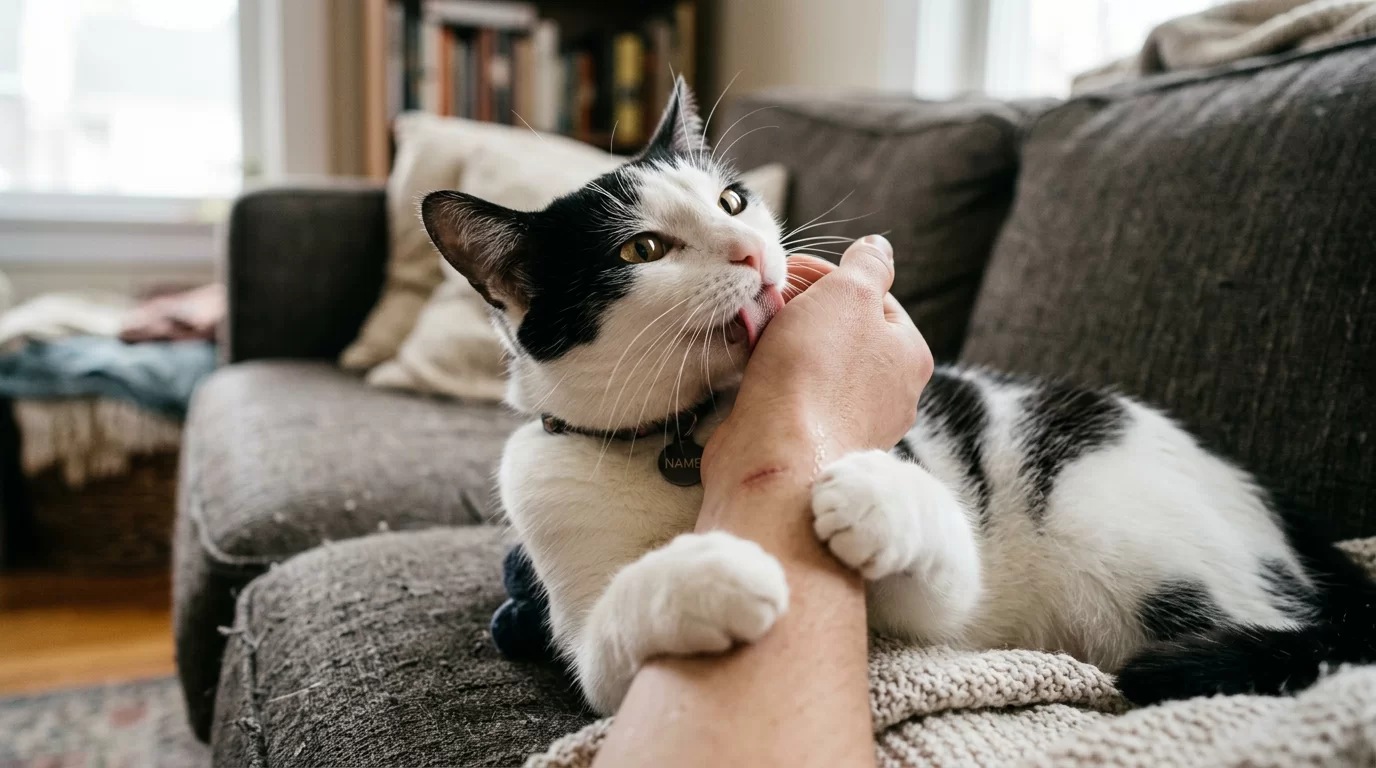
Common triggers include:
- Long petting sessions: A cat may enjoy attention at first, then reach a sensory limit.
- Petting in sensitive areas: The belly, paws, tail, and lower back can be overstimulating for many cats.
- Hand play: Cats that chase fingers may treat hands like prey or toys.
- Grooming behavior: Some cats lick skin, hair, or clothing and add tiny nibbles as part of the routine.
- Attention-seeking: A cat may nip, then lick, because the behavior reliably gets a reaction.
- High arousal: After play, bird-watching, or excitement, a cat may be more mouthy than usual.
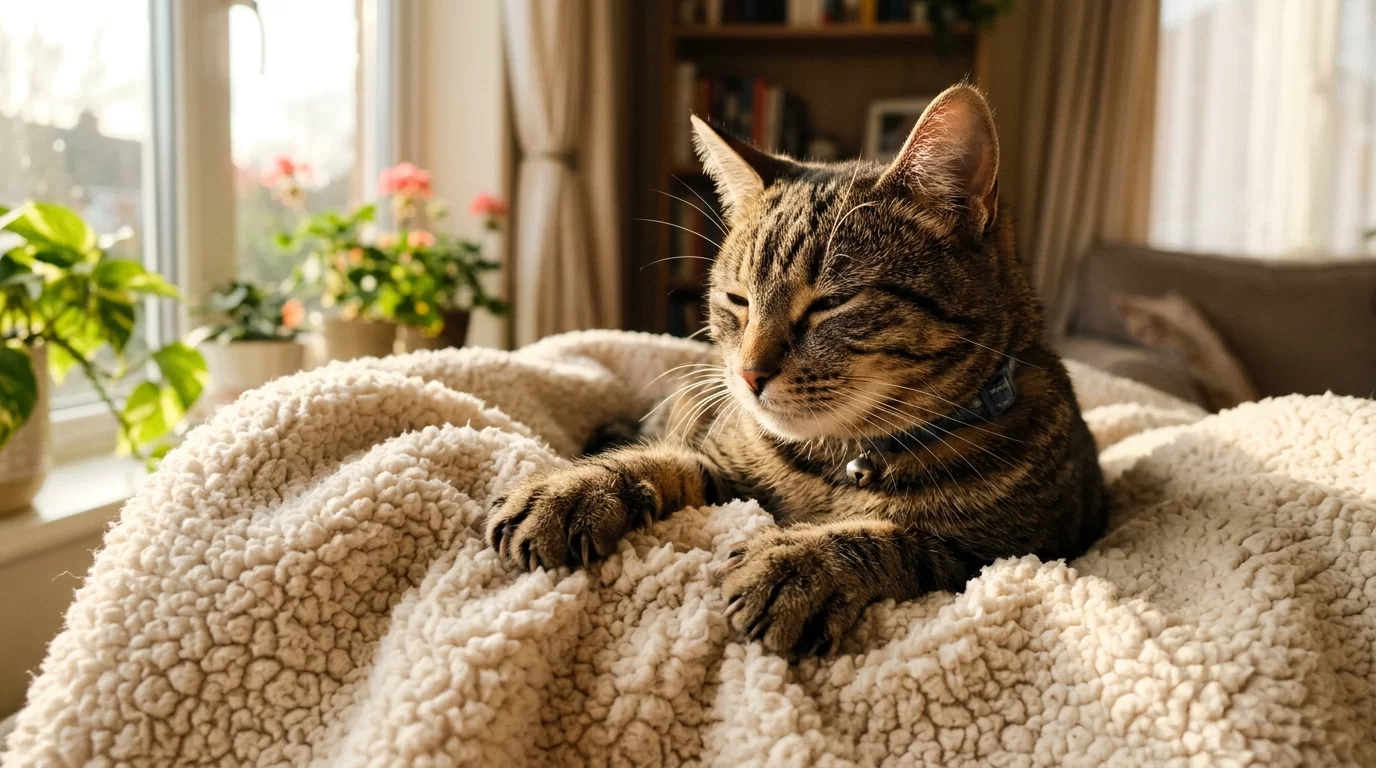
- Bonded attachment: Cats closely attached to their owners may use grooming-style behaviors during cuddling or resting nearby.
Some cats that constantly stay near their people also show more grooming, licking, and attention-seeking nips. If that pattern appears with clinginess, vocalizing, or distress when left alone, it may be useful to understand why cats follow their owners and signs of attachment behavior.
Why Some Cats Lick After Biting
The lick after a bite can have several meanings. It may be social, instinctive, or self-soothing.
In cat-to-cat relationships, licking is part of allogrooming, a social grooming behavior seen among bonded cats. A cat may lick a companion’s head, neck, or face and occasionally nibble as part of grooming. When directed toward humans, this can look like licking fingers, chewing lightly on knuckles, or nibbling skin before returning to licking.
Licking can also be a displacement behavior. In animal behavior, displacement behaviors are normal actions that appear when an animal feels conflicted or mildly stressed. A cat may want attention but feel overstimulated, or may want to stop petting without fully leaving. The bite communicates a boundary; the lick may reflect continued social interest or an attempt to settle itself.
Another possibility is taste and texture. Human skin may carry salt from sweat, lotion residue, or food smells. A cat may lick first, nibble, then lick again because the texture or scent is interesting. Owners should be cautious with lotions, essential oils, topical medications, and cleaning products, since cats can ingest substances from skin or fur during licking.
When Cat Biting and Licking May Signal a Problem
Most gentle bite-then-lick behavior is harmless, but some situations call for closer attention. A veterinary visit is appropriate when the biting is new, escalating, painful, or connected to touch in a specific area.
Watch for warning signs such as:
- A normally gentle cat suddenly biting hard
- Hissing, growling, or flattened ears before or after the bite
- Biting when touched near the mouth, back, hips, tail, or belly
- Excessive licking, chewing, or barbering fur
- Skin redness, scabs, fleas, or hair loss
- Hiding, appetite changes, litter box changes, or reduced activity
- Bites that break skin or happen without warning
Pain can change a cat’s tolerance quickly. Dental disease, arthritis, skin allergies, ear infections, wounds, and abdominal discomfort can all make handling unpleasant. The American Veterinary Medical Association and major veterinary teaching hospitals commonly advise that sudden behavior changes in cats should be assessed medically, especially when pain or aggression is involved.
Biting that breaks skin should also be taken seriously for the person’s health. Cat bites can introduce bacteria deep into tissue. A medical professional should be contacted if a bite punctures skin, becomes swollen, red, warm, or increasingly painful.
How to Respond When a Cat Bites Then Licks
The best response is calm, consistent, and low-drama. Pulling away quickly, yelling, or rough handling can increase arousal and make biting more likely.
Try this approach:
- Freeze briefly. Sudden movement can trigger more biting or play response.
- Stop petting. Remove the reward the cat may be seeking.
- Gently disengage. Move the hand away slowly when the cat loosens its mouth.
- Give space. Let the cat decide whether to stay, leave, or reset.
- Redirect if playful. Offer a wand toy, kicker toy, or plush toy instead of hands.
- Reward gentle behavior. Calm petting, relaxed sitting, and soft interactions can be reinforced with praise or treats.
If the bite was very gentle and clearly part of grooming, punishment is still unnecessary. The goal is to teach boundaries without frightening the cat. A soft pause, followed by redirecting the mouth to an appropriate toy, is usually more effective than scolding.
How to Reduce Unwanted Biting Over Time
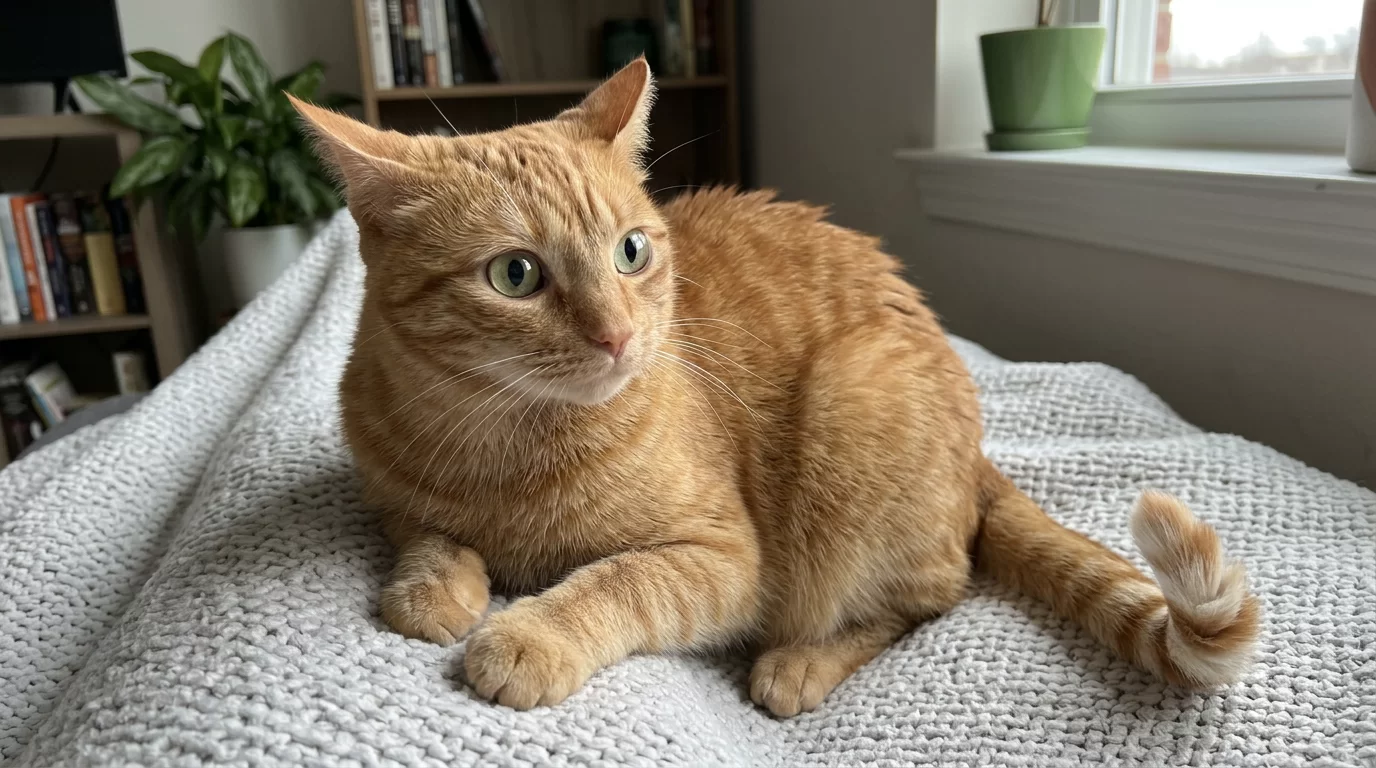
Early warning signs include a twitching tail tip, ears turning sideways, skin rippling along the back, sudden stillness, head turning toward the hand, paw gripping, or pupils becoming large. When these appear, petting should stop before the bite happens.
Helpful long-term strategies include:
- Keep petting sessions short. Stop while the cat is still relaxed.
- Pet preferred areas. Many cats prefer cheeks, chin, and the base of the ears over belly or tail areas.
- Avoid using hands as toys. Wand toys and toss toys create safer play habits.
- Schedule daily play. Predictable play helps reduce pent-up energy.
- Offer enrichment. Scratching posts, puzzle feeders, window perches, and climbing spaces support natural behavior.
- Respect consent. Let the cat approach, leave, and choose the length of contact.
For cats that bite during grooming-style licking, placing a small soft toy between the cat’s mouth and the hand can help redirect nibbling. For cats that become overstimulated during petting, the best solution is often shorter, more predictable affection rather than more handling.
What This Behavior Says About the Cat-Human Bond
A cat that bites then licks is often communicating in a complicated but normal feline way. The behavior may reflect trust, excitement, overstimulation, or a need for clearer boundaries. Rather than treating the lick as an apology or the bite as hostility, it is more accurate to view the moment as communication.
The most reliable interpretation comes from patterns. If the cat stays loose, purrs softly, blinks slowly, and gives feather-light nibbles, the behavior is likely social or affectionate. If the cat stiffens, bites harder, avoids touch, or reacts only when a certain body part is handled, discomfort or pain should be considered.
Cats tend to thrive when their signals are noticed early. A small nip followed by licking may simply be a cat’s way of saying the interaction is changing. With patient observation, gentle handling, and appropriate play outlets, most owners can reduce painful biting while preserving the affectionate rituals that make life with cats so distinctive.