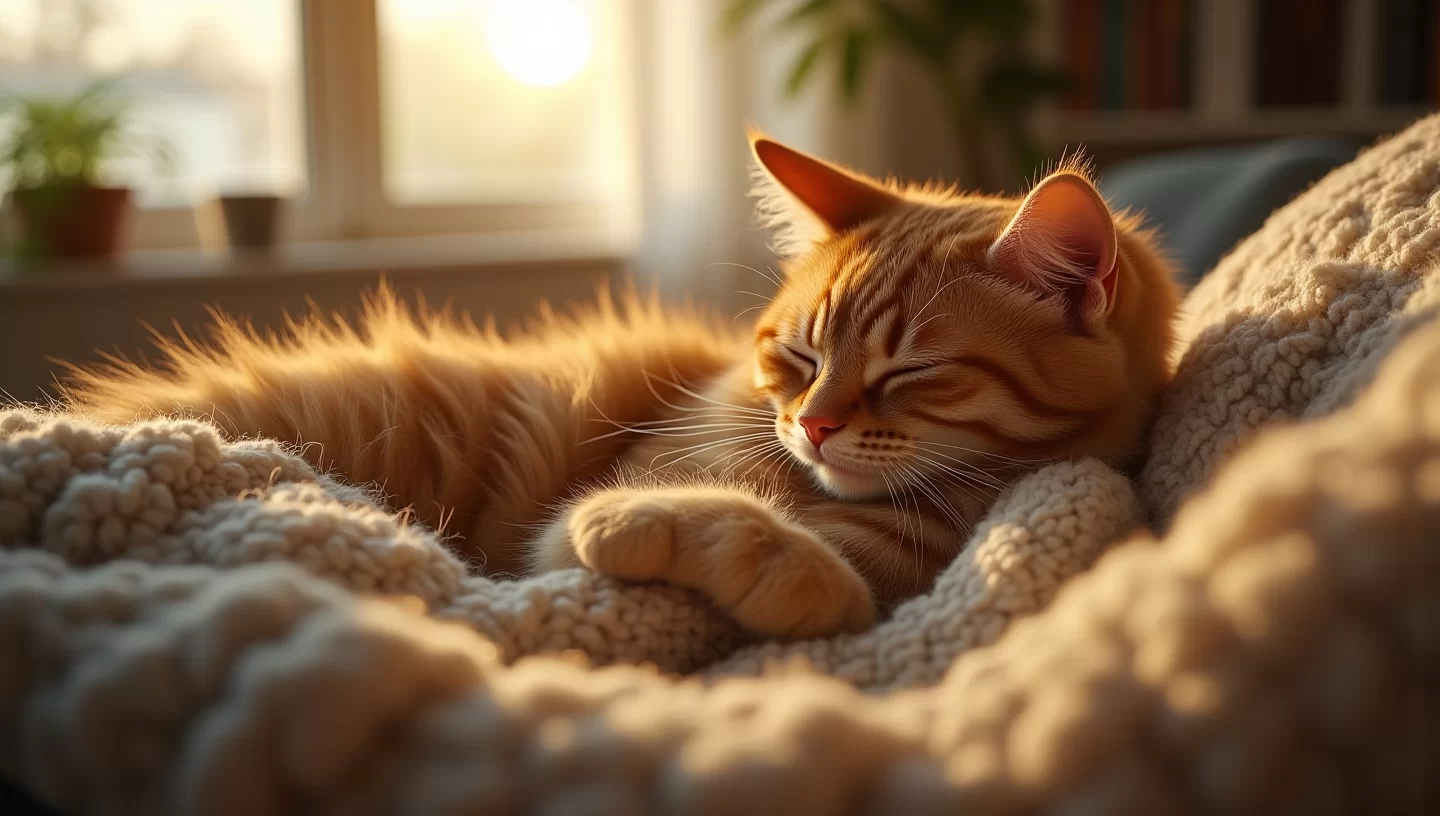
A cat’s purr is one of the most familiar sounds in a home, but it is not always as simple as “happy cat, happy sound.” Cats purr when they are relaxed, but they may also purr when they are nervous, in pain, asking for food, bonding with a person, or soothing themselves through stress. That range of meanings is why cat owners often wonder whether a purr is affectionate, emotional, medical, or something in between. Understanding the context around purring—body posture, appetite, energy level, vocalization, and recent changes—can help separate normal feline communication from signs that a cat may need veterinary attention. As more cat behavior research becomes part of everyday pet care, purring is increasingly viewed not as a single “mood signal,” but as a flexible communication tool shaped by biology, emotion, and environment.
In This Article
- Why Cats Purr: The Quick Answer
- How Cats Make a Purring Sound
- Common Reasons Cats Purr
- What Different Types of Purring May Mean
- When Purring Can Signal Pain or Stress
- How to Respond When a Cat Purrs
- What Purring Reveals About the Human-Cat Bond
Why Cats Purr: The Quick Answer
Cats purr for several reasons, including comfort, social bonding, communication, self-soothing, and sometimes pain or illness. A relaxed cat purring while curled up on a lap is usually expressing contentment. A cat purring at the veterinary clinic, after an injury, or while hiding may be using the sound as a calming behavior.
Cats purr because purring helps them communicate, regulate emotion, and maintain social connection. In many cases, it means a cat feels safe or affectionate. In other cases, especially when paired with lethargy, hiding, poor appetite, or unusual posture, purring may be a sign of stress, discomfort, or illness.
The meaning depends heavily on context. A soft purr with loose body language is very different from a tense, withdrawn cat purring while refusing food.
How Cats Make a Purring Sound
Domestic cats are not the only felines that purr. Many smaller wild cats can purr as well, while big cats such as lions and tigers produce different low-frequency vocalizations. The domestic cat’s purr is especially notable because it appears in so many different social and emotional situations.
Purring is often reported in a frequency range of roughly 25 to 150 Hz, although exact measurements vary. Some researchers have explored whether these low-frequency vibrations may have biological effects, but cat owners should be cautious about overstating “healing” claims. What is better established is that purring is a meaningful feline behavior connected to comfort, stress regulation, and communication.
Common Reasons Cats Purr
Most cat purring falls into a few broad categories. The same cat may purr for different reasons on different days, so reading the whole situation matters.
| Reason for Purring | What It Often Looks Like | Usually Concerning? |
|---|---|---|
| Contentment | Relaxed body, slow blinking, kneading, resting nearby | No |
| Affection and bonding | Purring during petting, rubbing, head bunting | No |
| Soliciting food or attention | Purring near mealtime, following, vocalizing | Usually no |
| Self-soothing | Purring while hiding, tense, or at the vet | Sometimes |
| Pain or illness | Purring with lethargy, poor appetite, limping, hiding | Yes |
| Mother-kitten communication | Nursing kittens and mother cats purring together | No |
Contentment and relaxation
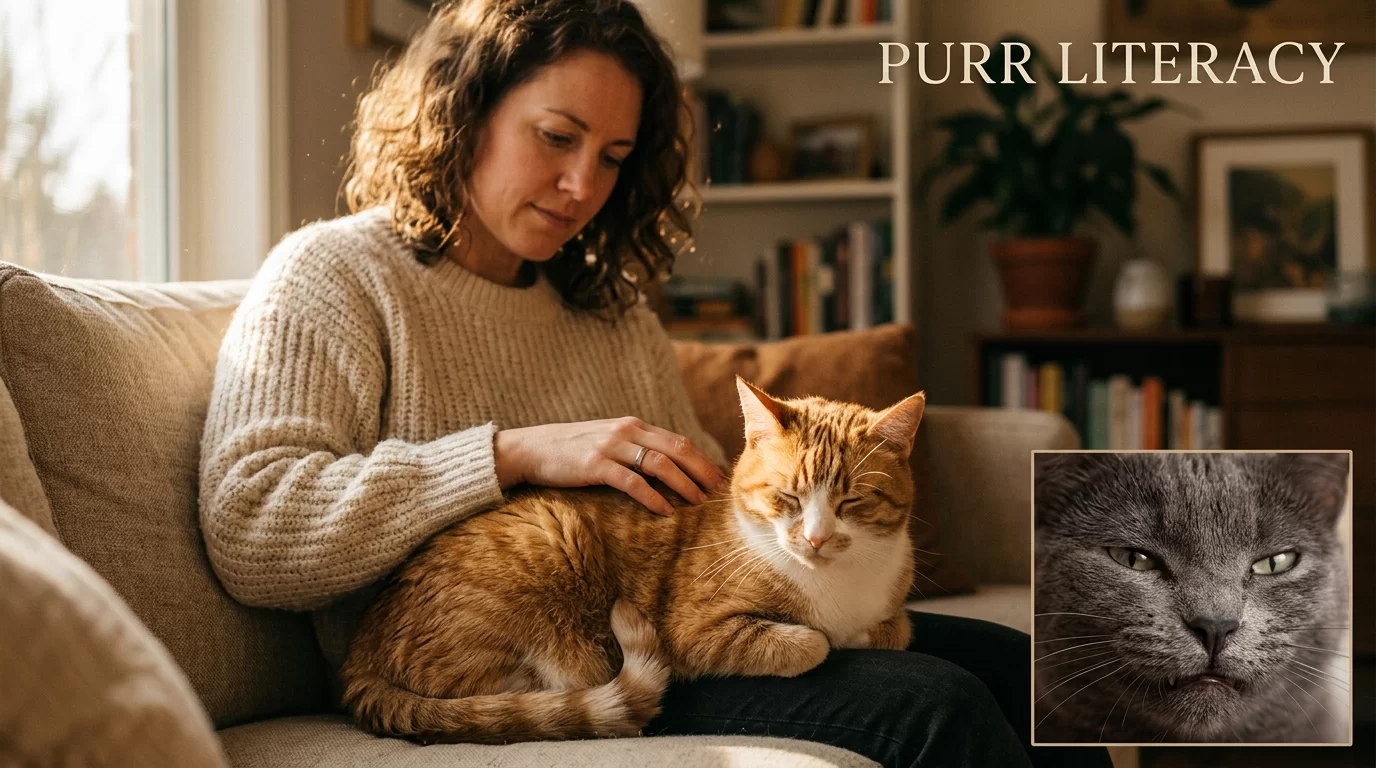
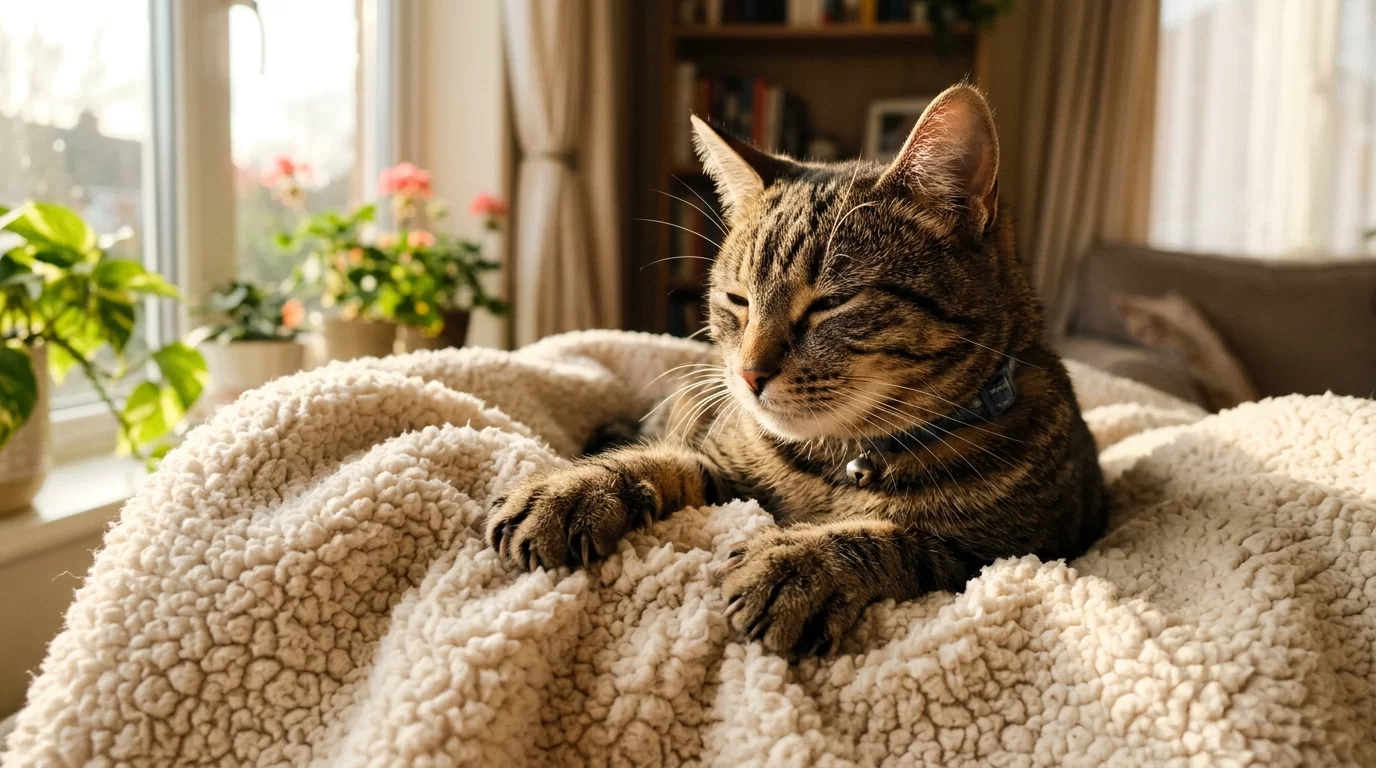
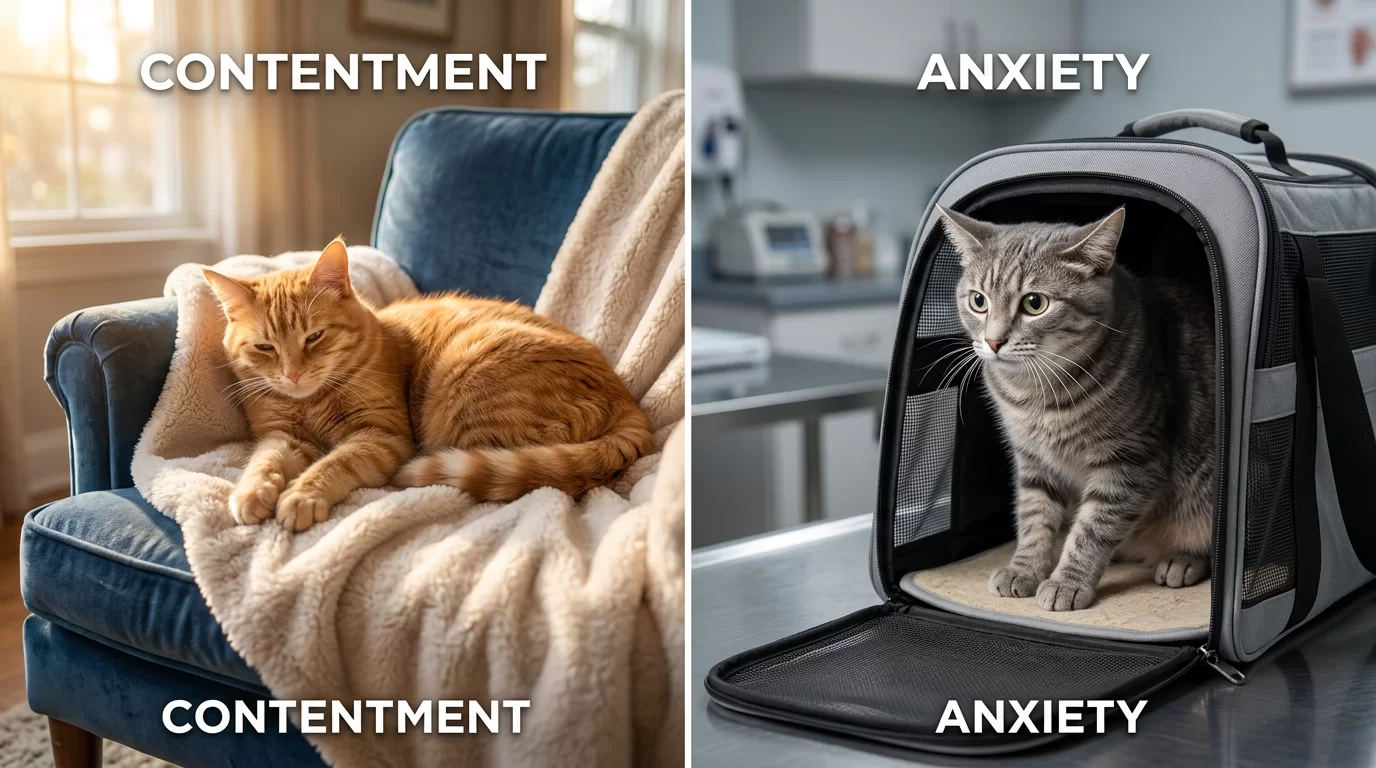
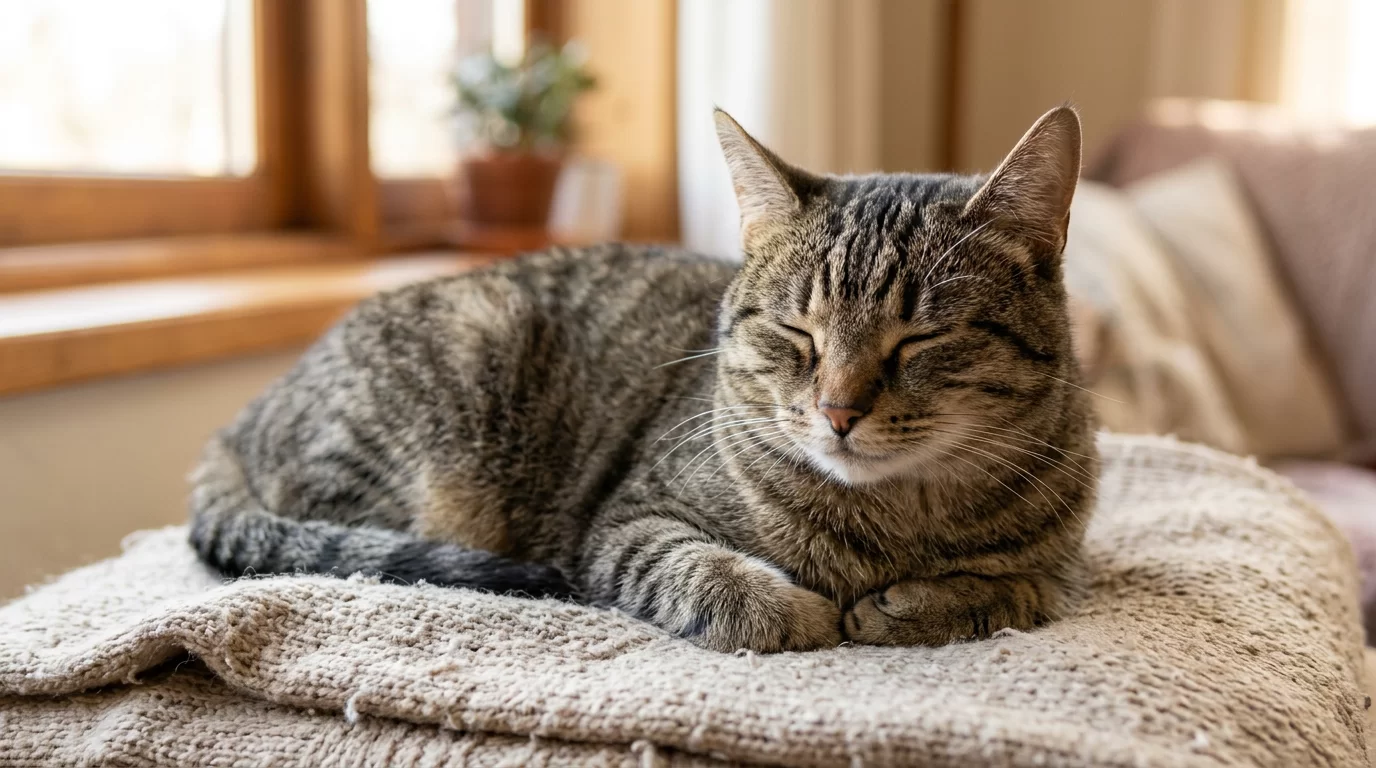
The classic happy-cat purr is real. Cats often purr when resting in a warm spot, being gently petted, kneading a blanket, or settling into a familiar person’s lap. In these moments, the purr is usually paired with other relaxed signals: half-closed eyes, a loose tail, soft ears, normal breathing, and a body that is not tense or crouched.
Bonding with people and other cats
Purring can strengthen social connection. Kittens purr while nursing, and mother cats may purr to reassure them. Adult cats often continue using purring as part of social bonding with trusted humans or feline companions.
Cats may also combine purring with rubbing, cheek marking, or head bunting. These behaviors are part of feline scent communication and affection. For a deeper look at this related behavior, LoveMichi’s guide to cat bunting and feline headbutting explains why cats rub their faces on people, furniture, and other pets.
Asking for food or attention
Some cats use a more insistent purr when they want something. This is sometimes called a solicitation purr. It may sound higher-pitched or more urgent than a relaxed purr and is often paired with walking underfoot, staring, meowing, or leading a person toward the food bowl.
This does not mean the cat is being manipulative in a negative sense. Cats learn which behaviors get a response, and purring is one of their most effective communication tools.
Self-soothing during stress
Cats may purr when they are anxious, overwhelmed, or unsure. A cat at the veterinary clinic may purr while trembling or flattening its ears. A newly adopted cat may purr while hiding under furniture. A senior cat may purr more during moments of confusion or insecurity.
In these cases, purring may function somewhat like self-comforting behavior. The cat is not necessarily happy; it may be trying to regulate stress. Owners who notice stress-related purring alongside pacing, hiding, overgrooming, or changes in litter box habits may find it helpful to understand common cat anxiety symptoms and stress relief tips.
What Different Types of Purring May Mean
Not every purr sounds the same. While people cannot translate purring with perfect accuracy, certain patterns can provide clues.
A soft, steady purr during petting or rest usually suggests comfort. A louder, more demanding purr near mealtime may mean the cat is requesting food or attention. A purr mixed with meows or chirps can indicate excitement, greeting, or anticipation. A low purr from a tense or withdrawn cat may signal stress or discomfort.
Body language is the best translator. A relaxed cat purring with slow blinks and an upright tail is likely comfortable. A cat purring while crouched, hiding, panting, growling, or refusing to move should be observed more carefully.
Signs that support a positive meaning include:
- Loose, stretched-out, or curled resting posture
- Slow blinking or sleepy eyes
- Normal appetite and activity
- Ears in a neutral or forward position
- Gentle kneading or cheek rubbing
- Willingness to interact
Signs that may suggest stress or illness include:
- Hiding more than usual
- Refusing food or water
- Limping or guarding part of the body
- Rapid or labored breathing
- Flattened ears or dilated pupils
- Growling, hissing, or sudden aggression
- Unusual vocalization or withdrawal
When Purring Can Signal Pain or Stress
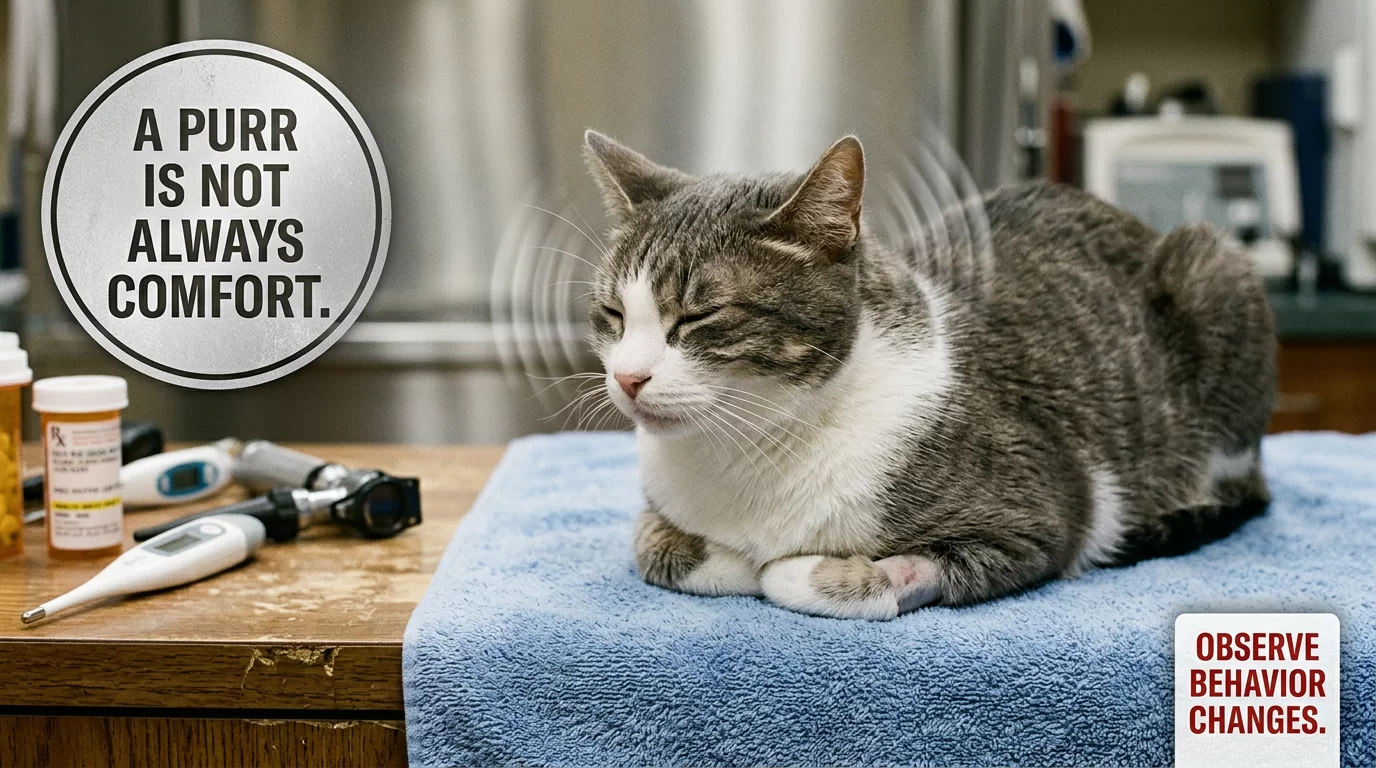
A purring cat is not always a comfortable cat. This is one of the most important points for owners to understand. Cats are naturally inclined to hide signs of weakness, and purring can appear during illness, injury, labor, recovery from surgery, or stressful events.
Veterinary attention is recommended if purring is accompanied by:
- Not eating for 24 hours or more
- Difficulty breathing or open-mouth breathing
- Sudden weakness, collapse, or extreme lethargy
- Signs of pain, such as limping, crying, or hiding
- Repeated vomiting or diarrhea
- Straining in the litter box
- A swollen abdomen or obvious injury
- Major behavior changes in a senior cat
Cats with chronic conditions, such as arthritis, dental disease, kidney disease, or hyperthyroidism, may still purr when approached. A purr should not be used as proof that a cat is pain-free. The American Association of Feline Practitioners and many veterinary pain-management guidelines emphasize that subtle behavior changes are often more reliable than obvious crying when assessing feline discomfort.
If a cat is purring but seems “not quite right,” a veterinary exam is the safest next step.
How to Respond When a Cat Purrs
The best response depends on what the cat is communicating. A relaxed purring cat may enjoy gentle petting, quiet companionship, or simply being allowed to rest nearby. Many cats prefer soft strokes around the cheeks, chin, and base of the ears rather than full-body handling.
If the purr seems attention-seeking, owners can respond consistently without reinforcing unwanted behavior. For example, feeding on a routine schedule helps prevent a cat from learning that urgent pre-dawn purring always produces breakfast.
If the purr appears stress-related, the priority is reducing pressure. Give the cat space, provide hiding spots, keep noise low, and avoid forced handling. In multi-cat homes, separate feeding stations, extra litter boxes, vertical territory, and predictable routines can reduce tension.
Helpful ways to support a purring cat include:
- Watching the full body, not just listening to the sound
- Letting the cat choose whether to approach
- Keeping petting sessions short if the cat becomes overstimulated
- Offering a calm retreat during visitors, storms, or construction noise
- Scheduling a vet visit when purring appears alongside illness signs
- Tracking changes in appetite, litter box use, grooming, and sleep
Purring should be treated as one piece of information, not the entire diagnosis.
What Purring Reveals About the Human-Cat Bond
Purring is one reason cats feel so emotionally close to people. The sound is quiet, intimate, and often shared during calm moments: a cat settling on the sofa, greeting a favorite person, or kneading a blanket before sleep. Over time, owners learn the difference between their cat’s sleepy purr, hungry purr, greeting purr, and uneasy purr.
That familiarity is valuable. Cats communicate in subtle ways, and the people who live with them are often the first to notice when a normal purr sounds different or appears in an unusual situation. A change in when, how often, or why a cat purrs can be a meaningful clue, especially when paired with shifts in mobility, appetite, social behavior, or grooming.
Purring is not a simple emotional label. It is a flexible feline signal that can mean comfort, connection, request, stress, or pain depending on the moment. Most purring is harmless and affectionate, especially when a cat looks relaxed and behaves normally. Still, owners should avoid assuming that every purr means happiness. A cat that purrs while hiding, refusing food, breathing abnormally, or acting withdrawn deserves closer attention and, when signs persist or seem severe, veterinary care. The more carefully a cat’s purr is read alongside body language and daily habits, the easier it becomes to understand what that cat is truly trying to say.